Jun 29, 2026
Monet, Matisse, Van Gogh: Impressionism at AGO
Delve into 50 Impressionist works at the AGO
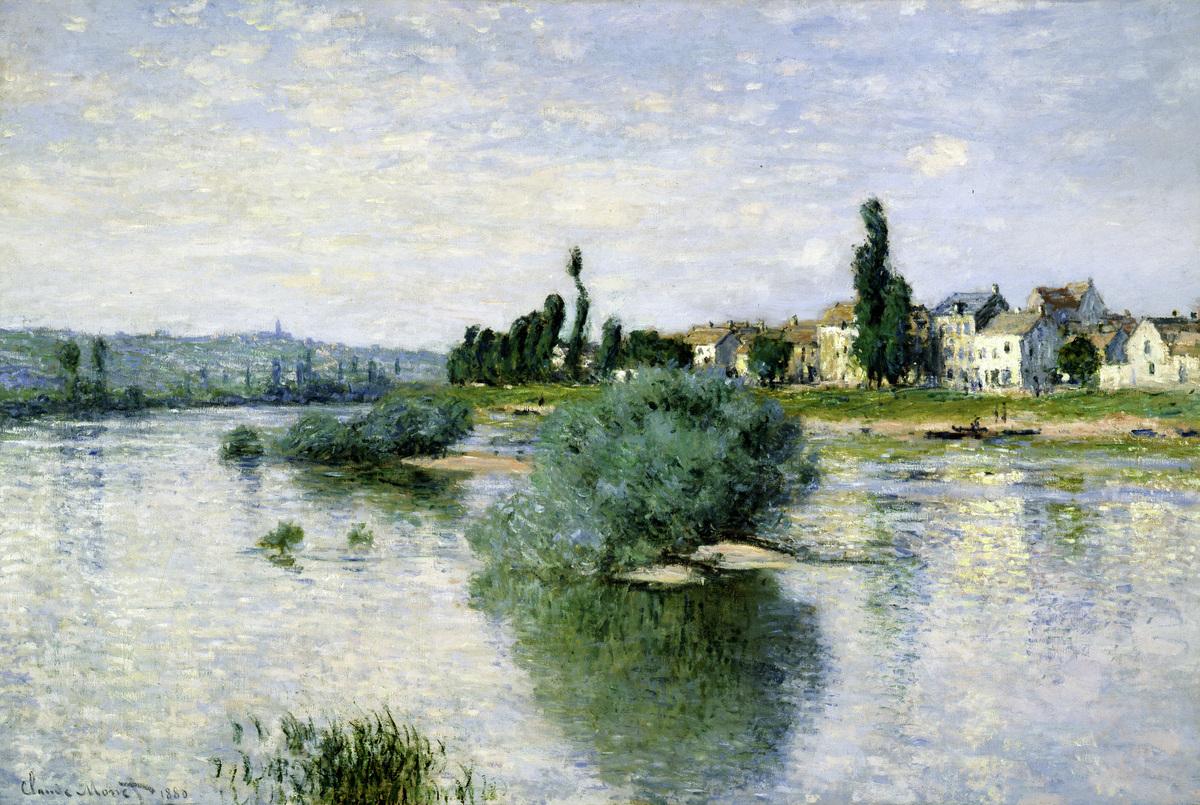
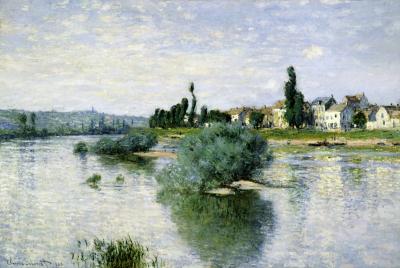
Claude Monet. The Seine at Lavacourt, 1880. Oil on canvas, unframed: 98.4 x 149.2 cm. Dallas Museum of Art, Munger Fund, 1938.4.M
The names Claude Monet, Berthe Morisot, and Pierre-Auguste Renoir are among the most recognizable in art history. For over a century, these originators of Impressionism have often been celebrated for defining modern art; but in the early days of their careers, they were considered controversial. Using experimental techniques to depict landscapes, public life, still lifes and interiors, they ushered in a new wave of avant-garde painting, profoundly inspiring the next generation. On view now on Level 4 of the AGO, The Impressionist Revolution: Monet to Matisse from the Dallas Museum of Art illustrates the inception and ripple effects of a beloved art movement.
Making its Canadian debut at the AGO, this sweeping overview of Impressionism is drawn from the Dallas Museum of Art’s exceptional permanent collection. The exhibition includes remarkable works by Monet, Renoir, Gustave Caillebotte, Henri Matisse, Edgar Degas, Berthe Morisot, Vincent van Gogh, Paul Gauguin, Piet Mondrian, Edvard Munch, and more. Arranged in five chronological and thematic sections, the 50 works on view highlight how the techniques and subjects of these experimental artists set a new course for modern art in the late 19th and early 20th centuries.
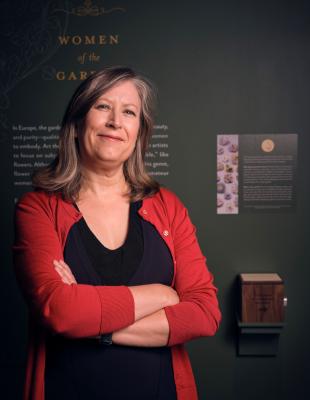
The exhibition is curated by Dr. Nicole R. Myers, the DMA’s Chief Curatorial and Research Officer and The Barbara Thomas Lemmon Senior Curator of European Art. The AGO presentation is led by Dr. Caroline Shields, AGO Curator, European Art.
Take a closer look at five works on view in the exhibition and their corresponding sections.
Introduction
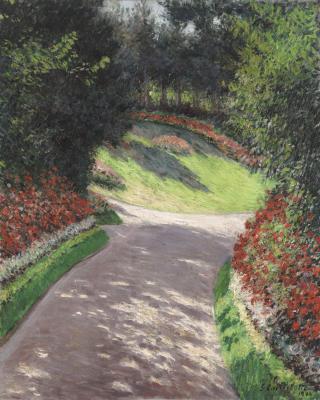
Upon arrival at The Impressionist Revolution, visitors will first encounter Gustave Caillebotte’s (1848 – 1894) The Path in the Garden (1886). An apt prologue to the exhibition, this striking work features foliage in the foreground framing a sun-dappled lane, which parts in the distance, inviting the viewer to wander ahead.
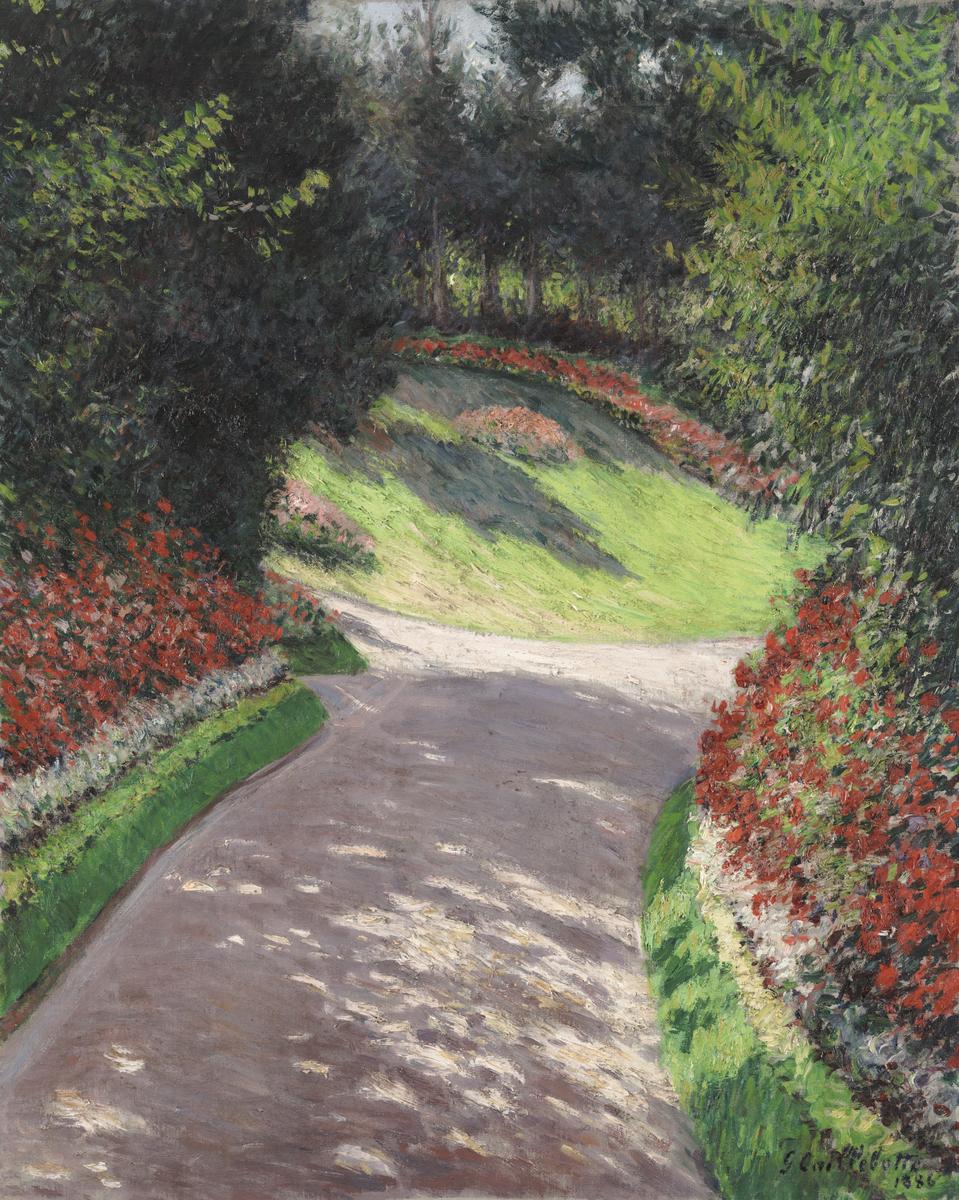
Gustave Caillebotte. The Path in the Garden, 1886. Oil on canvas, unframed: 81.6 x 73.3 cm. Dallas Museum of Art, The Eugene and Margaret McDermott Art Fund, Inc., bequest of Mrs. Eugene McDermott, 2019.67.5.McD
Caillebotte was fascinated by geometry and perspective, whether painting the streets of Paris or his garden’s winding paths. Here, he balances the natural abundance of his garden with marked shifts in light and texture. Caillebotte joined the Impressionists in 1876, participating in five of their eight shows. He sometimes organized the exhibitions and even collected the works of his fellow Impressionists.
When Impressionism Was New
In the first section of the exhibition, its chronology begins, whisking visitors back to the early days of Impressionism for a closer look at the movement’s founding members.
In 1874, the Impressionists (then known as the Anonymous Society of Painters, Sculptors, Printmakers, Etc.) opened their first-ever group exhibition in Paris. The collective would go on to mount eight shows over the next 12 years. By exhibiting their work independently, they bypassed the official Salon exhibition organized by the state-run Academy of Fine Arts, an act both bold and entrepreneurial. In contrast to historical subjects and traditional styles, the Impressionists captured everyday realities, painting street life, the bustle of commerce, and intimate scenes of domesticity.
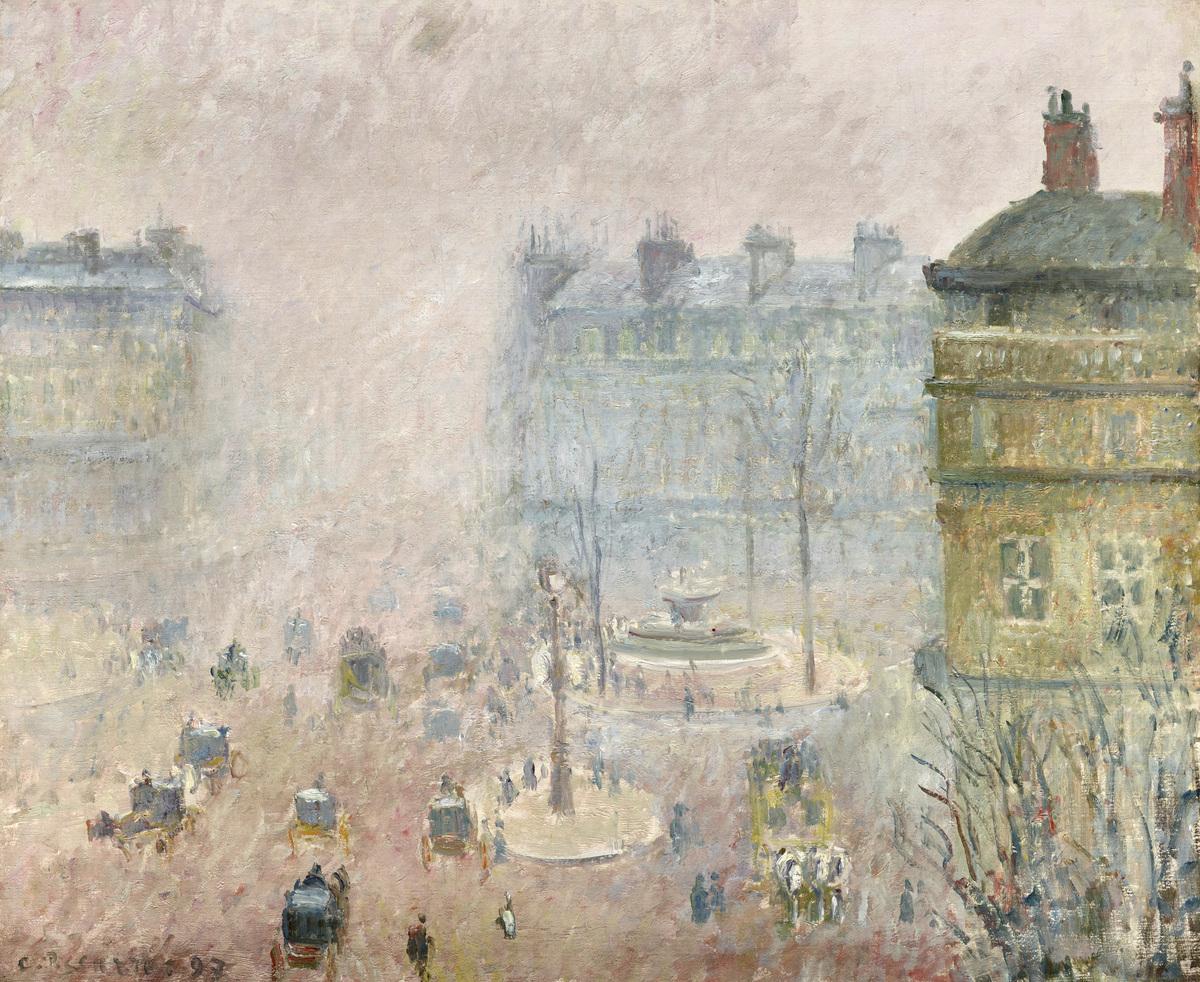
Camille Pissarro. Place du Théâtre Français: Fog Effect, 1897. Oil on canvas, unframed: 54.6 x 66.4 cm. Dallas Museum of Art, The Wendy and Emery Reves Collection, 1985.R.50
On view in this section (gallery 408) is Camille Pissarro’s (1830 – 1903) Place du Théâtre Français: Fog Effect (1897). Painted during his stay at the Grand Hôtel du Louvre, it depicts a hazy pink and purple winter fog shrouding the wide Parisian plaza. Loose brushstrokes convey the movement of horse-drawn carriages and pedestrians on the street below. Created two decades after the Impressionists had revolutionized pictorial subjects and composition, Pissarro’s painting confirms the trajectory established by his peers, who sought to make the modern, dynamic city a legitimate subject of artistic representation.
Painting a Glimpse: Techniques and Materials
Next, visitors are invited to delve into the Impressionists’ unconventional and innovative methods of painting. In the late 19th century, technological advances, including railway expansions, the invention of the resealable metal paint tube, and the advent of photography, fuelled their creative approach. Many Impressionists took their canvases outdoors to capture the fleeting presence of light.
To achieve light effects, they applied bright pigments on light-hued grounds (preparatory layers) in textured brushstrokes. They avoided black and grey when painting shadows and volume, depicting them in colour instead.
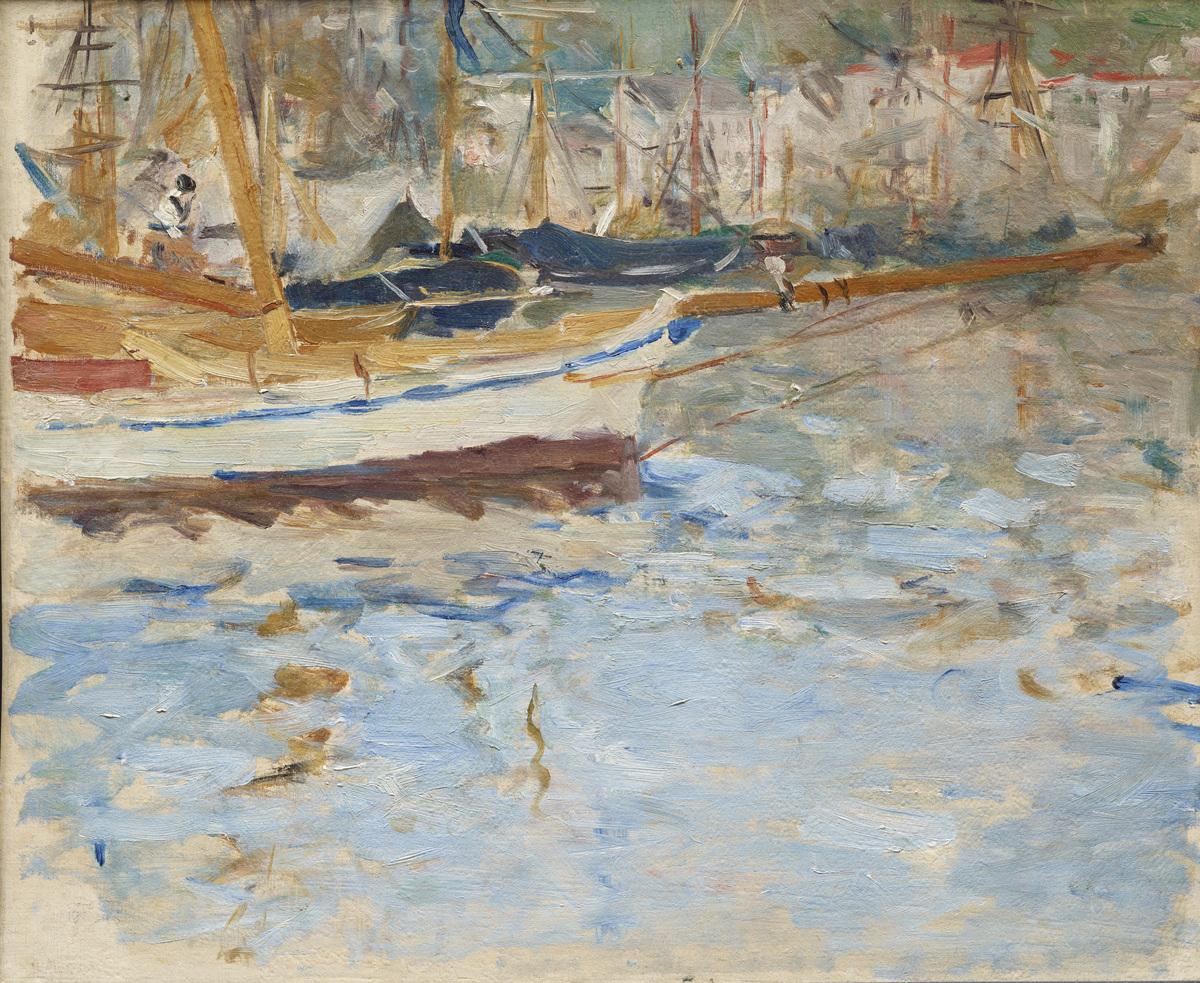
Berthe Morisot. The Port of Nice, 1881-1882. Oil on canvas, unframed: 38.1 x 46.4 cm. Dallas Museum of Art, The Wendy and Emery Reves Collection, 1985.R.40
Emblematic of Impressionist techniques and materials, Berthe Morisot’s (1841 – 1895) The Port of Nice (1881 – 1882) features a docked sailboat in its titular harbour (on view in gallery 402S). Morisot devoted more than two-thirds of the composition to her depiction of water and its play of movement, reflection, and broken colours. Fluid and gestural, her brushwork veers toward abstraction, which is typical of her daring formal experimentation.
Landscape Transformed
The Impressionists built landscapes through broken brushstrokes, allowing the surface of the canvas to register movement, weather, and the passage of time. This section illustrates the ground-breaking ways the Impressionists, and the Neo-Impressionists who followed, evolved landscape painting.
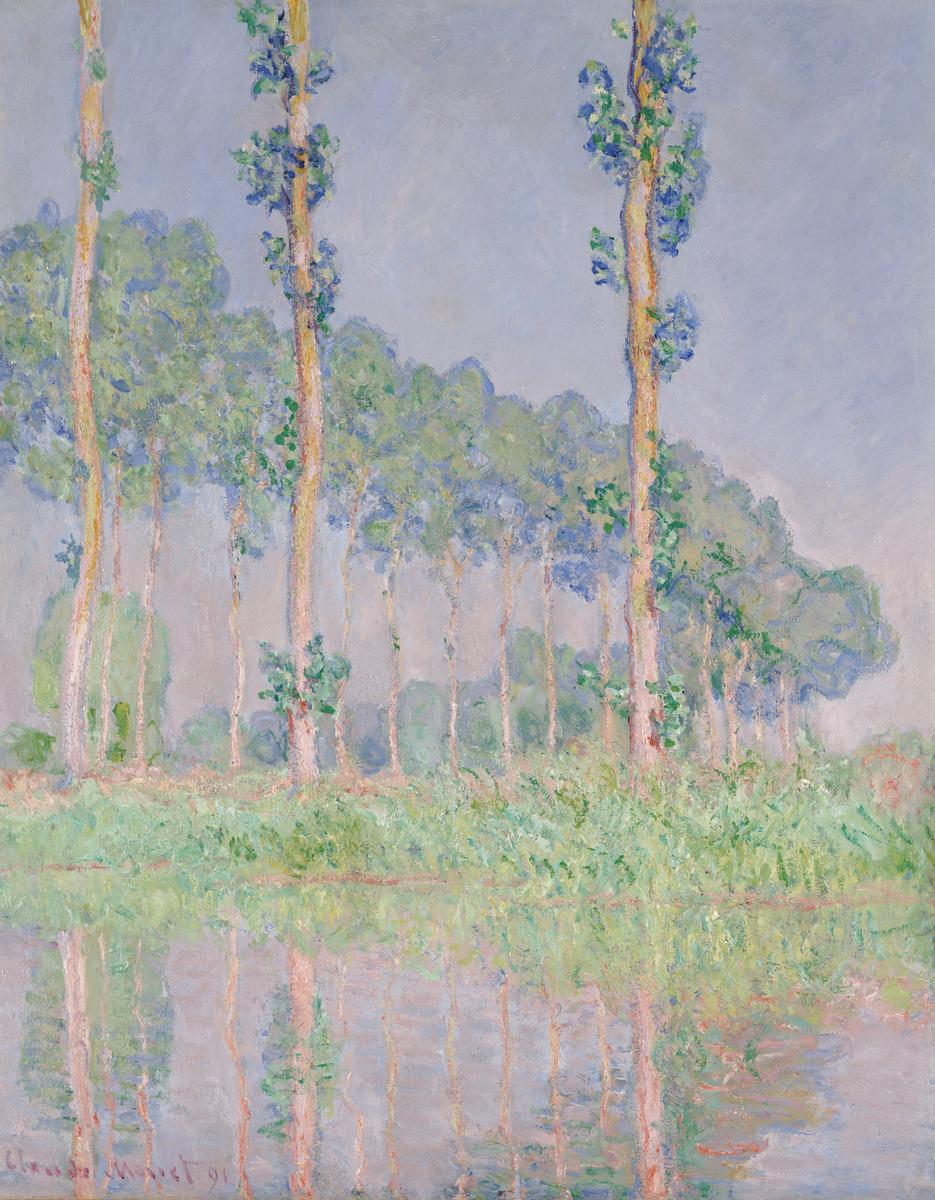
Claude Monet. Poplars, Pink Effect, 1891. Oil on canvas, Dallas Museum of Art, The Eugene and Margaret McDermott Art Fund, Inc., bequest of Mrs. Eugene McDermott, 2019.67.14.McD
Claude Monet’s (1840 – 1926) Poplars, Pink Effect (1891) (on view in gallery 402N) is part of a series that captures the effects of light on the same setting in various atmospheric conditions. While Monet’s landscapes may appear spontaneous, art historians note that he carefully composed his paintings. He depicted this scene from different vantage points across 24 canvases. Here, three poplars slice the view of the arc that continues further downriver. The trees and grassy bank appear reflected in the water.
After Impressionism: In Search of Modernity
To close out the exhibition, the final section reveals the impact of the Impressionists on two generations of avant-garde artists who came after them.
After the last Impressionist show of 1886, a new cohort of modern artists developed multiple styles that prioritized emotions, ideas, and personal expression over purely optical impressions. Known today as the Post-Impressionists, they favoured symbolic subjects, brighter colours, and exaggerated forms. Almost every modern art movement that followed, including Cubism, Fauvism, Expressionism, Futurism, and Abstraction, had roots in the Impressionists’ subversion of traditional Academic values.
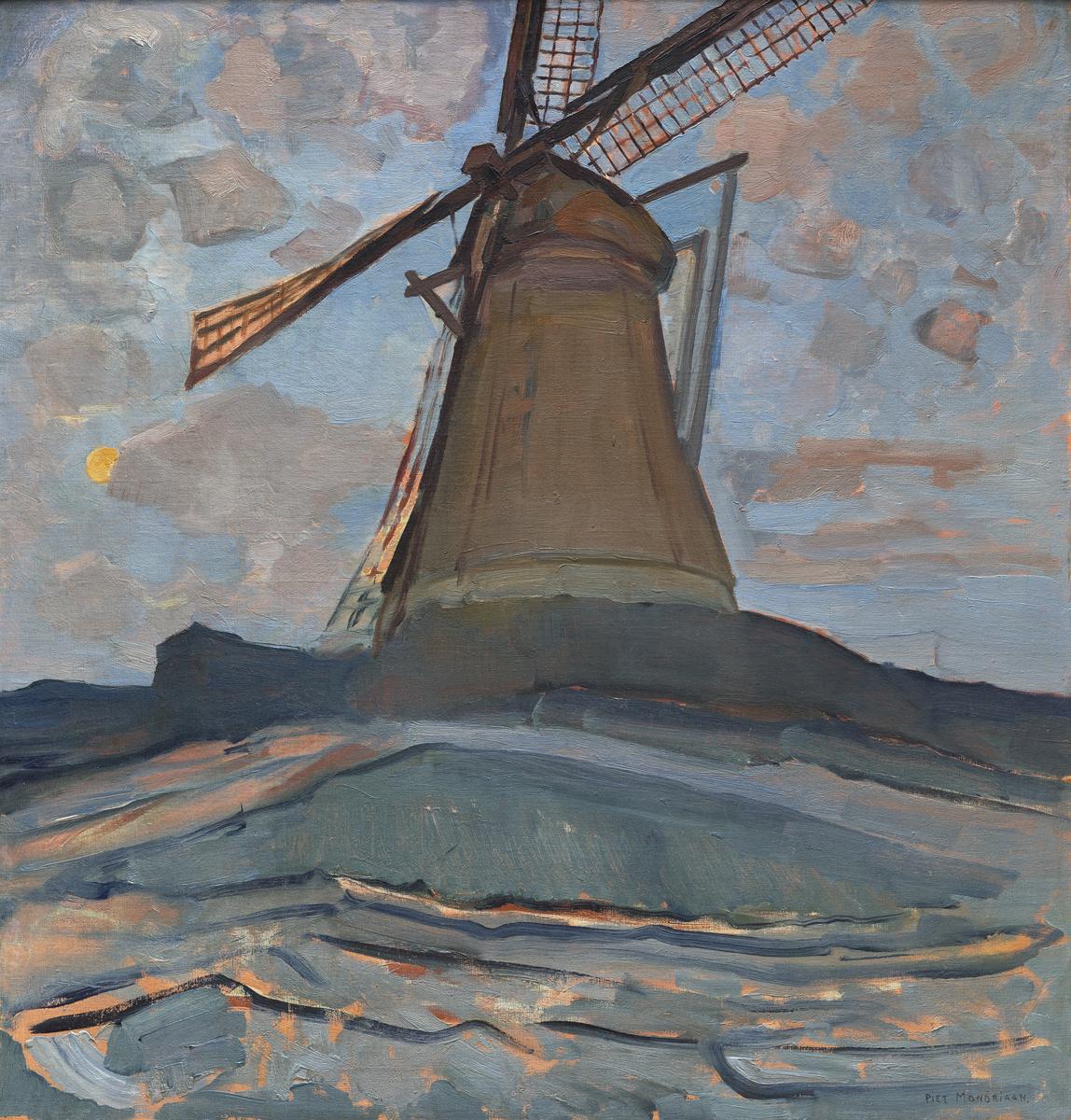
Piet Mondrian. Windmill, c. 1917. Oil on canvas, unframed: 100.3 x 95.3 cm. Dallas Museum of Art, gift of Mrs. Eugene McDermott to the Dallas Museum of Art in honor of Mr. and Mrs. James H. Clark, 1989.142
Renowned modernist whose artistic roots are embedded in the lessons of Impressionism and Post-Impressionism, Piet Mondrian (1872-1944) painted Windmill in 1917. On view in the exhibition’s final gallery (405), this work is part of a series depicting an old windmill located near his home outside of Amsterdam. He painted it from a low vantage point, employing a steep, upward-looking perspective to emphasize the windmill’s verticality.
The Impressionist Revolution: Monet to Matisse from the Dallas Museum of Art is on view on Level 4 of the AGO. The exhibition is organized by the Dallas Museum of Art and curated by Dr. Nicole R. Myers, the DMA’s Chief Curatorial and Research Officer and The Barbara Thomas Lemmon Senior Curator of European Art. The AGO presentation is led by Dr. Caroline Shields, AGO Curator, European Art.
Generous Support
Ira Gluskin & Maxine Granovsky Gluskin
Andrew Talpash
Supported by the Government of Canada/Avec l’appui du gouvernement du Canada