Jul 8, 2026
Curator Nicole R. Myers on Impressionism
The exhibition’s curator shares her insights on Impressionism and the must-see works at the AGO
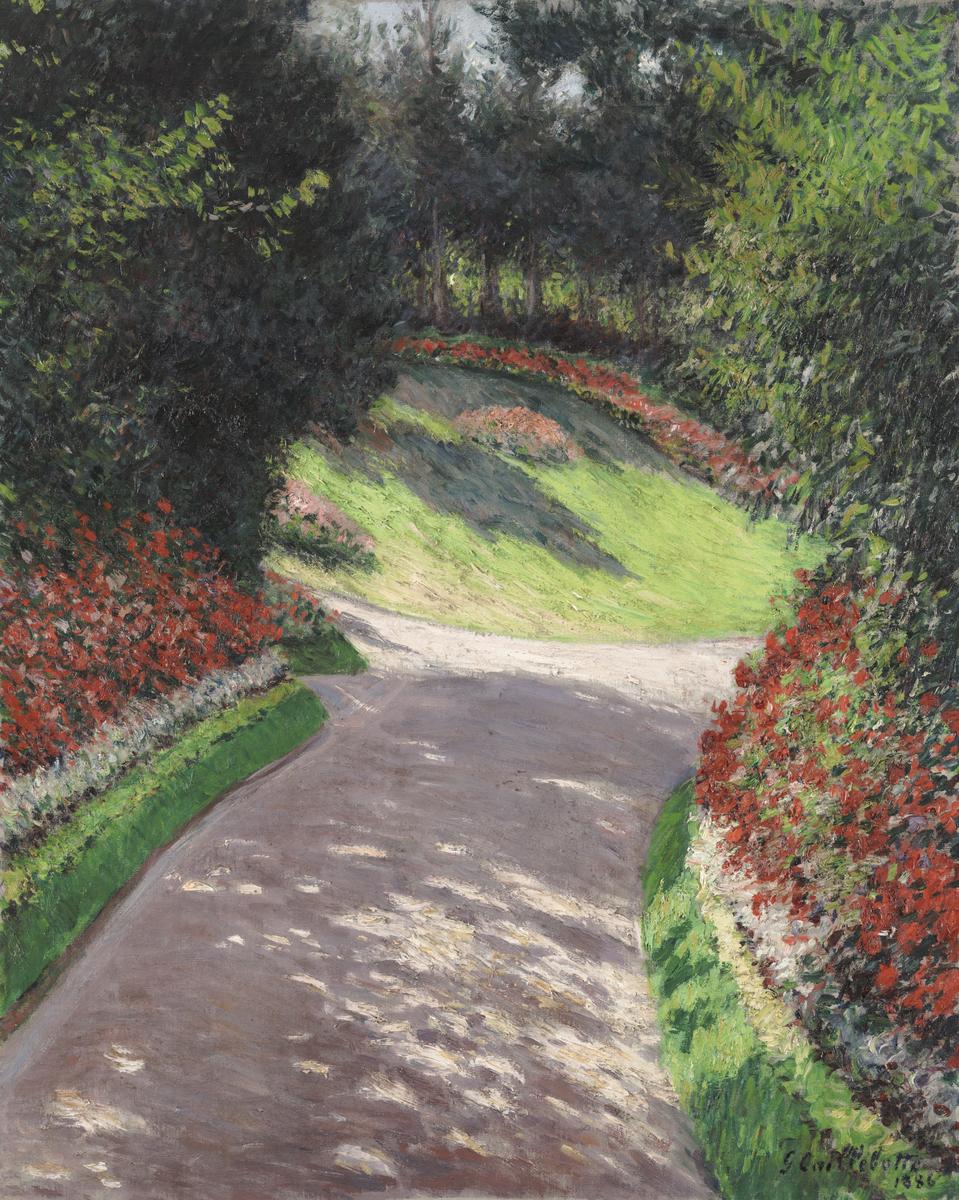
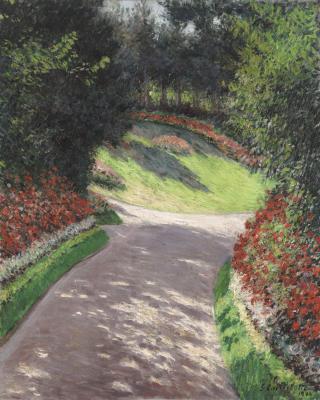
Gustave Caillebotte. The Path in the Garden, 1886. Oil on canvas, unframed: 81.6 x 73.3 cm. Dallas Museum of Art, The Eugene and Margaret McDermott Art Fund, Inc., bequest of Mrs. Eugene McDermott, 2019.67.5.McD
“The story of Impressionism is not simply about the artists who adopted or adapted their tenets, but also those who reacted against them.”
Currently on view on Level 4 of the AGO, The Impressionist Revolution: Monet to Matisse from the Dallas Museum of Art explores the fascinating story of Impressionism from its first exhibition in Paris in 1874 to its legacy in the early 20th century. Told entirely through the Dallas Museum of Art (DMA)’s exceptional holdings, it reveals the rebellious origins of the independent artist collective known as the Impressionists and the revolutionary course they charted for modern art.
The exhibition is curated by Dr. Nicole R. Myers, the DMA’s Chief Curatorial and Research Officer and The Barbara Thomas Lemmon Senior Curator of European Art. Since joining the DMA in 2016, she has curated/co-curated numerous exhibitions, including Van Gogh and the Olive Groves (2021–2022); Cubism in Color: The Still Lifes of Juan Gris (2021); and Berthe Morisot, Woman Impressionist (2018–2019).
Now that the exhibition is at the AGO, we’re resharing this interview with Myers from when it was first presented at the DMA in 2024. She shares what makes this exhibition different from other Impressionist exhibitions, and what she hopes visitors discover.
This interview has been edited for length and previously appeared on the Dallas Museum of Art’s website, impressionistrevolution.dma.org
What are some of your must-see works in the exhibition?
Myers: For this presentation, I wanted to pull out all the stops and dazzle visitors through the sheer breadth and quality of the artwork in our care. The exhibition includes some of my all-time favourite paintings, such as Gustave Caillebotte’s The Path in the Garden [image at top] from 1886. This deceptively simple painting is a tour-de-force of Impressionist bravado. Caillebotte built the composition around the contrasting complementary colours of red and green in order to increase each colour’s overall vibrancy. He applied thick, gestural brushstrokes like spackle to suggest the most ephemeral elements in the painting: sun-dappled light and shadow. And by rendering the landscape with a sharply receding perspective, Caillebotte manages to lend this mundane view a sense of excitement, even mystery. The effect of light is so convincing that it’s actually quite challenging to install. Compared to the more muted palettes and subtle light effects deployed by Caillebotte’s peers, The Path in the Garden appears to project light outward—from a distance it can look like a window has been opened on the gallery wall. I always find myself drawn to it every time I walk past.
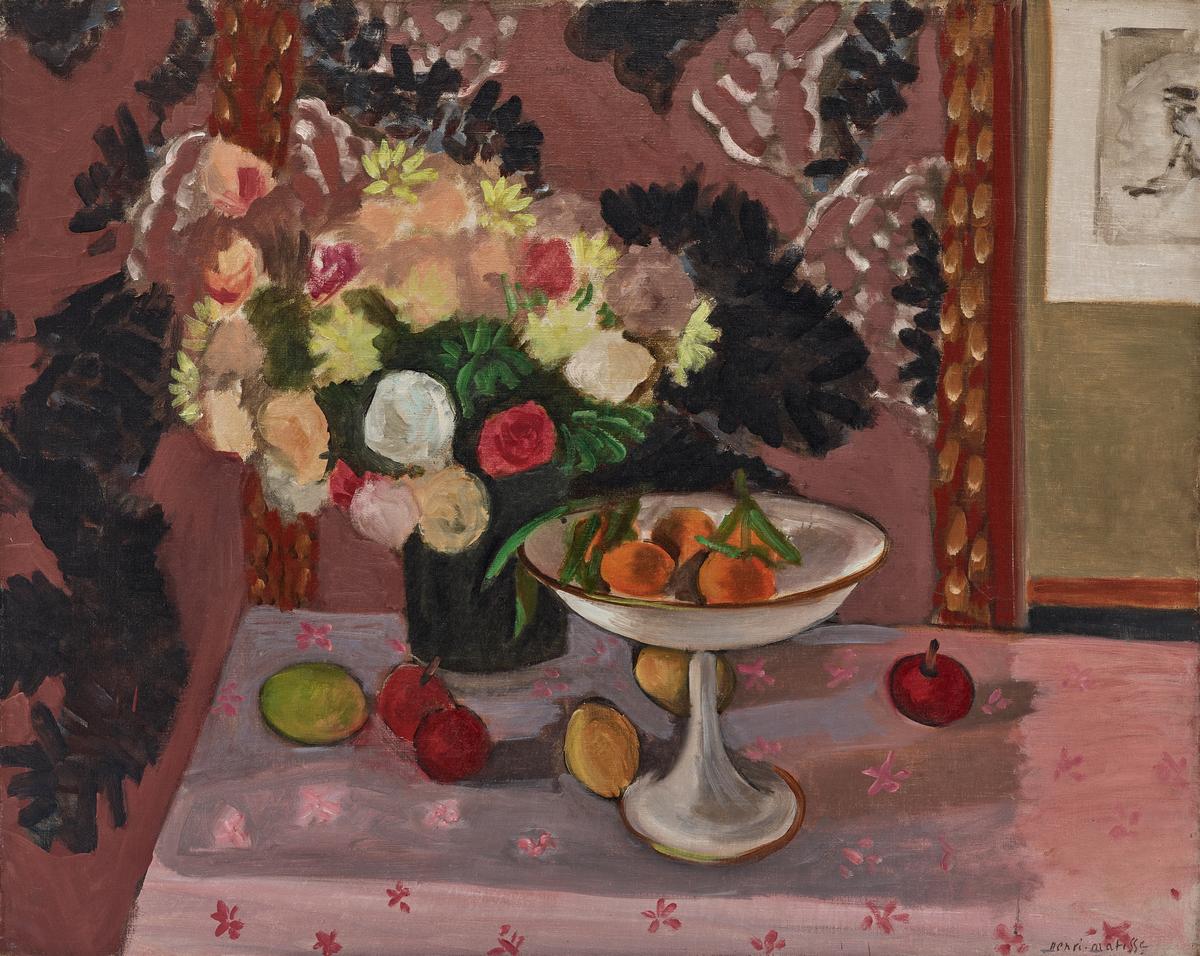
Henri Matisse. Still Life: Bouquet and Compotier, 1924. Oil on canvas, unframed: 74.2 x 92.7 cm. Dallas Museum of Art, The Eugene and Margaret McDermott Art Fund, Inc., in honor of Dr. Bryan Williams, 2002.19.McD
What makes this exhibition different from other presentations of Impressionist works?
I started this project with the relatively straightforward goal of telling the story of Impressionism entirely through the DMA’s extraordinary holdings. Investigations of Impressionism, whether in art history books or exhibitions, typically focus on the movement’s origins in the earlier 19th century. That is a great story, but it’s one that’s more frequently told. I wanted instead to look at the Impressionists’ comprehensive impact on their avant-garde peers as well as those who came up through the ranks shortly after, a subject I suspect is far less familiar.
Impressionism is often held apart from the explosion of different modernisms that proliferated in the late 19th and early 20th centuries. It can seem as if the Impressionists’ most radical innovations—the bright, anti-naturalistic palette, semi-abstract application of paint, and fixation on depicting the experience of modern living—ended in 1900, at which point the art world pivoted to something completely new. The process is of course far messier and more complex. Movements rarely unfold in straight lines from one to the next, following a neat chronology. Monet, Degas, Renoir, and Cassatt all lived to see the development of new avant-garde styles, such as Cubism and Fauvism, whose roots stem from the revolution they started with their cohort 40 years prior. I find it fascinating to trace the Impressionists’ significant and far-reaching fingers, especially where it’s least expected—for example, in Mondrian’s early work. The story of Impressionism is not simply about the artists who adopted or adapted their tenets, but also those who reacted against them. And this is the story that’s told in our show.
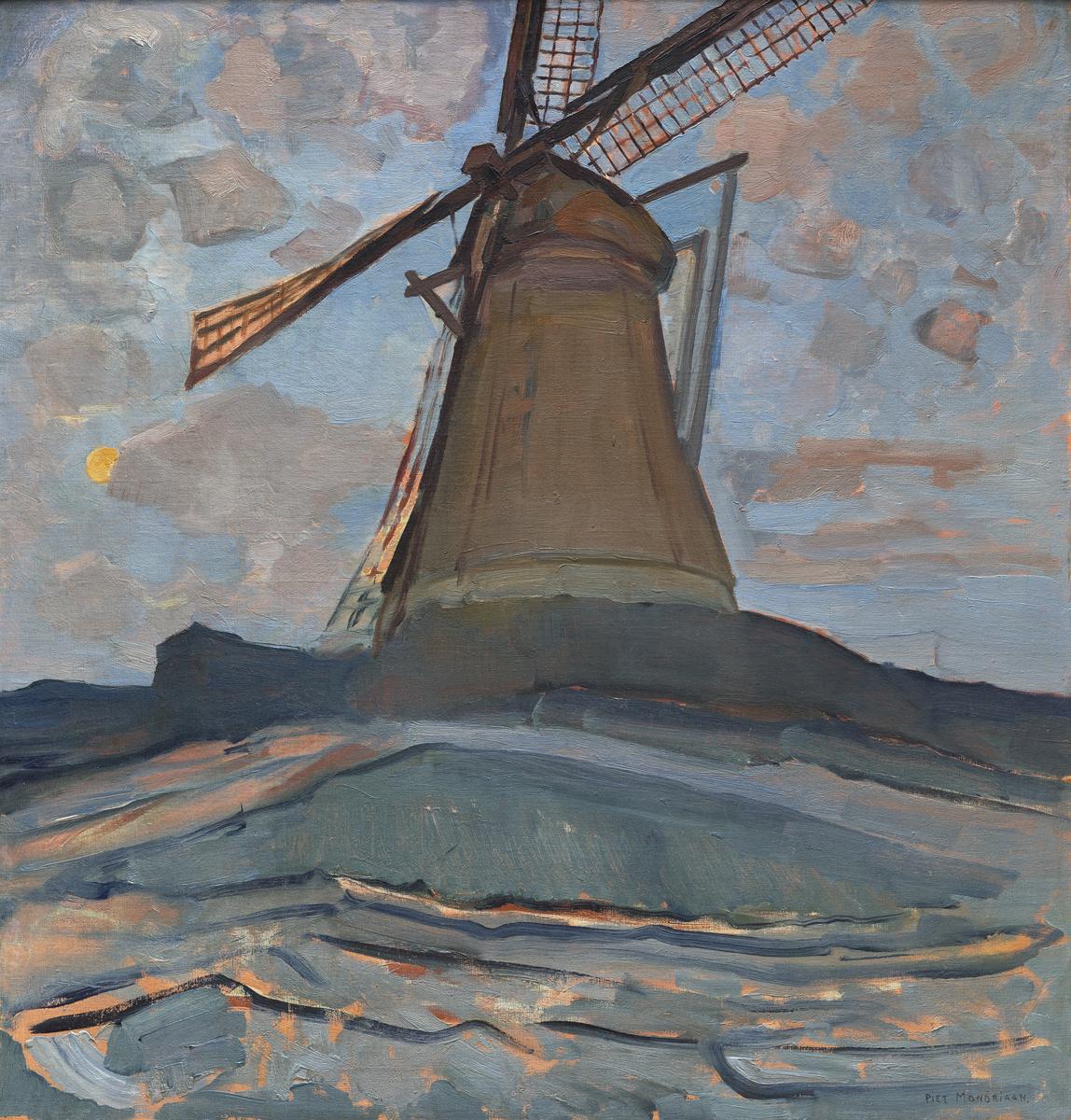
Piet Mondrian. Windmill, c. 1917. Oil on canvas, unframed: 100.3 x 95.3 cm. Dallas Museum of Art, gift of Mrs. Eugene McDermott to the Dallas Museum of Art in honor of Mr. and Mrs. James H. Clark, 1989.142
If visitors to this exhibition take away one thing about the Impressionists, what would it be?
Today, the works of the Impressionists are incredibly popular. Reproductions of their compositions—for example, Monet’s water lilies or Degas’s dancers—are everywhere, from dorm room posters to the lids of chocolate boxes. This seemingly universal appreciation of Impressionism makes it easy to think this was always the case. But in the 1860s and 1870s, there was virtually no audience or collectors for Impressionist artwork, nor could you find it on the walls of museums.
It can be difficult for us to see these paintings as ugly, unfinished, and even offensive. Yet that’s exactly how critics and the public alike responded to the Impressionists’ production, which rejected the Western artistic tradition in just about every way possible.
Some of the key aspects of their work that we take for granted, such as mundane middle-class subjects or sketch-like brushwork, were cutting-edge artistic innovations that subverted expectations for finished works deemed suitable for public consumption. Indeed, there was no venue for the exhibition or sale of this artwork in Paris at the time.
Despite how broadly we use the term nowadays, Impressionism did not originate as a style of artwork. Rather, the Impressionists emerged in 1874 as a collective of independent artists that were united by a shared vision of what modern art should be and the desire to publicly exhibit their work outside of France’s official, conservative art system. By framing these artists in this context, I hope to convey to our visitors a sense of the absolutely radical and challenging aspects of their individual approaches, to make strange or unfamiliar these beloved works in our collection, to deepen our appreciation of what at first glance may read simply as “pretty” pictures. Having established that foundation, visitors can then trace these rebel artists’ extraordinary legacy into the most daring modern movements that continue to resonate in the art produced today.
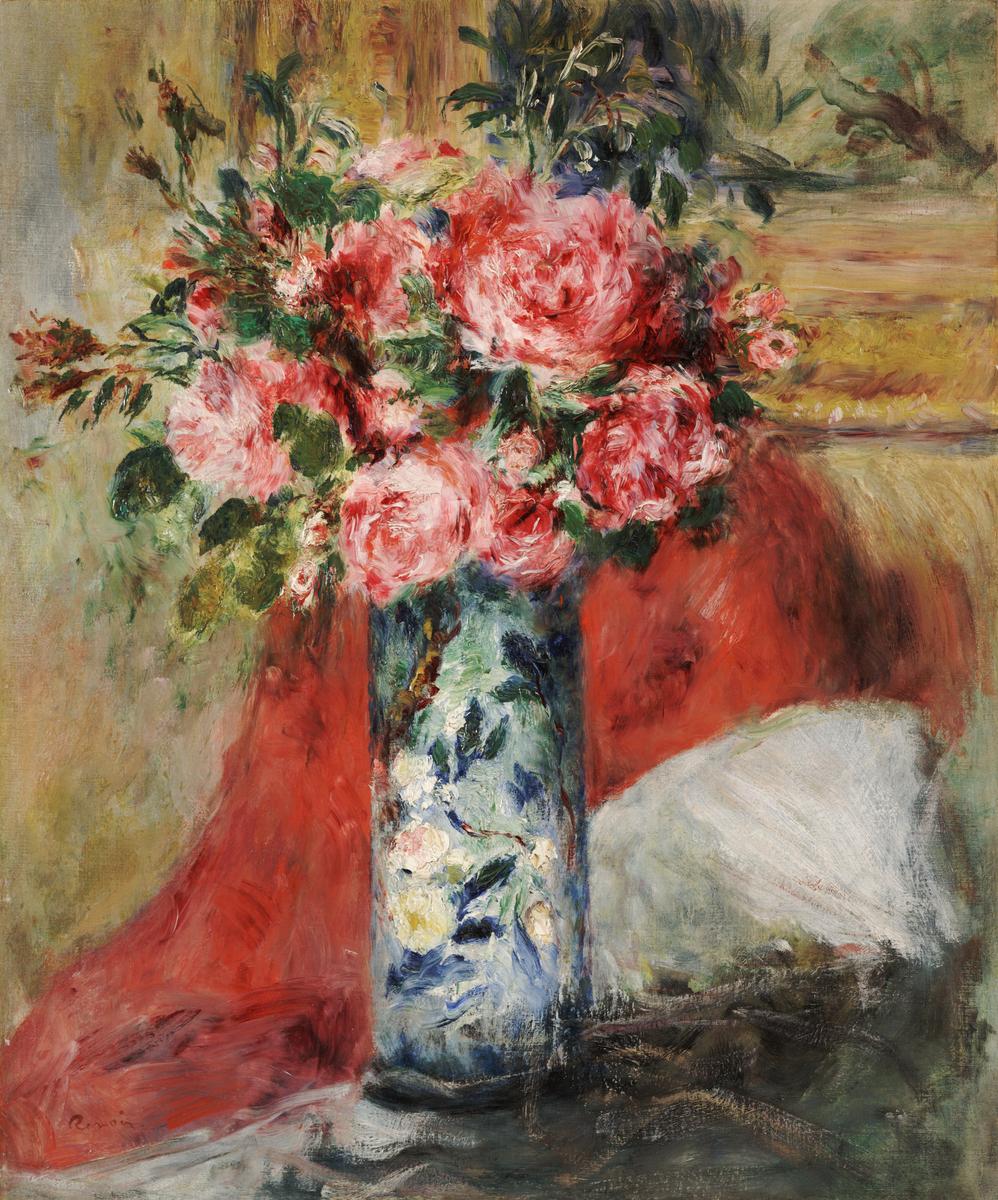
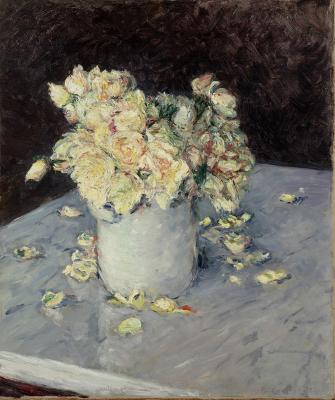
Pierre-Auguste Renoir. Roses and Peonies in a Vase, 1876. Oil on canvas, unframed: 60.6 x 51.4 cm. Dallas Museum of Art, The Eugene and Margaret McDermott Art Fund, Inc., bequest of Mrs. Eugene McDermott in honor of Sarah Perot, 2019.67.22.McD
The Impressionist Revolution: Monet to Matisse from the Dallas Museum of Art is on view on Level 4 of the AGO. The exhibition is organized by the Dallas Museum of Art and curated by Dr. Nicole R. Myers, the DMA’s Chief Curatorial and Research Officer and The Barbara Thomas Lemmon Senior Curator of European Art. The AGO presentation is led by Dr. Caroline Shields, AGO Curator, European Art.
Generous Support
Ira Gluskin & Maxine Granovsky Gluskin
Andrew Talpash
Supported by the Government of Canada/Avec l’appui du gouvernement du Canada



![Keith Haring in a Top Hat [Self-Portrait], (1989)](/sites/default/files/styles/image_small/public/2023-11/KHA-1626_representation_19435_original-Web%20and%20Standard%20PowerPoint.jpg?itok=MJgd2FZP)