Jun 23, 2026
A Double Portrait of Sikh Cavalry Officers
A work by Philip Alexius de László depicting World War I Sikh cavalry officers is now on view at the AGO
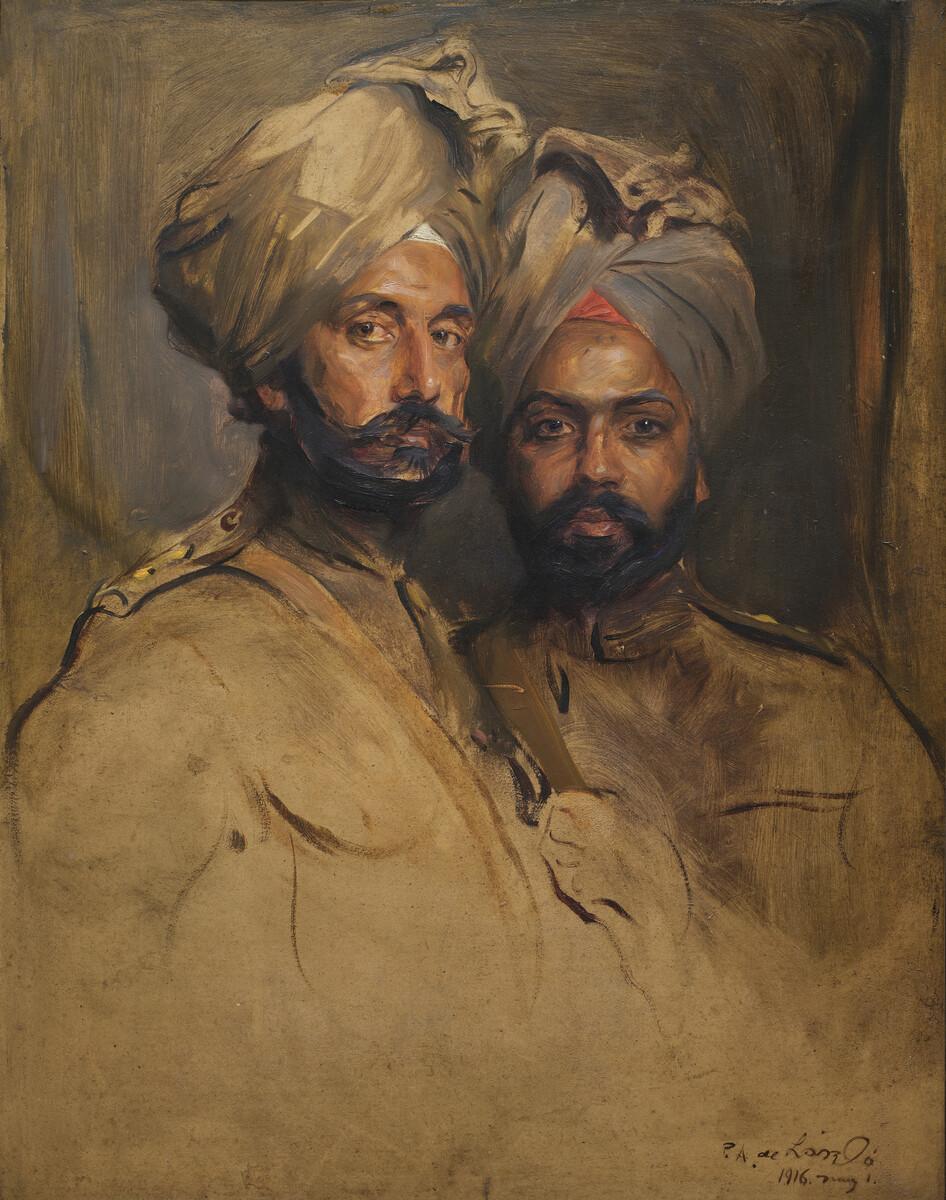
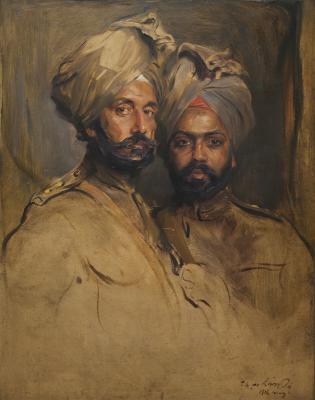
Philip Alexius de László, Risaldar Jagat Singh and Risaldar Man Singh, 1916. Oil on board, Overall: 90.2 × 69.9 cm. Private Collection.
Marina Dumont-Gauthier, Curatorial Assistant, Modern & Contemporary Art at the AGO, writes about a captivating double portrait now on view on Level 2 of the AGO. The painting hangs alongside other examples of early 20th-century portraiture from the AGO Collection.
--
On view at the AGO for the next two years is Philip de László’s Risaldar Jagat Singh and Risaldar Man Singh, an exceptional loan marking its first time outside the United Kingdom. Painted in London during the First World War, this rare double portrait depicts two Sikh cavalry officers of the British Indian Army, offering a powerful statement of the global dimensions of the conflict and the vast, multinational forces that sustained it. Its presentation in Toronto is particularly meaningful given the city’s large and vibrant Sikh community, bringing into view histories that extend beyond the canvas and into the present.
Born in Budapest in 1869, Philip de László rose from modest beginnings to become one of the most sought-after portrait painters of his generation. After early success in Vienna, in 1907, he settled in London, and he established himself at the centre of Edwardian high society, painting monarchs, aristocrats, and political figures from across Europe. By the outbreak of the First World War, he had secured his position as the leading portraitist of the British elite. Renowned for his ability to capture both likeness and psychological intensity, de László built an international reputation through commissions from this milieu; while also producing more immediate portrait studies of sitters he encountered outside it.
This double portrait reflects that more direct way of working. The painting depicts Risaldar Jagat Singh and Risaldar Man Singh, two Sikh officers in the British Indian Army— “Risaldar” being roughly equivalent to a captain in the British Army, though with a distinct status within the colonial hierarchy. While we do not know exactly how the artist met the two men, we do know that his studio was located near the Indian Cavalry Officers’ Institute, where visiting Indian officers were known to stay. De László’s visitor book—an important archival source—allows us to connect some of the dots: both men signed the book in Punjabi on May 1, 1916, and other signatures in Punjabi from that same month suggest that other Indian officers also passed through the studio.
As with many of de László’s sketch portraits, the work appears to have been completed rapidly, likely in a single sitting of roughly two or three hours. The handling is economical: the uniforms dissolve into a subdued ground, and details of rank and decoration are only lightly indicated. Here, the artist focuses less on military distinction, instead emphasizing the piercing gaze of his sitters as details fade beneath their shoulders. De László directs attention to the soldiers’ solemn dignity and the distinct presence they project, while the turbans—rendered with particular care—carry both visual and symbolic weight, evoking the strength of the Sikh warrior tradition.
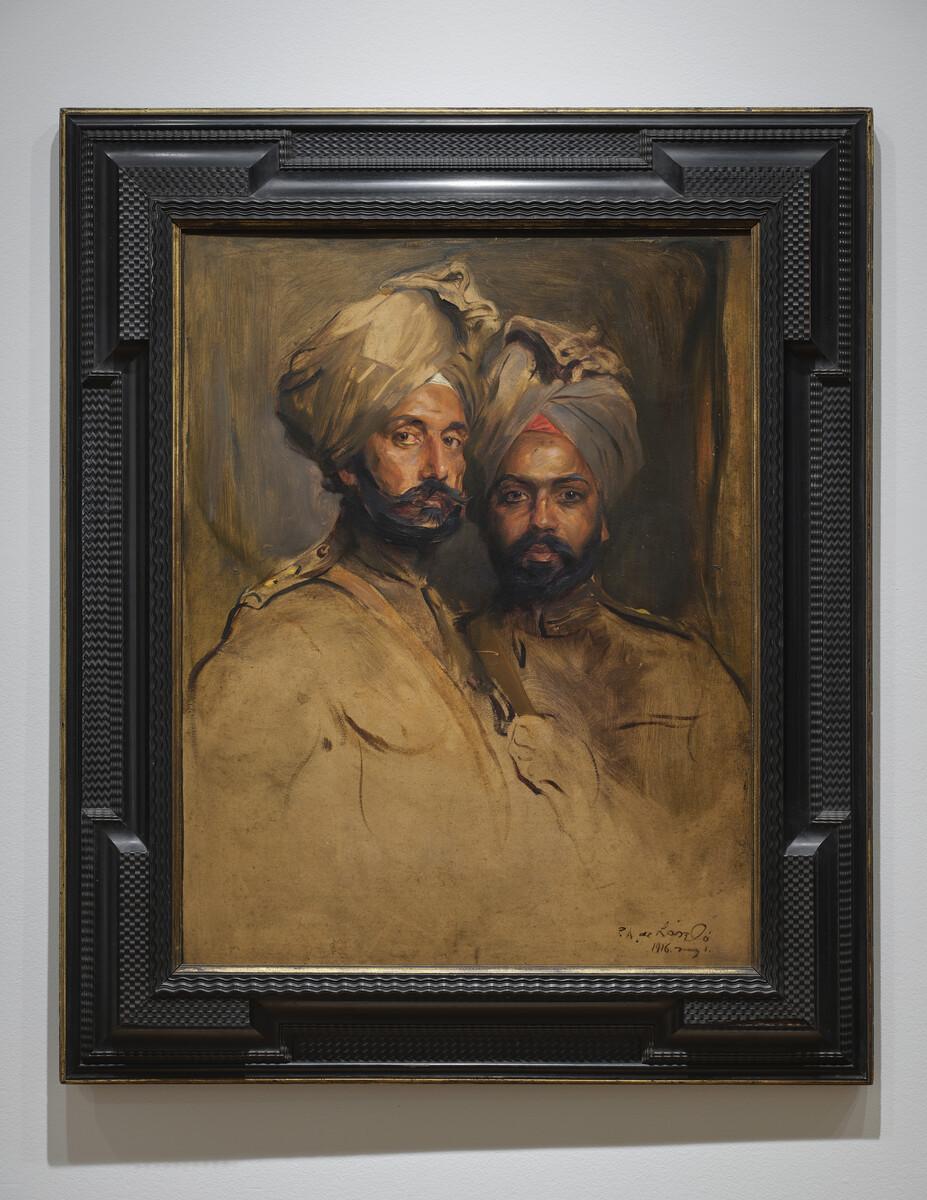
Philip Alexius de László, Risaldar Jagat Singh and Risaldar Man Singh, 1916. Oil on board, Overall: 90.2 × 69.9 cm. Private Collection.
“Historically, Canadians have little understood the extraordinary contributions of the British Indian Army during the First World War,” says Adam Welch, Interim Head, Modern & Contemporary Art and Curator, Modern Art at the AGO. “With one in six British soldiers coming from the Indian subcontinent and 20% of those Sikh, de László’s Risaldar Jagat Singh and Risaldar Man Singh give powerful visibility to this still underrepresented story.”
The broader historical context is essential to understanding the painting’s significance. Jagat Singh and Man Singh were part of this vast mobilization of colonial troops, serving in regiments deployed to the Western Front. In 1916, shortly after passing through de László’s studio, they were both sent to France, where their regiments would soon be drawn into the campaigns that culminated in the Battle of the Somme. Both men survived the war.
Although the precise circumstances around the making of the work remain unclear, de László appears to have formed a particular attachment to the portrait, which he retained in his studio for the rest of his life. This attachment may suggest that he recognized in his sitters something of a similarly precarious position, one that would come to shape his own trajectory as a Hungarian artist in the United Kingdom. Indeed, despite his success and close ties to British high society, the shifting political climate of wartime Britain exposed the limits of that belonging although he was naturalized as a British subject in 1914, he was nevertheless interned as an “enemy alien” in 1917–18. He was released in 1918 and fully cleared the following year.
“Portraiture is always relational,” explains Welch. It is shaped not only by the artist and the sitter, but also by the viewer—and that relationship continues to change over time as the painting is shown in different contexts.”
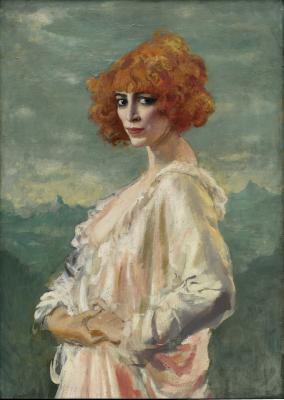
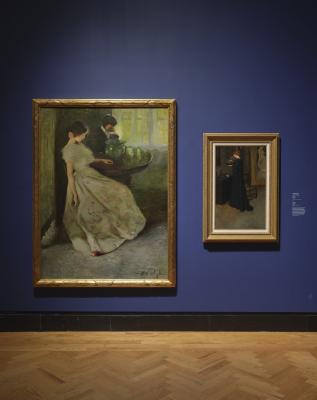
On the AGO walls, the painting enters a dialogue with key works in the AGO Collection, including Augustus John’s The Marchesa Casati (1919), Amedeo Modigliani’s Portrait of Mrs. Hastings (1915), and John Singer Sargent’s Portrait of Joseph Joachim (1904). Its presentation here takes on particular resonance, bringing into focus the ties that connect these histories to the present, especially in the Greater Toronto Area, home to vibrant Sikh communities. The generous loan of this painting offers an opportunity to connect the history of art with lived histories—inviting us to reflect on the past in the present.
Risaldar Jagat Singh and Risaldar Man Singh is currently on view in the Irina Moore Gallery (gallery 250), on Level 2 of the AGO.
![Keith Haring in a Top Hat [Self-Portrait], (1989)](/sites/default/files/styles/image_small/public/2023-11/KHA-1626_representation_19435_original-Web%20and%20Standard%20PowerPoint.jpg?itok=MJgd2FZP)