Jun 25, 2026
Faces of the AGO
Here are 10 painted portraits you can experience on your next visit to the AGO
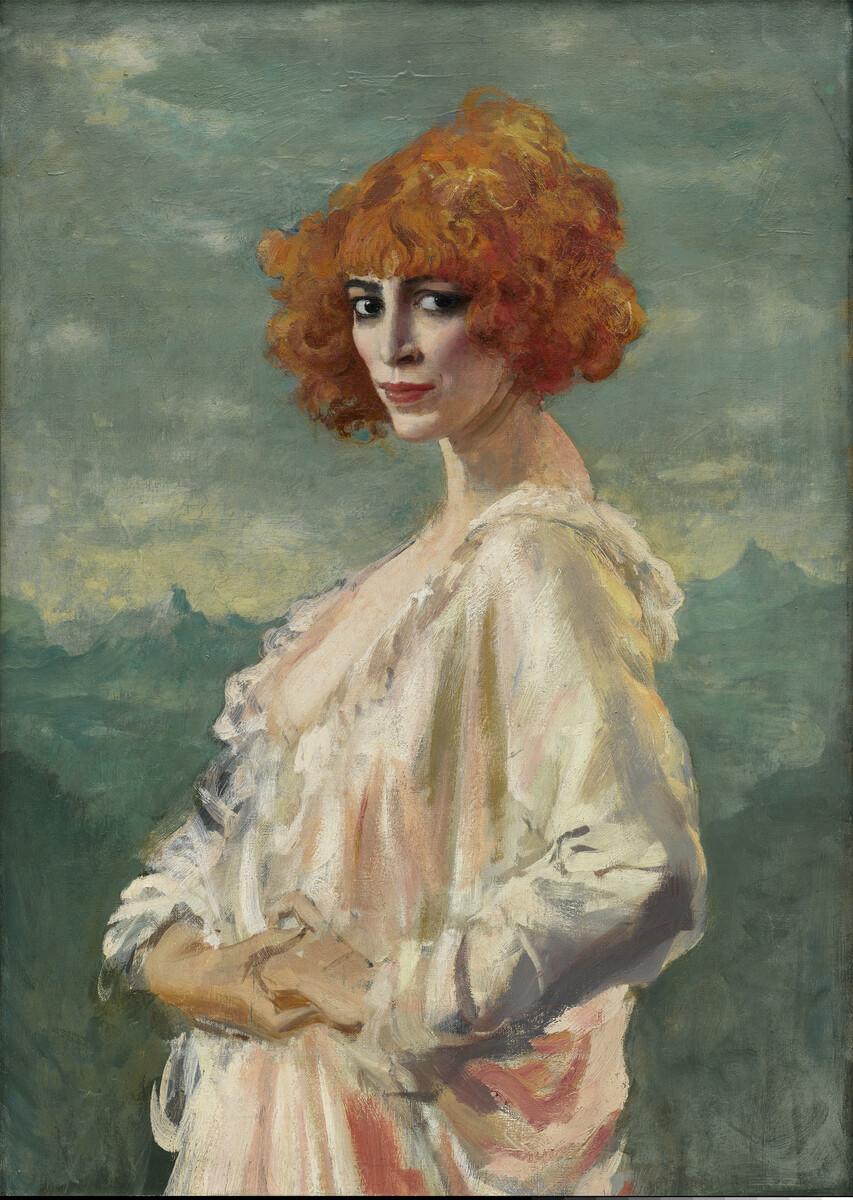
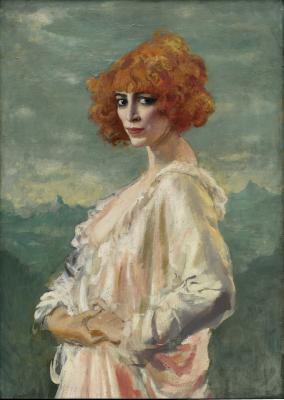
Augustus Edwin John. The Marchesa Casati, 1919. Oil on canvas, 96.5 x 68.6 cm. Art Gallery of Ontario. Purchase, 1934. © Art Gallery of Ontario. 2164
A way to immortalize the dead, a tool to convey power and status, or a loving keepsake – the rich history of portraiture goes back thousands of years. Over time, the art of portraiture has evolved, with paintings, drawings, and sculpture being the primary media until the popularization of photography during the 20th- century. Artists also began to branch away from literal or realistic portrayals, experimenting with alternative ways to depict the essence of their sitters.
From 16th- century royal commissions to portrayals of modern Canadian artists by their contemporaries, a range of portraits is currently on view at the AGO. Some feature familiar faces, while others introduce new ones. A small sample of the many portraits on view; here are 10 painted portraits you can experience on your next visit to the AGO.
Please note that works in the Gallery are always on rotation, so the works in these spaces may change or be taken off view over time.
1. Marchesa Casati (Above)
She’s got the stare — and hair — to stop you in your tracks.
Let’s start with arguably one of the most iconic portraits at the AGO: The Marchesa Casati (1919) by Augustus John (1878-1961). John’s captivating depiction of Marchesa Luisa Casati is a fitting tribute to the eccentric life of this Italian socialite.
Born into a wealthy family, Casati was the quintessential modern woman and a performance artist before her time. She shocked Europe with her theatrical costumes, makeup, and dyed hair alongside her menagerie of cheetahs, monkeys, and cobras. She was known for throwing over-the-top parties, where she entertained socialites, poets, and artists. She was also notorious for having extra-marital affairs, including one with the artist of this portrait. John painted four of the 125 known portraits of Casati, with this portrait being regarded as the most successful.
Take in Casati’s allure by visiting The Marchesa Casati by Augustus John on Level 2 of the AGO in the Irina Moore Gallery (gallery 250).
2. Eleonora Susette
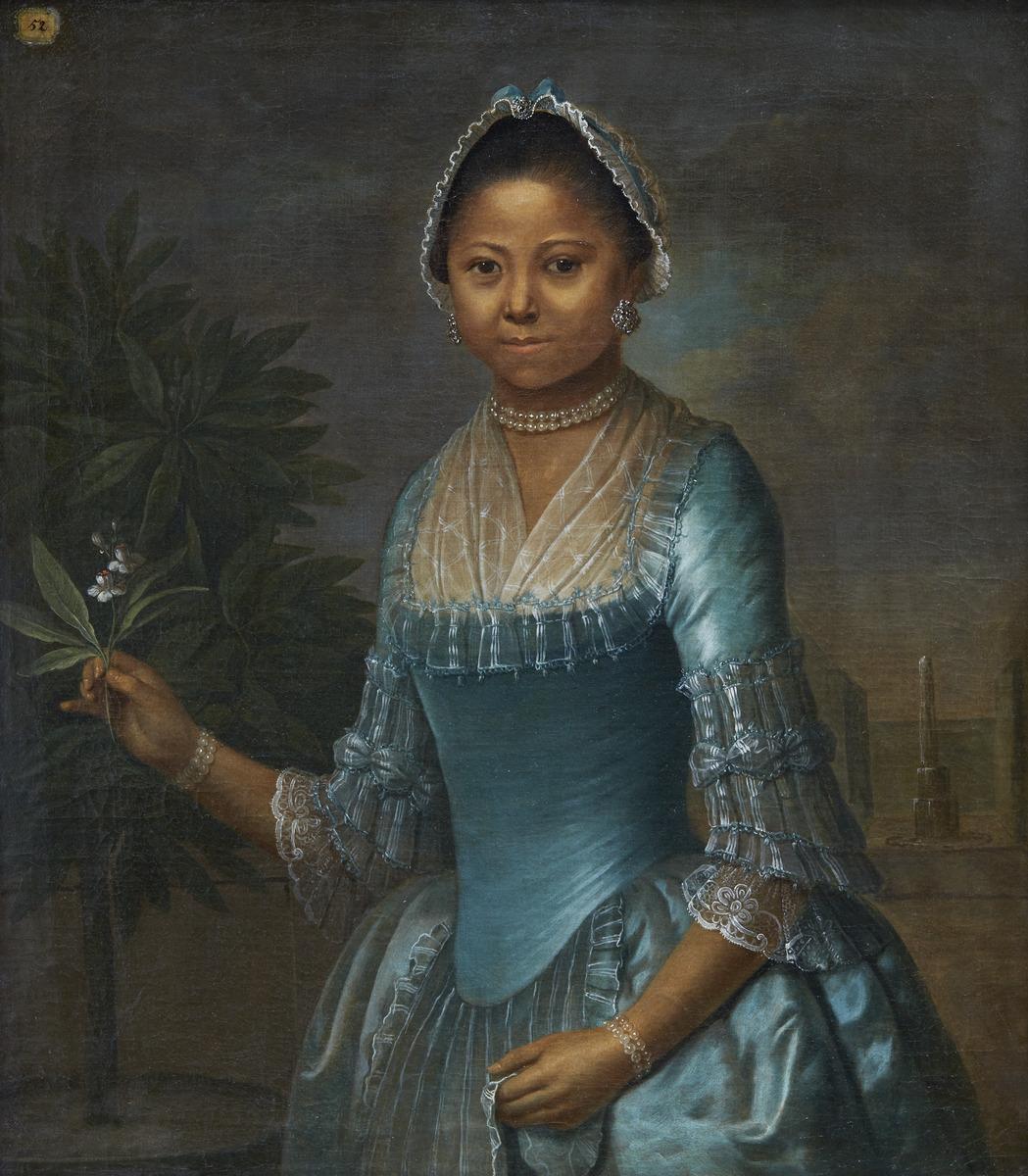
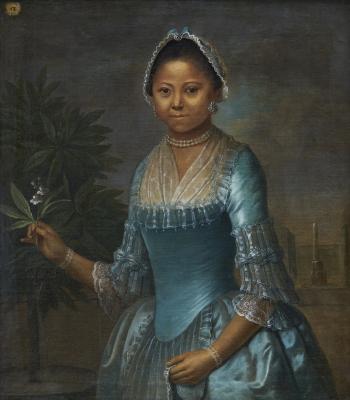
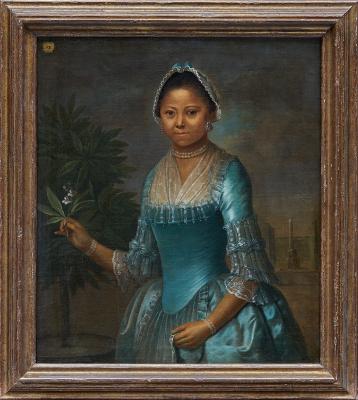
Jeremias Schultz. Portrait of Eleonora Susette, 1775. Oil on canvas. Overall: 80 × 56.2 cm. Art Gallery of Ontario. Purchase, with funds from the European Curatorial Committee, 2020. Photo © AGO. 2019/2437
When the AGO acquired this portrait in 2020, the identity of the sitter was long lost to time. After six years of research, a podcast, and the unlikely convergence of two research journeys, Eleonora Susette’s identity was finally restored.
Eleonora Susette was around 18 years old when this portrait was commissioned. Born in Berbice, a Dutch colony in present-day Guyana, she was an enslaved worker for the governors of the colony. In 1774, she was brought to Amsterdam by Beata Louise Schultz, the wife of the late governor of Berbice. She stayed in Amsterdam for eight months, and during this time, Schultz commissioned this portrait of Eleonora Susette from her cousin, Berlin-born artist Jeremias Schultz (1722-1800).
This portrait is an exceptional depiction of an enslaved woman of colour in 18th – century European Art in that it deviates from common depictions of servitude, sexualization, and exoticization.
Learn more about the journey to identify Eleonora Susette here. Experience the significance of this portrait by visiting Portrait of Eleonora Susette by Jeremias Schultz on Level 1 of the AGO in the Frank P. Wood Gallery (gallery 123).
3. Issac Abrahamsz Massa
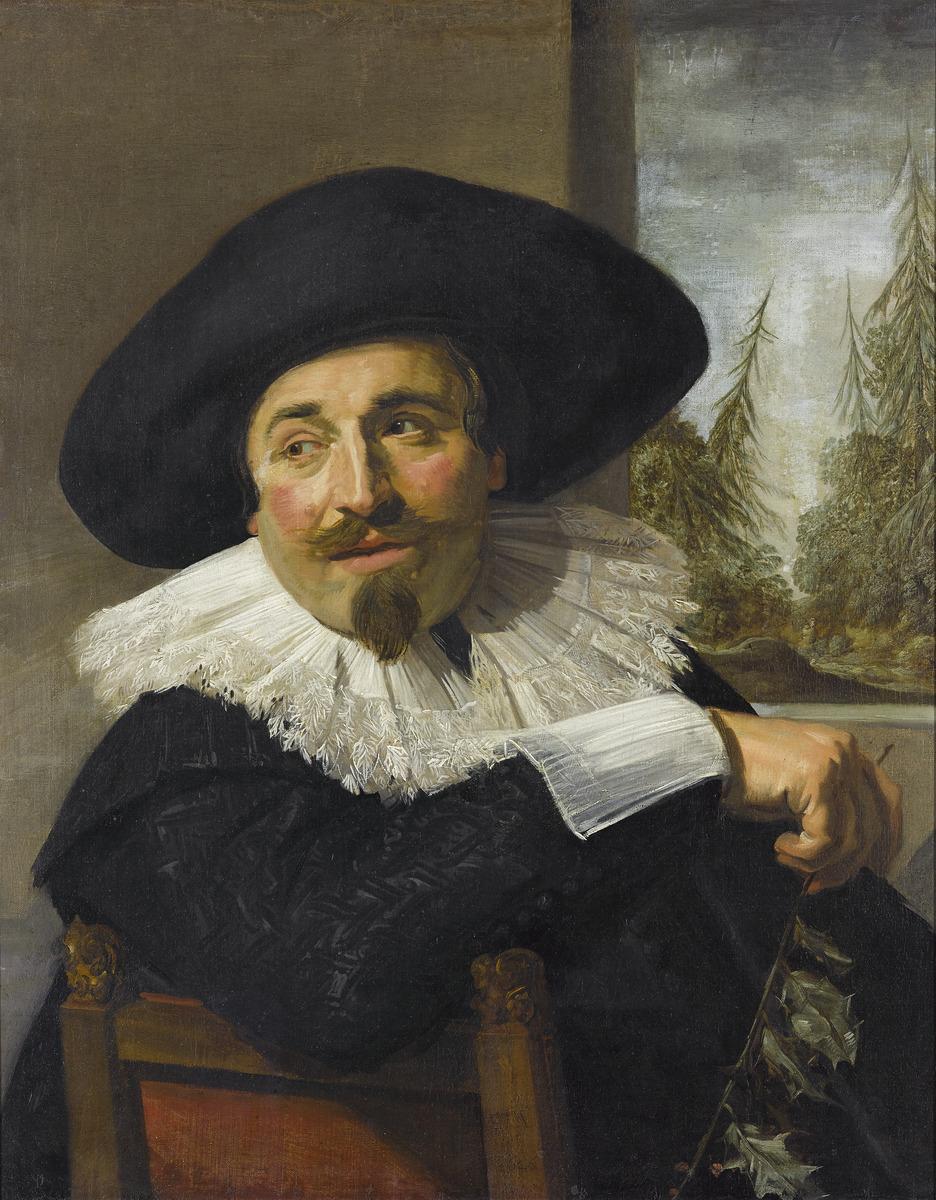
Frans Hals. Isaac Abrahamsz. Massa, 1626. oil on canvas, Overall: 79.7 × 65.1 cm. Art Gallery of Ontario. Bequest of Frank P. Wood, 1955. Photo © AGO. 54/31
Subtle details of this portrait reveal an intimate friendship between the sitter and the painter.
In this portrait of Dutch trader Issac Abrahamsz Massa, he leans forward casually, his arm resting on the back of his chair. The portrait is not overly idealized – instead, he exudes an easygoing charm. This portrait was radical for its time; most formal portraits from the 1600s depicted their sitters facing forward and upright. However, since the artist Frans Hals (1581-1666) and Massa were close friends, Hals had the artistic license to paint his friend in this relaxed manner. Hal’s contemporary, Pieter de Molijn (1565-1661), collaborated on this portrait to paint a forest of spruce trees in the window behind Mass to represent Russia, which Massa visited frequently.
Visit Frans Hals and Pieter de Molijn’s radical portrait, Issac Abrahamsz Massa on Level 1 of the AGO in the Walter C. Laidlaw Gallery (gallery 119).
4. Pierre Louis Alexandre
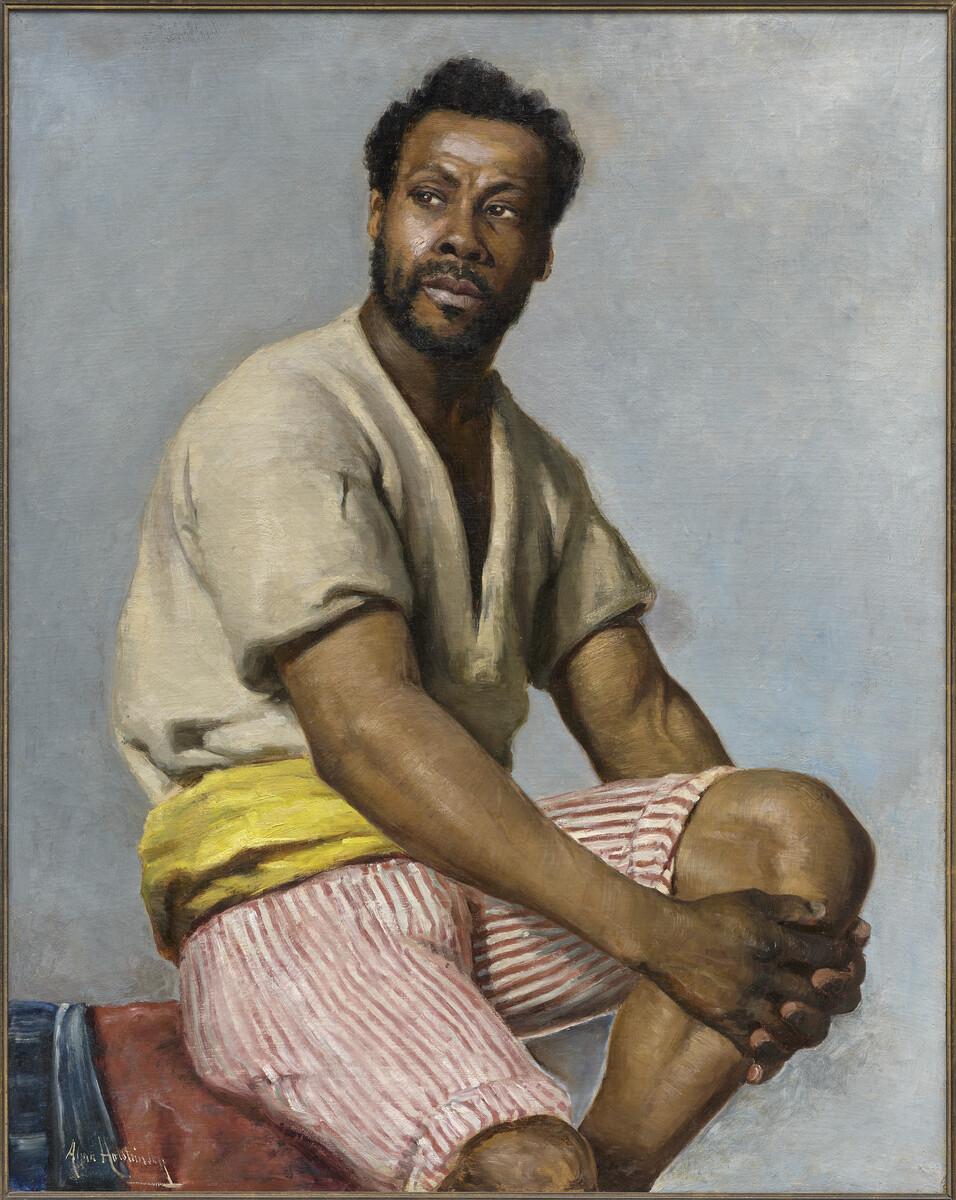
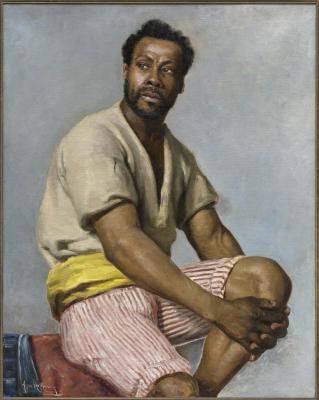
Alma Holsteinson. Portrait of Pierre Louis Alexandre (1844-1905), c. 1879-80. Oil on canvas, Overall: 92 × 74 cm. Art Gallery of Ontario. Purchase, with funds by exchange from the R. Fraser Elliott Estate, 2025. Photo © AGO. 2025/1061
Pierre Louis Alexandre was likely the most frequently depicted Black sitter in pre-20th-century European Art, and luckily, one of these portraits has made its way into the AGO Collection.
Painted by Alma Holsteinson (1859-1934), Portrait of Pierre Louis Alexandre (1879-80) is one of multiple portraits painted of Alexandre from a studio portraiture class at the Royal Swedish Academy of Fine Arts. Alexandre was born in French Guiana in 1844, likely into slavery. He fled the country by ship and eventually arrived in Stockholm in 1863. He became a dockworker at the city's ports and, when the harbours froze in the winter, he worked as a model at the Royal Swedish Academy of Fine Arts. He became a regular sitter for at least nine years between 1879 and 1903 and was depicted by several well-known Swedish painters.
Learn more about Alexandre’s legacy here, and visit this portrait of him on view on Level 1 of the AGO in the Sarah and David Macdonald Gallery (gallery 130).
5. Henry VIII
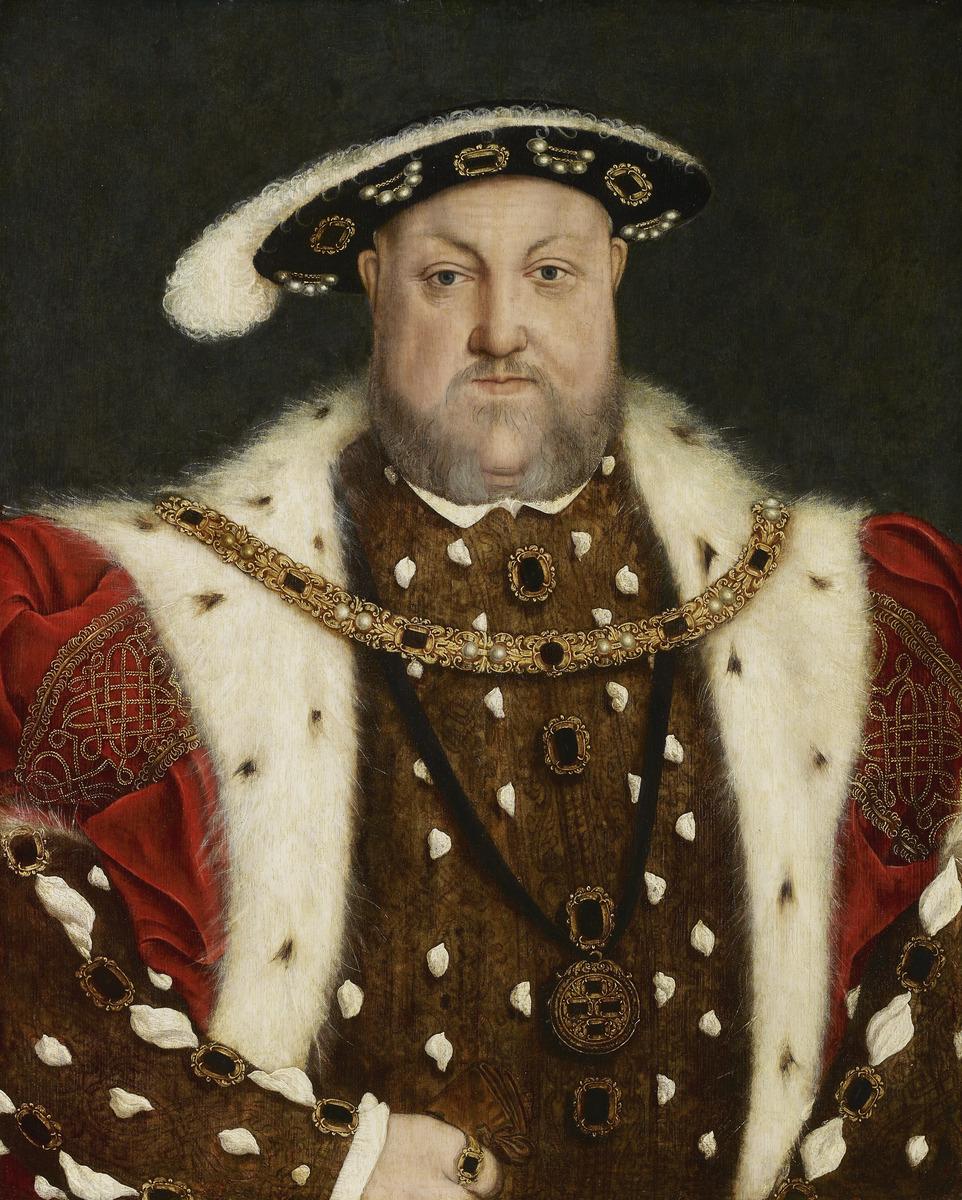
Circle of Hans Holbein, the younger. Portrait of Henry VIII (1491-1547; reigned 1509-47), 16th century. Oil on oak panel, Overall: 64 x 51.8 cm. Art Gallery of Ontario. Anonymous Gift, 2000. Photo © AGO. 2000/172
Don’t worry, it’s just a portrait – he can’t marry (or divorce or behead) you.
Tucked away in the Thomson Collection for European Art is a portrait of the notorious King Henry VIII, widely known for his tumultuous six marriages. This portrait is a recreation of a portrait originally created by Hans Holbein, who was one of Henry’s court painters. The original portrait by Holbein was created in 1537 after King Henry commissioned a series of paintings while redecorating his palace.
In the Middle Ages, portraits were a tool to assert power and authority, and Portrait of Henry VIII (1537) is no exception. This portrait depicts the king confidently, fashioned in opulent silks, furs, and jewels.
As SIX The Musical puts it, “Don’t lose your head,” and pay Henry VIII a visit through Portrait of Henry VIII on Level 1 of the AGO in gallery 113.
6. Harriet Boulton Smith
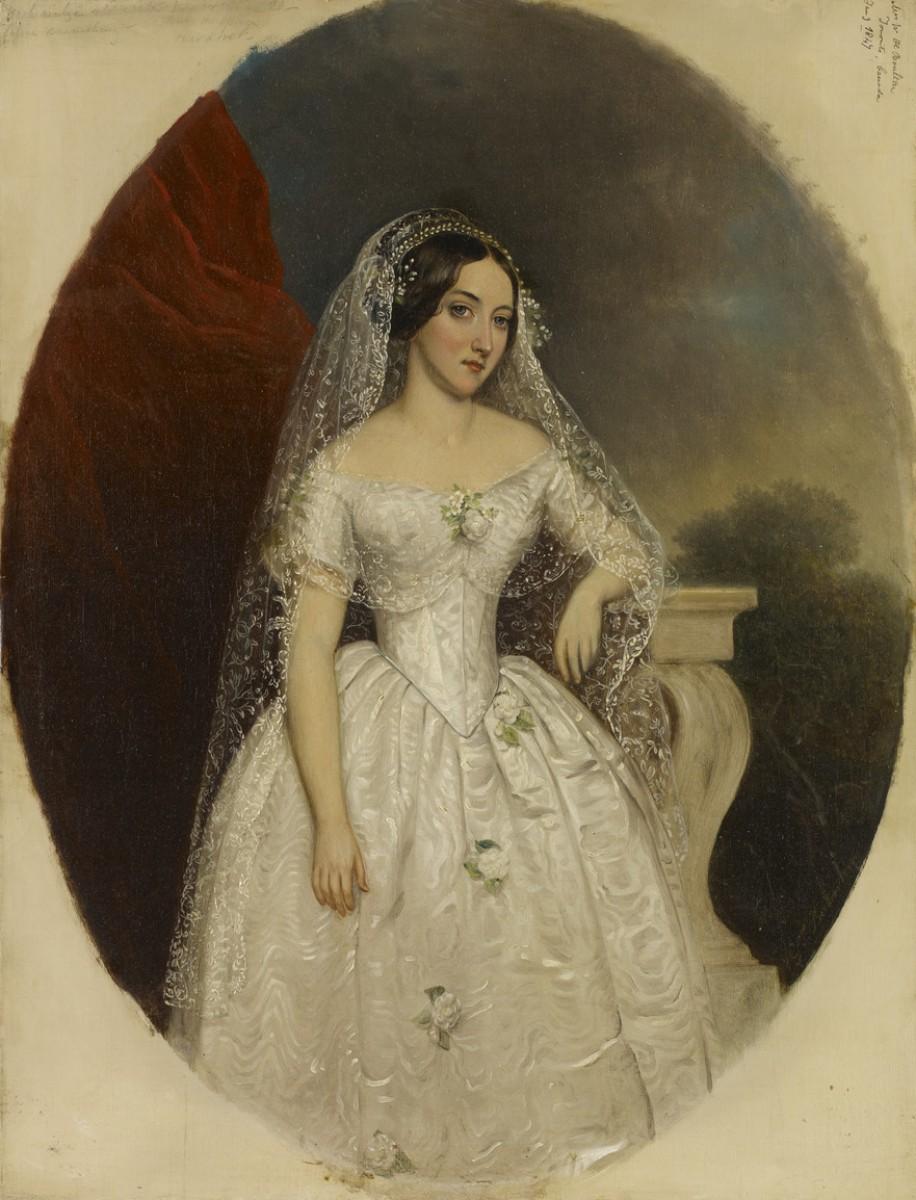
George Theodore Berthon. Portrait of Mrs. William Henry Boulton (Harriet), 1846. oil on canvas, Overall: 59.1 x 44.5 cm. Art Gallery of Ontario. Goldwin Smith Collection, Bequest of 1911. Photo © AGO. GS49
This portrait solidifies a moment in AGO history. The sitter, Harriet Boulton Smith, bequeathed her family home, The Grange, as the first location of the AGO, known as the Art Gallery of Toronto at the time. The oldest brick residence in the city, The Grange remains part of the AGO and now operates as the Norma Ridley Members’ Lounge.
Portrait of Mrs. William Henry Boulton (Harriet) (1846) by George Théodore Berthon was painted when Smith was 21 and preparing to marry her first husband, William Boulton, who was the mayor of Toronto. Berthon was a favoured artist among high-society Torontonians.
Experience a piece of AGO history by visiting Portrait of Mrs. William Henry Boulton (Harriet), on view on Level 2 of the AGO in the J.S. McLean Centre for Indigenous + Canadian art in the John & Elizabeth Tory Gallery (gallery 226).
7. Beatrice Hastings
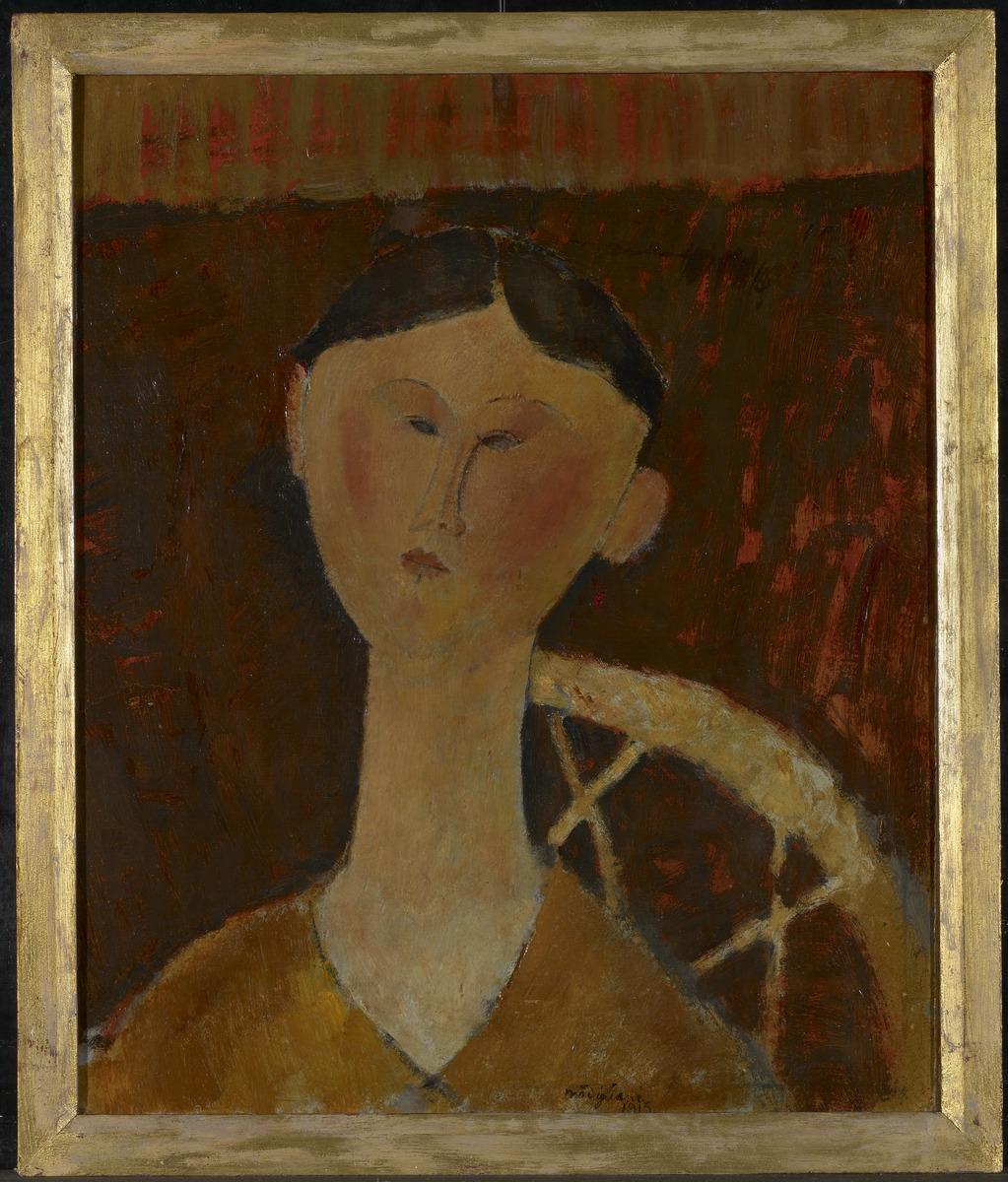
Amedeo Modigliani. Portrait of Mrs. Hastings, 1915. Oil on paperboard, Overall: 55.5 x 45.4 cm. Art Gallery of Ontario. Gift of Sam and Ayala Zacks, 1970. Photo © AGO. 71/260
Italian artist Amedeo Modigliani (1884-1920) depicts his housemate, English writer Beatrice Hastings (1879-1943), with an elongated neck and mask-like features. This portrait reflects how Modigliani’s study of West African Art influenced his painting style and is one of a series of works he painted of Hastings, his lover from 1914 to 1916 and the subject of some of his most iconic portraits.
Initially striving to be a sculptor, Modigliani made over 25 stone carvings before his poor health and financial struggles forced him to focus on painting. Yet, a sculptural quality can still be observed in his portraits.
See Modigliani’s Portrait of Mrs.Hastings on Level 2 of the AGO in the Irina Moore Gallery (gallery 250).
8. June Clark
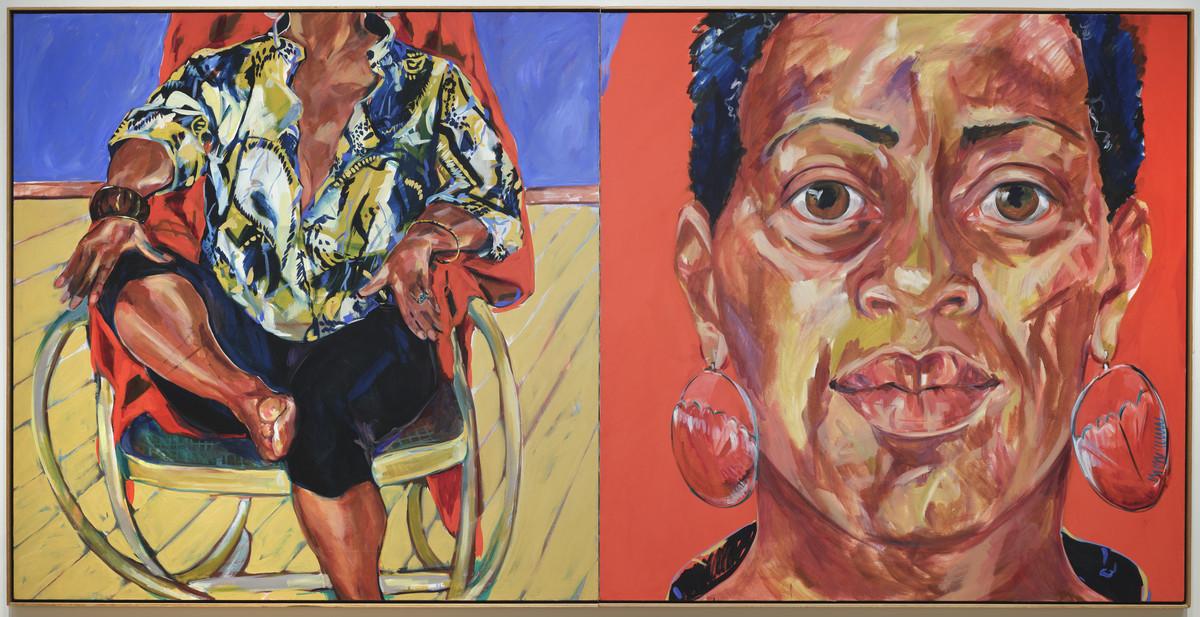
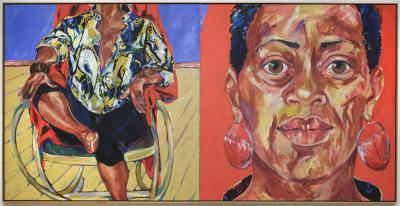
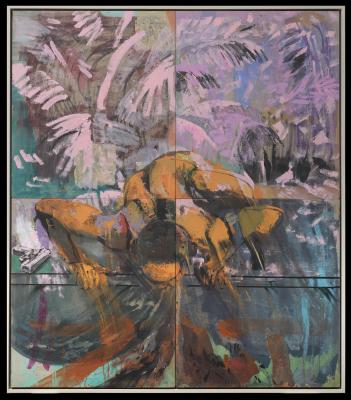
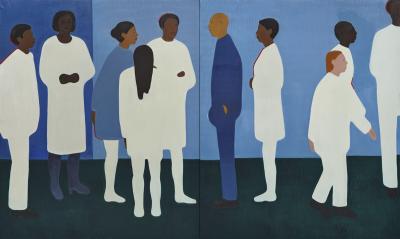
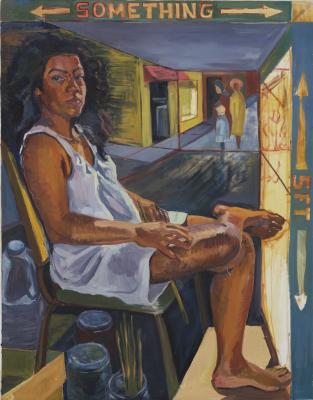
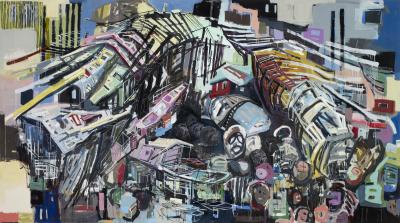
Lynn Donoghue. June, 1991. Acrylic on canvas, Panel: 156 × 308 cm. Art Gallery of Ontario. © Estate of Lynn Donoghue.
In this portrait, Lynn Donoghue (1953-2003) depicts her friend and artist, June Clark. A precursor to the contemporary figuration movement, Donoghue was a celebrated Canadian painter known for her large-scale, boldly coloured portraits of her friends, prominent figures in Toronto’s cultural community, as demonstrated in June (1991). Donoghue painted this portrait of Clark in the summer of 1991. For her 50th birthday, Clark’s husband surprised her by purchasing the painting. Reflecting on the portrait, Clark shared, “Lynn had a lot of friends, but, for me, she was my best friend at the time.”
American-born and Toronto-based, Clark is best known for her photo etchings and sculptural assemblages investigating themes of Black diasporic identity, exile, and memory work. She largely reflects on her childhood in Harlem and migration to Canada as a young adult.
Learn more about Clark and her practice in this Q&A. Visit June on Level 2 of the AGO in the Wilder Gallery (gallery 228) in the J.S. McLean Centre for Indigenous + Canadian Art.
9. Mary Hiester Reid
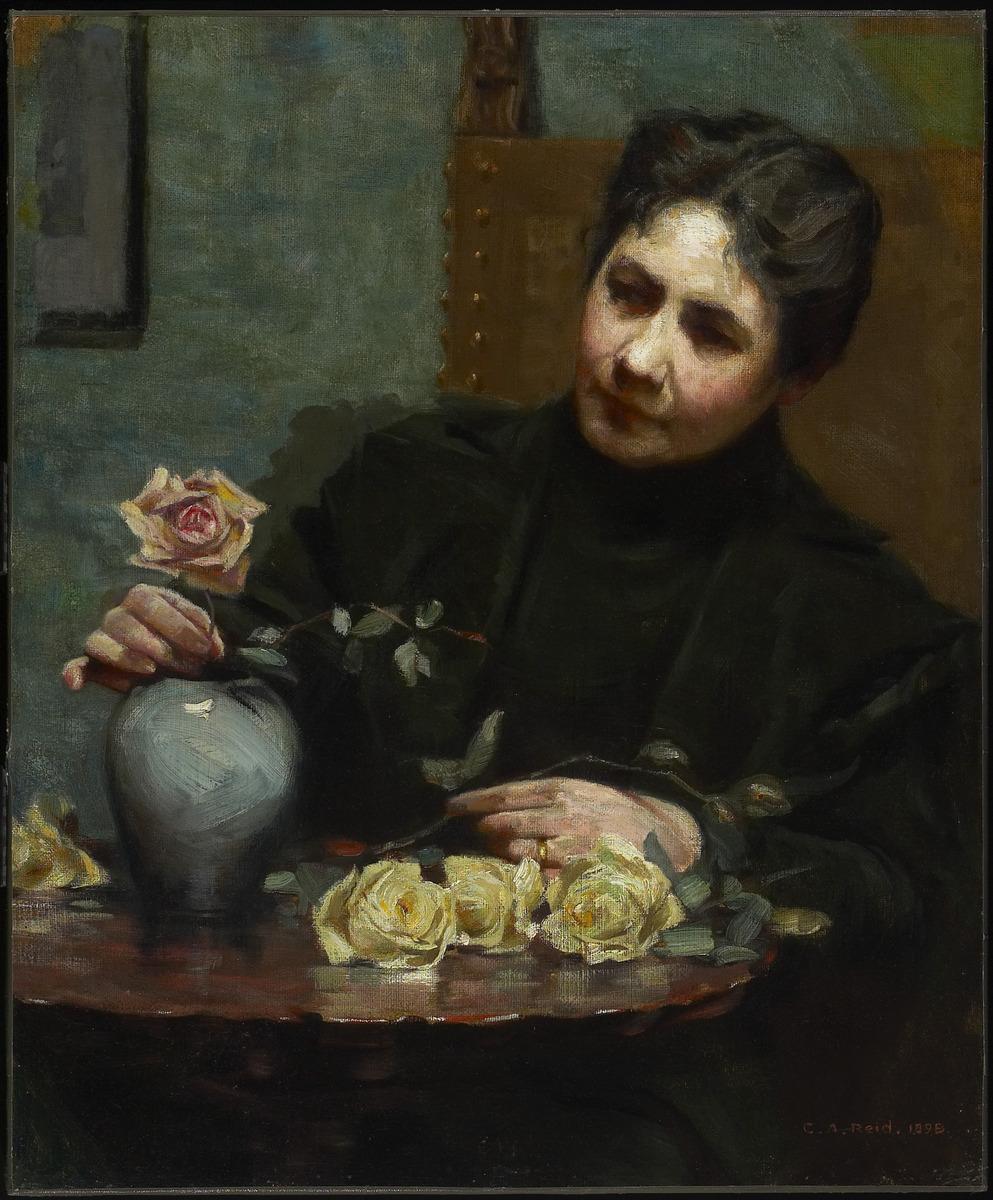
George Agnew Reid. Mary Hiester Reid, 1898. Oil on canvas, Overall: 76.8 x 64.1 cm. Art Gallery of Ontario. Gift of Mary Wrinch Reid, Toronto, 1954. Photo © AGO. 53/36
Mary Hiester Reid (1854-1921) was a trailblazing artist and teacher. Not only did she achieve success at a time when women artists seldom had the opportunity to study and exhibit art, but she also made history as the first woman artist to have a solo exhibition at the AGO. Her solo exhibition was also the largest in the Gallery’s history at the time.
Hiester Reid was celebrated for her floral still lifes, interiors, and landscapes. She often depicted the very flowers she grew in her garden in Wychwood Park. In Mary Hiester Reid (1898), Hiester Reid’s husband, artist George Agnew Reid (1860-1947), depicts her artfully arranging a floral still life before composing the painting.
Learn more about Hiester Reid’s historical exhibition here. Visit Mary Hiester Reid on Level 1 of the AGO in the Richard Barry Fudger Memorial Gallery (gallery 125).
10. Joseph Joachim
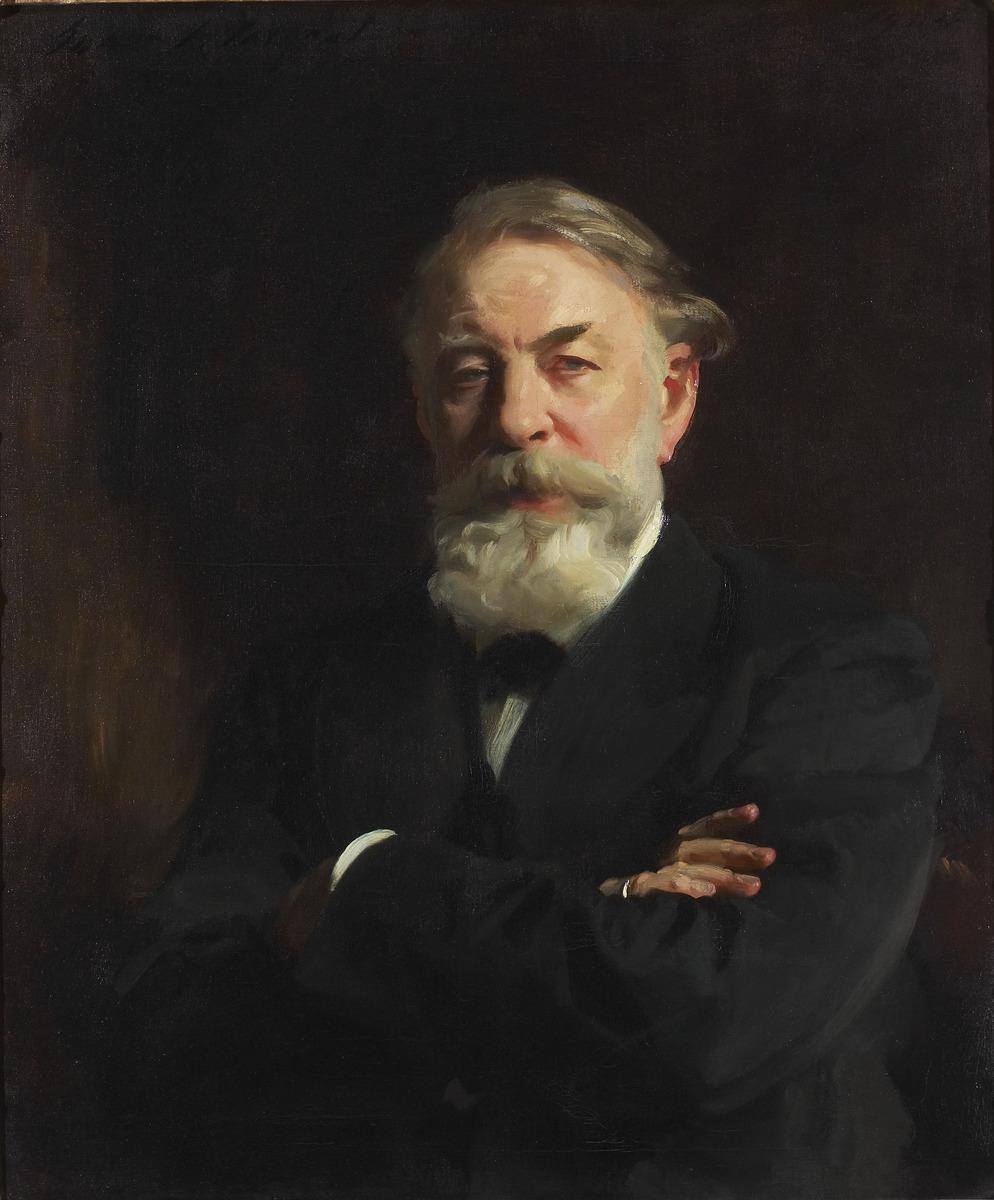
John Singer Sargent. Portrait of Joseph Joachim, 1904. Oil on canvas, Overall: 87.6 x 73 cm. Art Gallery of Ontario. Gift of Mr. and Mrs. Frank P. Wood, 1928. Photo © AGO. 901
Joseph Joachim (1831-1907) was a Hungarian violinist, composer, and conductor. This portrait commemorates the anniversary of 13-year-old Joachim taking a trip to London with German composer Felix Mendelssohn. Upon being asked to paint this portrait, John Singer Sargent (1856-1925) declared her was “sick of portrait painting,” but eventually relented to the request, saying, “Well, if it’s Joachim, I must do it.”
Former U.K. Prime Minister Balfour presented Joachim with the painting, paid for by public subscriptions. In 1907, three years after this portrait, Sargent decided to focus on watercolours and stopped taking portrait commissions.
Pay Portrait of Joseph Joachim (1904) a visit on Level 2 of the AGO in the Irina Moore Gallery (gallery 250).
Are portraits not your speed? Want to explore more of what the AGO has to offer? Check out the exhibitions and installations currently on view.
![Keith Haring in a Top Hat [Self-Portrait], (1989)](/sites/default/files/styles/image_small/public/2023-11/KHA-1626_representation_19435_original-Web%20and%20Standard%20PowerPoint.jpg?itok=MJgd2FZP)