Apr 14, 2026
A Street Named Coenties Slip
Learn more about the Manhattan street that changed modern art history
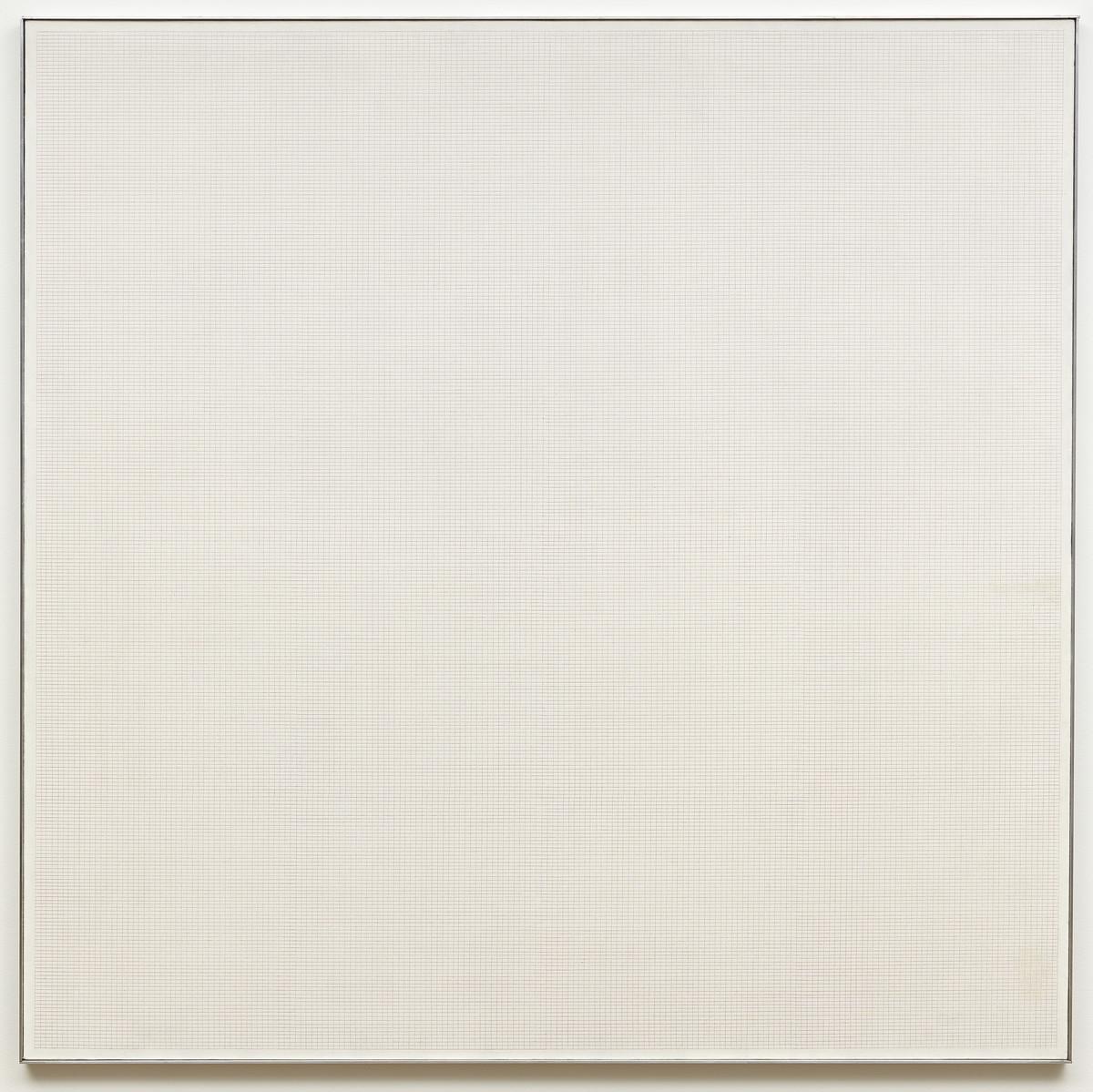
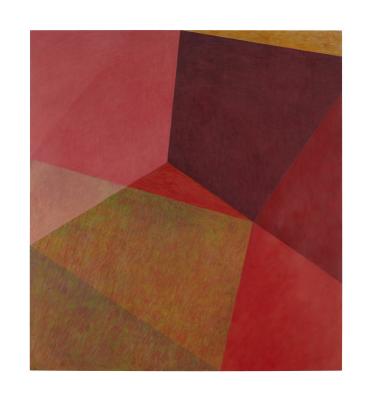
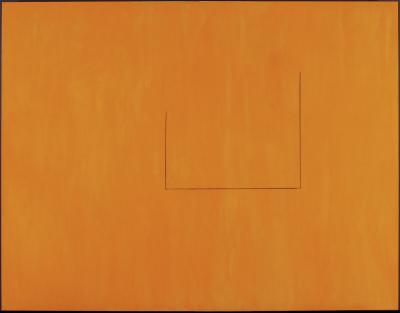
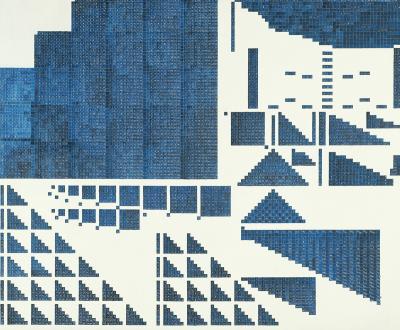
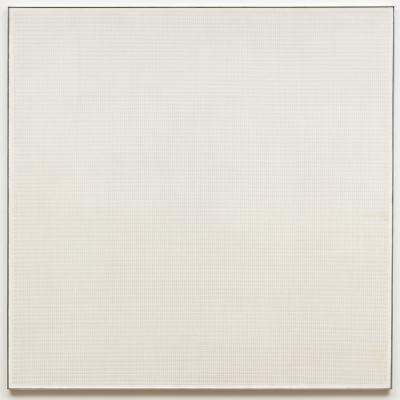
Agnes Martin. The Rose, 1964. Oil, red and black pencil, sizing on canvas, 182.6 x 182.7 cm. Art Gallery of Ontario. Purchase with assistance from Wintario, 1979. © Art Gallery of Ontario. 78/751
In the 1940s and 50s, the identity of American art was largely defined by Abstract Expressionism. Artists like Jackson Pollock and Mark Rothko used intuitive brushstrokes, drips and splatters to create the first major art movement in post-war America, with its epicentre in New York City.
While Abstract Expressionism dominated the headlines, not every artist in New York identified with the movement. In the mid 1950s, a group of forward-thinking artists, each with a singular approach to their practice, began congregating and creating on an unlikely street in lower Manhattan. The ecosystem they built on the Coenties Slip (also known as The Slip) became the pulse of the New York avant-garde, and a pivotal chapter in modern art history. Two works associated with the Coenties Slip are on view now as part of the AGO exhibition Moments of Modernism.
Located in what is now the financial district of lower Manhattan, Coenties Slip was originally an artificial waterway for ships from New York’s East River. It was later filled in with land and became a bustling trade zone around the turn of the 20th century. By the early 1950s, changes to the city and economy left the neighbourhood desolate, especially in terms of housing. Empty warehouse buildings with large loft units lined the two-block-long street. Although these units came with shabby conditions and poor insulation not fit to inhabit, they had potential for serious artists who needed cost-efficient spaces to work.
In 1954, renowned American painter Ellsworth Kelly was among the first to move into The Slip, during the early stage of his career. He was returning home to New York in search of a fresh start, after several years painting in France. Once settled in, he invited his close friend and fellow artist Jack Youngerman to come and lease a dilapidated loft of his own. Youngerman agreed, bringing along his wife, actor Delphine Seyrig, and their small child. Soon after, Kelly convinced several other artist friends to come shack up on The Slip and start practicing there: Agnes Martin, Robert Indiana and James Rosenquist.
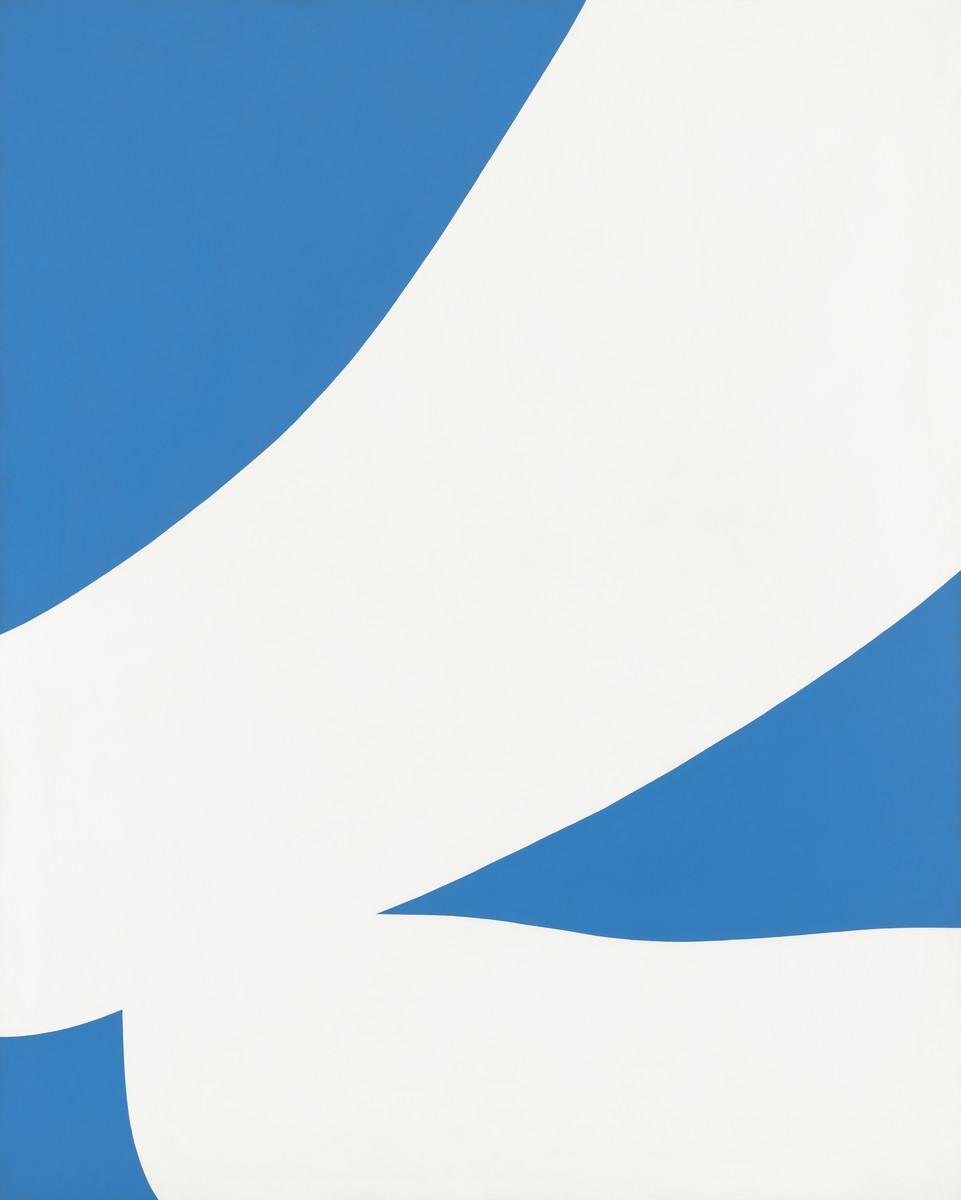
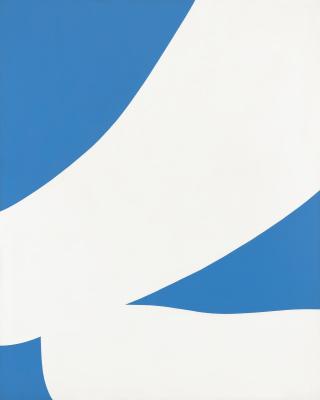
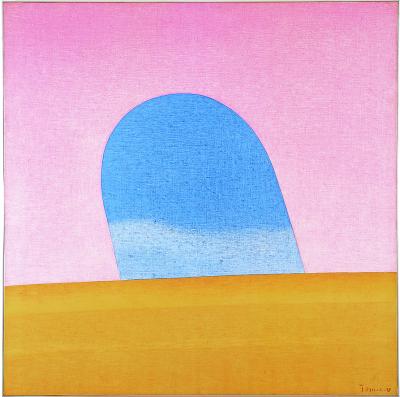
Ellsworth Kelly. White Blue, 1960. Oil on canvas, Overall: 215.9 x 172.7 cm. Art Gallery of Ontario. Gift from the Women's Committee Fund, 1963. © Ellsworth Kelly Foundation. 62/63
The community they would go on to build over the next decade was not based on a communal approach to artmaking, but on a shared environment that nurtured their individual growth. During a 2023 talk about her book, The Slip: The New York Street That Changed American Art Forever, author and critic Prudence Peiffer noted, “this setting fostered what I call collective solitude. It’s a model of creativity that is about being together in a very specific place at a very specific time, without denaturing each individual, locked-away story.” The influence of The Slip on the New York art scene grew quickly. Visits from influential artists like Robert Rauschenberg and Jasper Johns became a regular occurrence. In 1964, even Andy Warhol shot a film in a ramshackle Slip warehouse.
On view now as part of Moments in Modernism is a major painting by Ellsworth Kelly from the AGO collection, White and Blue (1954). Created the year Kelly moved into The Slip, this painting represents the type of striking colour field work Kelly was most known for. Taking its cues from nature, like much of Kelly’s oeuvre, White and Blue is based on a drawing of an apple, its stem and leaves, enlarged massively.
Additionally on view in the exhibition is Agnes Martin’s The Rose (1964). Created during her last few years on The Slip, this large-scale work appears as completely unmarked negative space with a faint pinkish hue. However, as you approach the canvas, an expansive grid of tiny squares is eventually exposed. What is astonishing, and a testament to Martin’s artistic rigour, is that the entire grid is actually hand-drawn using red and black pencils. These tiny and unique squares ultimately form a wall of small imperfections situated within a large, perfect square.
Witness these two masterworks by foundational residents of the Coenties Slip community, Ellsworth Kelly and Agnes Martin, now as part of Moments in Modernism at the AGO. Move quickly – this exhibition closes on April 26, 2026.
Located on Level 4 of the AGO, the exhibition is co-curated by Debbie Johnsen, Assistant Curator of Contemporary Art, and Stephan Jost, Michael and Sonja Koerner Director, and CEO. Moments in Modernism features work that will form the cornerstone for the expansion of the new Dani Reiss Modern and Contemporary Gallery, under construction now. The new building is being designed by architects Diamond Schmitt, Selldorf Architects and Two Row Architect to showcase the AGO's growing collection of modern and contemporary art.
Supporting Sponsor

Generous Support
Ira Gluskin & Maxine Granovsky Gluskin
Jay Smith & Laura Rapp
Marion & Gerald Soloway
Anonymous


![Keith Haring in a Top Hat [Self-Portrait], (1989)](/sites/default/files/styles/image_small/public/2023-11/KHA-1626_representation_19435_original-Web%20and%20Standard%20PowerPoint.jpg?itok=MJgd2FZP)