May 5, 2026
The Gardens of the AGO
Can’t wait for the spring flowers to bloom? Come see the gardens on view at the AGO
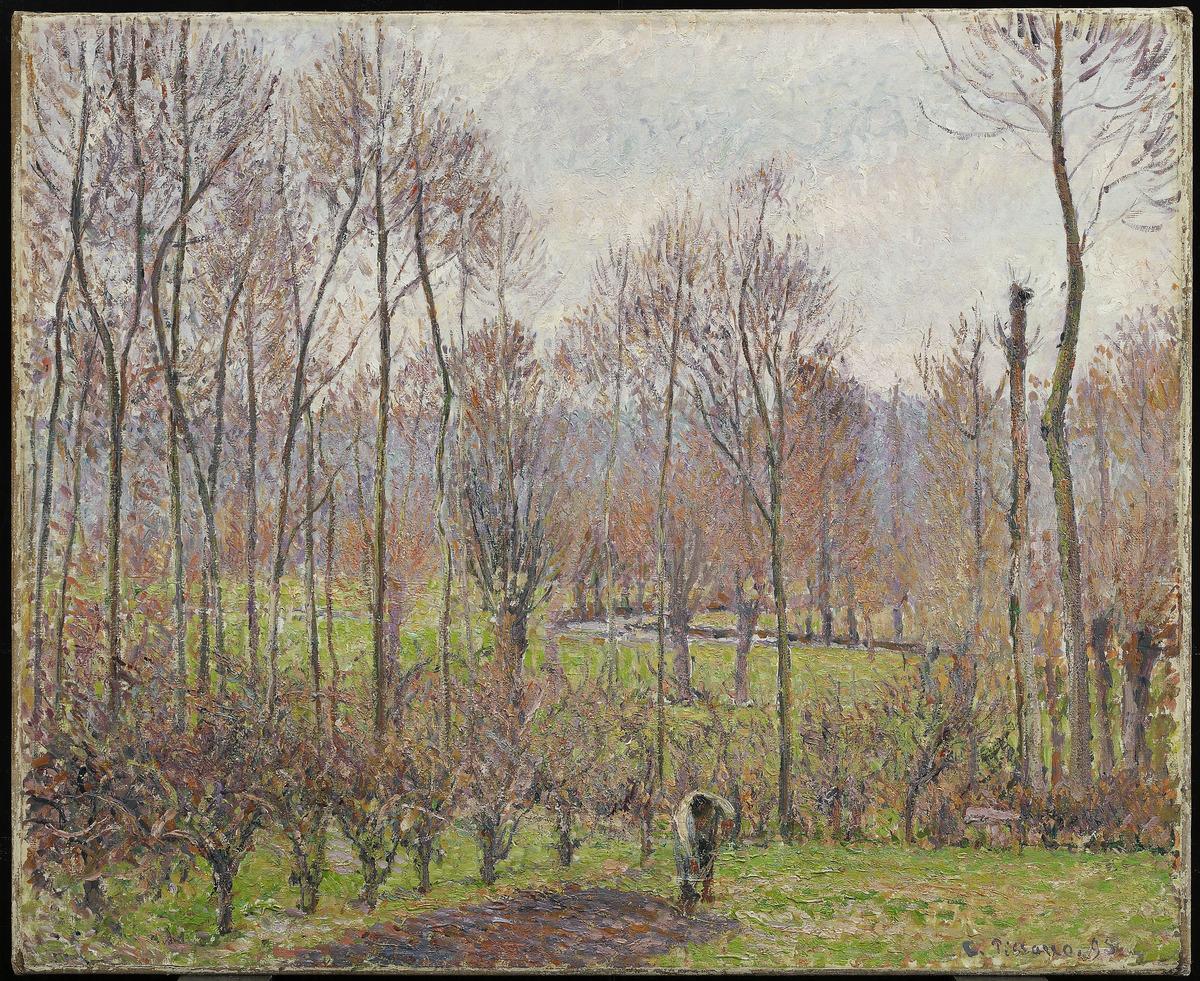
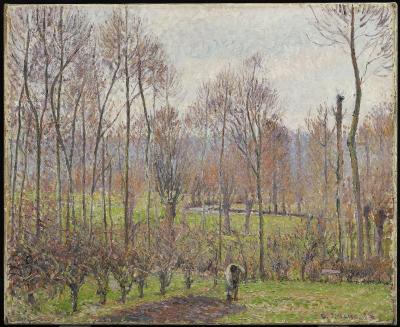
Camille Pissarro. Peupliers, temps gris, Éragny, 1895. Oil on canvas, Overall: 61 x 74.4 cm. Art Gallery of Ontario. Bequest of Frederic William Gerald Fitzgerald, 1949. Photo © AGO. 49/20
The first blooms of the spring are starting to pop up, and anticipation of lush, colourful gardens is mounting.
If you’re too impatient to wait for May flowers — and looking to dodge residual April showers — why not take a garden stroll through the AGO, where the flowers remain perpetually in bloom? From the iconic Jardin du Luxembourg to flowers grown by the very artists painting them, the first level of the Gallery is filled with botanical depictions that are sure to add colour to your day.
Poplars, Grey Weather, Éragny (1895) by Camille Pissarro (Above)
Many consider Camille Pissarro (1831-1903) the Father of Impressionism, in part for his role in teaching and influencing an entire generation of painters. His works often depict everyday people at work in cities or fields.
In Poplars, Grey Weather, Éragny (Peupliers, temps gris Éragny), Pissarro depicts a gardener turning soil with a spade at his home in the village of Éragny, France. This scene of Pissarro’s vegetable garden is dominated by slim, and elegant poplar trees, with lime-green grasses, a curving stream, and trees daubed in pinky-mauve. Despite the grey sky, this work is filled with a stunning variety of vibrant colours. Pissarro moved to this home with a garden in 1884, which he rented until 1892, when he was able to purchase it with help from his dealer, Paul Durand-Ruel and his friend and fellow Impressionist painter, Claude Monet. Pissarro directed some of the proceeds from the sale of this work and two others to help pay back his debt to Monet.
This work is on view as part of the exhibition Steam: Impressionist Painting Across the Atlantic, located in the Carol Tanenbaum Gallery (gallery 116).
Landscape with Poppies (1887) by William Blair Bruce
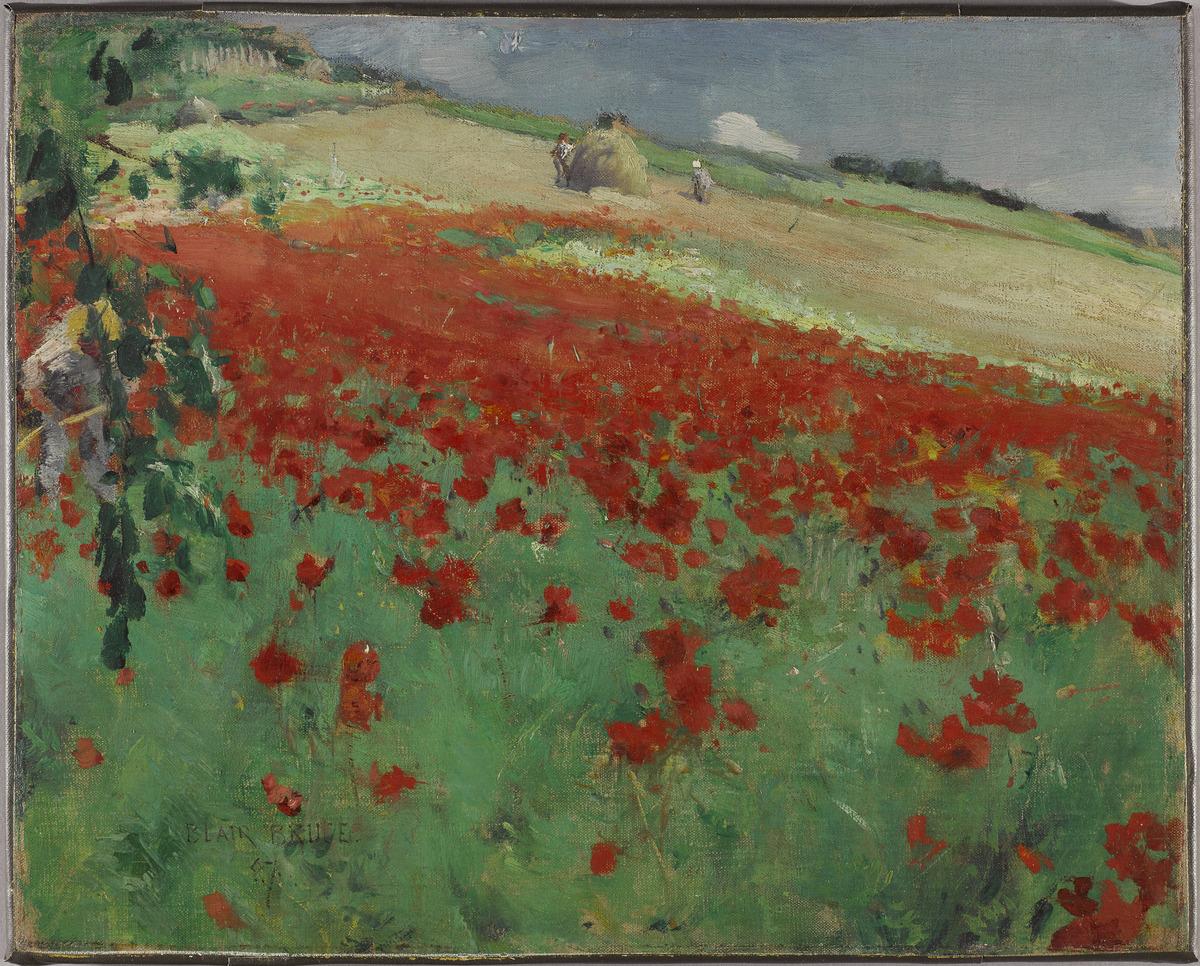
William Blair Bruce. Landscape with Poppies, 1887. Oil on canvas, Overall: 27.3 x 33.8 cm. Art Gallery of Ontario. Purchase with assistance from Wintario, 1977. © Art Gallery of Ontario. 77/42
William Blair Bruce (1859-1906) was one of the first Canadian artists to work abroad in Europe, arriving in Giverny only four years after Claude Monet. This sketch captures the fleeting springtime moment when vibrant red poppies are in full bloom. Whereas Monet frequently painted women and children at leisure among poppy fields, Bruce shows individuals at work in the foreground and flanking a haystack in the background.
This work is on view as part of the exhibition Steam: Impressionist Painting Across the Atlantic, located in the Carol Tanenbaum Gallery (gallery 116).
Luxembourg Gardens, Paris (1890) by Paul Peel
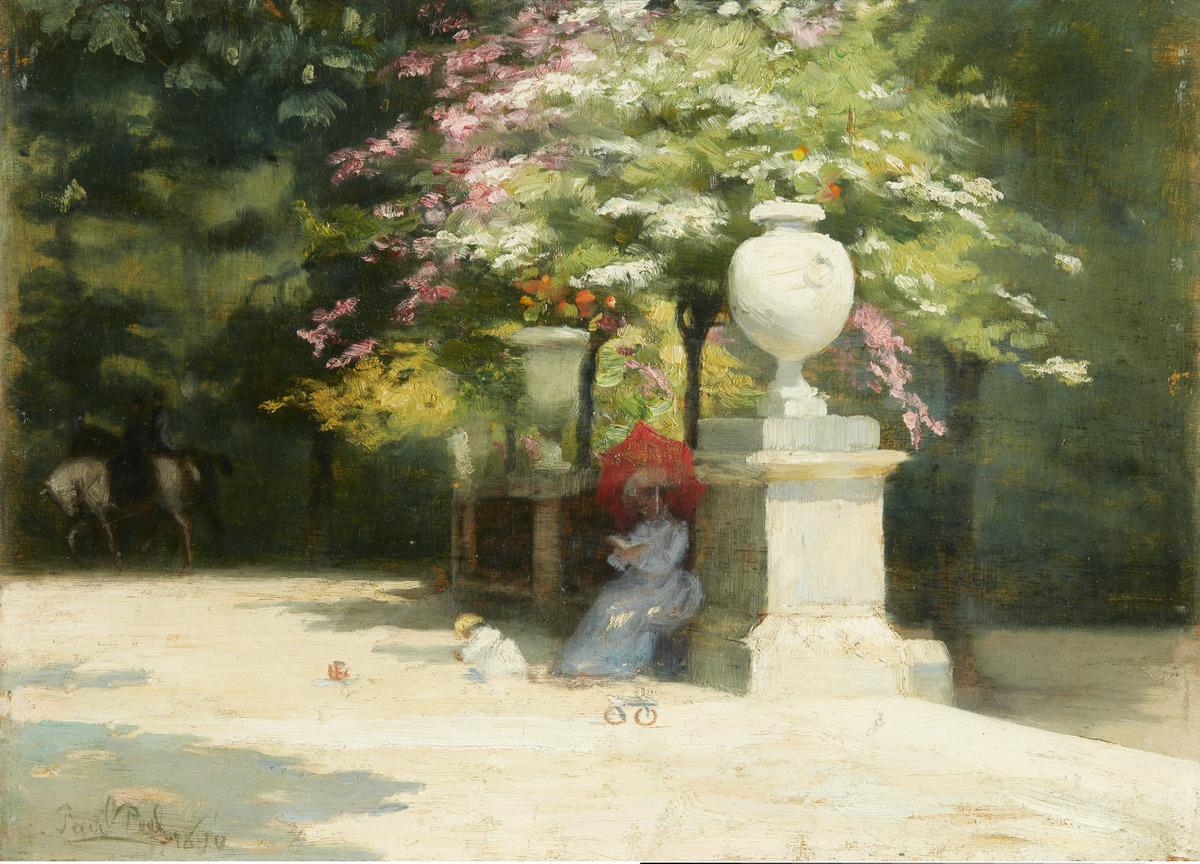
Paul Peel. Luxembourg Gardens, Paris, 1890. oil on wood, Overall: 25.7 × 35.3 cm. Art Gallery of Ontario. Gift of Mary Wrinch Reid, Toronto, 1954. Photo © AGO. 53/43
Painted on a small and durable wood panel, this allowed Paul Peel (1860-1892) to easily leave his studio and make sketches while travelling across the countryside or around town. Here, in Paris’ Jardin du Luxembourg, Peel turns his back to the iconic fountains and sculptures to instead focus on a resplendent blossoming tree and the pair who seek shade beneath it. A young mother or nurse keeps an eye on the child at play while escaping into her own world through a book.
This work is on view as part of the exhibition Steam: Impressionist Painting Across the Atlantic, located in the Carol Tanenbaum Gallery (gallery 116).
A Garden in September (Around 1894) by Mary Hiester Reid
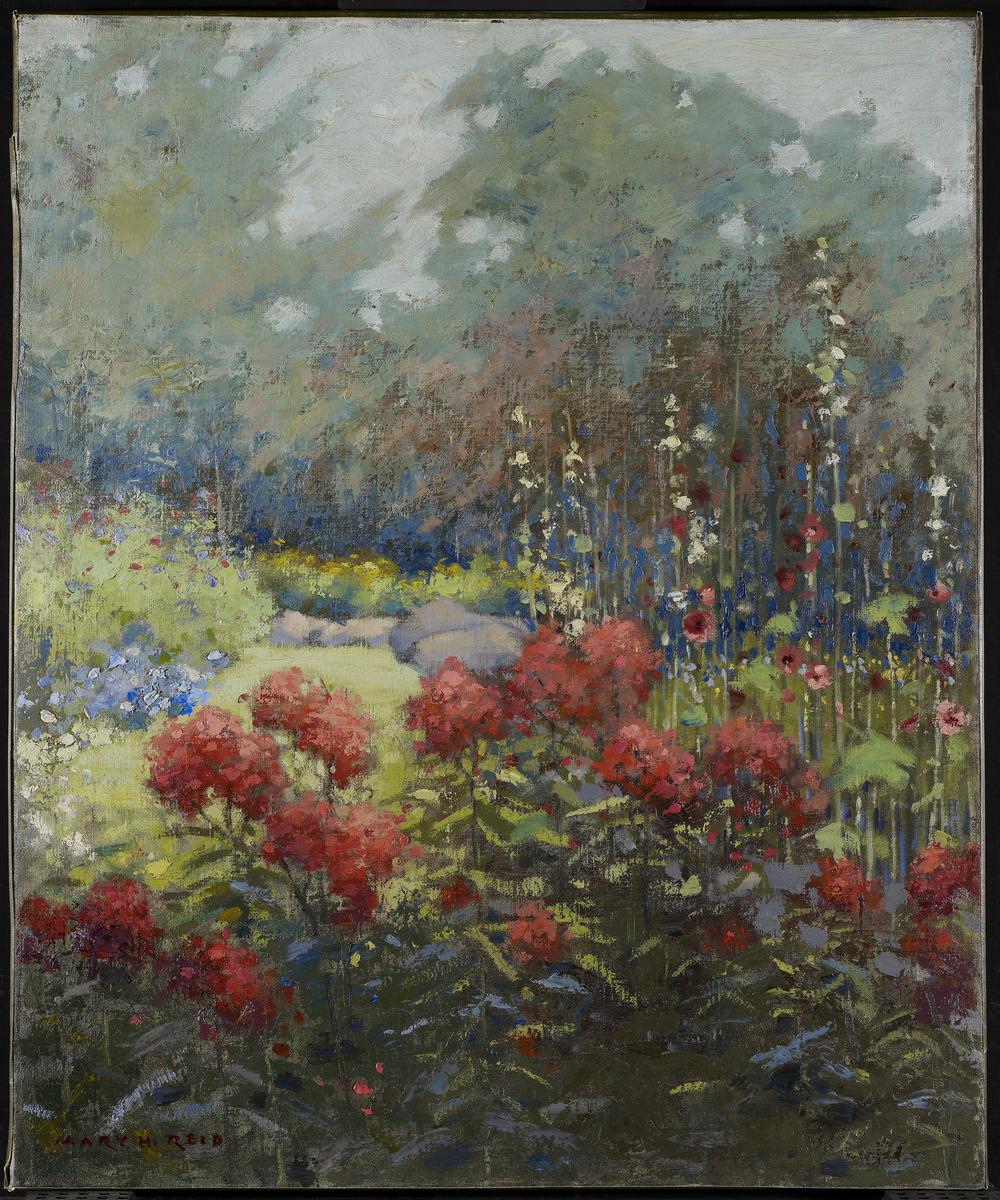
Mary Hiester Reid. A Garden in September, c. 1894. Oil on canvas, 76.2 x 63.5 cm. Art Gallery of Ontario. Gift of G.A. Reid, 1923. Photo © AGO. 667
As the title suggests, this work may not depict a spring garden, but it is a fitting example of Mary Hiester Reid’s (1854-1921) expressive and moving depictions of flowers (and is sure to still satisfy your craving for spring).
Hiester Reid was among the first women to achieve professional success as a painter in Canada during her lifetime. Celebrated for her floral still lifes, interiors, and landscapes, she organized her own solo exhibitions and taught at arts academies in Toronto and New York. On view beside this work is a painting of Hiester Ried by her husband, George Agnew Reid, which depicts her artfully arranging a vase of flowers before she begins painting. A Garden in September captures Hiester Reid’s well-ordered Toronto Garden located in Wychwood Park in 1894.
This work is on view in the Richard Barry Fudger Memorial Gallery (gallery 125), located on Level 1 of the AGO.
Blue Irises, Garden at Petit Gennevilliers (1892) by Gustave Caillebotte
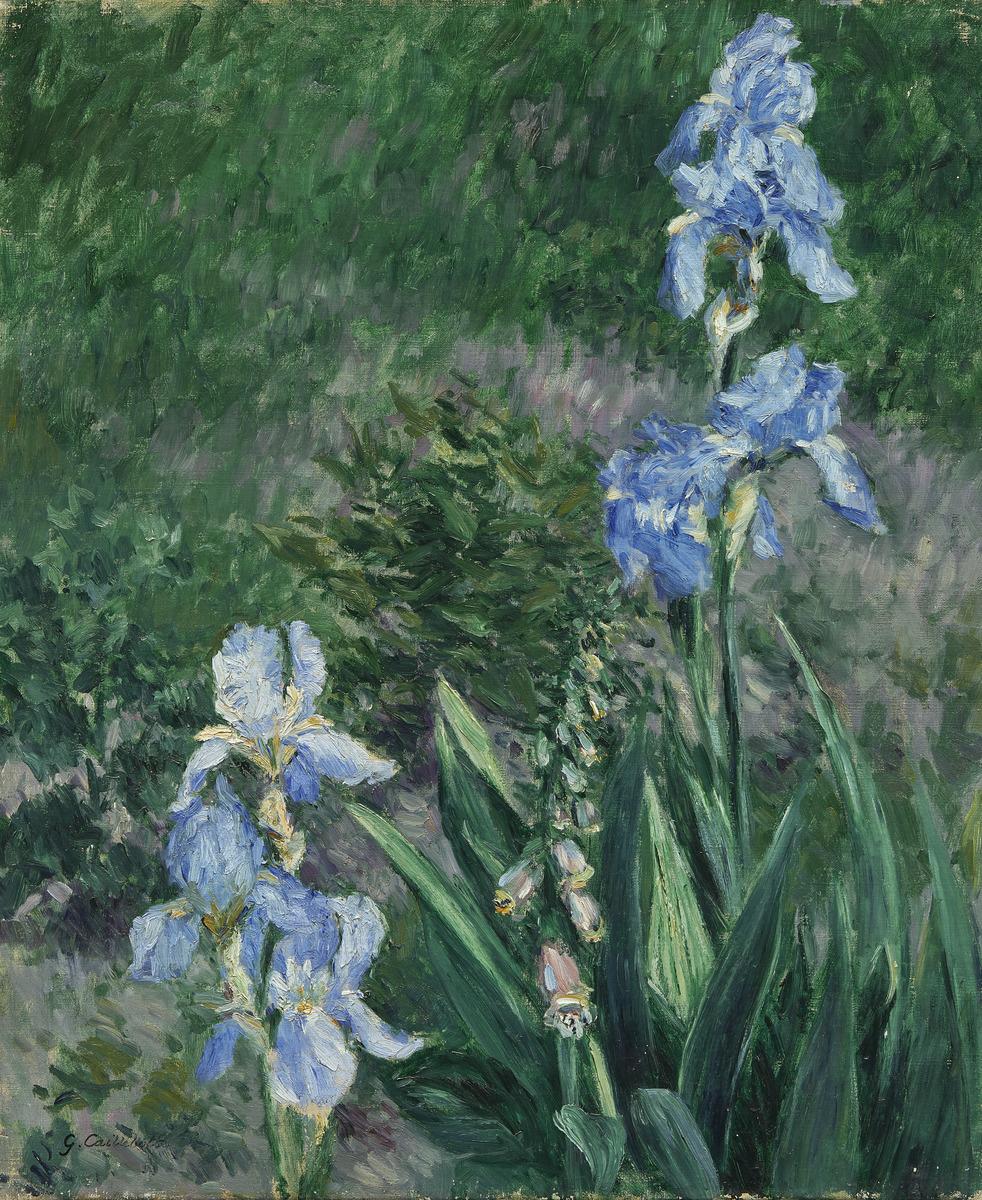
Gustave Caillebotte. Iris bleus, jardin du Petit Gennevilliers, c. 1892. Oil on canvas, Overall: 55.2 × 46.4 cm. Art Gallery of Ontario. Purchase, with funds by exchange from the R. Fraser Elliott Estate and the Bequest of F.W.G. Fitzgerald. Purchased with the assistance of a Moveable Cultural Property grant accorded by the Department of Canadian Heritage under the terms of the Cultural Property Export and Import Act; Acheté avec l'aide d'un subvention des biens culturels mobiliers accordée par le Ministère du Patrimoine canadien en vertu de la Loi sur l'exportation et l'importation des biens culturels, 2019. Photo © AGO. 2019/226
Gustave Caillebotte (1848-1894) was a leader in the Impressionist movement, a pioneer of garden genre scenes, and a passionate gardener.
Caillebotte cultivated these irises and foxgloves himself. His garden was no mere hobby — it was a laboratory, a painting studio, and a work of art in its own right. His fascination with horticulture inspired him to grow flowers, build greenhouses, and even install automatic sprinklers.
Thanks to an acute awareness of his own mortality, the artist wrote a will early in life. Perhaps these irises, which bloom for only a short time, represent an extension of his own fleeting existence. The artists died at 45, two years after completing the painting.
This work is on view on Level 1 of the AGO in the Richard Barry Fudger Memorial Gallery (gallery 125).
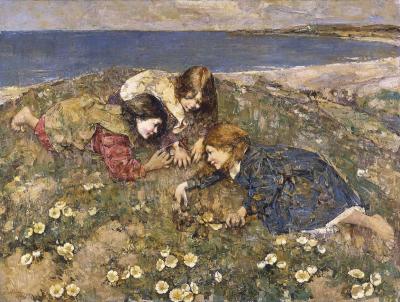
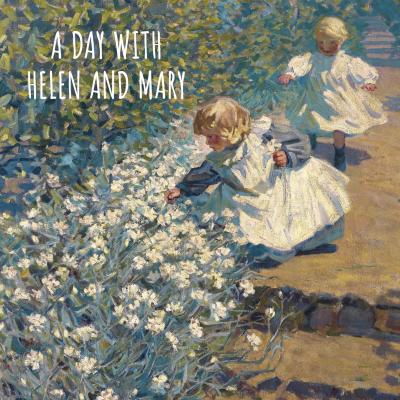
Picking Flowers (Around 1912) by Helen Galloway McNicoll
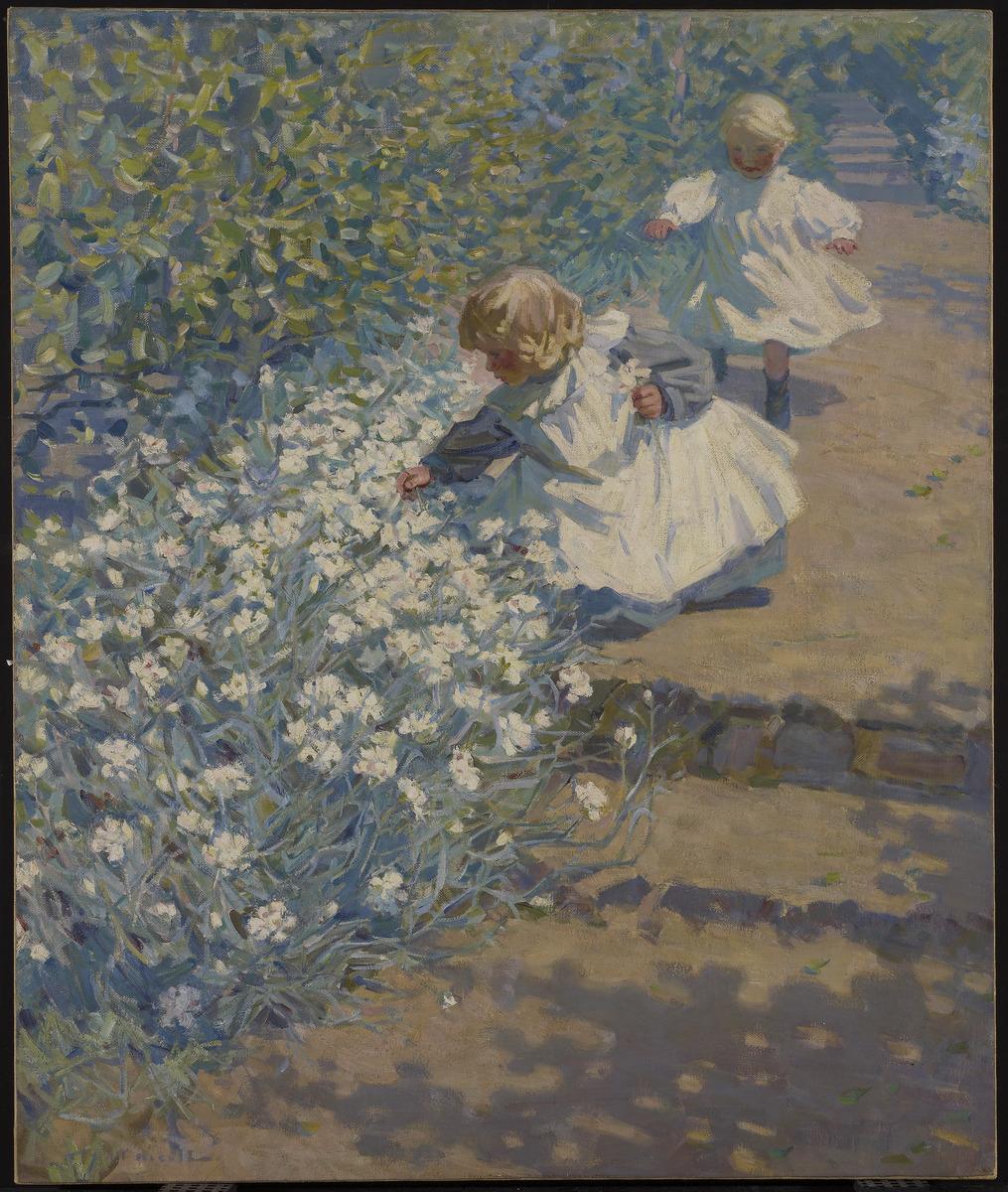
Helen Galloway McNicoll. Picking Flowers, c. 1912. Oil on canvas, Framed: 115.5 x 107 cm. Art Gallery of Ontario.Gift of R. Fraser Elliott, Toronto, in memory of Betty Ann Elliott, 1992. Photo © AGO. 92/102.
Helen Galloway McNicoll (1879-1915) was a keen observer of colour, light, and shadow, which she expertly demonstrated in this work. On view beside this work is McNicoll’s sketch for Picking Flowers, which she likely painted the oil sketch from direct observation outdoors. A comparison between the sketch and final painting reveals her deep interest in patterns of colour, such as the contrasting blue and yellow green of the bushes and the white and blue of the flower patch. Although her hues are brighter than those found in nature, her understanding of optical effects enabled her to convincingly capture shimmering sunlight in a springtime garden.
This work is on view on Level 1 of the AGO in the John & Nancy Mulvihill Gallery (gallery 127).
Please note that works in the Gallery are always on rotation, so the works in these spaces may change or be taken off view over time.
While you’re enjoying the gardens on view, stop by the AGO’s current exhibitions as well. Craving more Impressionist garden scenes? The exhibition, The Impressionist Revolution: Monet to Matisse from the Dallas Museum of Art, opens on June 24, 2026, at the AGO. Learn more about the exhibition here.



![Keith Haring in a Top Hat [Self-Portrait], (1989)](/sites/default/files/styles/image_small/public/2023-11/KHA-1626_representation_19435_original-Web%20and%20Standard%20PowerPoint.jpg?itok=MJgd2FZP)