Feb 25, 2026
Edna Taçon: Verve & Decorum
The first exhibition of the Canadian artist’s work in 40 years opens on February 28 at the AGO
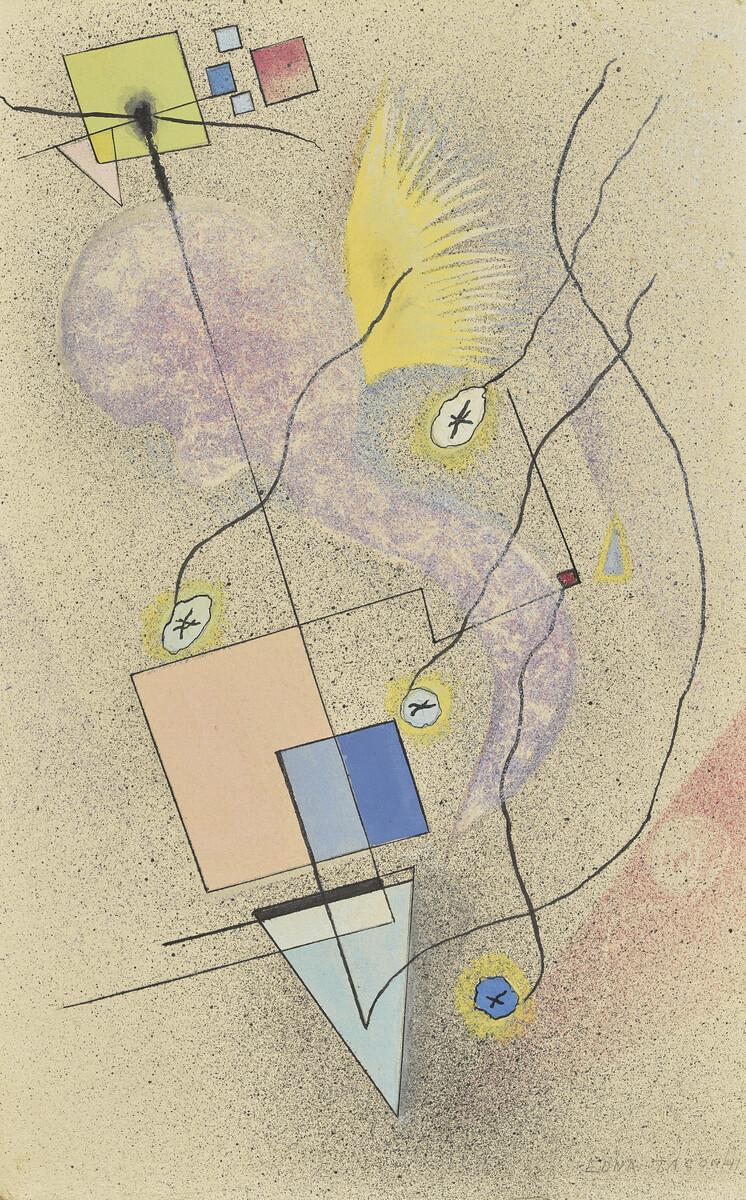
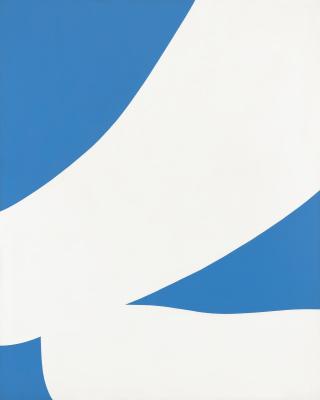
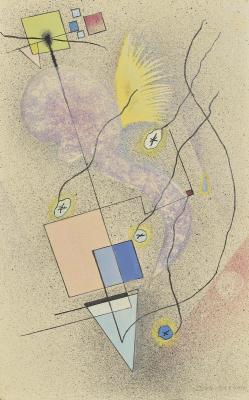
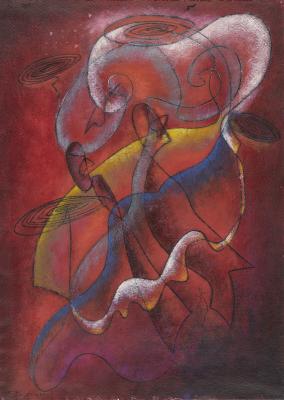
Edna Taçon. Untitled, 1941. Pen and ink with gouache and watercolour on paper, Overall: 76.2 × 50.8 cm. Promised gift of Paul and Susan Taçon. © Estate of Edna Taçon. Photo: AGO
In the information era, the concept of the multi-hyphenate creative is commonplace. For a variety of reasons, many young artists often shift laterally between mediums and career focuses. In the early 20th century, this was a far more radical notion – one of the many reasons why the life and work of Canadian artist Edna Taçon (1905–1980) is remarkable. Concert violinist, non-objective painter, collage artist, shop window designer and muralist, Taçon was a trailblazer of abstract art in Canada.
The focused solo exhibition Edna Taçon: Verve and Decorum shines a light on the late artist’s colourful legacy.
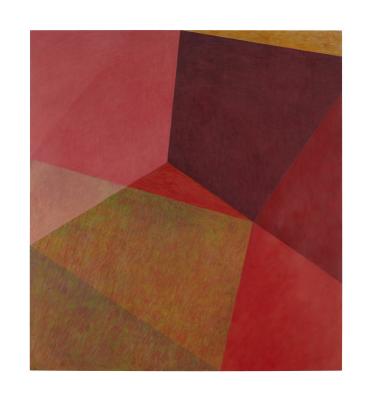
Curated by Renée van der Avoird, the AGO’s Associate Curator of Canadian Art, the exhibition features more than 25 oil paintings, watercolours, and paper collages from the 1940s. Often considered too bold and forward-thinking for the Canadian artistic palette of the time, Taçon’s body of work is defined by abstract shapes, flowing lines, and effervescent colour. She was a student of the non-objective art movement, taking her creative cues from musicality and inner consciousness rather than external environments. Additionally, the exhibition includes sketches, correspondence and photographs from Taçon’s personal archive that help contextualize the works on view and provide visitors with further insight into her life.
Launching alongside the exhibition is a 128-page catalogue titled Edna Taçon, co-published by the AGO and Goose Lane Editions. Featuring texts and interviews by van der Avoird and the artist’s grandson, sculptor Carl Taçon, the catalogue is available at Shop AGO.
Take a closer look at the three major sections of Edna Taçon: Verve and Decorum.
The following are excerpts from the exhibition's wall text.
Non-Objective Art
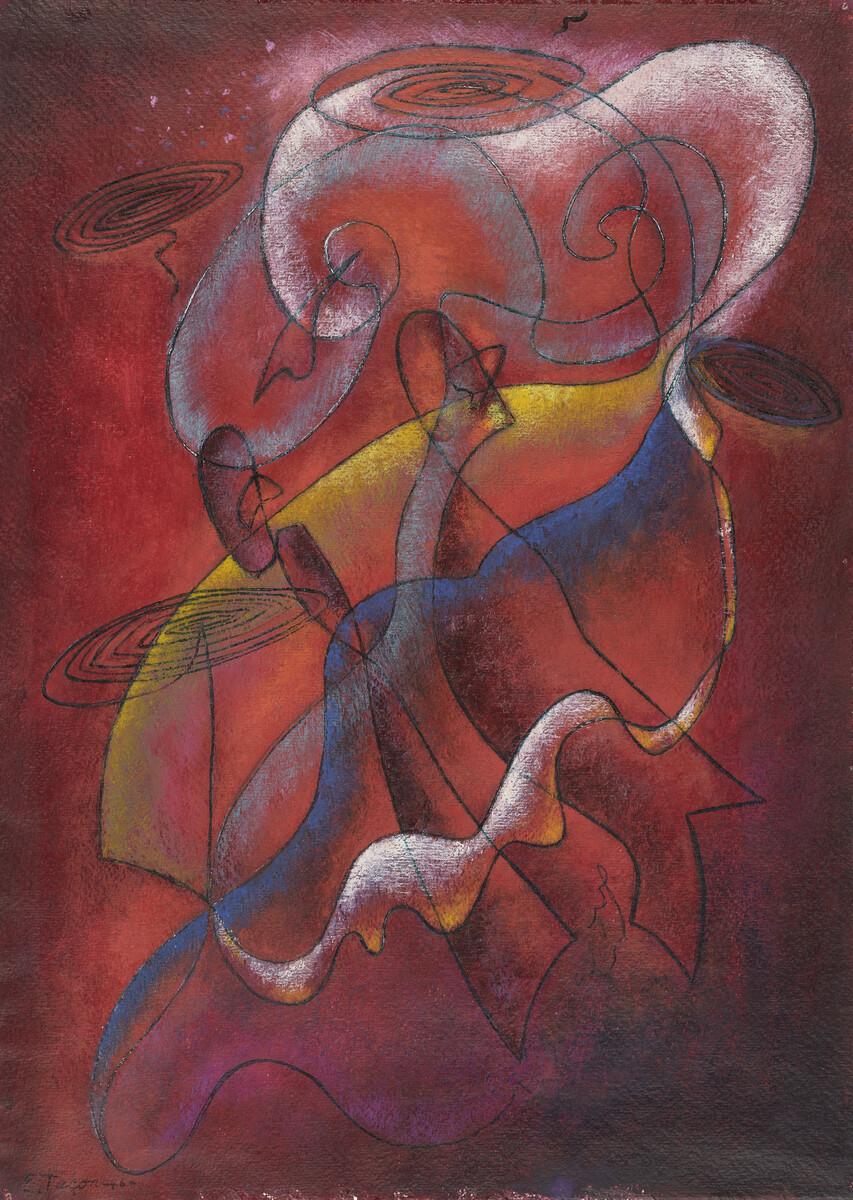
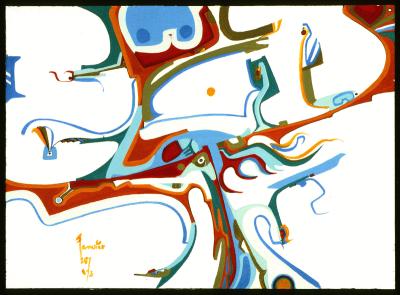
Edna Taçon. Improvisation No. 2, 1946. Watercolour and ink on paper, Overall: 38.8 × 27.6 cm. Art Gallery of Ontario. Purchase, 1947. © Estate of Edna Taçon. Photo: AGO. 2879
“Just as an orchestra produces a symphony through sound, non-objective art produces a symphony through colour.” -Edna Taçon
Non-objective art features abstract shapes and lines rather than specific subjects found in the natural world. This style is often associated with spirituality, emotional expression, and the search for deeper meaning. One of the most well-known proponents of non-objective painting was Russian painter Wassily Kandinsky (1866 -1944), whose influence is present in Taçon's work. Geometric forms, invented shapes, and colour become, in Taçon's words, “a means of expressing the inner life-call it soul, spirit, or mind... all conditions and outbursts of the soul."
Paper Plastics
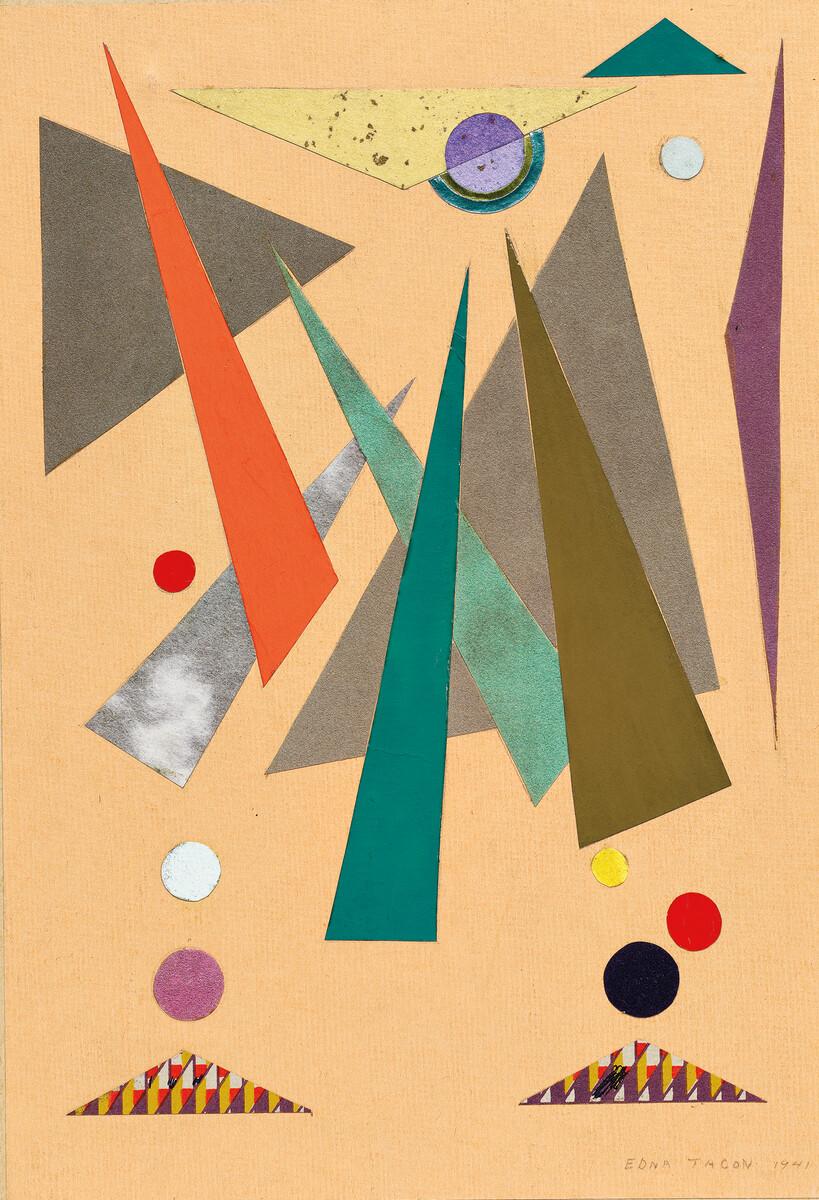
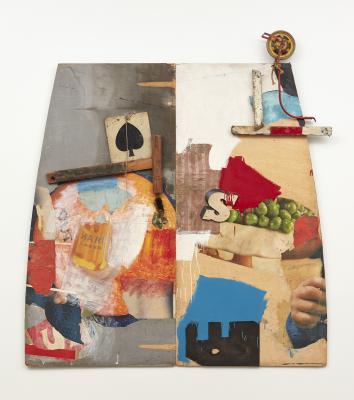
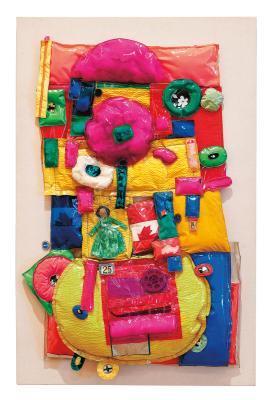
Edna Taçon, Untitled, 1941. Colored, flocked, and printed paper collage, mounted to Paperboard, 29.8 × 19.7 cm. Solomon R. Guggenheim Museum. Gift, the artist’s estate and Paul Taçon, 2025. 2025.28 © Estate of Edna Taçon.
Taçon called her collages "paper plastics," a term coined by Hilla Rebay (1890-1967), artist and former Director of the Museum of Non-Objective Painting (now the Solomon R. Guggenheim Museum). They are small, dynamic compositions of intermingling geometric and biomorphic shapes cut from paper sample catalogues. In preliminary drawings, Taçon made precise designs for her collages and would then experiment with colours and materials intuitively when executing the works. This way, the elements would come together in harmony, appearing to be both pre-designed and completely natural.
Personal Archive
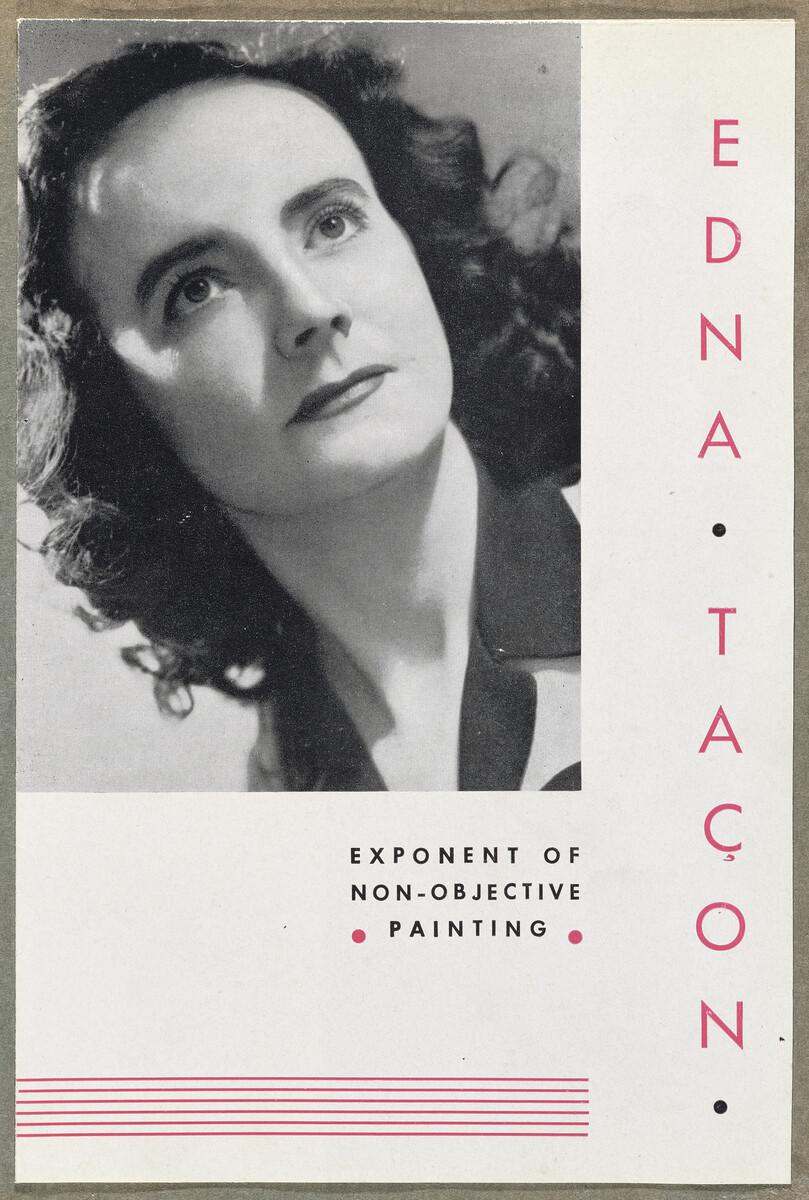
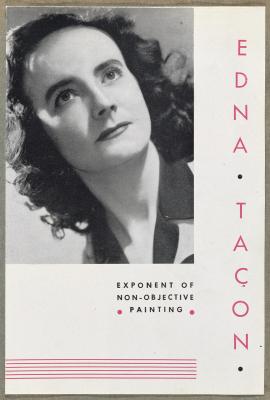
Exhibition pamphlet for Edna Taçon: Objective for Non-Objective Painting, Eaton's Fine Art Gallery, 1944. Edward P. Taylor Library & Archives, Art Gallery of Ontario. Promised gift of Paul and Susan Taçon. Photo: AGO.
Held at The Art Gallery of Ontario’s Edward P. Taylor Library & Archive, Taçon's archive includes photographs, diaries, correspondence, and a personal scrapbook of newspaper clippings about her work. This archive, along with interviews given by her family members, has bolstered research about Taçon's life and practice. A range of items from the archive are on view in this section of the exhibition.
Edna Taçon: Verve and Decorum is on view until August 30, in the Nicholas Fodor Gallery (gallery 140 and gallery 141) on Level 1 of the AGO.
Contemporary programming at the AGO is supported by

![Keith Haring in a Top Hat [Self-Portrait], (1989)](/sites/default/files/styles/image_small/public/2023-11/KHA-1626_representation_19435_original-Web%20and%20Standard%20PowerPoint.jpg?itok=MJgd2FZP)