Presented by Signature Partner

Feb 24, 2026
"I am half sick of shadows,” said The Lady of Shalott
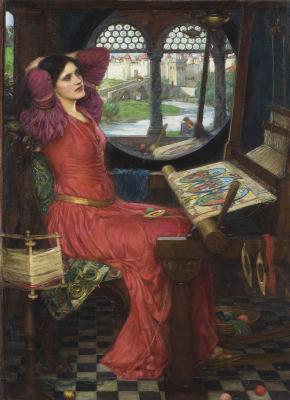
John William Waterhouse depicts a contemplative moment from the tragic tale of the Lady of Shalott
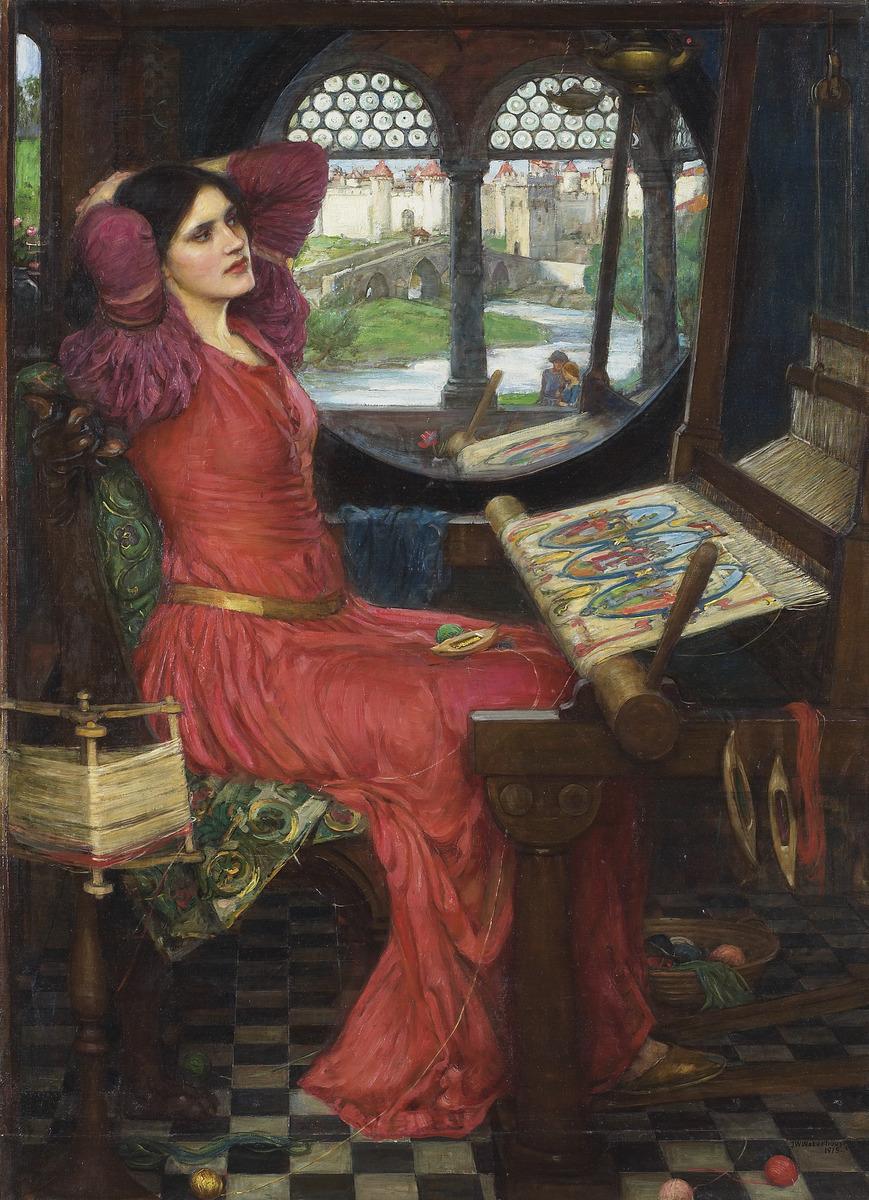
John William Waterhouse. " 'I am half sick of shadows,' said The Lady of Shalott" (Alfred, Lord Tennyson, The Lady of Shalott, Part II), 1915. Oil on canvas, Overall: 100.3 x 73.7 cm. Art Gallery of Ontario. Gift of Mrs. Philip B. Jackson, 1971. Photo © AGO. 71/18
This RBC Art Pick depicts a moment of restless contemplation preceding the defiance, and, ultimately, the tragic fate of the Lady of Shalott.
“I am half sick of shadows,” said The Lady of Shalott (1915) by English painter John William Waterhouse (1849-1917) is based on Lord Alfred Tennyson’s poem “The Lady of Shalott,” which comes from the ancient legends of King Arthur and his court at Camelot. The poem tells the tale of the Lady of Shalott, also known as Elaine Astolat. Suffering under a mysterious curse, she is trapped in an island-bound tower and forbidden from looking directly out the window. Instead, she is forced to observe the world through a window-facing mirror while weaving what she sees.
The title of this work is a direct line from Tennyson’s poem; upon seeing a newlywed couple pass by, Elaine overwhelmingly declares, “I am half sick of shadows,” meaning she is tired of experiencing the world in reflected form. In Waterhouse’s depiction, Elaine takes a break from weaving, her hands cradling the back of her head as she eyes the newlyweds, deep in thought. Viewers share her perspective, only observing the passing couple through the mirror. Colourful balls of thread lay strewn at her feet while the shuttle of her loom rests on her lap, its boat-like shape often read as foreshadowing to her tragic death.
Elaine was a favoured subject of Waterhouse, appearing in two of his earlier major works. Through the tale of “The Lady of Shalott,” Waterhouse found an ideal subject to explore emotion and event. His earlier paintings illustrate the tragic ending of the tale: upon seeing Sir Lancelot in her mirror, Elaine defies the curse and looks at him through the window, spurred by love. Shattering the mirror and doomed to death, she attempts to reach the knight by boat, but dies before making it to Sir Lancelot.
Exemplified by this RBC Art Pick, Waterhouse’s subjects were often young women from Greek mythology and Arthurian legends. His paintings depict these fantastical women in historical costumes and settings. Waterhouse’s oeuvre is characterized by the Pre-Raphaelite Brotherhood’s style, a genre of painting that combines meticulous natural detail with vivid colour and romantic medieval subject matter to create emotionally charged works.
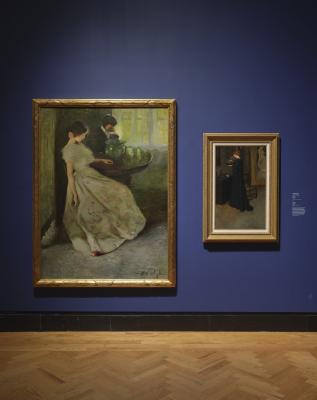
“I am half sick of shadows,” said The Lady of Shalott is on view as part of the exhibition Reality and Reverie: Canadian and European Painting Beyond Impressionism, currently on view on Level 1 of the AGO in John & Nancy Mulvihill Gallery (gallery 127).


![Keith Haring in a Top Hat [Self-Portrait], (1989)](/sites/default/files/styles/image_small/public/2023-11/KHA-1626_representation_19435_original-Web%20and%20Standard%20PowerPoint.jpg?itok=MJgd2FZP)