Presented by Signature Partner

Jan 27, 2026
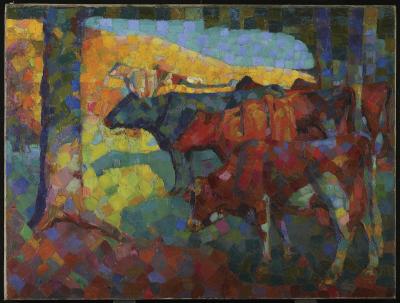
Untitled (Cows on a Hillside)
Kathleen Munn transforms a quiet hillside with vibrant colours and ten cows
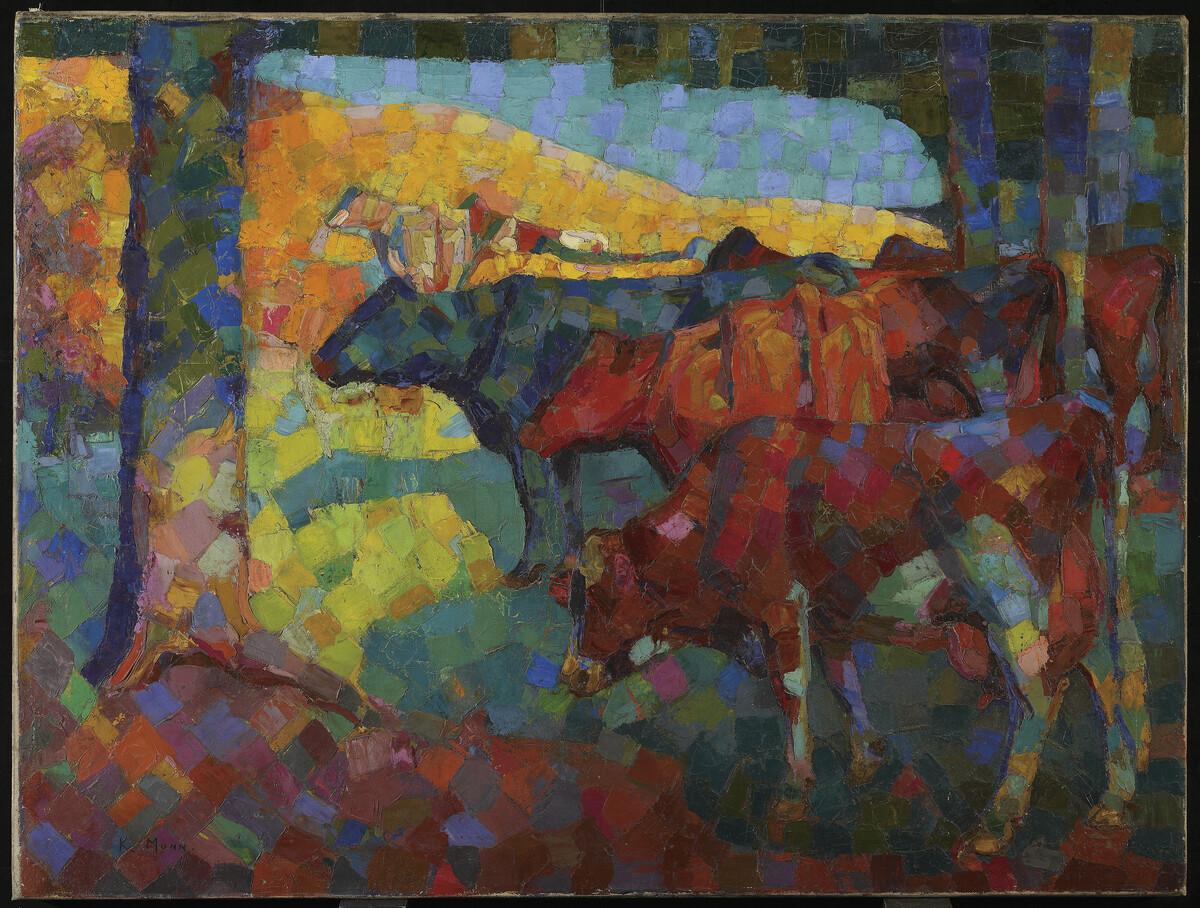
Kathleen Jean Munn. Untitled (Cows on a Hillside), c. 1916. Oil on canvas, Overall: 76.3 x 101.7 cm. Art Gallery of Ontario. Purchased with funds donated by Susan and Greg Latremoille, Toronto, 2006. © Estate of Kathleen Munn. Photo: AGO. 2006/85
Kathleen Munn (1887–1974) was a trailblazer of abstract painting in Canadian art history, though recognition for her artistic achievements came after her death. During the 1910s and ‘20s, she entrenched herself in the New York City art scene as both a student and practicing artist, finding profound inspiration in the American avant-garde movement. With works completed mostly in oil and pencil, she developed her own visual language influenced by Cubism, Post-Impressionism, and Synchronism – distinguishing her from other Canadian artists of the time.
On view now at the AGO, Munn’s Untitled (Cows on a Hillside) (1916) is a visitor favourite featuring a technicolour depiction of grazing cattle from the earlier period of her career.
Located on Level 1 in the John and Nancy Mulvahill Gallery (127), close to the AGO’s front entrance, Untitled (Cows on a Hillside) is an easel-sized (76.3 x 101.7 cm) oil painting that draws attention. Utilizing a varied palette of magentas, indigoes and earth tones, Munn creates a patchwork of rectangular brush marks that abstract a familiar farm setting. On the right side of the canvas, staggered from foreground to background, 10 cows can be seen grazing on a hillside – each becoming more obscured the farther back they are portrayed. Balancing out the frame to the left is a lone tree trunk with visible roots. The painting’s foremost cow appears in slightly sharper detail than the rest, including faintly depicted facial features, a large round utter, and a long tail.
Beloved by many AGO visitors, it has become a quiet tradition for young people to scan the painting in search of all ten cows. As you reach the background of the canvas, parsing out the distinction between each cow requires careful, close looking.
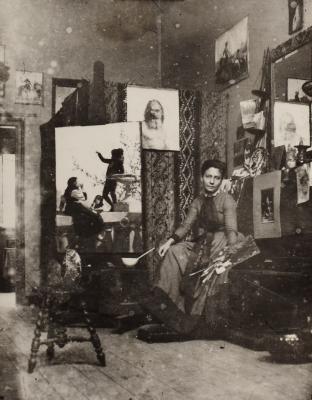
Munn was born in 1887 in Toronto, youngest of six children. Her family owned and operated a jewellery store located near Yonge and Bloor. She began studying art in school at the age of seven and showed significant promise. By her early twenties, she started exhibiting works in Toronto with the Ontario Society of Artists and at the Canadian National Exhibition.
1912 was a pivotal year for Munn. She moved to New York City and enrolled at the Modern Art school, The Art Students League. During the next several years, she was exposed to the work and teachings of various American avant-garde artists, significantly shaping her practice. Among them was artist and writer Jay Hambridge, whose influential theory of dynamic symmetry became instrumental in her approach to art making.
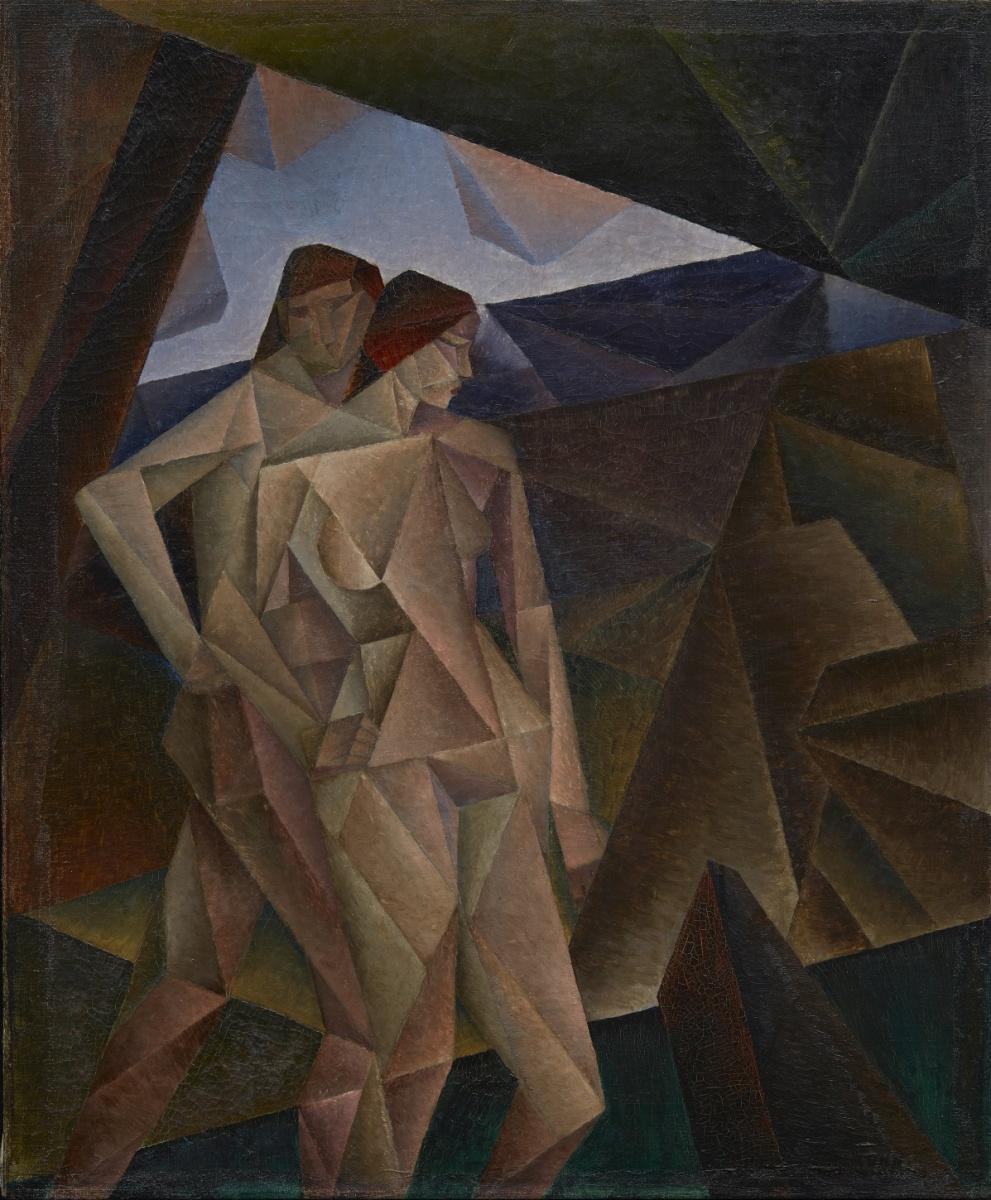
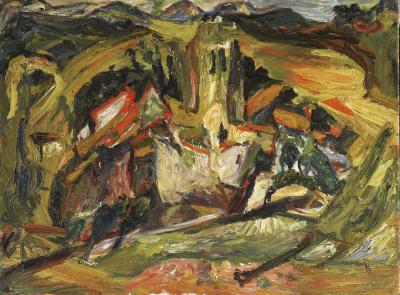
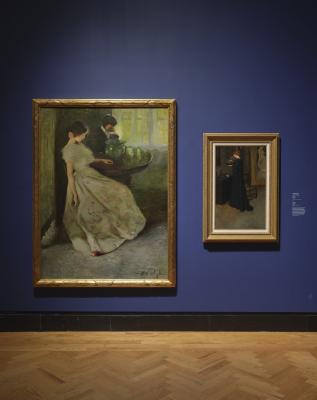
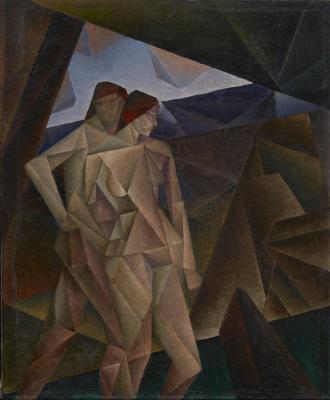
Kathleen Jean Munn. Untitled (Two Figures in a Landscape), c. 1925. Oil on canvas, 51.2 × 42.7 cm. Gift of William and Verna Richards, 2012. © Estate of Kathleen Munn 2012/98.
By the late 1920s, Munn’s earlier Post-Impressionist inspired approach had progressed into something more clearly informed by dynamic symmetry. This is exemplified in her work Untitled (Two Figures in a Landscape) (1925), also currently on view in the same gallery space on level 1 (127). Around this time, she began The Passion Series, which was the most significant series of her career. The collection of works consisted of over 1,000 drawings and sketches of The Passion of Christ, culminating in ten large drawings – eight ink and two graphite.
Although she occasionally exhibited works with prominent Canadian artists of the era, including the Group of Seven, Munn’s work was largely unrecognized on the national art scene during her lifetime. There was much less of an appetite for the forward-thinking abstraction present in her work. In 1974, the year of her death, she received a studio visit from two National Gallery of Canada curators that resulted in the purchase of one of her Passion Series works. This purchase would spark a wave of posthumous interest in Munn’s life and work, resulting in a number of traveling exhibitions, acquisitions by major institutions, and the establishment of Munn’s name among the most important artists in Canadian history. In 2011, the AGO organized the first ever art museum retrospective exhibition of Munn’s work.
Untitled (Cows on a Hillside) is on view now in the John and Nancy Mulvahill Gallery (127) on Level 1 of the AGO.
![Keith Haring in a Top Hat [Self-Portrait], (1989)](/sites/default/files/styles/image_small/public/2023-11/KHA-1626_representation_19435_original-Web%20and%20Standard%20PowerPoint.jpg?itok=MJgd2FZP)