Mar 3, 2026
Reflecting on Kazuo Nakamura’s Watercolours
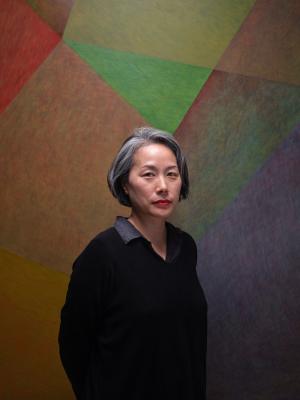
Art historian Ihor Holubizky and artist Louise Noguchi will discuss Nakamura’s work at the AGO on March 11
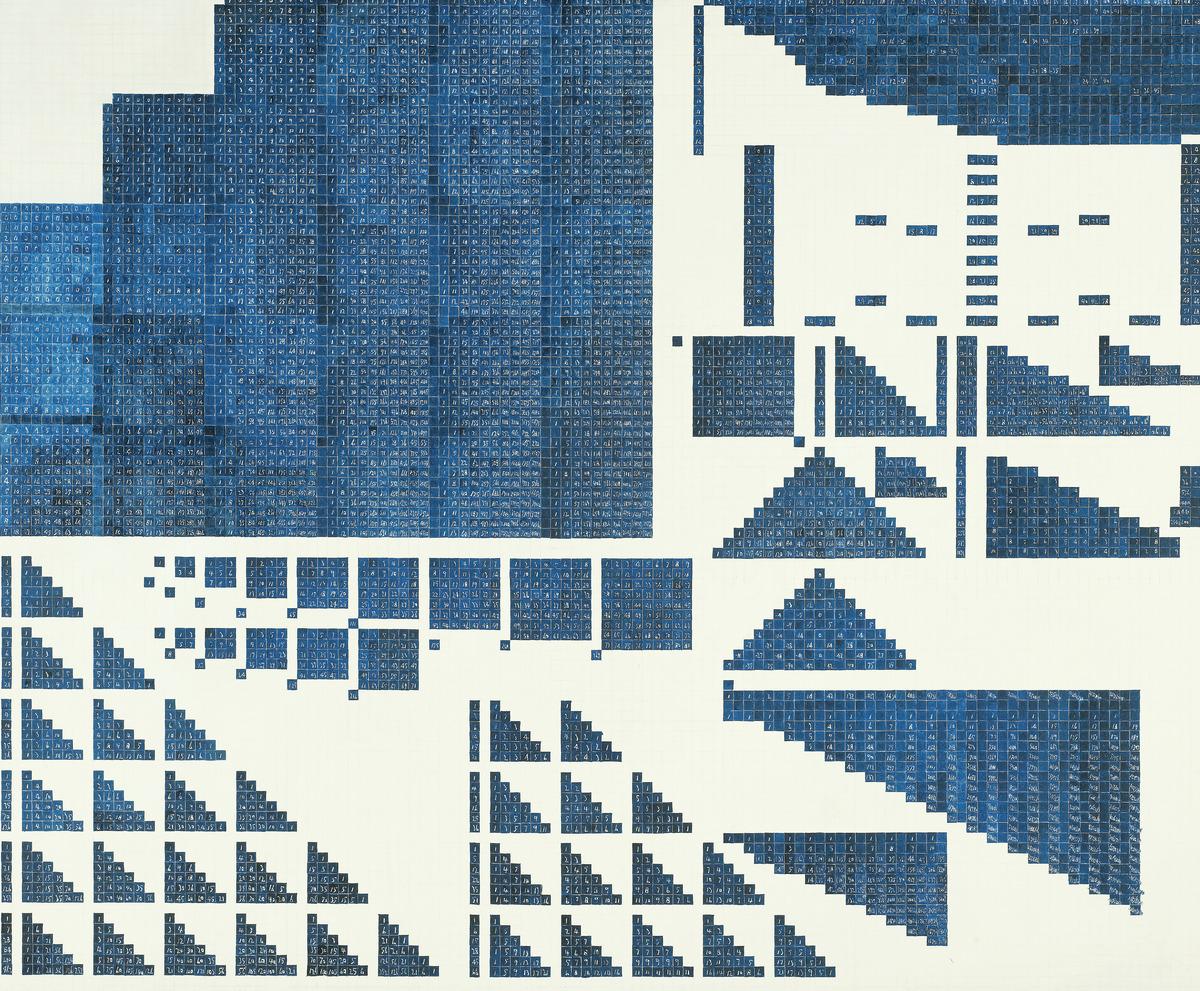
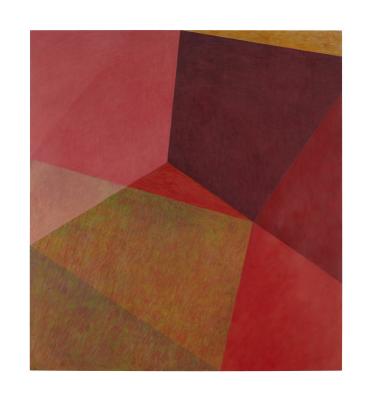
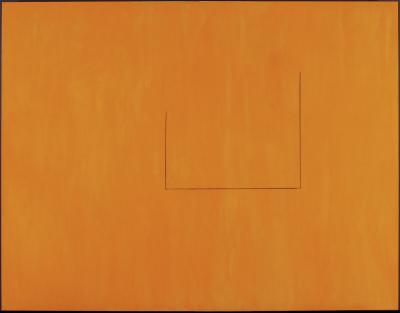
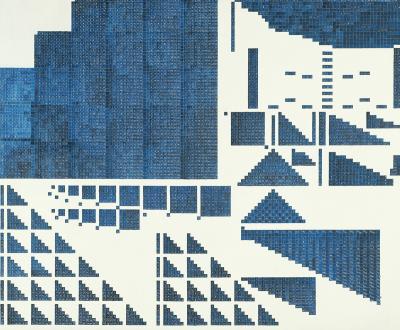
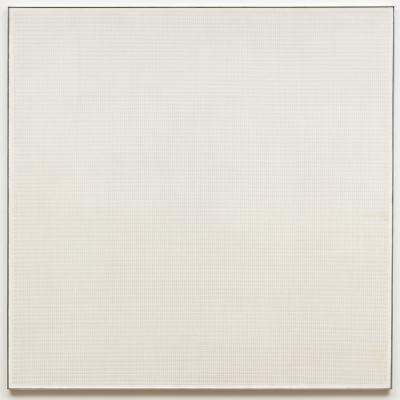
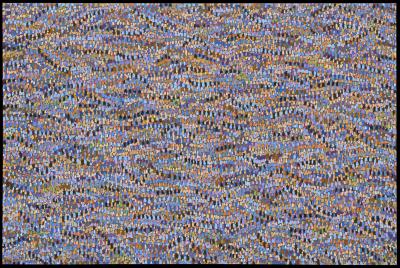
Kazuo Nakamura. Number Structure II, 1984. Oil and graphite on canvas, Framed: 128.9 x 154.1 cm. Art Gallery of Ontario. Gift of Kazuo Nakamura, Toronto, 2001. © Art Gallery of Ontario. 2001/73
“There’s a sort of fundamental pattern in all art and nature. In a sense, scientists and artists are doing the same thing. The world of pattern is a world we are discovering together,” - Kazuo Nakamura
On Level 2 of the AGO, now in its second year, Kazuo Nakamura: Blue Dimension presents works by the artist from the 1950s to 1980s. Organized chronologically, visitors are invited to trace the evolution of Nakamura’s practice, from geometric abstractions to landscapes, still lifes, and his celebrated Number Structure series.
On March 11, the AGO will host a conversation about Nakamura’s works in the AGO Collection with art historian Ihor Holubizky, artist Louise Noguchi and Georgiana Uhlyarik, Fredrik S. Eaton Curator of Canadian Art.
Nakamura is a second-generation Japanese Canadian. Born in Vancouver to Japanese parents, he and his family were detained at the Tashme Internment Camp near Hope, British Columbia, in 1942 under Canada’s War Measures Act during the Second World War. While detained, Nakamura painted watercolours that documented the surrounding mountainous and agrarian landscapes.
In 1945, he resettled in Hamilton, Ontario, and two years later, he moved to Toronto, where he established himself as a young artist and spent the rest of his life. Throughout his 40-year long career, he explored many different styles and techniques – from figuration to abstraction. He was a founding member of Painters Eleven from 1953 to 1960, a local group of avant-garde artists known for their bold abstraction. His works stood out for their meditative quality and a restrained palette of greens and blues, largely seen in his abstract landscapes.
Nakamura believed that art was a science. As his career progressed and his reputation grew, his work increasingly reflected his fascination with mathematics and science through geometric shapes, lines, grids, and ellipsoids. Noguchi explains, “While his work is often known for its abstract imagery, for me, there is much intention behind whatever he did. His work was rigorously focused on the structures and boundaries within space and perception. Whenever I see his paintings, there is an urgency to articulate meaning to the viewer, which sometimes could be in the form of an inner world, an acknowledgement of physical and psychological structures and the use of numbers to convey universal codes.”
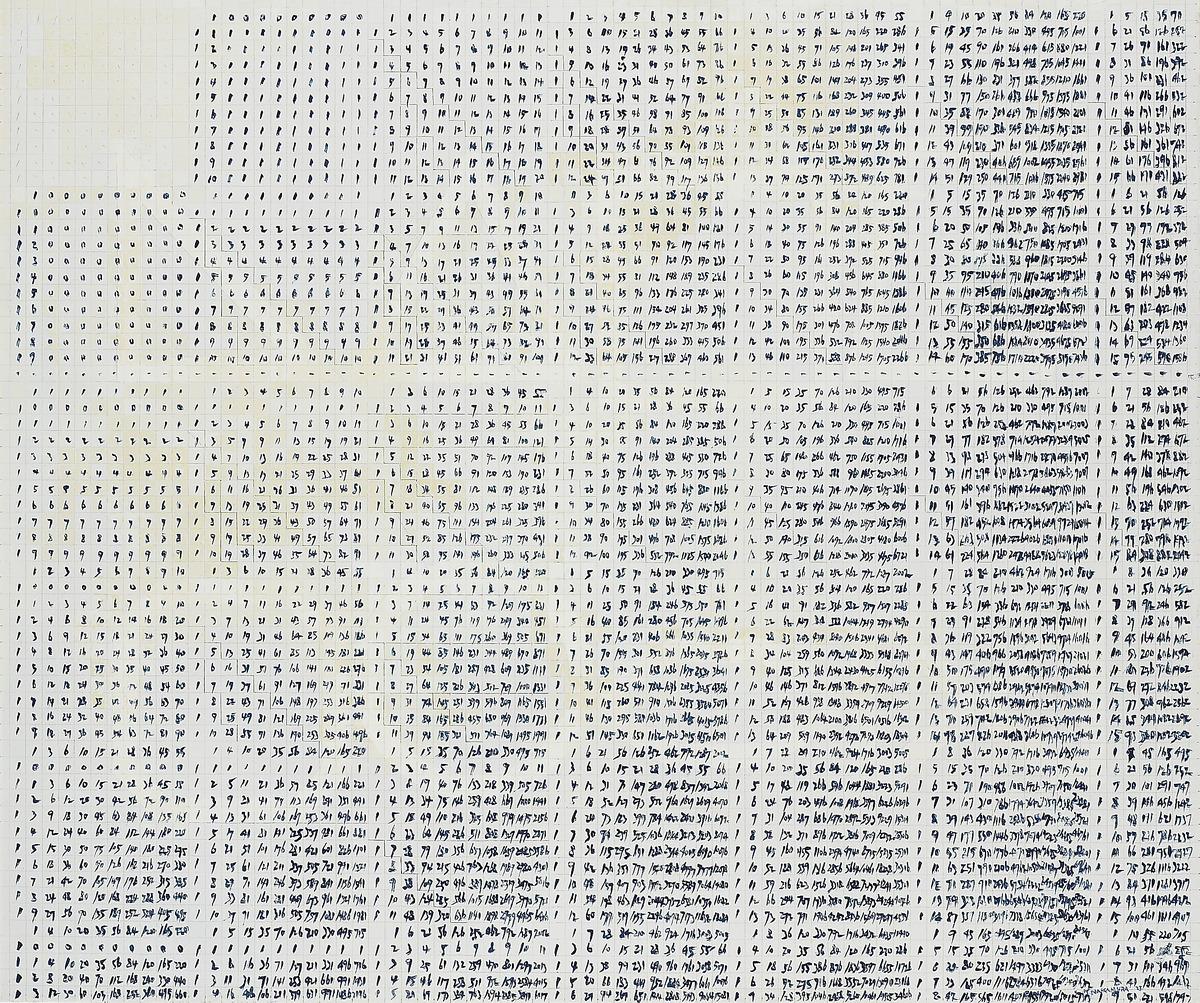
Kazuo Nakamura. Number Structure #4, 1969-1983. Oil, resin, and graphite on canvas, 79.5 x 94.5 cm. Art Gallery of Ontario. Gift of Kazuo Nakamura, Toronto, 2001. © Art Gallery of Ontario. 2001/71
Holubizky highlights Nakamura’s Number Structure works, naming Number Structure #4 (1969-83) as his favourite in the AGO Collection. “These works are a critical turning point and ‘invention’ that preoccupied Nakamura for the rest of his career but first appeared at least by 1965. This concern with theoretical mathematics was unique for art in Canada at the time. What continues to hold my attention (and is inspirational) is the 'imaginative truth,' his rigour and discipline within these works.”
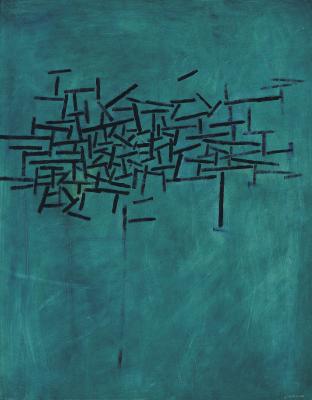
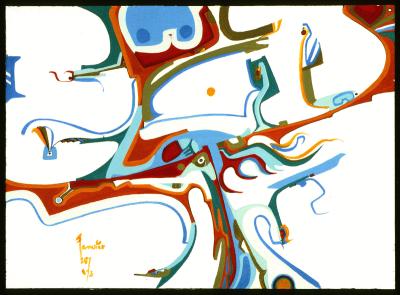
Noguchi gravitates towards Nakamura’s Inner Structure paintings. She explains, “I love Kazuo’s Inner Structure paintings with their deep blues. They are a bit of a guilty pleasure for me, since I feel he allows us to interpret their meaning more freely than some of his other work.”
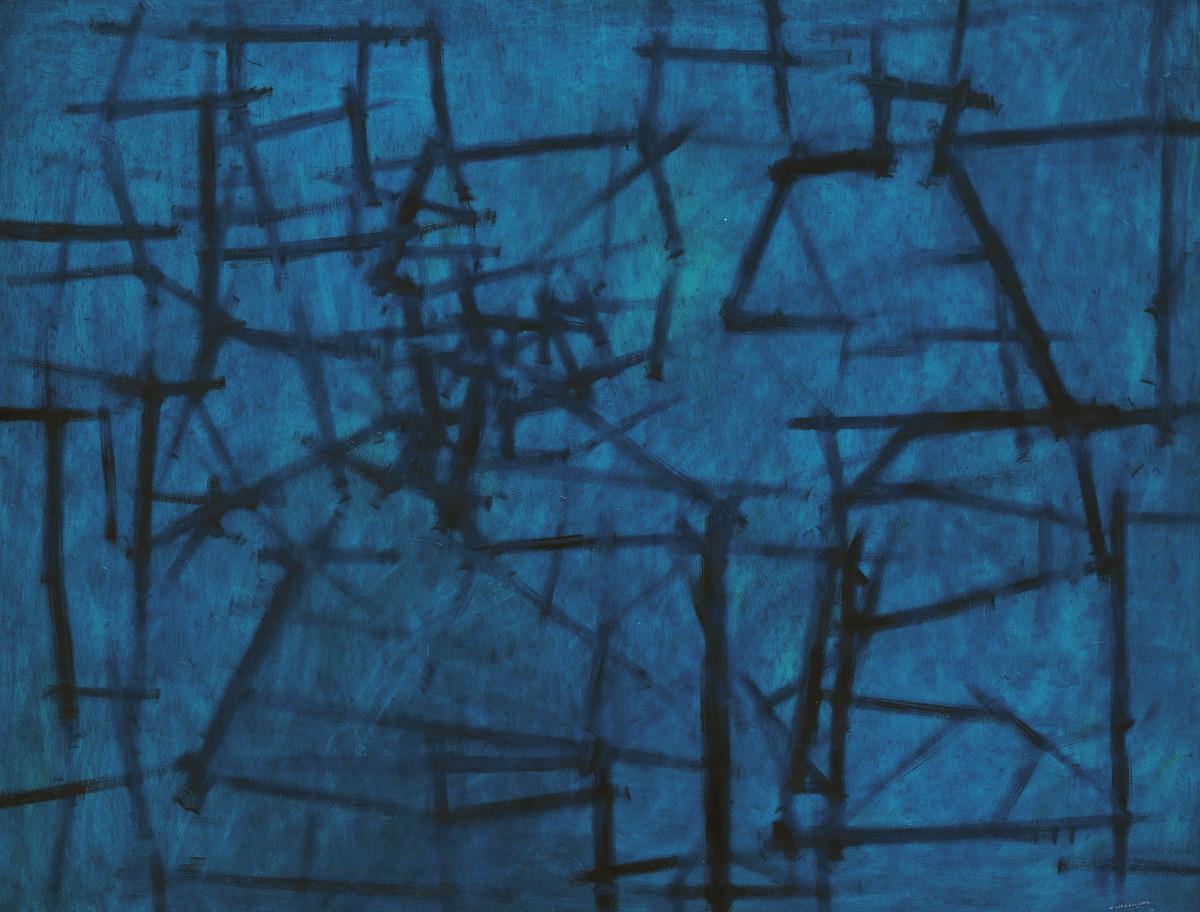
Kazuo Nakamura. Inner Structure, 1956. oil on hardboard, Overall: 60.8 x 78.8 cm (23 15/16 x 31 in.) Art Gallery of Ontario. Gift of Mr. Charles McFaddin, Toronto, 1985. © Art Gallery of Ontario 85/115
Over the course of his life, Nakamura achieved an unprecedented level of international recognition for a Japanese Canadian artist of his time. His influence still resonates today, inspiring new generations through his singular vision and long career.
Experience Nakamura’s works in-person in Kazuo Nakamura: Blue Dimension, now on view on Level 2 in the Bovey Gallery (gallery 225) at the AGO.
On March 11, join Holubizky and Noguchi in conversation with Georgiana Uhlyarik to chat about the artistry and legacy of Kazuo Nakamura. Advanced tickets required, book yours now.
![Keith Haring in a Top Hat [Self-Portrait], (1989)](/sites/default/files/styles/image_small/public/2023-11/KHA-1626_representation_19435_original-Web%20and%20Standard%20PowerPoint.jpg?itok=MJgd2FZP)