Mar 18, 2026
Meet Eleonora Susette
The previously unknown sitter of Portrait of a Lady Holding an Orange Blossom has been identified
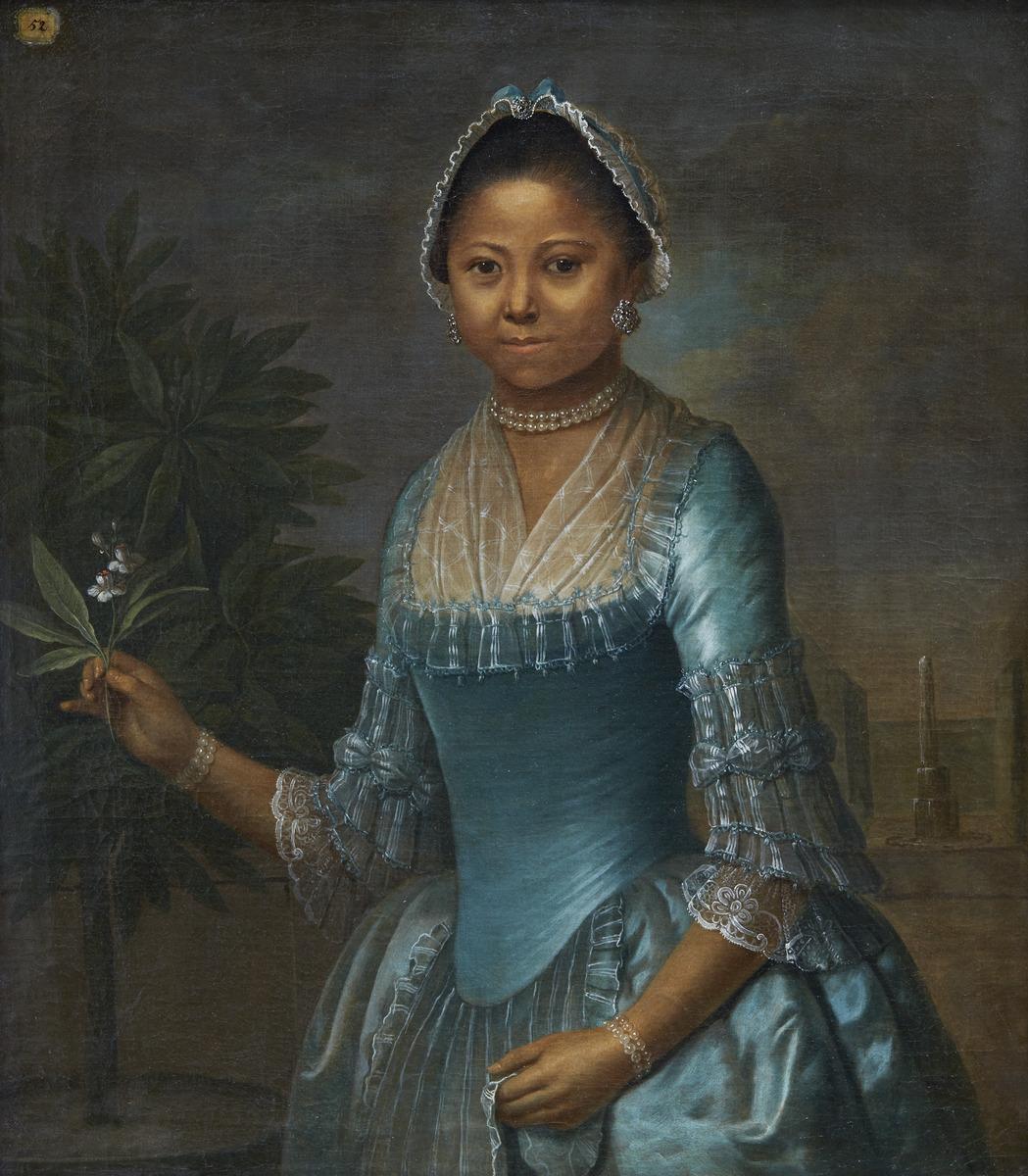
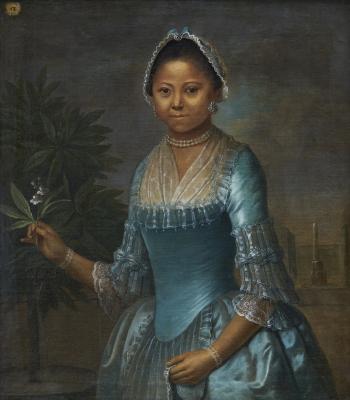
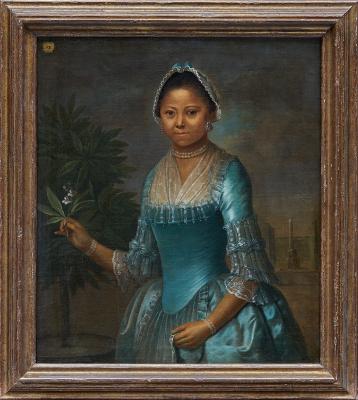
Jeremias Schultz. Portrait of Eleonora Susette, 1775. Oil on canvas. Overall: 80 × 56.2 cm. Art Gallery of Ontario. Purchase, with funds from the European Curatorial Committee, 2020. Photo © AGO. 2019/2437
She holds the viewer’s gaze with confidence and poise. Dressed in an opulent blue silk gown, she is adorned with lace cuffs, fine jewellery, and a white cap tied with a matching blue ribbon. In one hand, she holds an orange blossom; in the other, the apron of her skirt.
She stands front and centre. A young woman of colour who refuses to look away.
The very essence of this portrait demands that we know who she was. Yet, it would take six years of research, a podcast and the unlikely convergence of two research journeys to yield a compelling theory of her identity: Eleonora Susette.
Eleonora Susette was born around 1756 in Berbice, a Dutch colony in present-day Guyana. She was enslaved and forced to work alongside her mother, Lucia Afiba, for the governors of the colony.
She was around 18 years old when this portrait was made, which begs the question: how exactly did a young, enslaved woman become the sitter of a late 18th-century European portrait, particularly one of such elegance and formality?
A Portrait of Possibilities
The identity of the sitter was one of the many questions facing Adam Harris Levine, the AGO’s Associate Curator of European Art, and Monique Johnson, former interim Associate Curator of European Art.
When the painting was acquired in January 2020, the sitter, artist, and date of the portrait were all unknown. The AGO’s European Curatorial team chose to acquire the work because it embodies their aim of placing European art in a global context.
“Often, traditional art history makes it seem like Europe exists on its own, but Europe has never been culturally isolated and takes influences from other cultures as much as it has influenced others,” Levine explained. “One of the things that was so exciting about the portrait is that it makes clear that Europe has never been monolithically white and has always been home to people of colour for different reasons.”
Temporarily titled Portrait of a Lady Holding an Orange Blossom, there were small clues pointing towards the origin of the painting: there was a partial signature of the artist, “J.Schul...fec” and a pendant painting of a young man of colour dressed in similar grandeur bearing the same artist signature. While the location of this other painting remains unknown, it was key in redefining the scope of research: Levine and Johnson weren’t just looking for a young woman, but two people who had the occasion to be painted by “J.Schul.”
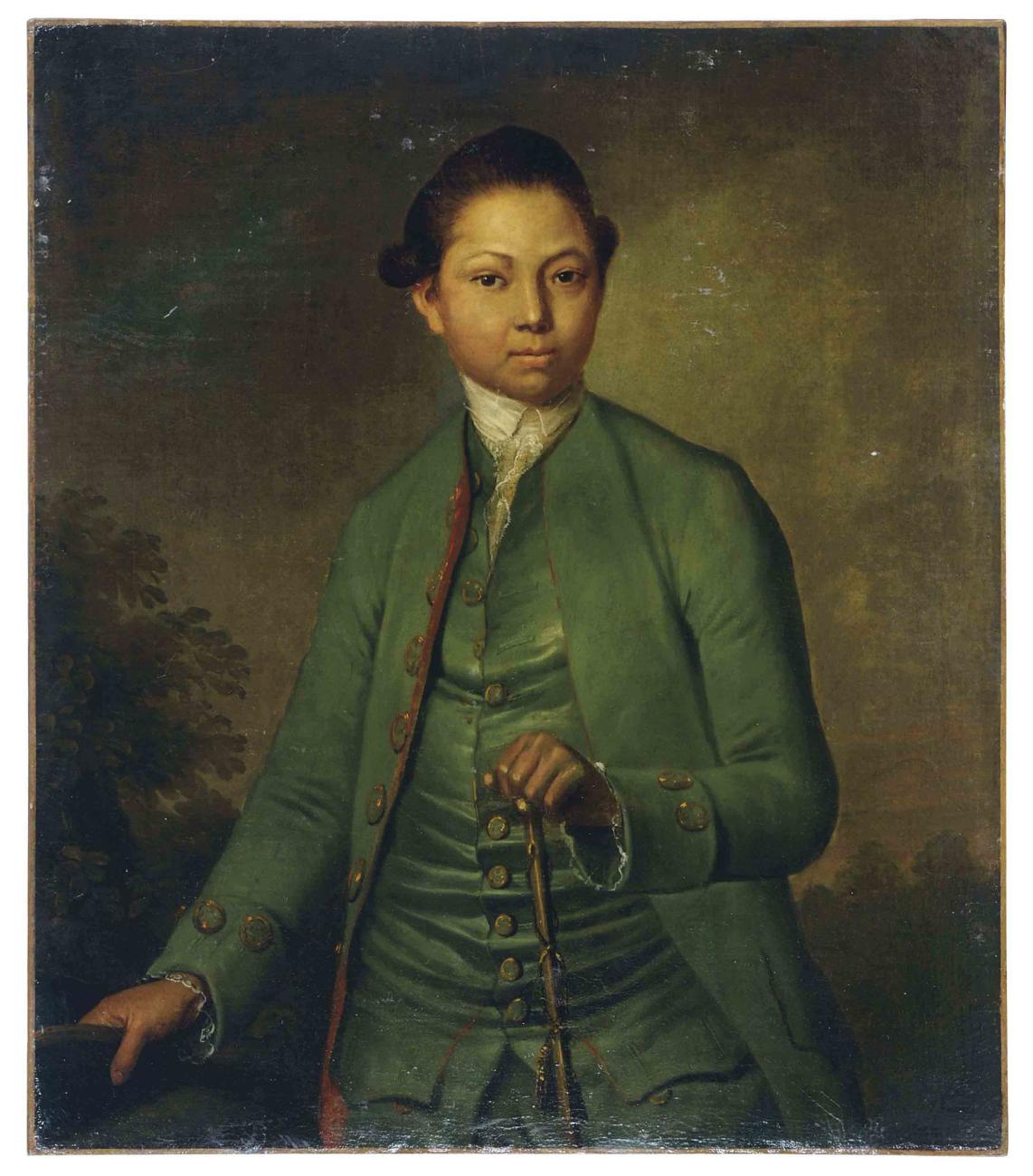
J. Schultz (German, 18th Century), Portrait of a young man wearing a green jacket holding a cane. Oil on canvas, Unframed: 80 x 68.6 cm. Private Collection.
After exhausting their own knowledge, Levine and Johnson turned to the expertise of colleagues across disciplines. They shared their research journey publicly through Portrait of Possibilities, a podcast in which they spoke to historians of race, botany, fashion, and archivists specializing in the lives of people of colour in Europe.
These conversations helped broaden their research. They uncovered that the young woman may have been connected to Europe as an enslaved person or as the mixed-ancestry child of an enslaved mother and a European father. Another major clue came from her garments, which suggested that the portrait was likely painted in the mid-1770s.
A year into the research, Johnson identified the partial signature as belonging to Berlin-born artist Jeremias Schultz (1722-1800), who lived and worked in the Netherlands. Schultz often painted merchants involved in global trade through the Dutch Empire, which confirmed suspicions that the young sitters were brought to Amsterdam in connection to Dutch colonization and trading.
Just as momentum was picking up, it came to a halt. With little record of Schultz’s work and numerous Dutch colonies established around the world by the 18th century, the possibilities were endless.
“We were looking for two young people of colour who were living in Amsterdam in the 1770s and would have occasion to be painted by Jeremias Schultz,” Levine remembered. “That, frankly, felt like a complete dead end to me.”
The Email that Changed Everything
Research on the portrait laid dormant for four years until it was reignited by an unexpected email from the Netherlands.
Tim de Jonge and his mother, Dorien Nieuwenhuijsen, had spent the last couple of years researching their ancestry. They learned that their direct ancestor, Beata Louise Schultz, was the first cousin of Jeremias Schultz. While looking for more information on the artist, they came across Portrait of Possibilities.
Believing their ancestral research could be useful, they connected with Levine and soon became the missing link in the long line of collaborators searching for Eleonora Susette’s name.
Listen to the newest episode of Portrait of Possibilities, where Adam Harris Levine interviews Tim de Jonge and Dorien Nieuwenhuijsen on identifying Eleonora Susette.
Archives provided by de Jonge and Nieuwenhuijsen showed that in 1768, Beata moved to Berbice with her husband, Stephen Hendrik de la Sablonière, who was appointed as the governor of the colony. When her husband passed away in 1773, she decided to move back to Amsterdam with her young daughter. In a letter to the Dutch government, she asked permission to bring two enslaved people who worked in her home with her. Their names were first discovered by Nieuwenhuijsen and de Jonge in the ship log of Beata’s journey back home: Michiel, who was an assistant to the late governor, and Eleonora Susette, who also used the name Johanna and cared for Beata’s young daughter.
In Amsterdam, Beata — who had commissioned pendant portraits of her and her husband before they left for Berbice — asked her cousin, Schultz, to also paint portraits of her son and daughter, and of Eleonora Susette and Michiel. Beata likely commissioned the paintings as a keepsake of the pair. Eight months after their arrival in Amsterdam, Eleonora Susette and Michiel were sent back to Berbice.
While there is physical resemblance between the two in Schultz’s depictions, there is no evidence to suggest that Eleonora Susette and Michiel were related.
A Beautiful Portrait with a Complicated History
With the sitter finally identified, the painting has now been aptly retitled Portrait of Eleonora Susette (1775) and is accompanied by updated label text that describes how the young woman came to be painted by Schultz.
After six years of trying to identify her, Levine’s most meaningful moment came after finding Eleonora Susette’s mother’s name in the archive.
“Having a name attached to a person can feel really abstract, but remembering that someone has a mother is such a deeply special moment,” he said. “I’m hopeful that Lucia Afiba was there waiting for her to come back from this journey.”
Levine emphasizes that while Portrait of Eleonora Susette is striking, the painting represents an especially turbulent time in the young woman’s life.
“I’m sure she was not asked if she wanted to cross the Atlantic twice. She didn’t have a lot of agency. It must have been a scary and strange time in her life to go from Berbice to a completely foreign place and then be sent back as soon as she started to get a sense of the new city.”
Identifying Eleonora Susette would not have been possible without de Jonge and Nieuwenhuijsen’s ancestral research. Yet, this development leaves the mother and son with a complicated legacy to reckon with.
“The first time we found there were [ancestral] links to enslaved people and plantations, [our] understanding of these things developed as [we] read more context about it,” de Jonge said in the most recent podcast episode. “It’s a process. You discuss it together. It confuses you, at least for me personally, and it takes a while for these ideas to set in your mind. Sometimes it’s a little painful, and you get a sense of shame.”
“We discussed a lot about what it means that our ancestors were the owners of plantations [and] had enslaved people – how do we relate to that information?” Nieuwenhuijsen added. “It really was a process realizing that although this happened in the 18th century, the next generation, my great-grandmother, for example, inherited money that must have come from the plantations.”
Eleonora Susette’s Legacy
What happened to Eleonora Susette after returning to Berbice is unknown, but Levine maintains his commitment to learning Eleonora Susette’s story beyond the moment of her portrait.
“I approach her with deep care because I want people who come to the museum and see kinship with Eleonora Susette to feel like she’s being well cared for,” he emphasized.
While the later details of her life are yet to be discovered, Eleonora Susette’s portrait leaves a legacy in itself; it is a rare depiction of an enslaved young woman of colour that deviates from usual portrayals of servitude, sexualization, and exoticization, both within the AGO’s Collection and European art from the 1700s. Although she was enslaved to Beata, the painting depicts Eleonora Susette with confidence and elegance.
Her portrait made waves before her name was even known. Now, through the collaborative efforts of many, Eleonora Susette’s image, name and story live on at the AGO.
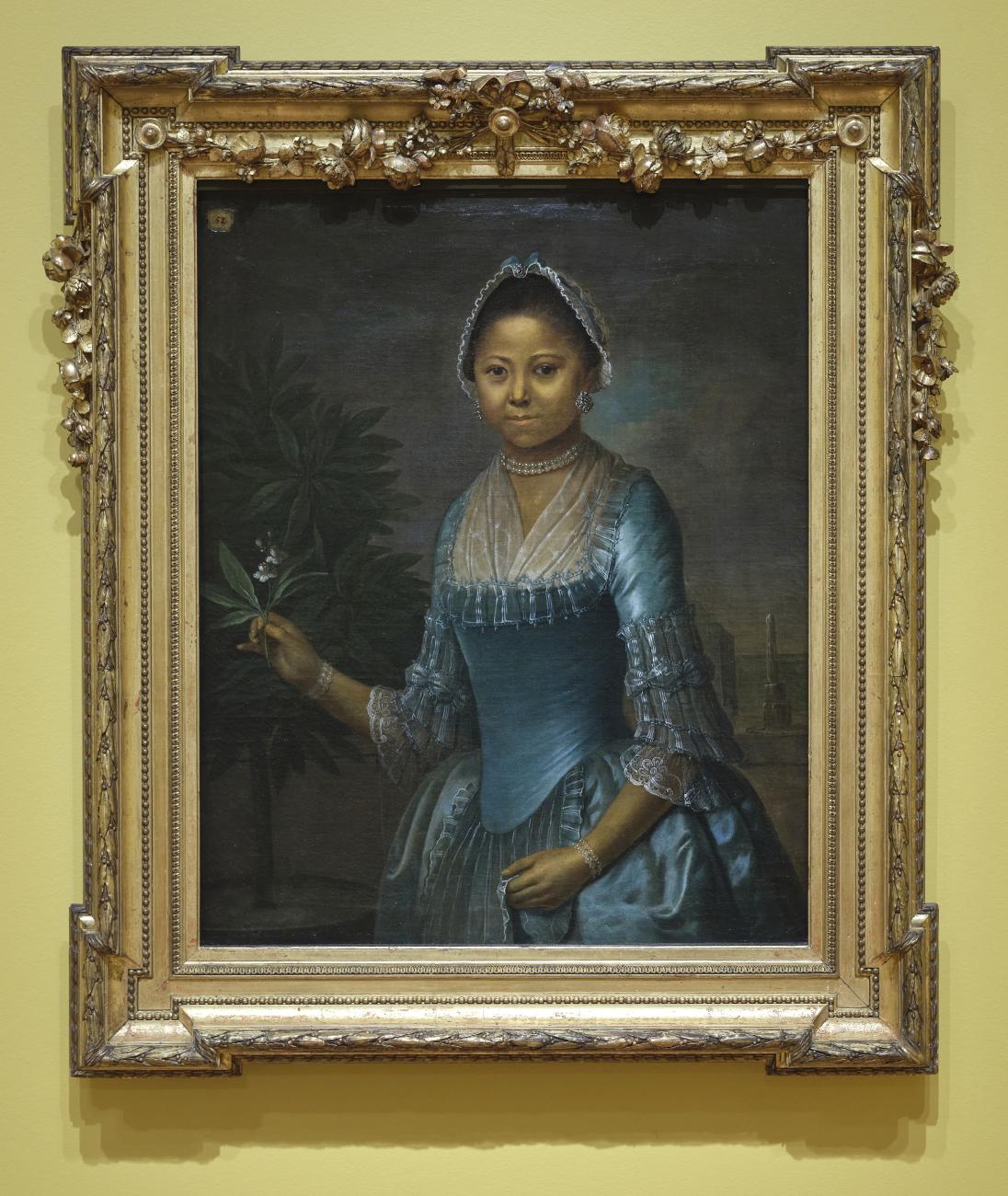
Jeremias Schultz. Portrait of Eleonora Susette, 1775. Oil on canvas. Overall: 80 × 56.2 cm. Art Gallery of Ontario. Purchase, with funds from the European Curatorial Committee, 2020. Photo © AGO. 2019/2437
Listen to Adam Harris Levine, the AGO’s Associate Curator of European Art, interview Tim de Jonge and Dorien Nieuwenhuijsen on identifying Eleonora Susette and Jeremias Schultz on the newest podcast episode of Portrait of Possibilities.
Visit Portrait of Eleonora Susette (1775) by Jeremias Schultz and the updated label text in the Frank P. Wood Gallery (gallery 123), located on Level 1 of the AGO.


![Keith Haring in a Top Hat [Self-Portrait], (1989)](/sites/default/files/styles/image_small/public/2023-11/KHA-1626_representation_19435_original-Web%20and%20Standard%20PowerPoint.jpg?itok=MJgd2FZP)