Mar 16, 2026
Among the Trees and Totem Poles with Emily Carr
Explore the painted visions of one of Canada’s most celebrated artists
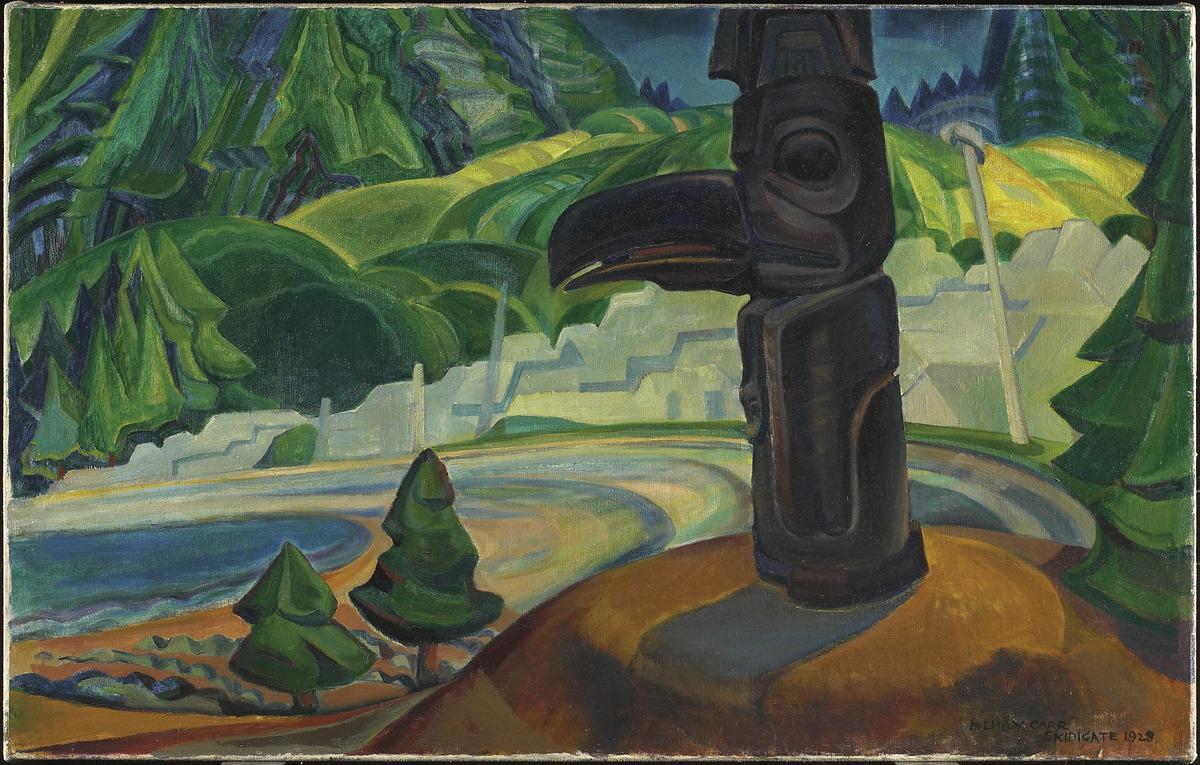
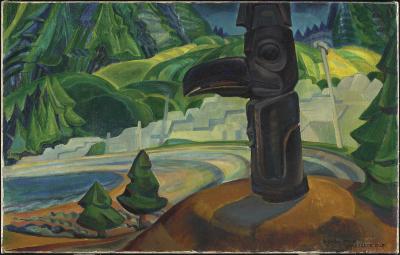
Emily Carr. Skidegate, 1928. Oil on canvas, Framed: 91.7 x 132.2 cm. Art Gallery of Ontario. Gift from the J.S. McLean Collection, by Canada Packers Inc., 1990. Photo © AGO. 89/781
Emily Coneybeare is a Curatorial Intern, Indigenous and Canadian Art at the AGO, who examines the art and complex legacy of one of Canada’s most celebrated modernist painters.
--
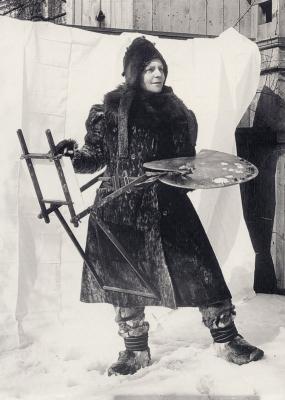
Emily Carr (1871-1945) built an imaginative visual language and a uniquely innovative vision, leading Canada’s modern art movement alongside the Group of Seven and her contemporaries. On view now on Level 2 (gallery 211) at the AGO are eight Emily Carr paintings, the majority of which were created around 1930, depicting lush forests, totem poles, and the villages of the Kwakwakaʼwakw, Haida, Wet'suwet'en, and Gitxsan nations.
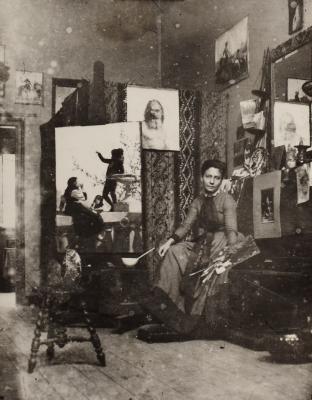
Born in 1871 in Victoria, British Columbia, Carr was the second youngest of nine children and raised in a house that was, as Carr later wrote, “extremely English.” She moved to San Francisco to study art in 1890, then to London, England, in 1899 and later to France. She returned to Canada in 1904 and began to develop her unique modernist vision, heavily influenced by styles she had encountered in France, specifically Fauvism, Post-Impressionism, and elements of Cubism and German Expressionism.
In 1907, she made a sightseeing trip to Alaska, one that had a profound influence on her and inspired her to begin a new project: documenting the Indigenous villages and totem poles of British Columbia, as seen in Hagwilgate/Untitled (Gitsegukla) (1912-1913).
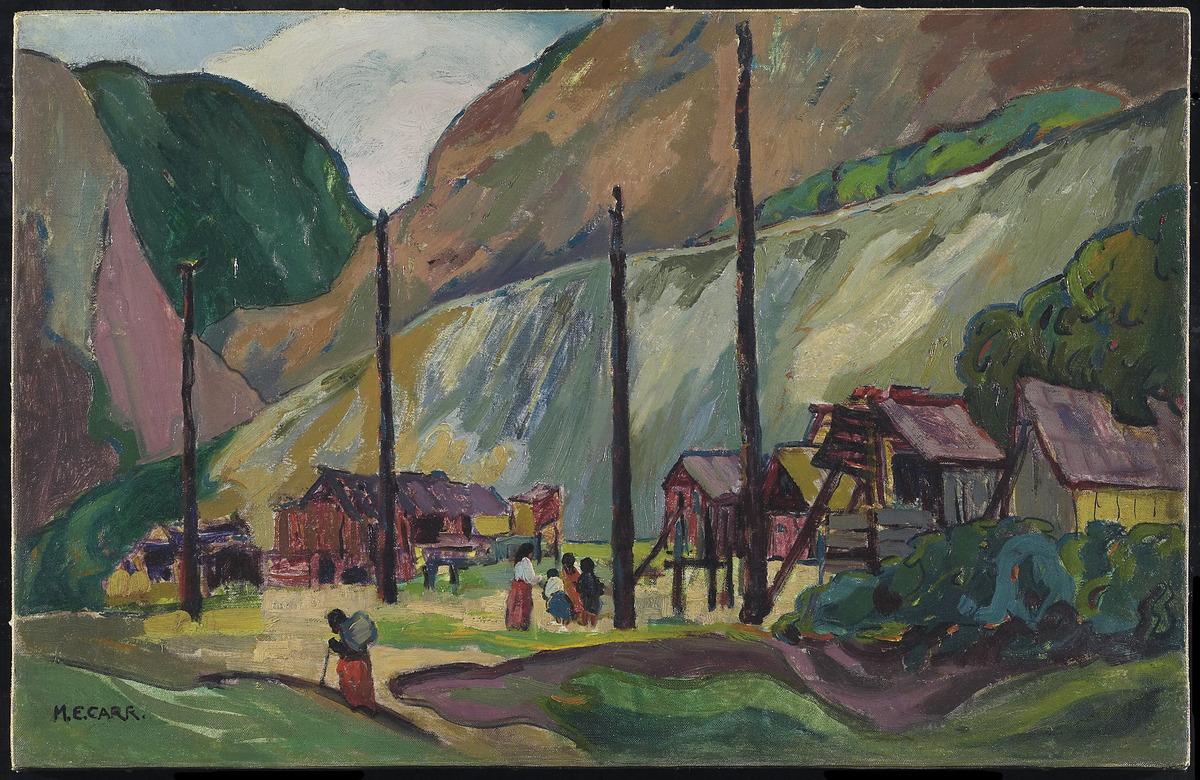
Emily Carr. Hagwilgate, 1912-1913. Oil on canvas, Overall: 36.9 x 57.3 cm. Art Gallery of Ontario. Purchase, 2004. Photo © AGO. 2004/36
Carr began taking trips all over the coast, from the islands, including Haida Gwaii, to the Upper Skeena River, staying in the villages she was painting as a careful observer. She declared her intention to “try and make as good a representative collection of those old villages and wonderful totem poles as I could, for the love of the people and the love of the places and the love of the art; whether anybody liked them or not... I painted them to please myself in my own way, but I also stuck rigidly to the facts because I knew I was painting history.” From her colonial perspective, she was creating a record of what she believed to be the relics of a “dying” culture, a manifestation of salvage anthropology, which was a late nineteenth to early twentieth century movement focused on documenting “vanishing” Indigenous cultures. She even sought support from the Minister of Education in British Columbia for this undertaking. However, reviews of her work were mixed, and her expressive execution was not seen as accurate documentation.
Carr was fascinated by what she encountered on her travels, such as Dzunukwa, a figure in Kwakwakaʼwakw mythology, representing the “Wild Woman of the Woods,” and a recurring subject of Carr’s paintings. Carr said of her first time seeing a totem representing Dzunukwa, “Her stare so over-powered mine, that I could scarcely wrench my eyes away.”
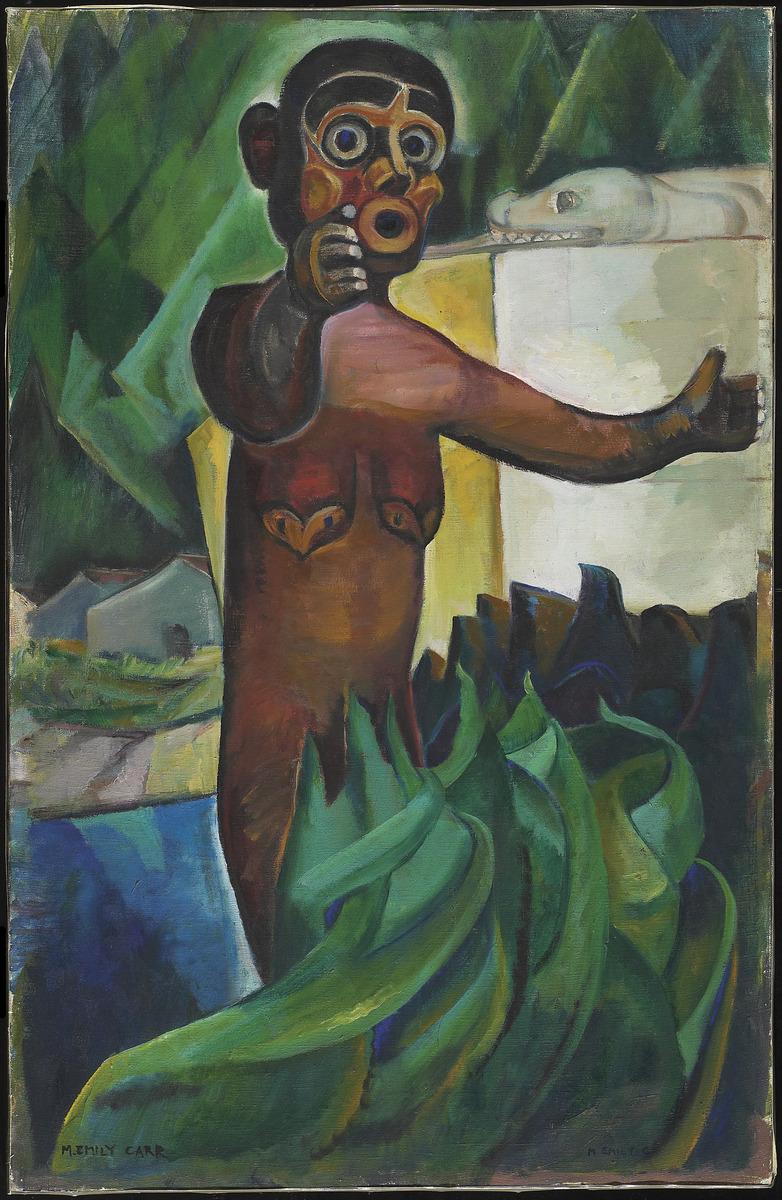
Emily Carr. Guyasdoms D'Sonoqua, c. 1930. Oil on canvas, Overall: 100.3 x 65.4 cm. Art Gallery of Ontario. Gift from the Albert H. Robson Memorial Subscription Fund, 1942. Photo © AGO. 2705
Carr’s legacy is complex. Scholars continue to question her role in perpetuating the harmful myths of salvage anthropology and accuse her of cultural appropriation. At the same time, she found herself at odds with the imperialism of her time that saw Indigenous cultures as primitive. Scholar Richard Hill has said that Carr “recognized the value, power, and sophistication of Northwest Coast art and culture at a time when many non-Indigenous Canadians did not. At the same time, her perspective was distorted by stereotypes and attitudes she likely couldn’t see in herself…” Artist Sonny Assu, who has engaged with many of Carr’s works in his own practice, has said that Carr was “oddly working both within and outside of the salvage paradigm.”
While she may have seen herself as recording a fading way of life, her work shows a living culture. Unlike the Group of Seven’s unpopulated depictions of the Canadian wilderness, Indigenous communities were central to Carr’s vision. While Indigenous peoples in Canada faced immense persecution during Carr’s lifetime, including the Potlatch Ban (1885-1951) and the residential school system, her prediction of a “dying” culture never came to pass. Indigenous communities have persisted and resisted with rich cultural and creative practices.
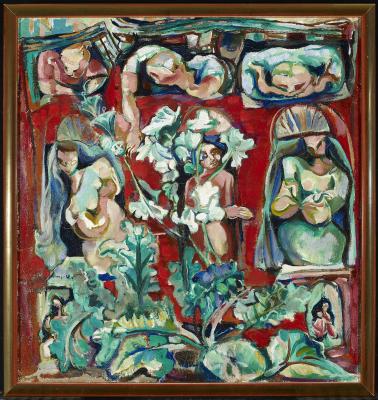
Carr’s work has been widely criticized for the colonial imaginary it presents, but Assu has stated, “she wasn’t the figurehead of colonialism through art… I think she was really conscious of the colonial onslaught, and she was just documenting that life that she saw and the ramifications of that.” She was determined to attest to the impact of colonialism on the villages she visited. Her depiction of a potlatch figure is seen in Potlatch Welcome (c. 1928).
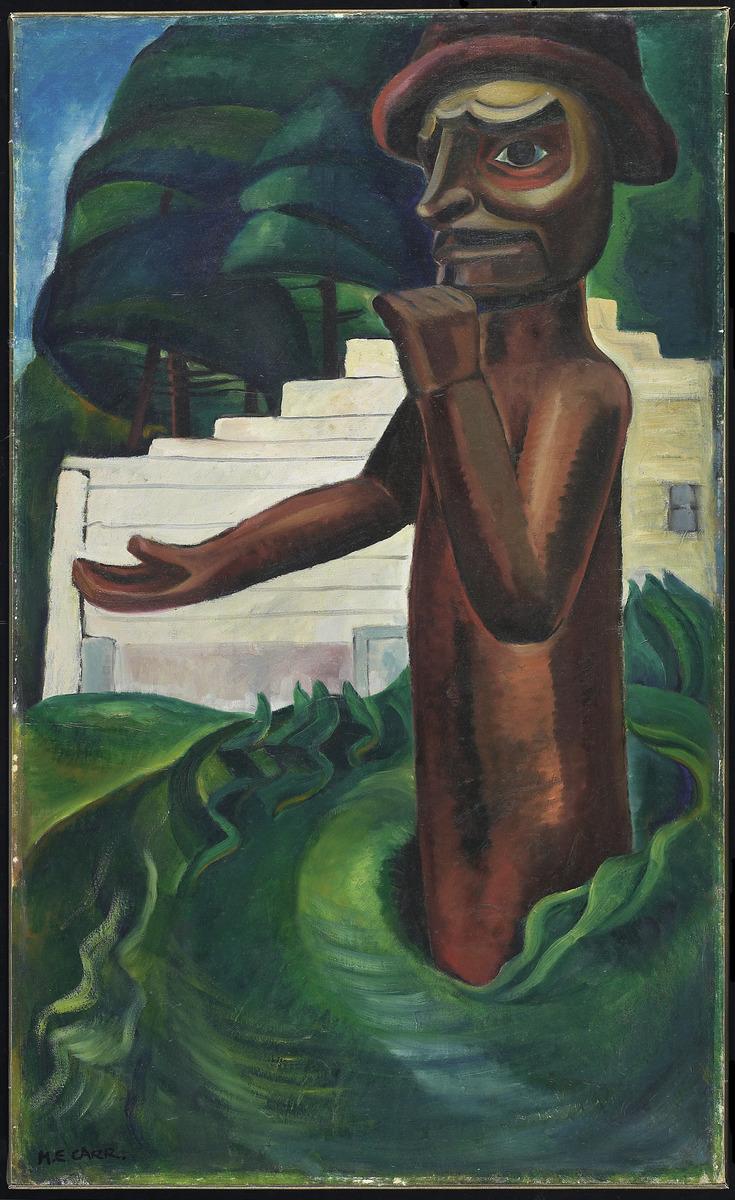
Emily Carr. Potlatch Welcome, c. 1928. Oil on canvas, Overall: 110.3 x 67.2 cm. Art Gallery of Ontario. Bequest of Charles S. Band, 1970. Photo © AGO. 69/120
Frustrated by her lack of commercial success as an artist, Carr stopped painting for 15 years. Her breakthrough came in 1927, when she was 55, and her work was exhibited at the National Gallery of Canada (NGC). At the exhibition, she met members of the Group of Seven, and this artistic community inspired her to continue painting and pursue her unique vision.
Although Carr’s work was not widely recognized during much of her lifetime, her paintings were eventually purchased by the Vancouver Art Gallery and the NGC towards the end of her life. In 1941, she won the Governor General’s Award for her book Klee Wyck. Today, she is regarded as one of Canada’s most well-known and beloved artists. Her artistic style is deeply connected to the Pacific Northwest and continues to influence artists throughout the region.
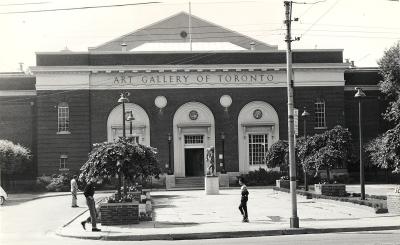
Select works by Emily Carr are currently on view on Level 2 in gallery 211 at the AGO.