Mar 9, 2026
Conserving Pegi Nicol MacLeod
A conservation project at the AGO aims to bring three works by the Canadian artist back on view
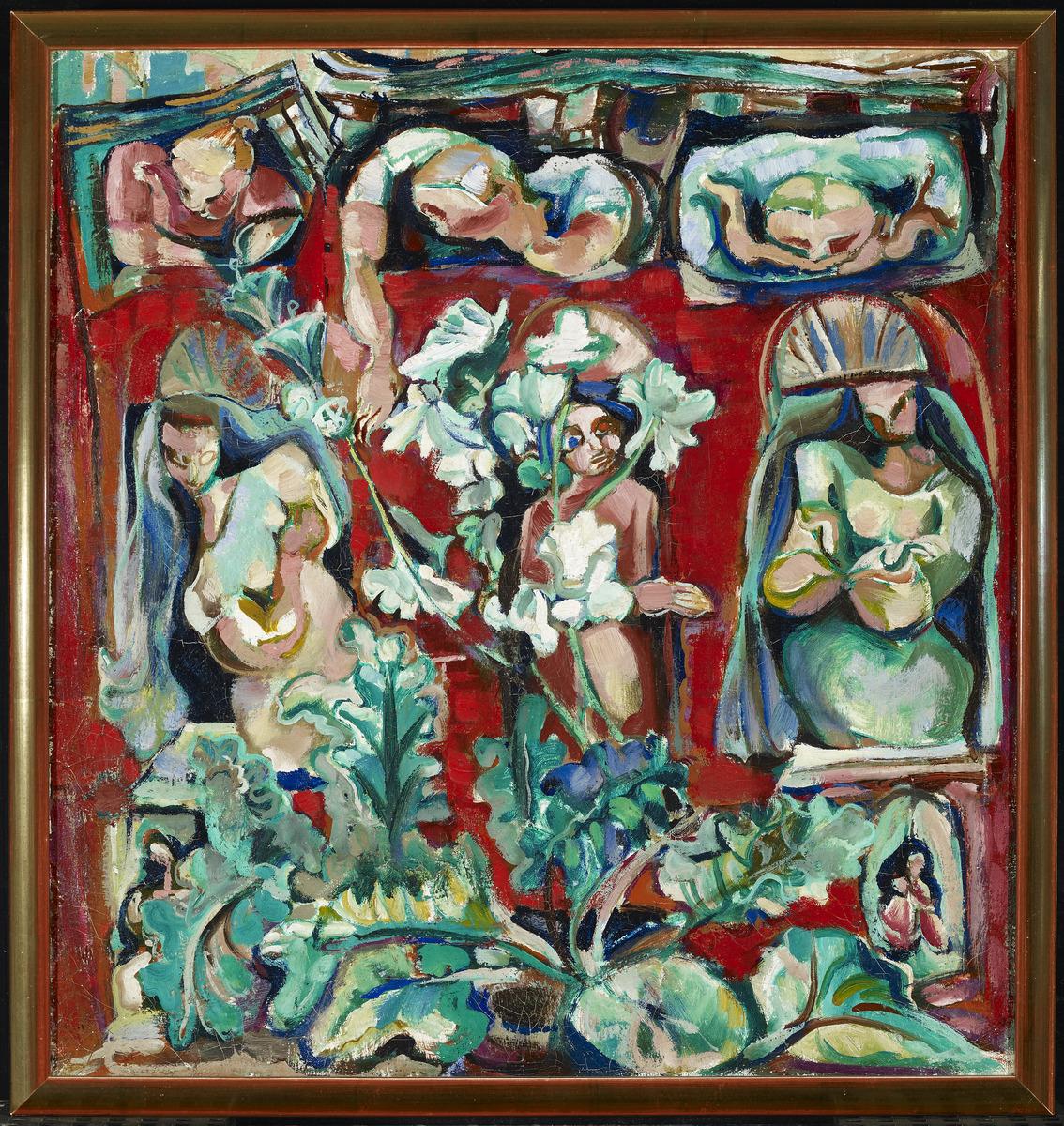
Pegi Nicol MacLeod. Untitled, c. 1940. oil on canvas, Overall: 40 x 37.2 cm. Art Gallery of Ontario. Gift of Elizabeth and Tony Comper, 2011. Photo © AGO. 2011/325
Three works by influential Canadian painter Pegi Nicol MacLeod (1904-1949) are undergoing some much-needed TLC (tender loving conservation) at the AGO.
Known for her experimental methods, MacLeod is one of Canada’s most notable artists and a key pioneer in the evolution of Modernism during the 1930s-40s. Much of her work drew inspiration from her everyday life, translating the energy of busy streets into gestural paintings filled with vivid colour and movement. MacLeod endearingly described the urban activity she loved to capture as the “ballet of street folk.”
Three works in the AGO Collection are examples of MacLeod’s bustling urban compositions. New York Apartment View, Manhattan (1940) and Untitled (1940) were created during MacLeod’s time in New York City, painted from the artist’s balcony on 88th Street. From this vantage point, MacLeod morphed the busy movements of her neighbourhood into decorative and symbolic forms. Main Street, Fredericton (1941) depicts a busy city street in winter through rich tones of brown, blue, and burgundy.
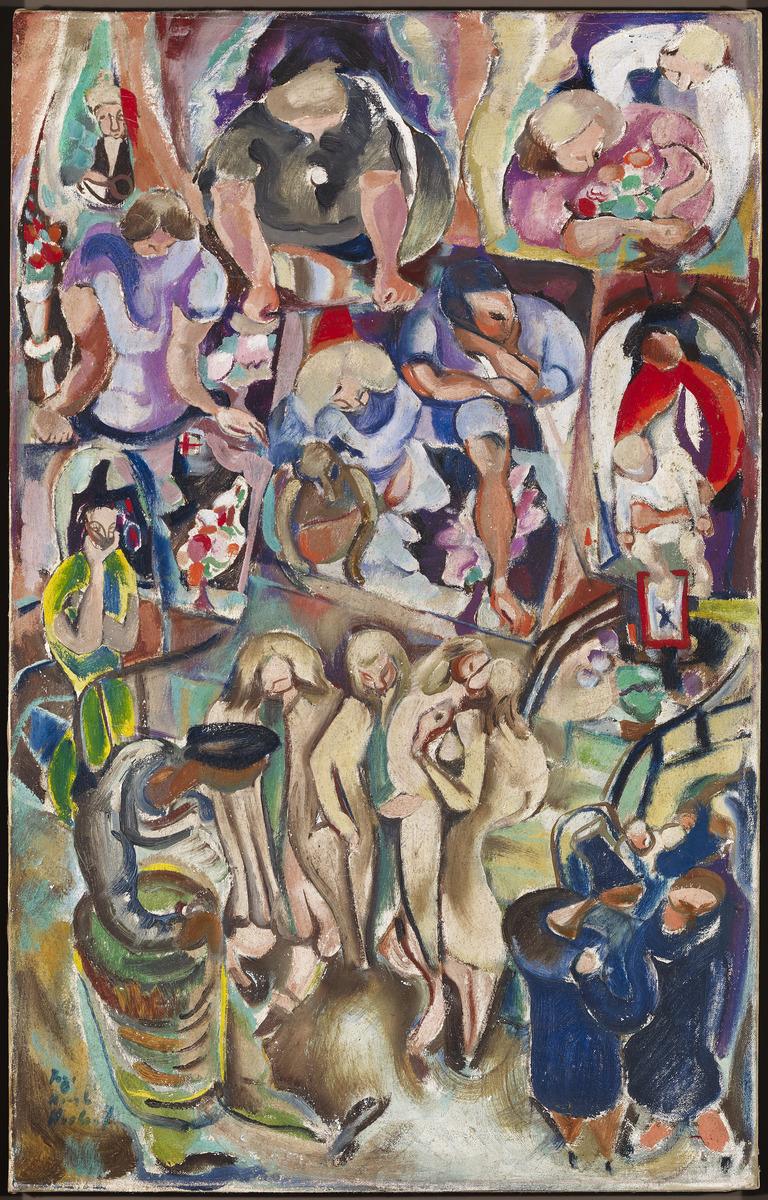
Pegi Nicol MacLeod. New York Apartment View - Manhattan, c. 1940. Oil on canvas, Overall: 66 x 50.8 cm. Art Gallery of Ontario. Gift of Elizabeth and Tony Comper, 2011. Photo © AGO. 2011/324
Due to extensive conservation concerns, these significant works by MacLeod have been tucked away in the AGO’s vaults for years. Led by Maria Sullivan, the AGO’s Head of Conservation, and Christina McLean Al-Saidi, the AGO’s Assistant Conservator of Painting, an ongoing conservation project aims to bring these paintings back into the public eye, where MacLeod’s under-recognized artistic vision can be appreciated.
MacLeod’s unconventional methods — while influential for her time — have made preserving her works almost 90 years later quite the challenge for conservators. The works exhibit cracking, paint loss, and delamination between paint layers; the adhesion between the lean, upper layer of paint and the thick, textured, underground layer of paint is especially poor across all three works. Metal soaps, which are compounds that form over time due to reactions between a painting’s pigments and oil binder, are responsible for much of this paint delamination while also causing colour changes and surface bumps. Previous analysis of the paintings showed that MacLeod incorporated unusual materials into her paintings, including dyes and non-drying oils, furthering the instability of the works.
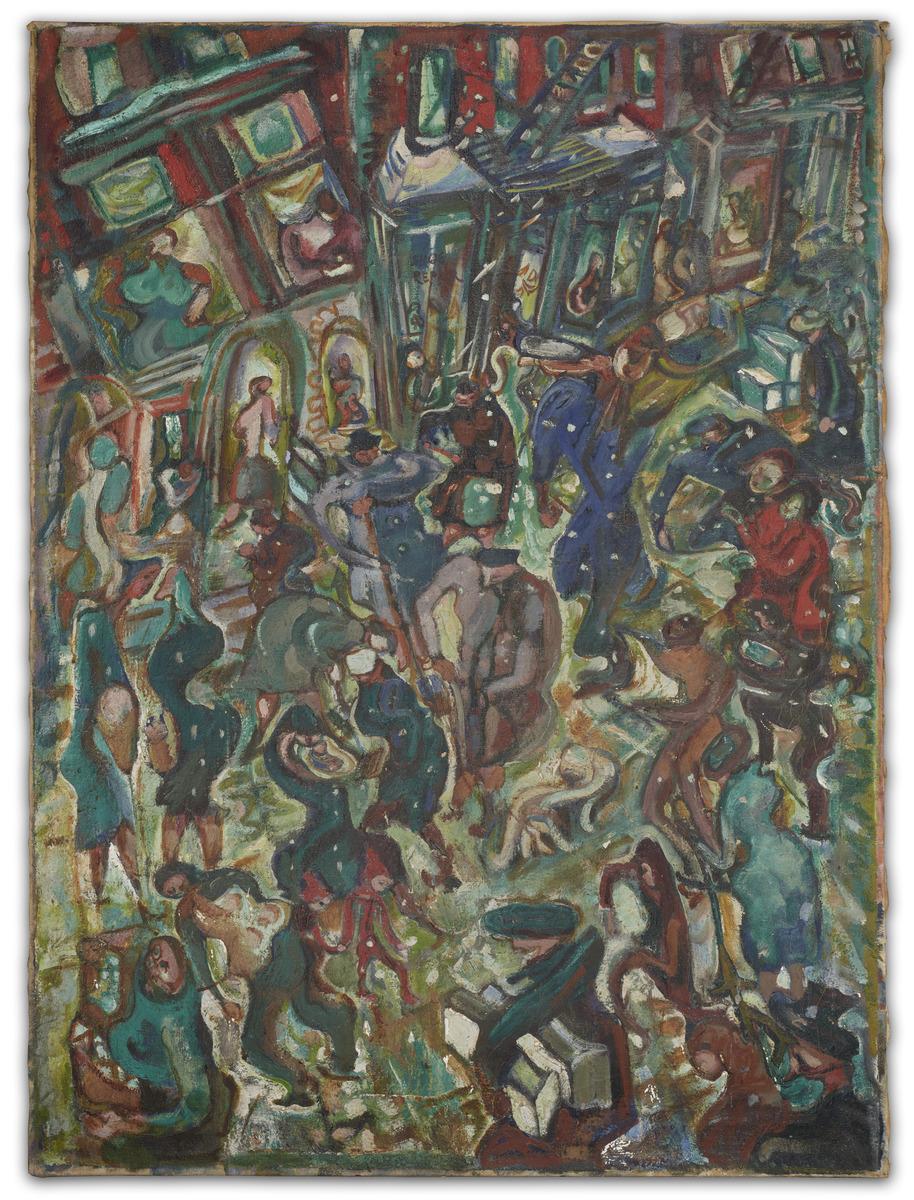
Pegi Nicol MacLeod. Main Street, Fredericton, 1941. oil on canvas, Overall: 96.3 x 71.2 cm. Art Gallery of Ontario. Gift from the J.S. McLean Collection, by Canada Packers Inc., 1990. Photo © AGO. 89/877
So far, McLean Al-Saidi has dedicated over 275 hours consolidating paint flakes on Main Street, Fredericton, and there are still many more hours to go on just this painting alone. Rather than applying adhesive across the whole work, this painstaking conservation treatment carefully secures fragile sections where the original paint layer has begun to lift. This localized approach allows conservators to tailor the treatment of each area while also preserving the original texture, appearance, and integrity of the painting.
“It’s been meticulous work but incredibly rewarding to see the stabilization progress over time,” McLean Al-Saidi said.
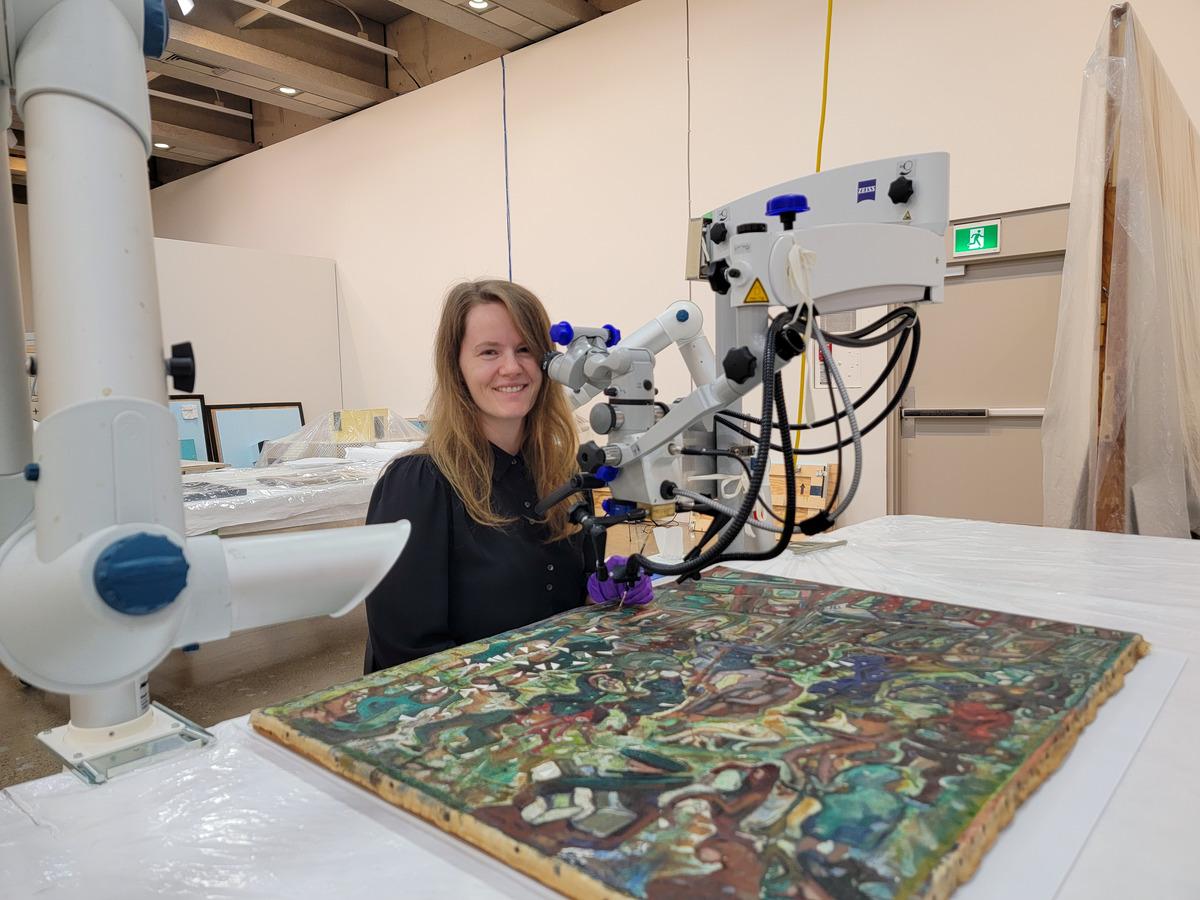
Christina McLean Al-Saidi working on Pegi Nicol MacLeod's Main Street, Fredericton (1941). Photo by Justina Yu.
While the project began in December 2024, there is still considerable work ahead until the paintings are ready to return on view. The Conservation team is hopeful that this major conservation effort will be completed by early 2027.
Funding for the conservation of this artwork was generously provided through a grant from the Bank of America Art Conservation Project. Bank of America and its predecessor companies have roots in Canada that go back to 1903. Today, Bank of America has offices across Vancouver, Calgary, Toronto and Montreal helping clients navigate markets, industries and geographies to drive growth on a global scale.