May 7, 2026
Edna Taçon: Champion of Non-Objective Art
Learn more about Taçon’s unique life and career, as seen in her focused solo exhibition at the AGO
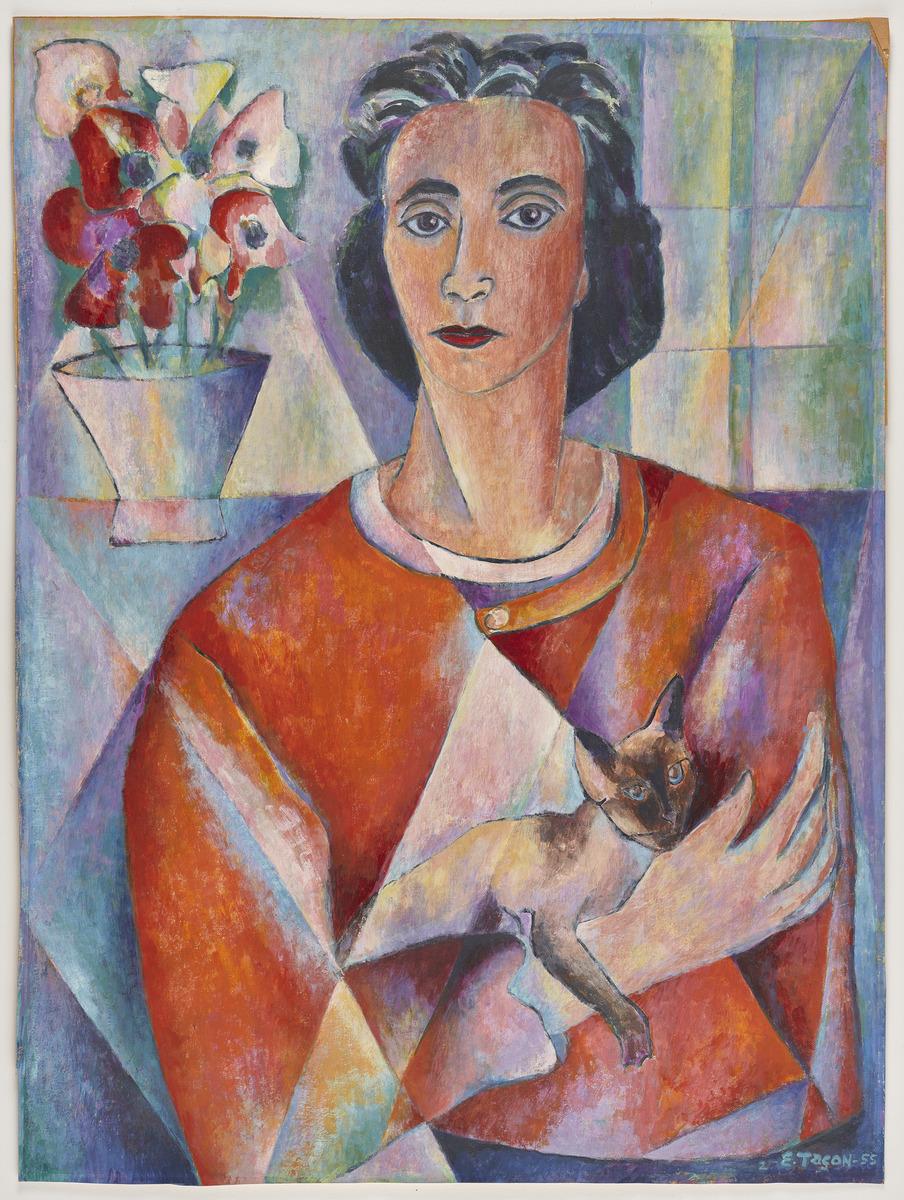
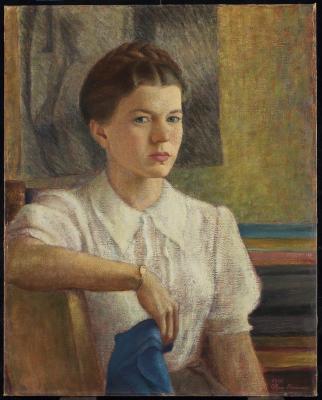
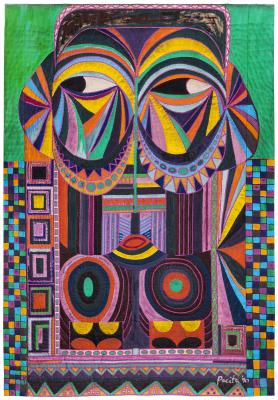
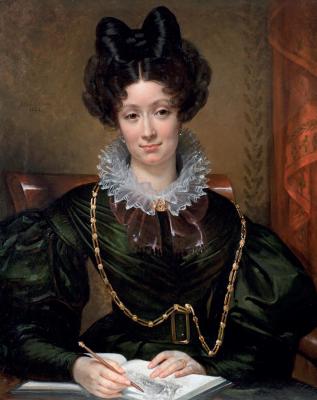
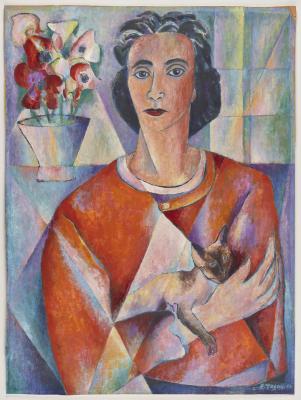
Edna Taçon. Self‐portrait, 1944 - 1949. Opaque watercolour on paper, Overall: 152.4 × 101.6 cm. Collection of Paul and Susan Taçon. © Estate of Edna Taçon. Photo: AGO.
During the early-to-mid 20th century, it was uncommon for women to pursue careers as professional musicians, visual artists or designers. Edna Taçon did all three. Beginning as a young, dedicated concert violinist, she developed a keen interest in non-objective painting and became a trailblazer of abstract art in Canada. Taçon’s artistic career was equally rooted in both Toronto and New York City, where she regularly exhibited her works and influenced arts communities in a variety of ways.
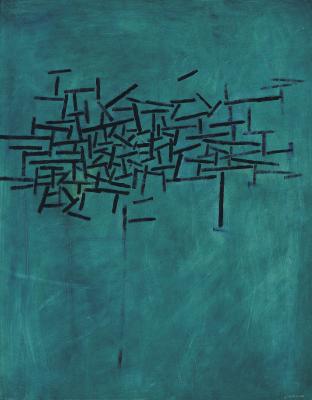
On view now at the AGO, the focused solo exhibition Edna Taçon: Verve and Decorum shines a light on the late artist’s colourful legacy. Curated by Renée van der Avoird, the AGO’s Associate Curator of Canadian Art, the exhibition features more than 25 oil paintings, watercolours, and paper collages from the 1940s.
Take a closer look at four of the key periods that shaped Taçon’s life as an artist.
Violin and the Early Years
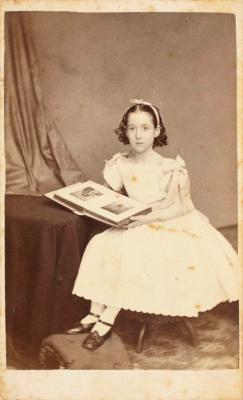
Edna Jeanette Taçon (née MacDougall) was born in Milwaukee, Wisconsin, in 1905. At age six, after the death of her father, she was adopted by a widow named Jane MacFarlane from Goderich, Ontario. She began training on the violin as a child, and at age 19, she moved with her adopted mother to Toronto to study music.
Taçon played her first public concerts the following year and tenaciously pursued a career as a concert violinist for roughly the next decade. She rehearsed with a high level of rigour and discipline, performing at legendary Toronto venues like Massey Hall, and spending significant periods playing throughout Ontario and New York State.
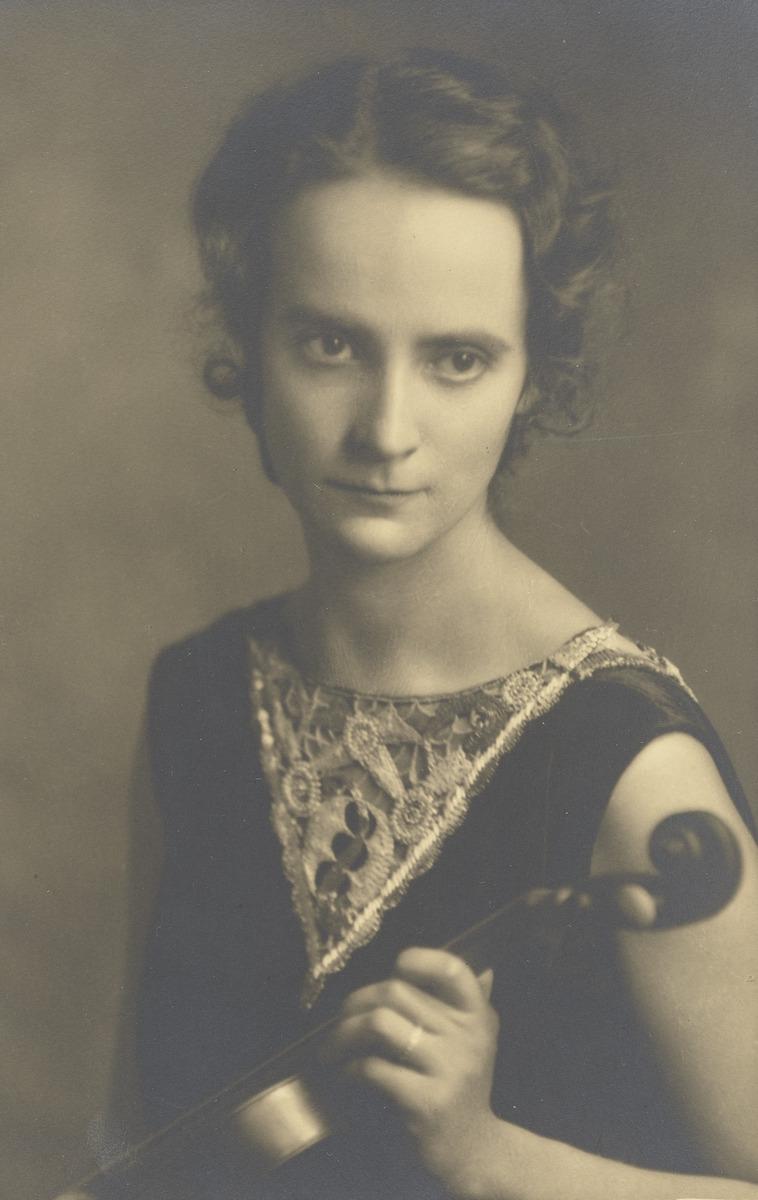
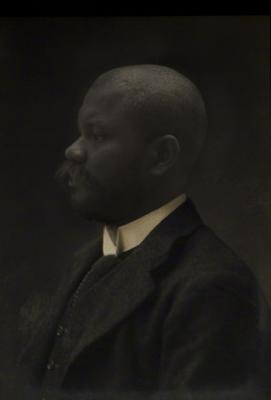
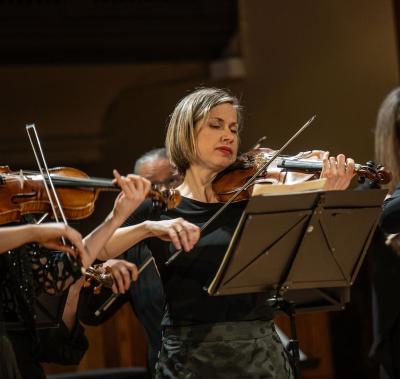
Melbourne Photo Studios. Edna Tacon Holding Violin, c. 1920s. Photogravure, Overall: 27.8 × 17.3 cm. Promised gift of Paul and Susan Taçon. © Estate of Edna Tacon.
In 1929, she married Canadian artist and teacher Percy Henry Taçon. The two settled in Hamilton, where they would have two sons, Paul (born 1932) and Peter (born 1936). By the mid-1930s, Taçon began to focus less on her music career due to the financial constraints of further training and a changing home environment. Though she had always dabbled in visual art – mostly caricatures and pastel drawings – it was around this time that she started to take artmaking more seriously. She developed a fascination with non-objective art and slowly began creating works in the style that would define the rest of her career.
Evolving in New York
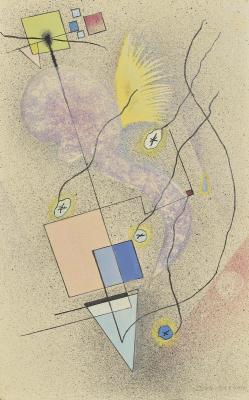
In 1940, the Canadian art scene was still largely influenced by the landscape painting of The Group of Seven, leaving a very limited appetite for abstract art. That year, Taçon decided to write a letter to Hilla Rebay, director of the Museum of Non-Objective Painting in New York City (later the Solomon R. Guggenheim Museum), that would shift the course of her career. Keen on entering New York’s non-objective art community, she requested a meeting with Rebay to present some of her recent collage works on paper. As a result, three of her works were included in a group exhibition at the museum, a moment that began a long and fruitful relationship with the institution and Rebay.
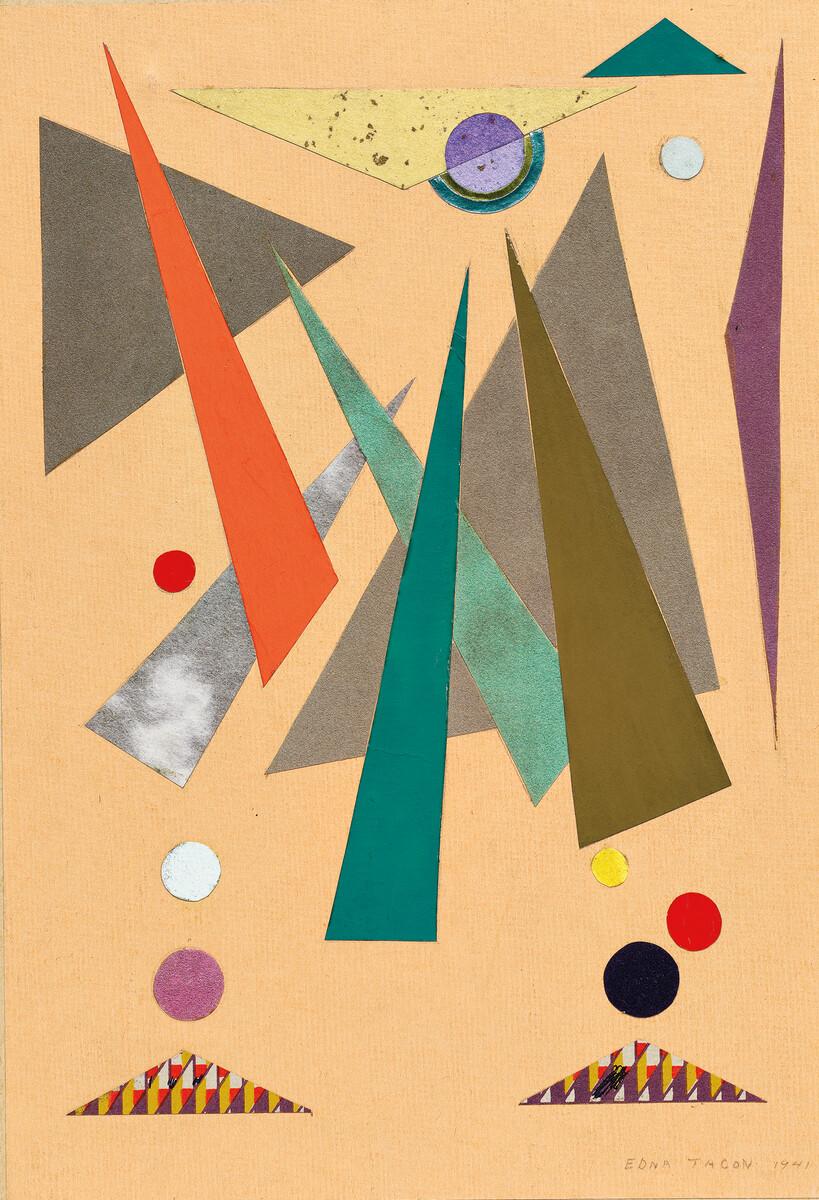
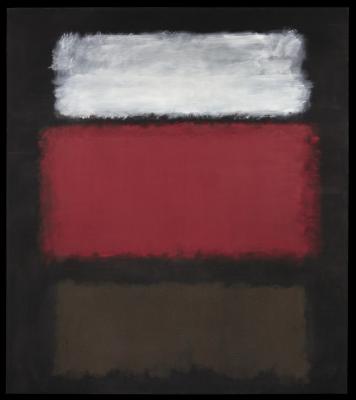
Edna Taçon, Untitled, 1941. Colored, flocked, and printed paper collage, mounted to Paperboard, 29.8 × 19.7 cm. Solomon R. Guggenheim Museum. Gift, the artist’s estate and Paul Taçon, 2025. 2025.28 © Estate of Edna Taçon.
Between 1941 and 1945, Taçon was part of 11 exhibitions at the museum. Featuring collage works (called paper plastics), and her signature non-objective paintings, these shows were instrumental in establishing Taçon as a premier artist and a fixture in the New York non-objective community.
During her long periods in New York, to keep up with the fast-paced and expensive lifestyle of the city, Taçon took on additional jobs to help make ends meet. She was employed as a docent and tour guide at the museum, greeting and guiding visitors through its galleries. She had a flair for shop window arrangement and was hired to design window displays for a number of prominent stores in Manhattan. Taçon even dabbled in mural painting, creating a three-part mural featuring underwater scenes for a New York restaurant.
Canadian Prominence
As was often the case for Canadian artists, Taçon’s success in New York City was a catalyst to legitimize her career back in Toronto. Eaton’s Fine Art Galleries, located inside the well-known department store’s College Street location, was the site of Taçon’s first major Canadian solo exhibition in 1941. This was the first-ever show dedicated to non-objective art in Canada, and the first of multiple Eaton’s solo exhibitions for Taçon over the next few years.
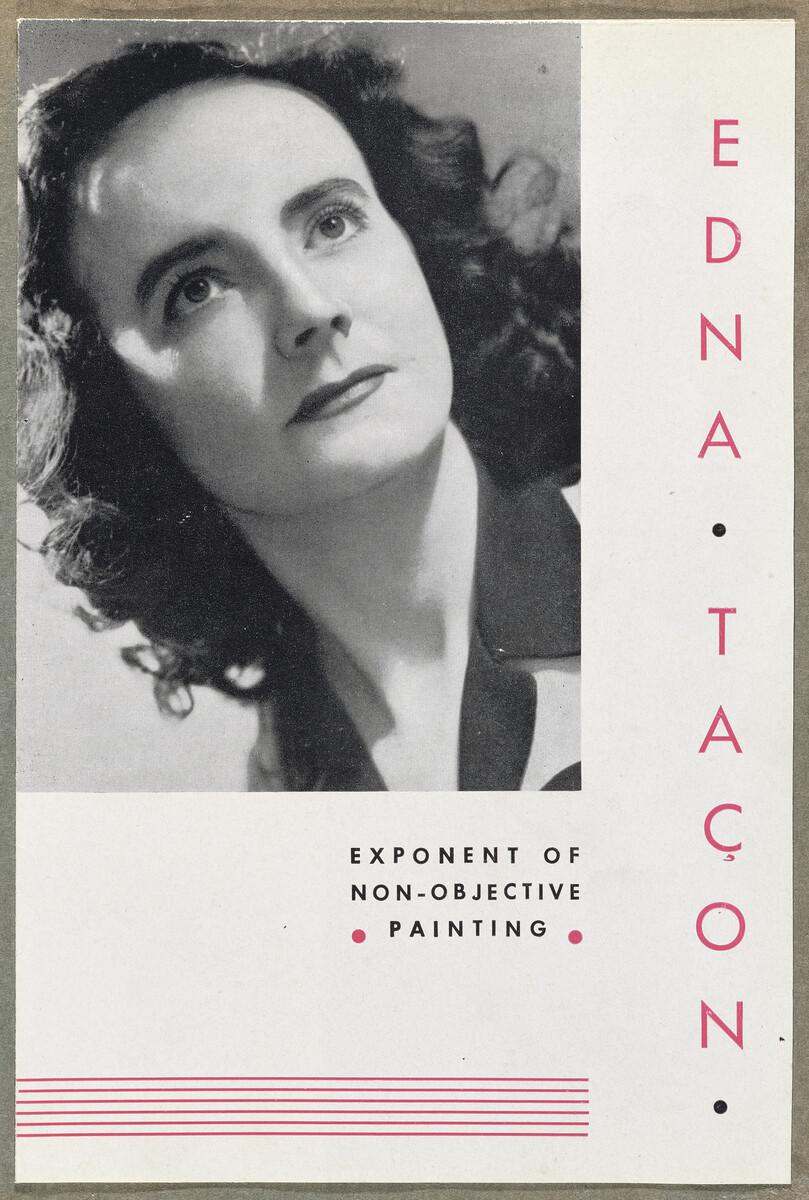
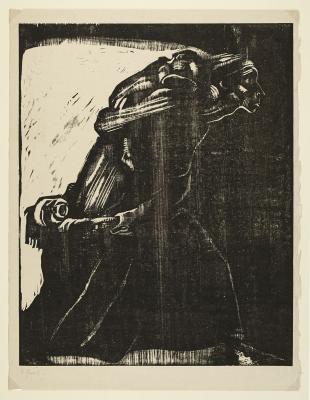
Exhibition pamphlet for Edna Taçon: Objective for Non-Objective Painting, Eaton's Fine Art Gallery, 1944. Edward P. Taylor Library & Archives, Art Gallery of Ontario. Promised gift of Paul and Susan Taçon. Photo: AGO.
By 1943, Taçon was considered a leading contemporary artist in Toronto. Her relationship with the AGO began that year when she was included in the group exhibition Four Canadian Artists: Jessie Faunt, Michael Forster, Edna Taçon, Gordon Webber, in which she exhibited 15 works. In 1945, Taçon participated in three more major group exhibitions at the AGO, marking the peak of her prominence in the Canadian art scene. Later that year she was invited to exhibit with the Canadian Group of Painters – a prestigious collective that she would go on to become a member of the following year.
The Latter Years
In the late 1940s, Taçon’s tumultuous relationship with her husband Percy became untenable. In her diaries, she describes him as both physically and verbally abusive, and largely unsupportive of her career. After their official divorce in 1947, she moved to New York, permanently stepping back from her art career the following year. She lived the rest of her days in New York, surrounded by a robust community of creatives, occasionally traveling to Europe and leisurely painting. Taçon passed away in 1980 at the age of 75.
Today, her work can be found in the collections of the Solomon R. Guggenheim Museum, the AGO,the Art Gallery of Hamilton, and the Robert McLaughlin Gallery.
The AGO exhibition Edna Taçon: Verve and Decorum helps to establish Taçon’s legacy as a remarkable multidisciplinary artist, a trailblazing woman of distinction, and the foremost champion of non-objective art in Canadian history.
Edna Taçon: Verve and Decorum is on view in the Nicholas Fodor Gallery (gallery 140 and gallery 141) on Level 1 of the AGO.
Source information for this story is derived primarily from, Verve and Decorum: The Non-Objective Art of Edna Taçon by Renée van der Avoird. Read the complete essay in the exhibition’s catalogue, Edna Taçon, available at Shop AGO and online.