Jan 15, 2026
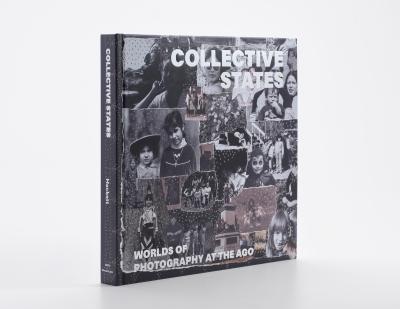
Collective States Book Launch January 31
In this essay, AGO Curator Sophie Hackett reflects on how photography found its place in the AGO Collection
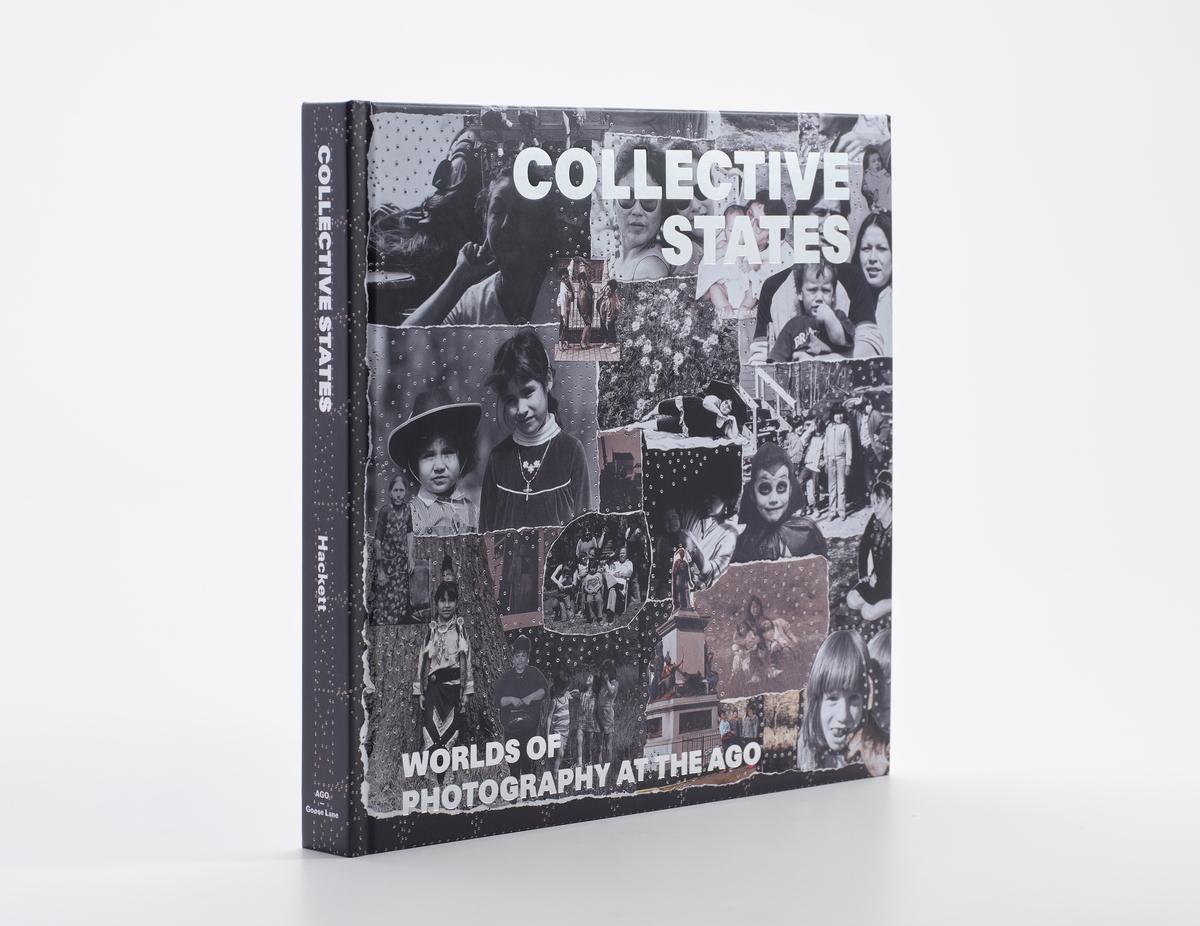
A new hardcover, co-published by the AGO and Goose Lane Editions, marks the 25th anniversary of the Gallery’s photography department. Collective States: Worlds of Photography at the AGO traces the history of the medium at the AGO, from the origins of its permanent photography collection to today. The book features the work of early innovators, 20th-century trailblazers, and contemporary artists, alongside the collections of 20th-century press photographs, pop photographica, and photographic albums.
Organized into five thematic sections with over 200 images, Collective States includes essays by Sophie Hackett, the AGO’s current curator of photography, and the department’s founding curator, Maia-Mari Sutnik.
Currently on view at the AGO until May 2026, the exhibition Collective Visions: Celebrating 25 Years of Photography highlights the breadth of the AGO’s photography collection and the people who helped build it. Organized by Hackett, it represents a range of artists, artistic genres and approaches, subject matter, and materials. Structured as an “exquisite corpse”—the collaborative game popularized by the Surrealists in the 1920s—more than 90 artists, collectors, donors, curators, and scholars from Toronto’s photography community have each selected a photograph in response to the previous choice.
The book launch for Collective States: Worlds of Photography at the AGO is on Saturday, January 31, from 1 pm to 4 pm, with remarks at 1:30 pm, at Stephen Bulger Gallery on 1356 Dundas Street West in Toronto. This is an essay from Collective States, written by Hackett.
Worlds of Photography
Twenty-five years ago, the Art Gallery of Ontario (AGO) committed to photography as an official area of focus by establishing a department exclusively dedicated to the medium. This book marks that significant milestone and aims to do two things. First, it seeks to bring a range of works from the AGO’s photography collection into view for the first time, underscoring the richness and variety of the gallery’s holdings, which are not widely known. Second, it aims to document two decades of advocacy that led to the department’s formation in 2000 and its work since then, setting all these activities within the wider context of Toronto’s photography scene.
The book’s title, Collective States, references the department’s foundational goals as the gallery’s first photography curator, Maia-Mari Sutnik, articulated them: a commitment to “building a collection of primary photographic materials of artistic, historical, and social significance, with emphasis on exploring the collective states of photographic expression and the means by which photographers have achieved their objectives.”
Sutnik’s statement of guiding principles continued:
The department is committed to exploring not only the wider canon of photography and its renowned historical figures, and the acknowledged “front line” modernists, but also the larger universal scope of photography that has played a seminal role in our visual culture. It takes initiatives to explore the thrusts of creativity in the development of the vernacular and the visual forms of anonymous photography of the past, referenced in the larger body of picture-making that embraces the documentary, photojournalism, reportage, popular photographic objects of everyday life, and the widespread attention to “other pictures” assembled in personal albums. This approach will contribute to the fabric of new ideas and revised studies of how invention, discovery, science, and art have combined to form an account of photography that was unimaginable at the time the medium re-affirmed its practice as a collecting activity.
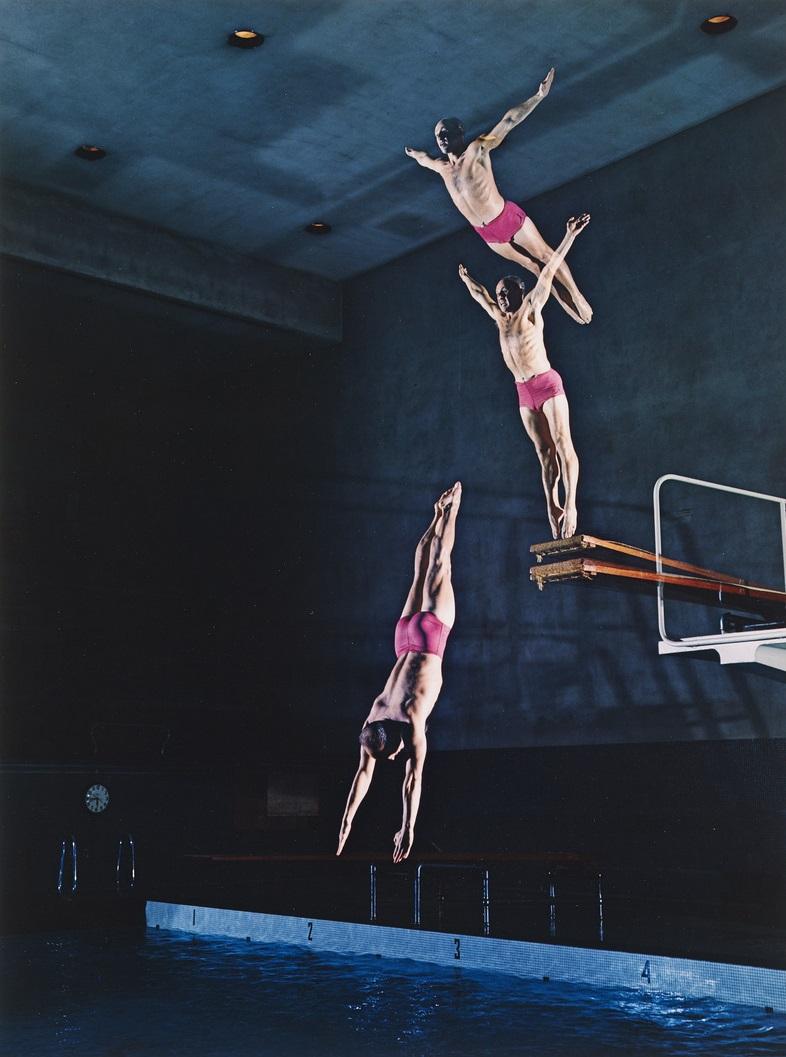
Harold Eugene Edgerton. Diver, between late 1950s and late 1980s. Dye Transfer print, Overall: 50.8 × 38.9 cm. Art Gallery of Ontario. Gift of Rose Baum and Family, David Feldman, The Menkes Family, Shabin and Nadir Mohamed, Marc and Alex Muzzo, David Ross, Felicia Ross, Gretchen Ross and Victoria Ross, 2021. © 2010 MIT. Photo: AGO. 2021/1312
This guiding vision acknowledged the medium’s multiple uses and argued for their importance as part of a broad and interconnected history of photography, highlighting the key roles photographs have played in our visual culture to relay events, act as keepsakes, and create visual narratives. The idea of “collective states” remains a potent and capacious way to describe the medium’s multiplicities, its varied uses, and our ongoing engagement as viewers.
The department, with its interest in photography’s diverse uses and materials, has aimed to keep its field of inquiry broad and open, like the medium itself. This aim has proactively evolved in recent years to encompass a greater diversity of makers, both known and unknown. It may be no surprise that the core of the AGO’s collection reflects photography’s origins in France and England in the mid-1800s and follows its numerous paths from there—migratory, colonial, journalistic, familial, mercantile, and expressive. The collection also reflects the North American context, and key practitioners and artistic movements, especially as they connect to Toronto, one of the continent’s largest and most diverse cities. A focus on the medium’s roles prompts an awareness of the conditions under which any given photograph was created, in the past or in the present: Who held the camera, for whom did they intend the image, for what purpose and in what context, and what materials did they use to produce its finished form.
Acquisitions, exhibitions, and programming have all expanded in recent years to address important gaps. For example, until as recently as 2017, the only photographic work by an artist of Black or African descent was by Lorna Simpson; today our collection includes more than 3,000 such works, including photographs by major artists, snapshots of Black family life, and the Montgomery Collection of Caribbean Photographs.
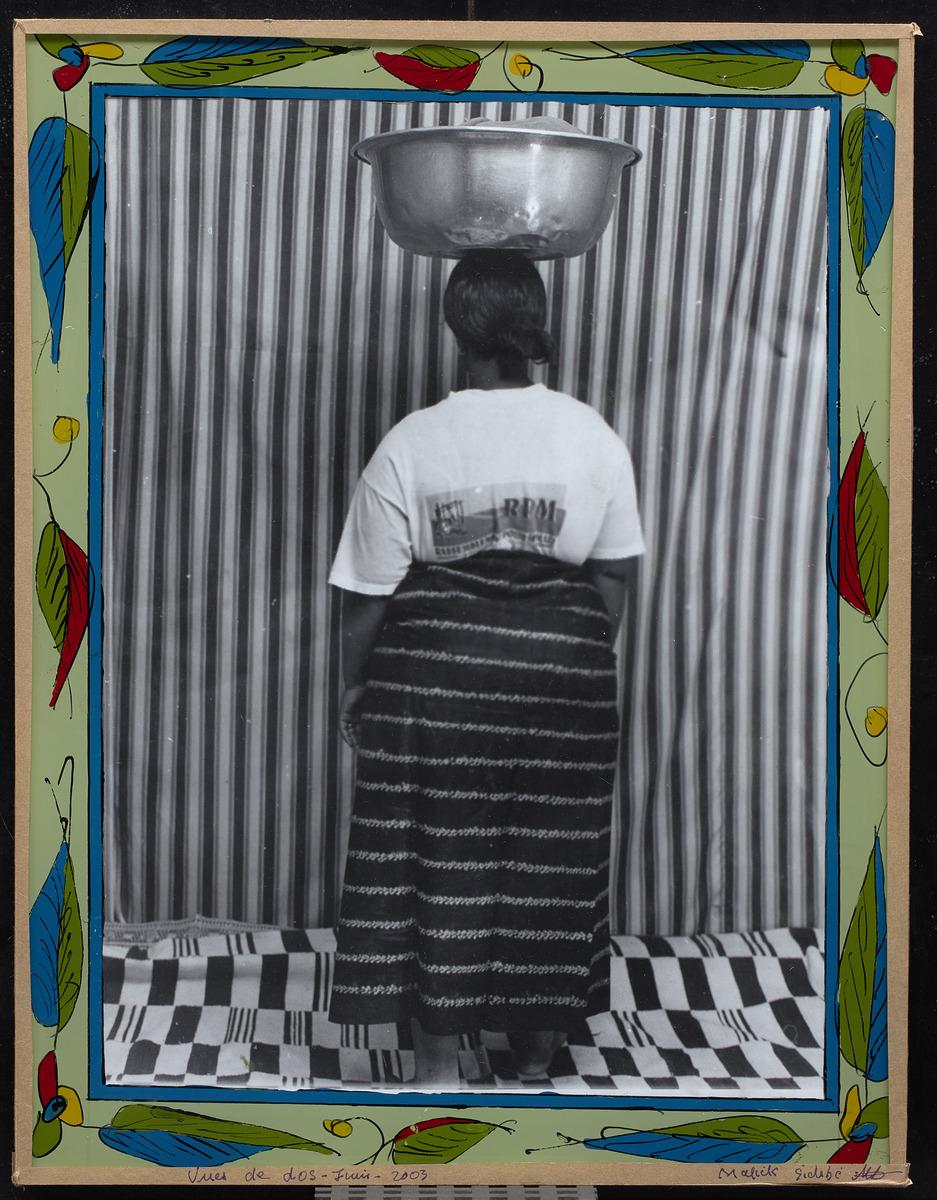
Malick Sidibé. Vues de dos - Juin, 2003. Vintage gelatin silver print, glass, paint, cardboard, tape, and string, Framed: 43.2 × 33 cm. Purchase, with funds from the Photography Curatorial Committee, 2020. © Malick Sidibé. Courtesy of the family of Malick Sidibé and Jack Shainman Gallery, New York. 2019/233
Colleagues from several curatorial departments, past and present—many from before the advent of the Photography Department—have brought photographic works into the collection, including Alan Wilkinson, Alvin Balkind, Dennis Young, Roald Nasgaard, David Burnett, Philip Monk, Barbara Fischer, Matthew Teitelbaum, Jessica Bradley, Christina Ritchie, Michèle Thériault, Michelle Jacques, Ben Portis, David Moos, Kitty Scott, Adelina Vlas, Xiaoyu Weng, Gerald McMaster, Georgiana Uhlyarik, Wanda Nanibush, Taqralik Partridge, Renée van der Avoird, and Julie Crooks. Each has made their mark, enriching the gallery’s holdings, and thus enriching the histories of the field, according to their curatorial expertise and interests.
Today, the AGO photography collection numbers more than 70,000 objects. For staff and interns in the department, the research and curatorial work focused on this collection yields discoveries on a near-daily basis as we explore the objects’ subject matter, uses, makers, materials, and connections across time and place. Collective States aims to bring this spirit of discovery to life for readers—whether they’re familiar with the AGO collection or encountering it for the first time.
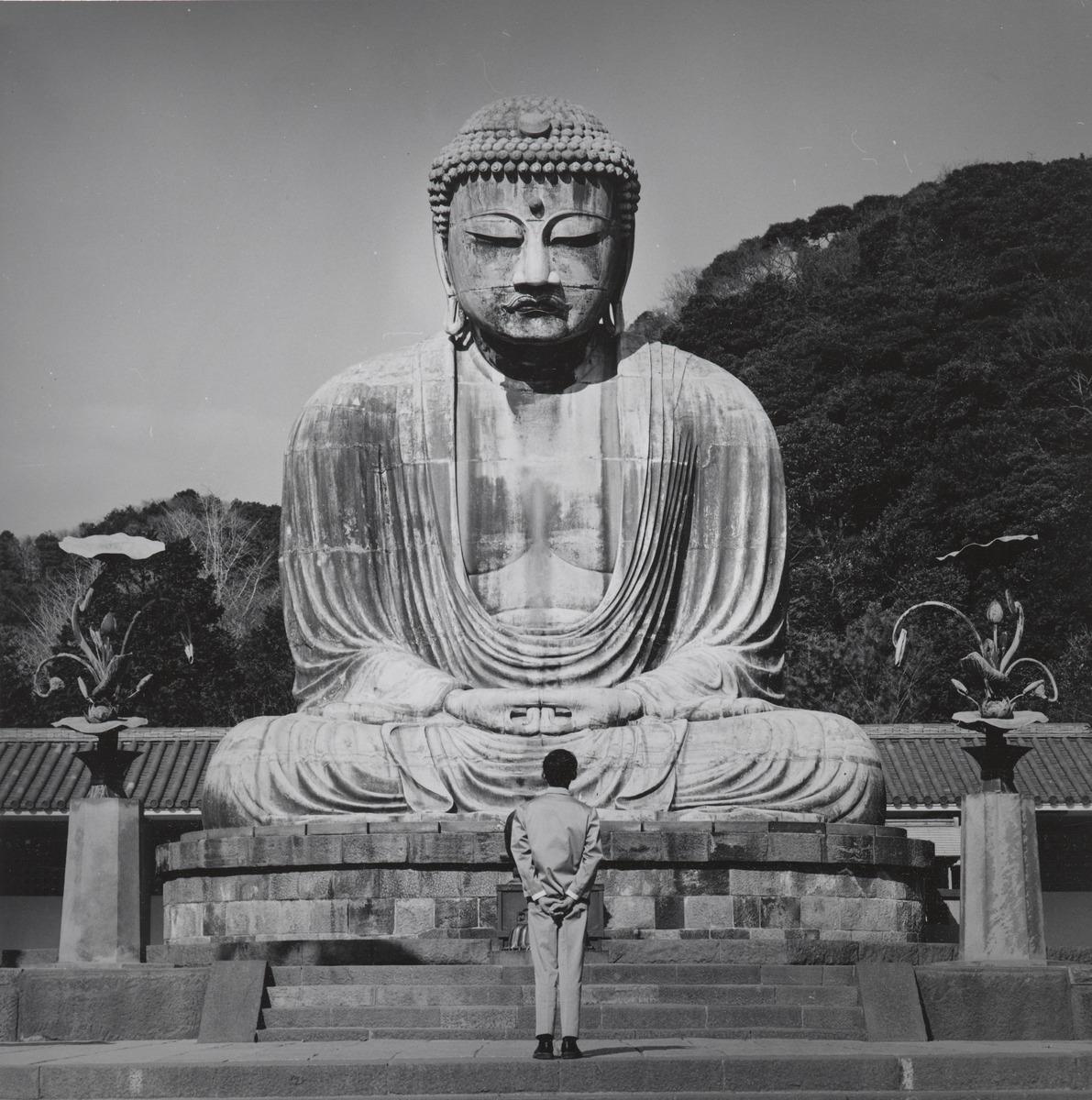
Tseng Kwong Chi. Kamakura, Japan, 1988. Gelatin silver print, Overall: 25.3 × 20.2 cm. Art Gallery of Ontario. Purchase, with funds from the Marie-Louise Stock Fund in memory of Valentine Stock, George Yabu & Glenn Pushelberg, Judy Schulich in honour of Julie Saul, Eleanor & Francis Shen in memory of Laura Rapp, Woodrow A. Wells, Kate Subak, Andrew Grimes and Jamie Stagnitta, 2024. © Muna Tseng Dance Projects, Inc., 2024/202.
The five thematic sections here each point to important ways artists have put photography to use. Although applications of the medium number far more than five, and often overlap, these sections allow us to showcase the idiosyncrasies of the AGO’s collection while also calling forth common uses and genres.
Stories We Tell focuses on the ways we’ve used photographs to create and share narratives visually, from family albums to press photographs.
People We’ve Met centres on the photographic encounter—between photographer and subject, and image and viewer. One of the first threads for collection-building at the AGO was portraits of artists, and these abound in this section; early acquisitions are mainly of painters and sculptors, while later ones see artists harnessing their own image to build new tableaux. The spaces of the photography studio and city streets recur as productive platforms for self-expression and spontaneous exchange.
Things We Make considers at once the medium’s materials—products of European industrialization—and the ongoing inventiveness of makers in adapting and re-presenting these materials to suit a range of wants and needs. Nineteenth-century photocollage, cyanotypes of industrial forms, records of the built environment accompanying mercantile and colonial enterprises, and contemporary photograms all connect here.
Places We’ve Been gathers myriad images of the world around us, mapping, evoking, and recording our relationships to and experiences of home, the natural world, cities, migration, places familiar and unfamiliar.
Lastly, What We Imagine recognizes how we have sought to use photography to express inner states—which have no tangible form—and what we hope for the future. Photographs have long helped create that which does not yet exist and can often only be seen and understood in retrospect.
The “we” that each section title invokes is not static or monolithic. It aims to acknowledge the medium’s increasing pervasiveness as much as a diversity of makers, subjects, and viewers. This “we” knows photographs look different to different people, and mean different things. It is a “we” that sees the difficult histories photographs have served to perpetuate and seeks to reckon with these legacies. It is a “we” that, amid these difficult histories, sees the potential for productive exchange—and common ground—in the simple fact that so many of us continue to make, share, and engage with photographs, whether as part of a consciously creative practice or in the course of daily life.
The AGO’s photography collection and this book make the case for the social and artistic force of the medium, its open-ended nature and meanings, and ultimately the mysteries of its collective states, which continue to unite and to divide us, to delight and to bedevil us, fuelling our ongoing discoveries and dialogues.
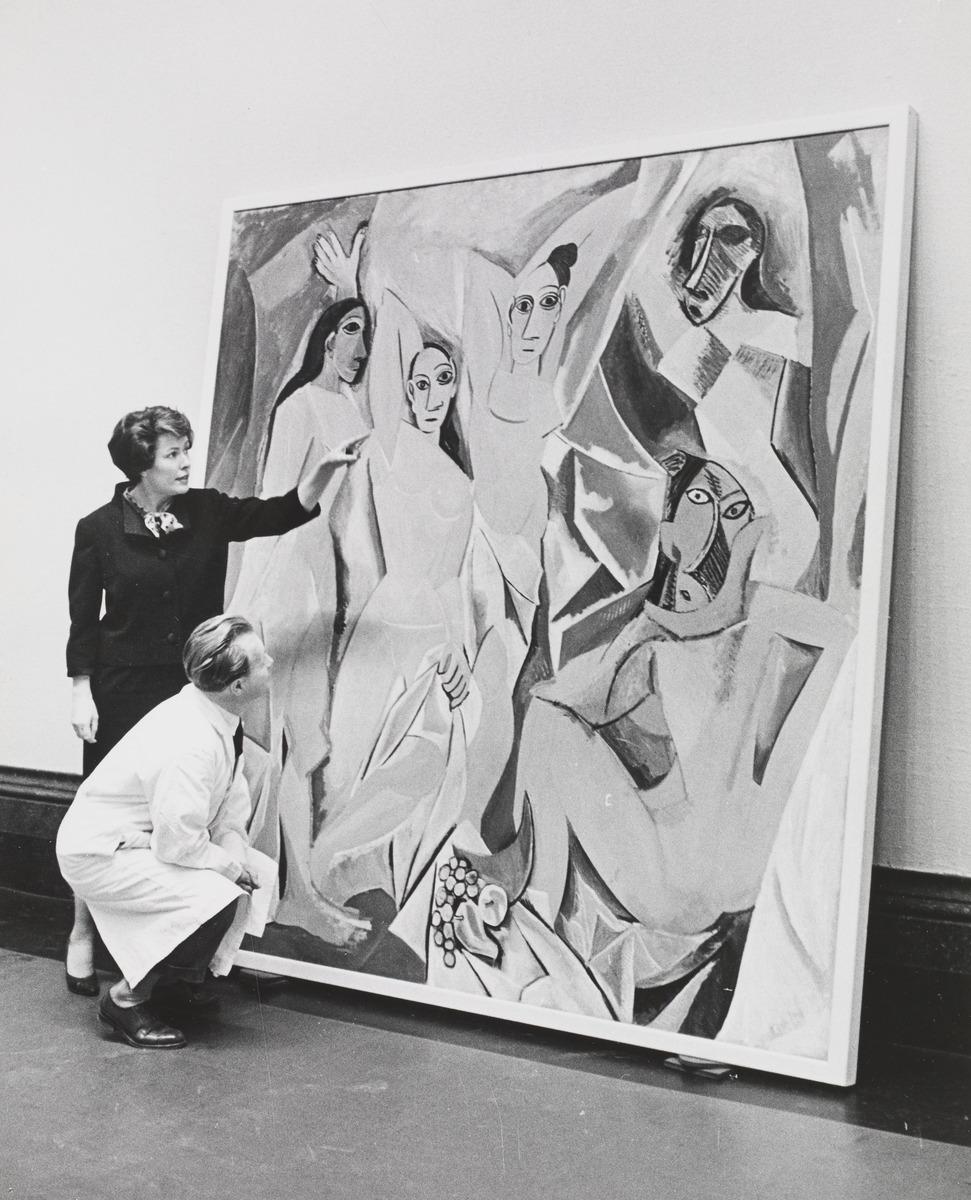
Unknown, Dr. Jean Sutherland Boggs and Mr. Eduard Zukowski during installation of Picasso and Man, January, 1964. Photo: AGO.
--
This essay is written by Sophie Hackett, Curator, Photography, at the AGO. Purchase Collective States: Worlds of Photography at the AGO Shop online and in store.
The book launch for Collective States: Worlds of Photography at the AGO is on Saturday, January 31, from 1 pm to 4 pm, with remarks at 1:30 pm, at Stephen Bulger Gallery on 1356 Dundas Street West in Toronto. The book is co-published by the AGO and Goose Lane Editions.
Collective Visions: Celebrating 25 Years of Photography is on view until May 2026 on Level 1 of the AGO in Edmond G. Odette Family Gallery (gallery 128) and Robert & Cheryl McEwen Gallery (gallery 129).
Generous Support
David W. Binet
Gale M. Kelly
The Schulich Foundation
Jack Weinbaum Family Foundation
George Yabu & Glenn Pushelberg
Anonymous
Contemporary programming at the AGO is supported by