Presented by Signature Partner

Mar 24, 2026
Improvisation No.2
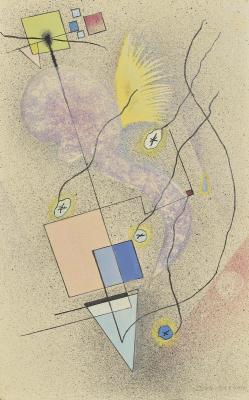
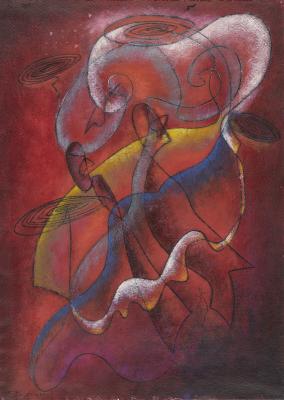
Edna Taçon captures sound with colour, line and shapes in this non-objective composition
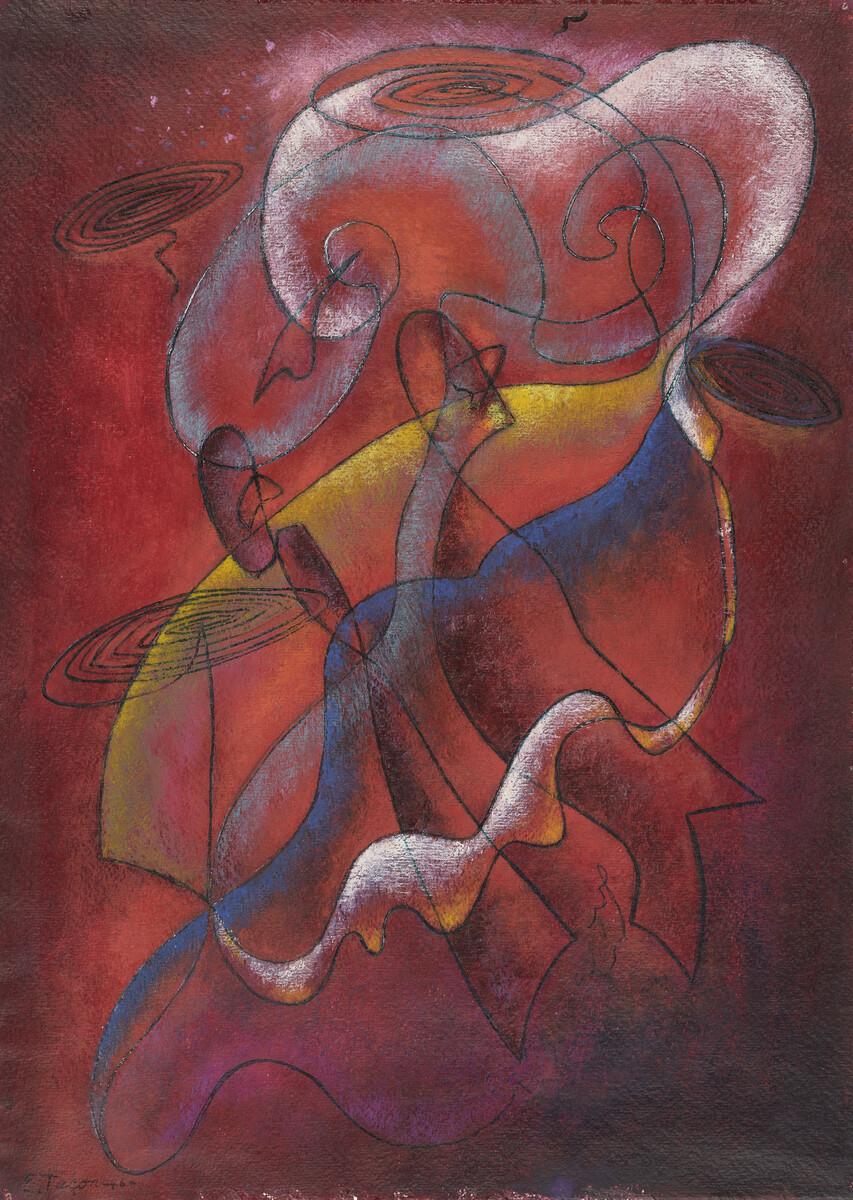
Edna Taçon. Improvisation No. 2, 1946. Watercolour and ink on paper, Overall: 38.8 × 27.6 cm. Art Gallery of Ontario. Purchase, 1947. © Estate of Edna Taçon. Photo: AGO. 2879
This is a painting you might not only see, but maybe even hear.
Take a look at Edna Taçon’s (1905-1980) Improvisation No. 2 (1946). Perhaps you can trace a crescendo of harmonies or sense the embellishment of smooth vibrato and exciting trills. Or, maybe, you can simply feel the rhythm of the painting.
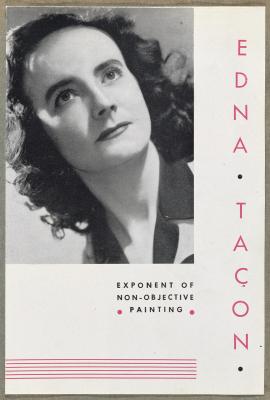
For Taçon, painting and music were windows into the soul, spirit, and mind. An accomplished concert violinist turned abstract painter, Taçon fittingly found herself within the non-objective art movement. Drawing inspiration from musical expression, non-objective art uses abstract shapes and lines to transcend the material world and explore spirituality, expression, and meaning.
As both an artist and musician, Taçon had a particularly intimate understanding of the connection between music and non-objective art; the former heavily influencing her approach to the latter. In comparing the two, Taçon has been quoted as saying, “just as an orchestra produces a symphony through sound, non-objective art produces a symphony through colour.”
Music and art were part of Taçon’s life from an early age. Starting her violin training as a child, she turned to art as an outlet to relax. Up until the mid-1930s, Taçon focused primarily on her musical career, studying at Toronto’s Hambourg Conservatory and the University of Toronto. She was likely introduced to non-objective art through her husband, Percy Taçon, who was also an artist, and her visits to the Art Gallery of Toronto (now AGO) in the 1920s. As she later travelled to Europe for her musical career, Taçon remained connected to the non-objective art movement independently.
By the 1940s, Taçon began formally exhibiting her work, and quickly became one of Canada’s leading non-objective artists. She was particularly influenced by Russian painter Wassily Kandinsky (1866-1944), who believed that painters shouldn’t rely on the material world the same way musicians do not rely on it for their music. Like Kandinsky and other non-objective painters, Taçon often titled her paintings with musical terms.
Taçon was no longer practicing as a professional musician when she created Improvisation No. 2. But, as demonstrated by this watercolour painting, music remained intrinsically linked to her artistic practice. In this painting, Taçon departs from the geometric approach present in her earlier works, opting instead for expressive, flowing lines that give the work a visual rhythm. The rich red background, accented with the blue, white, and yellow strokes, creates an ethereal atmosphere. Improvisation No. 2 is a fitting example of how Taçon explored the visuality of sound through divergent shapes, lines, and colour fields. The AGO acquired this work in 1947, just one year after Taçon painted it.
Experience Tacon’s musicality on paper by visiting Improvisation No. 2, as part of the exhibition Edna Taçon: Verve and Decorum, on view on Level 1 of the AGO in the Nicholas Fodor Gallery (gallery 140 and 141).
![Keith Haring in a Top Hat [Self-Portrait], (1989)](/sites/default/files/styles/image_small/public/2023-11/KHA-1626_representation_19435_original-Web%20and%20Standard%20PowerPoint.jpg?itok=MJgd2FZP)