Jul 24, 2026
Five Facts You May Not Know About Impressionism
From rebels to trailblazers, the Impressionists irrevocably changed art as we know it today
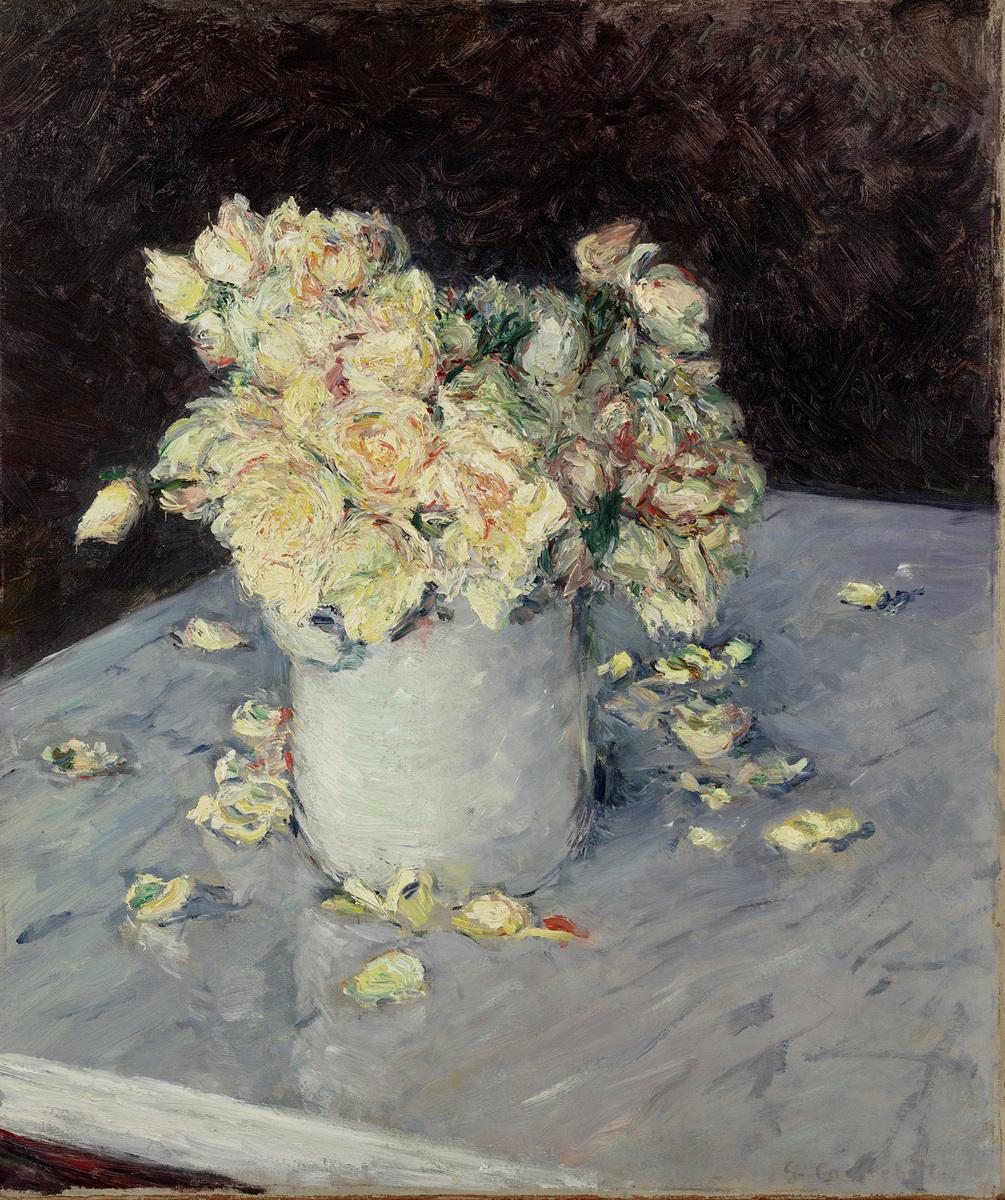
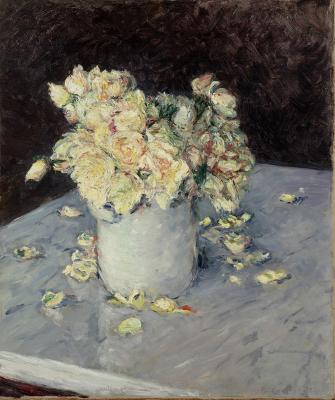
Gustave Caillebotte. Yellow Roses in a Vase, 1882. Oil on canvas, unframed: 53.3 x 46.4 cm. Dallas Museum of Art, The Eugene and Margaret McDermott Art Fund, Inc., in honor of Janet Kendall Forsythe, 2010.13.McD
You've likely come across an Impressionist print in your doctor's office, or recognize names such as Claude Monet (1840-1926), Pierre Auguste-Renoir (1841-1919), and Edgar Degas (1834-1917).
Impressionism may be one of the most popular art movements today, but did you know that some of the most beloved Impressionist works were once regarded as distasteful?
A detailed and captivating presentation of the history of Impressionism and its impact on modern art is currently on view at the AGO in the exhibition The Impressionist Revolution: Monet to Matisse from the Dallas Museum of Art. Composed of works from the Dallas Museum of Art's (DMA) exceptional collection, the exhibition is arranged into chronological and thematic sections that highlight how Impressionist techniques and subjects set a new course for modern art in the late 19th to early 20th centuries.
The exhibition is curated by Dr. Nicole R. Myers, the DMA’s Chief Curatorial and Research Officer and The Barbara Thomas Lemmon Senior Curator of European Art. The AGO presentation is led by Dr. Caroline Shields, AGO Curator, European Art.
From the movement's rebellious roots to Monet's meticulous staging of nature, here are five facts you may not know about Impressionism.
1. The Impressionism movement began as an artist collective
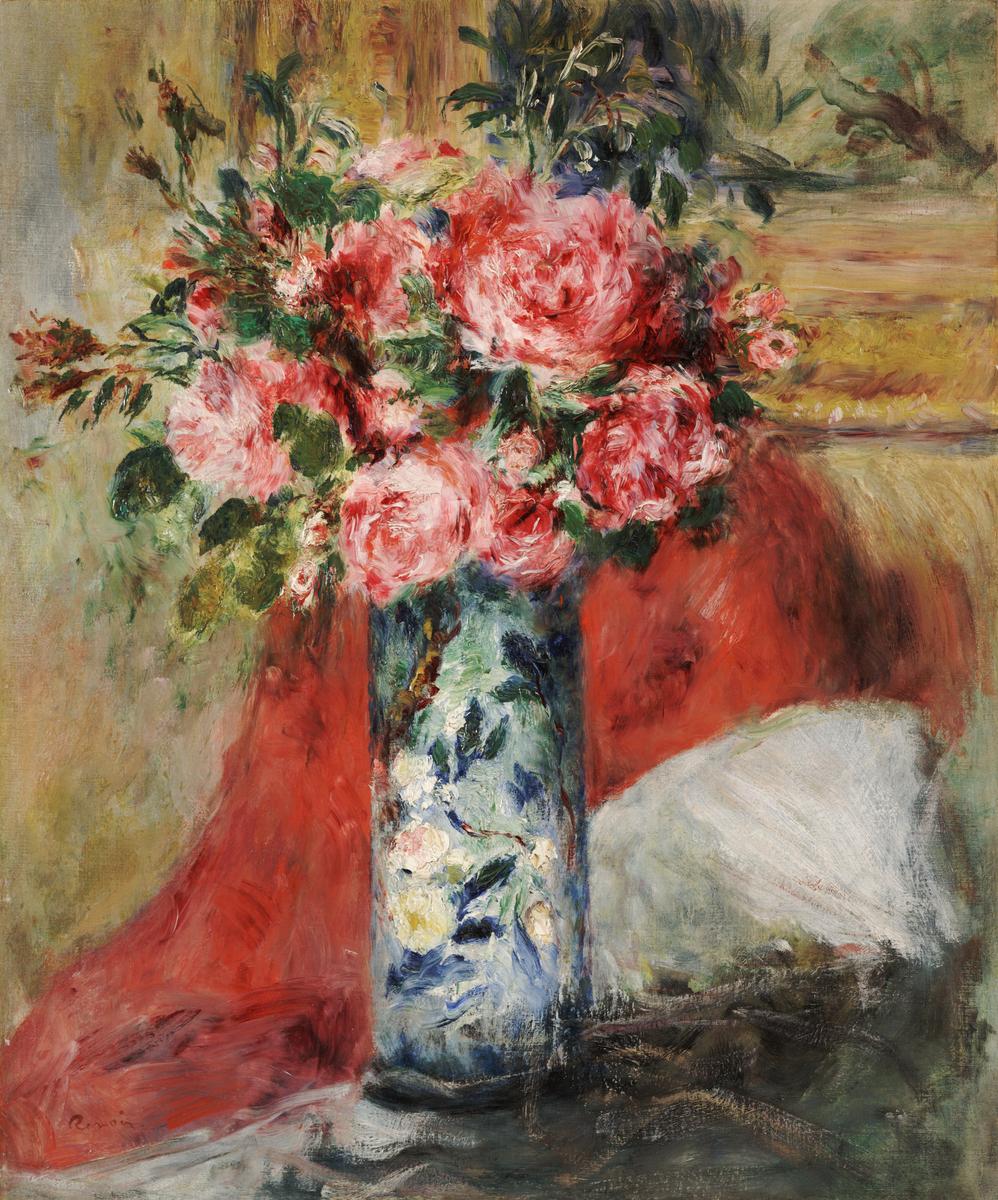
Pierre-Auguste Renoir. Roses and Peonies in a Vase, 1876. Oil on canvas, unframed: 60.6 x 51.4 cm. Dallas Museum of Art, The Eugene and Margaret McDermott Art Fund, Inc., bequest of Mrs. Eugene McDermott in honor of Sarah Perot, 2019.67.22.McD
While today it’s a widely celebrated art movement, Impressionism began as a collective of independent artists seeking change.
The Anonymous Society of Painters, Sculptors, Printmakers Etc. held their first exhibition in 1874. The founding members included Monet, Degas, Renoir, Berthe Morisot (1841-1895), and Camille Pissarro (1830-1903). Loosely aligned stylistically, these artists were mainly united by their desire to showcase their works outside of the traditional Salon system established by France's official conservative art system arranged by the state-run Academy of Fine Arts.
Over the next 12 years, the Impressionists held just eight independent exhibitions as bold and entrepreneurial interventions.
2. Impressionists were the rebels of the art world in their day
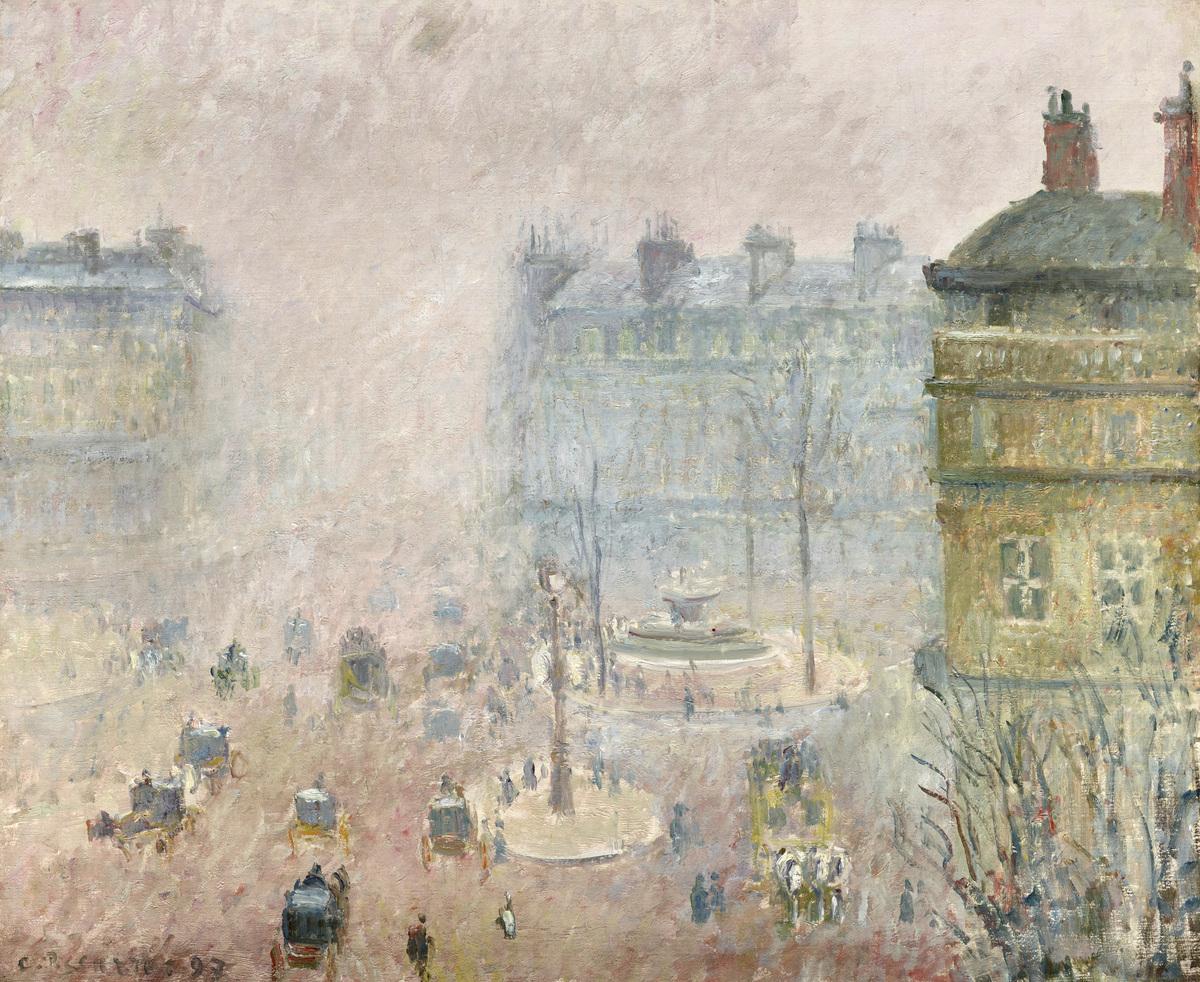
Camille Pissarro. Place du Théâtre Français: Fog Effect, 1897. Oil on canvas, unframed: 54.6 x 66.4 cm. Dallas Museum of Art, The Wendy and Emery Reves Collection, 1985.R.50
It may be hard to see the bright colours, visible brushstrokes, and everyday subjects of these works as rebellious, but these are some of the aspects of Impressionism that made the movement radical during the 19th century.
Along with their decision to operate outside the Salon system, their vibrant, anti-naturalistic palette and visible brushstrokes flew in the face of the slick realism and earth tones of Academic paintings shown at the Paris Salon. Technological advances, including resealable paint tubes, allowed Impressionists to step outside the studio and paint en plein air (outdoors), where they focused on capturing fleeting light.
Working outside studios, Impressionists aimed to capture the everyday in all its realities, depicting street life, industrial living, and domesticity rather than the historical and religious subjects championed by the Academy.
Through their choice of colour, subjects, and independent exhibitions, the Impressionists redefined art on the cutting edge in the late 1800s.
3. Impressionism was met with a cold shoulder
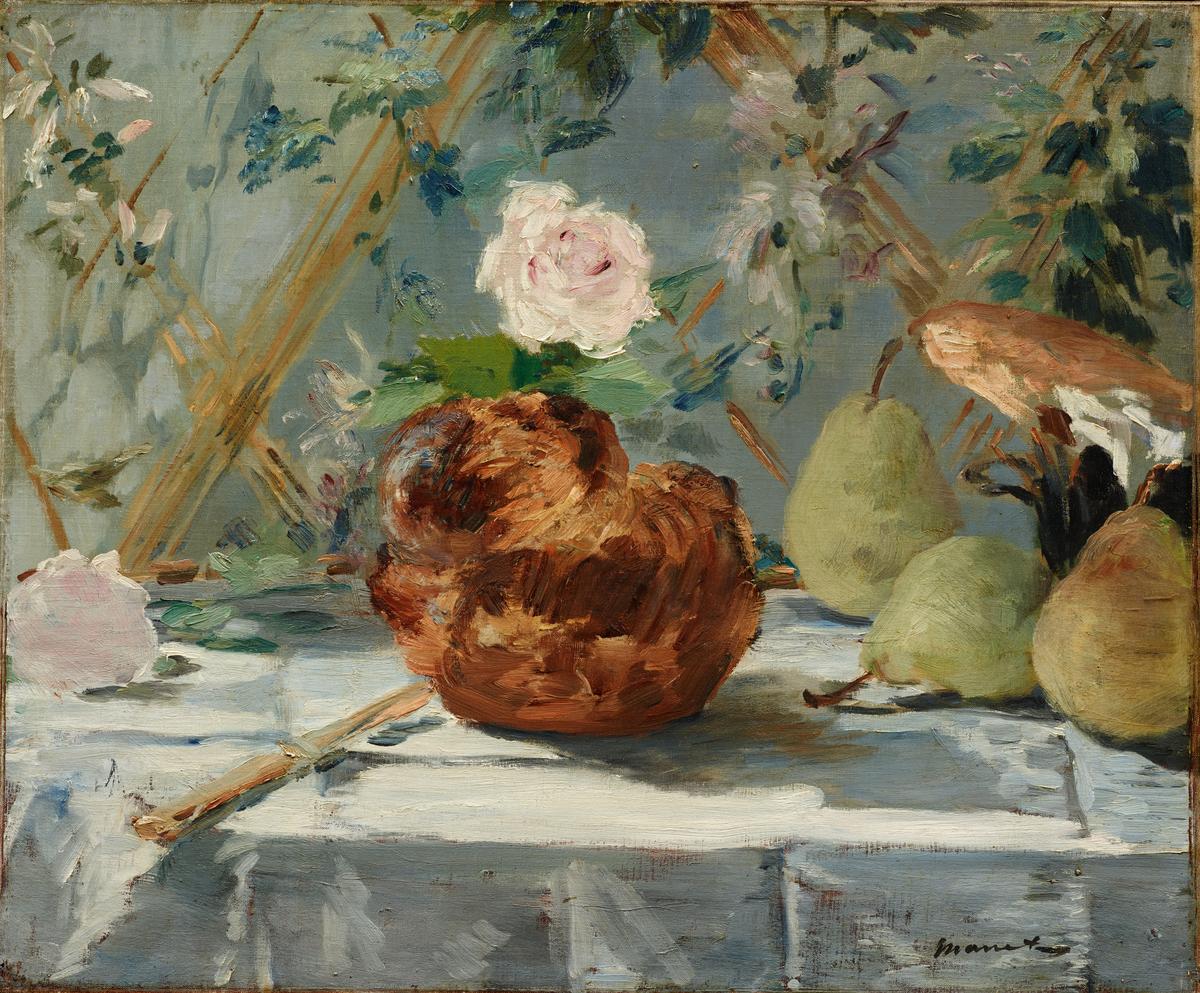
Edouard Manet. Brioche with Pears, 1876. Oil on canvas, unframed: 46.0 x 55.9 cm. Dallas Museum of Art, gift of the Wendy and Emery Reves Foundation, 2024.R.2
Following this thread, it makes sense (but may still be surprising to learn) that the reception to the Impressionists’ artistic approach was polarized at best and, at its worst, quite harsh.
Very few collectors took an interest in their work, and, in general, the audience for Impressionist art was minimal at best. Critics called their works ugly, unfinished, and even offensive.
Despite the initial lack of interest, the Impressionists managed to change the trajectory of art: not only did they begin to create a more democratized art market, but they also paved the way for future modern art movements
4. Impressionism paved the way for Cubism, Abstraction and other future art movements
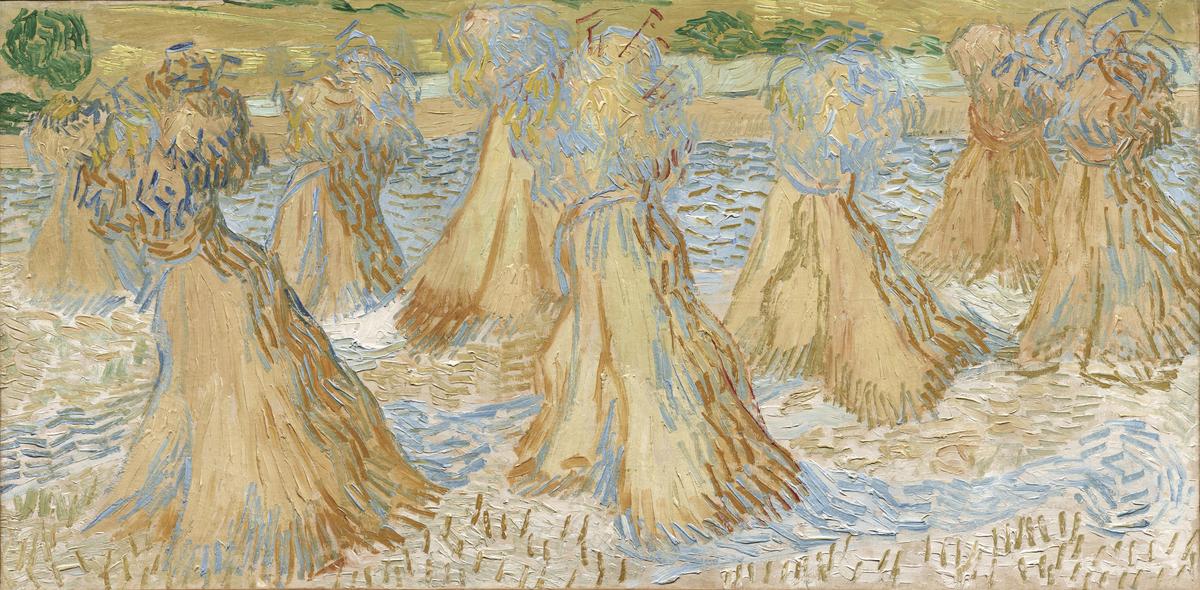
Vincent van Gogh. Sheaves of Wheat, July 1890. Oil on canvas, unframed: 50.8 x 101.6 cm. Dallas Museum of Art, The Wendy and Emery Reves Collection, 1985.R.80
It may be hard to see the connection between Impressionism and comparatively more abstracted styles like Cubism, but it was the innovative spirit of Impressionism and the way they broke away from the representation of nature that helped usher in art movements that emerged in the 20th century.
After the last Impressionist exhibition in 1886, a new wave of modern art movements developed, known today as the Post-Impressionists. Building off Impressionism’s subversion of traditional academic values, these artists experimented with brighter colours, exaggerated forms, and symbolic subjects. Almost every following modern art movement, such as Cubism, Fauvism, Expressionism, Futurism, and Abstraction, had roots in Impressionism.
As time went on, artists associated with Impressionism, including Paul Cézanne (1839–1906), Vincent van Gogh (1853-1890), and Paul Gauguin (1848-1903), were given retrospective exhibitions across Europe, leading to the spread of their collective styles and theories.
The impact of Impressionism on Van Gogh, Gauguin, Cézanne, Piet Mondrian (1872-1944), Henri Matisse (1869-1954), and many other modern artists is traced within The Impressionist Revolution: Monet to Matisse from the Dallas Museum of Art.
5. Monet manipulated nature for his paintings
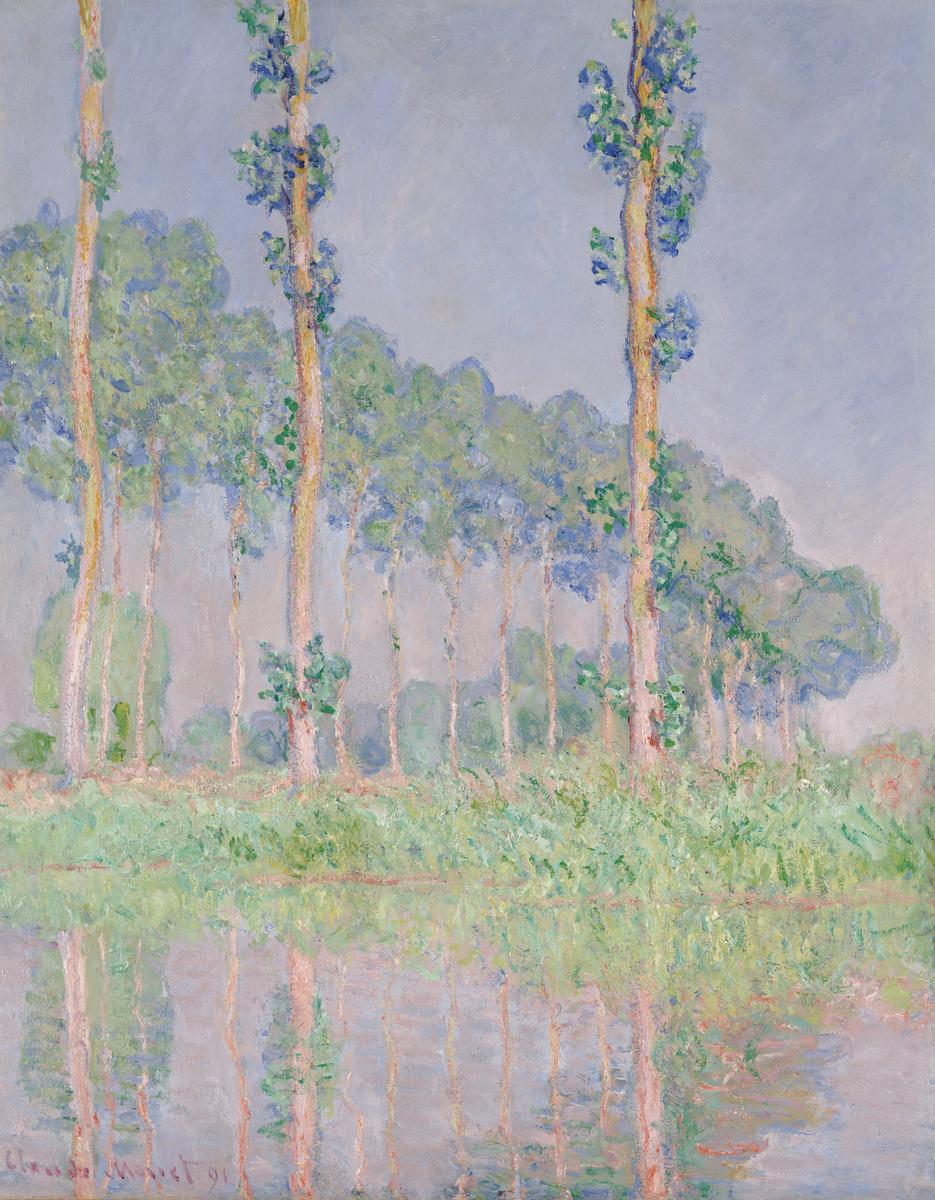
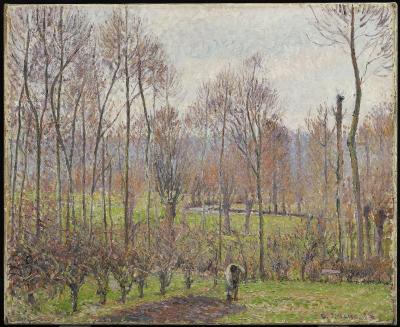
Claude Monet. Poplars, Pink Effect, 1891. Oil on canvas, Dallas Museum of Art, The Eugene and Margaret McDermott Art Fund, Inc., bequest of Mrs. Eugene McDermott, 2019.67.14.McD
Like many Impressionists, spontaneity, or at least the appearance of it, was a key factor in Monet's practice. However, art historians note that Monet meticulously composed his paintings, sometimes going to great lengths to realize his artistic vision.
A fitting example is Monet's Poplars, Pink Effect (1891), which is on view in The Impressionist Revolution: Monet to Matisse from the Dallas Museum of Art at the AGO. Legend has it that when Monet learned the trees depicted in this work were set to become lumber, he purchased the trees with a wood merchant who was willing to wait long enough to allow him to finish the painting.
Other stories recount that Monet even asked his gardeners to move water lilies around to achieve the desired compositions for his celebrated Water Lilies series.
Continue learning about Impressionism by visiting The Impressionist Revolution: Monet to Matisse from the Dallas Museum of Art, currently on view on Level 4 of the AGO. The exhibition is organized by the Dallas Museum of Art and curated by Dr. Nicole R. Myers, the DMA’s Chief Curatorial and Research Officer and The Barbara Thomas Lemmon Senior Curator of European Art. The AGO presentation is led by Dr. Caroline Shields, AGO Curator, European Art.
Generous Support
Ira Gluskin & Maxine Granovsky Gluskin
Andrew Talpash
Supported by the Government of Canada/Avec l’appui du gouvernement du Canada


![Keith Haring in a Top Hat [Self-Portrait], (1989)](/sites/default/files/styles/image_small/public/2023-11/KHA-1626_representation_19435_original-Web%20and%20Standard%20PowerPoint.jpg?itok=MJgd2FZP)