Nov 5, 2026
Muckpaloo Ipeelie's Kamiik Journey
The artist and the CEO of Urban Inuit Identity Project debuts her kamiik pattern at the AGO
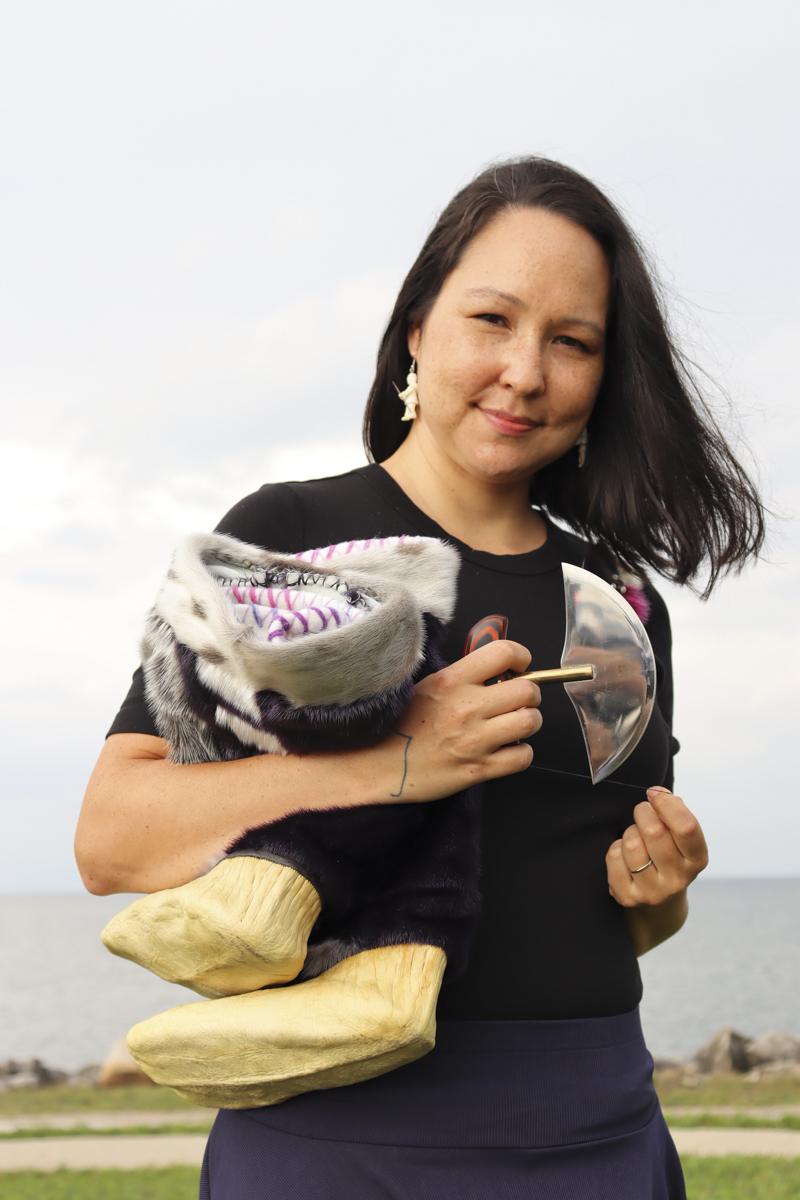
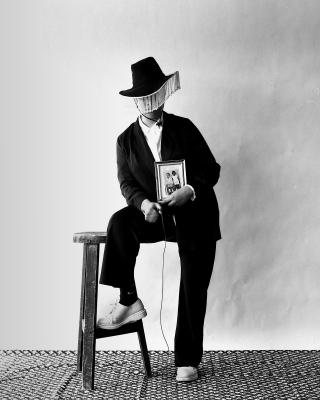
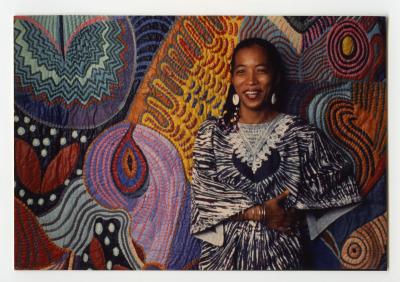
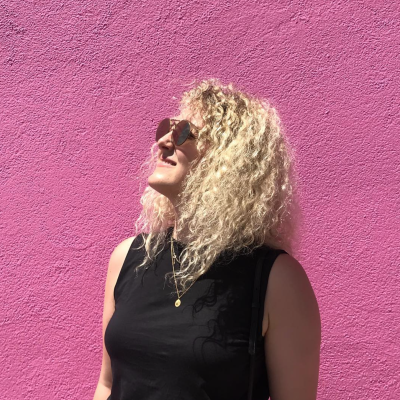
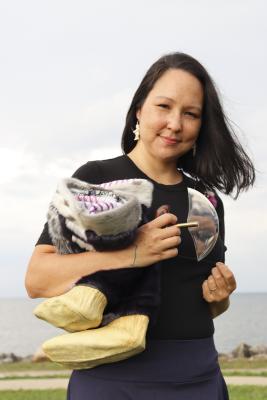
Muckpaloo Ipeelie. Image courtesy of the artist.
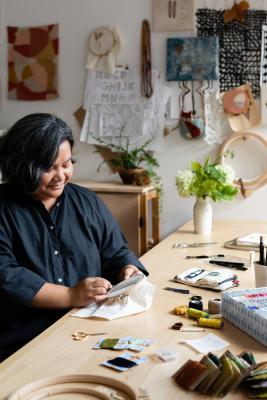
During a visit to Iqaluit, artist Muckpaloo Ipeelie came across a pair of partially made kamiik, traditional handmade Inuit seal-skin boots. As part of her journey to reconnect with her Inuit culture through art, she decided to purchase and finish them herself. But when she began working on the kamiik, she hit a roadblock: she couldn't find a pattern in English. Instead of giving up, Ipeelie developed her own pattern, not only for herself, but also for her fellow urban Inuit looking to reconnect with their cultural traditions.
On November 7 from 2 pm to 3 pm, Ipeelie will debut her kamiik pattern at the AGO as part of an International Inuit Day Celebration. She will speak on her experience creating the pattern and will have free kamiik patterns available for Inuit. The celebration will also include a throat-singing performance by Ipeelie and throat singer Alexandra Anaviapik as well as a drumming and dance performance by multidisciplinary artist Laulaq LeDrew. Inuit interested in pre-registering for a kamiik pattern or receiving a digital PDF version can request one here.
Designed for the cold Arctic weather, Ipeelie describes kamiik as an impressive engineering and stylistic feat.
"The kamiik provides safety and waterproofing for hunters," she explained. "The wide-foot shape of kamiik allows them to stand in snow. It's a brilliant boot – they're biodegradable, super warm, and they look amazing on your feet."
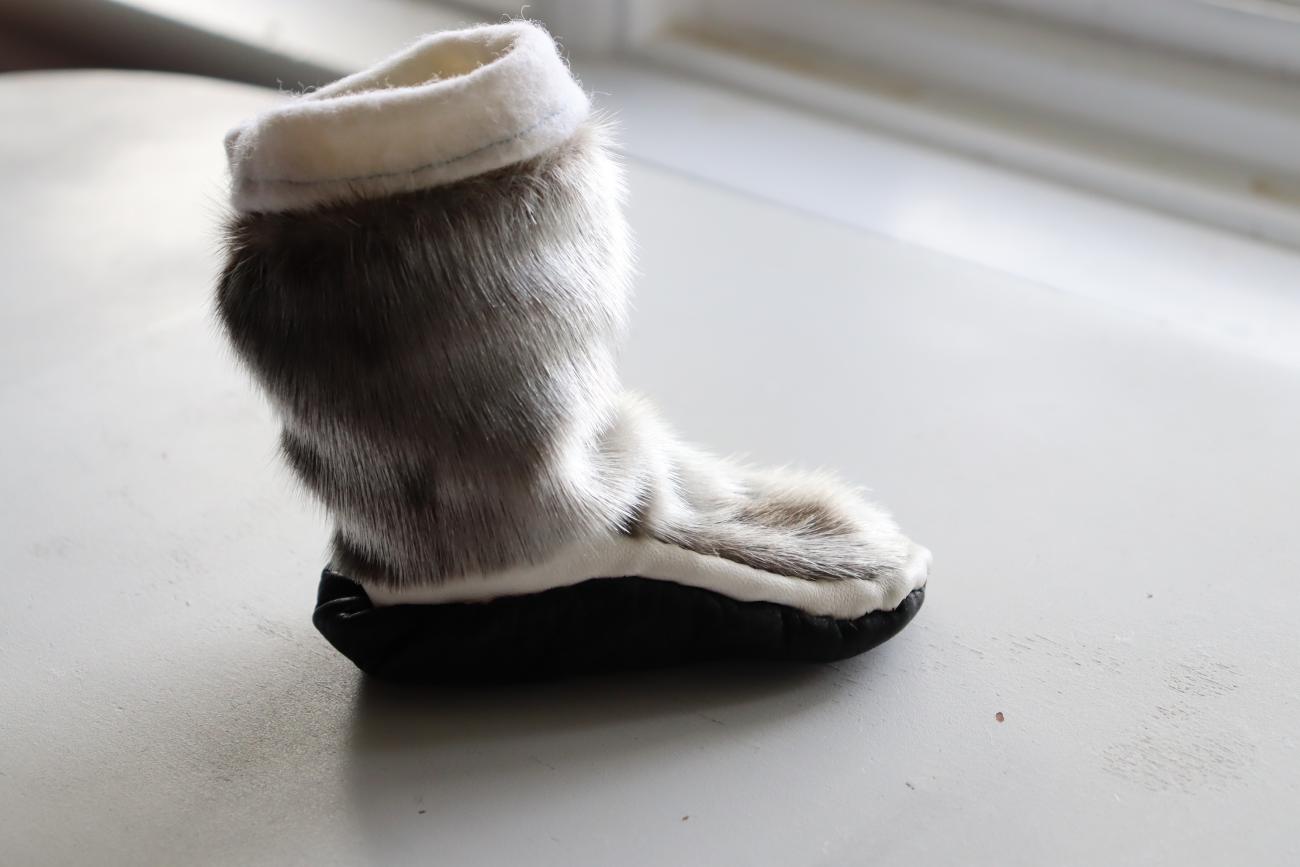
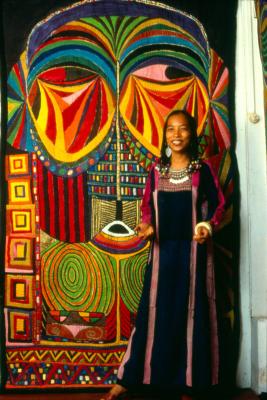
Photo courtesy of Muckpaloo Ipeelie
Growing up, Ipeelie watched the women in her community make kamiik collectively. She always imagined she herself would one day be in that position.
"I remember women sitting on the floor, cutting sealskin on cardboard, and being together lovingly while teaching each other. That was super heartwarming for me," Ipeelie remembered. "I saw the patterns on the floor and thought, 'What a simple pattern. I'll get one one day.' Little did I know, I would lose my cultural connections to other Inuit."
Moved to Welland, Ontario as a teenager, Ipeelie was not only isolated from her culture, but often mistaken for being First Nations, a different Indigenous peoples. She began to assimilate, changing her name and losing her ability to speak Inuktitut. At 26, Ipeelie began reclaiming her Inuit culture and was drawn to artmaking. Through finger pricks, blood, and mounting frustration, she taught herself how to bead.
"The biggest thing I learned from that experience is that it's so much easier to regain traditional practices when you can learn from other people and ask for help. You can only go so far on your own," she reflected. "That ideology is something I take forward today; anything I do to reclaim my culture, I bring to other people."
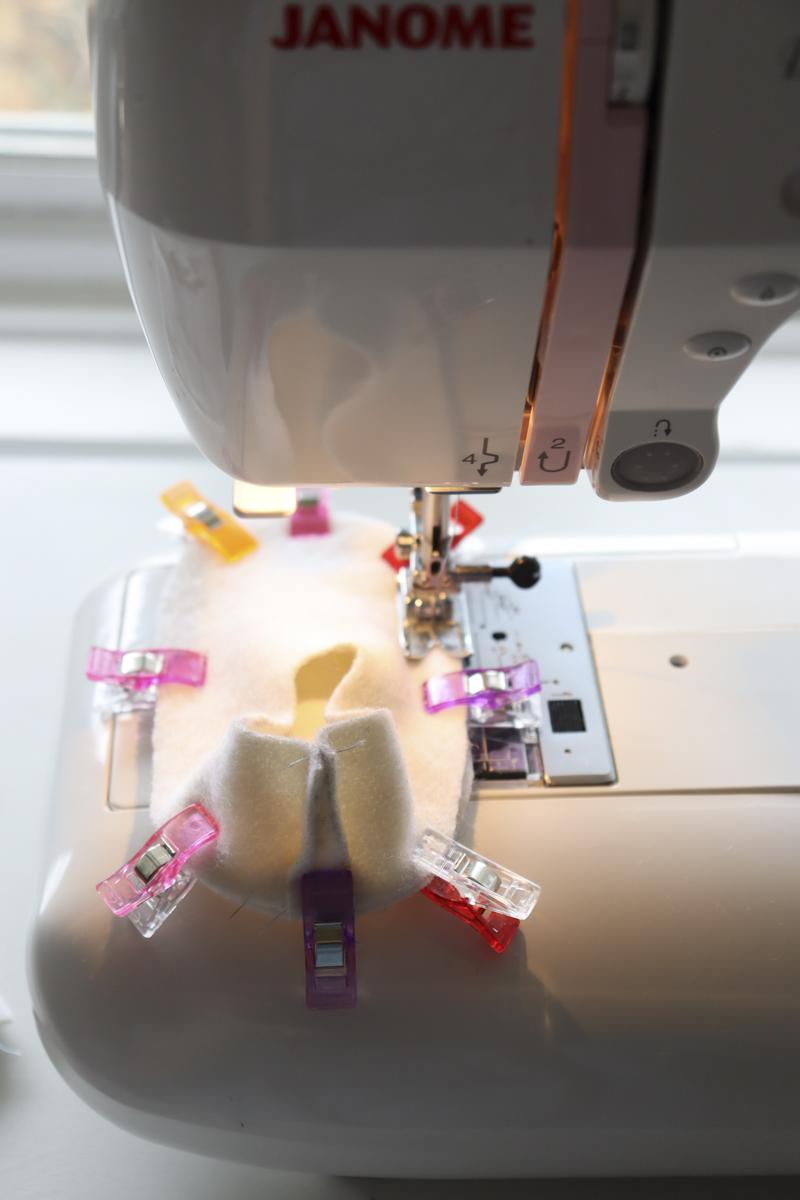
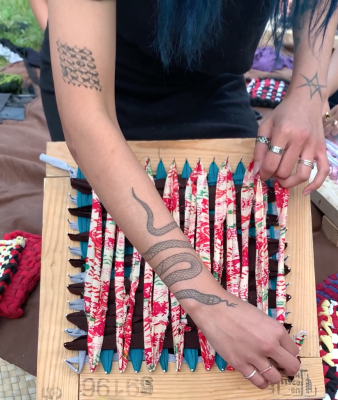
Photo courtesy of Muckpaloo Ipeelie
When Ipeelie struggled to find a kamiik pattern in English, she did just that: she reached out to the Inuit Art Foundation (IAF) for help. After receiving IAF's Turaagaq-Kajungiqsaut Grant, Ipeelie began her project Threads of Our Ancestors, where she began developing a pattern with the goal of sharing it with urban Inuit who face similar barriers to accessing traditional knowledge.
"It's not our fault that we don't know Inuktitut or can't read syllabics," Ipeelie explained. "A lot of us cannot speak it for reasons that are not ours. Some of us are Sixties Scoopers or some of us never got the opportunity to learn due to Residential Schools or intergenerational trauma."
Threads of Our Ancestors is an extension of Ipeelie's work as founder and CEO of Urban Inuit Identity Project, an organization that provides cultural awareness teachings to people who support Inuit, such as healthcare, school board and social service workers. Urban Inuit Identity Project also helps urban Inuit reclaim and reconnect with their cultural identities and traditional practices. In line with that spirit, she has a special request for those planning to attend the event on Saturday:
"Pull out that sealskin pin you've been hiding away, wear your parkas, wear your fur! We look fabulous decked out in our winter wear. Inuit are super proud of our traditional wear, and we are not shy to let others wear it too."
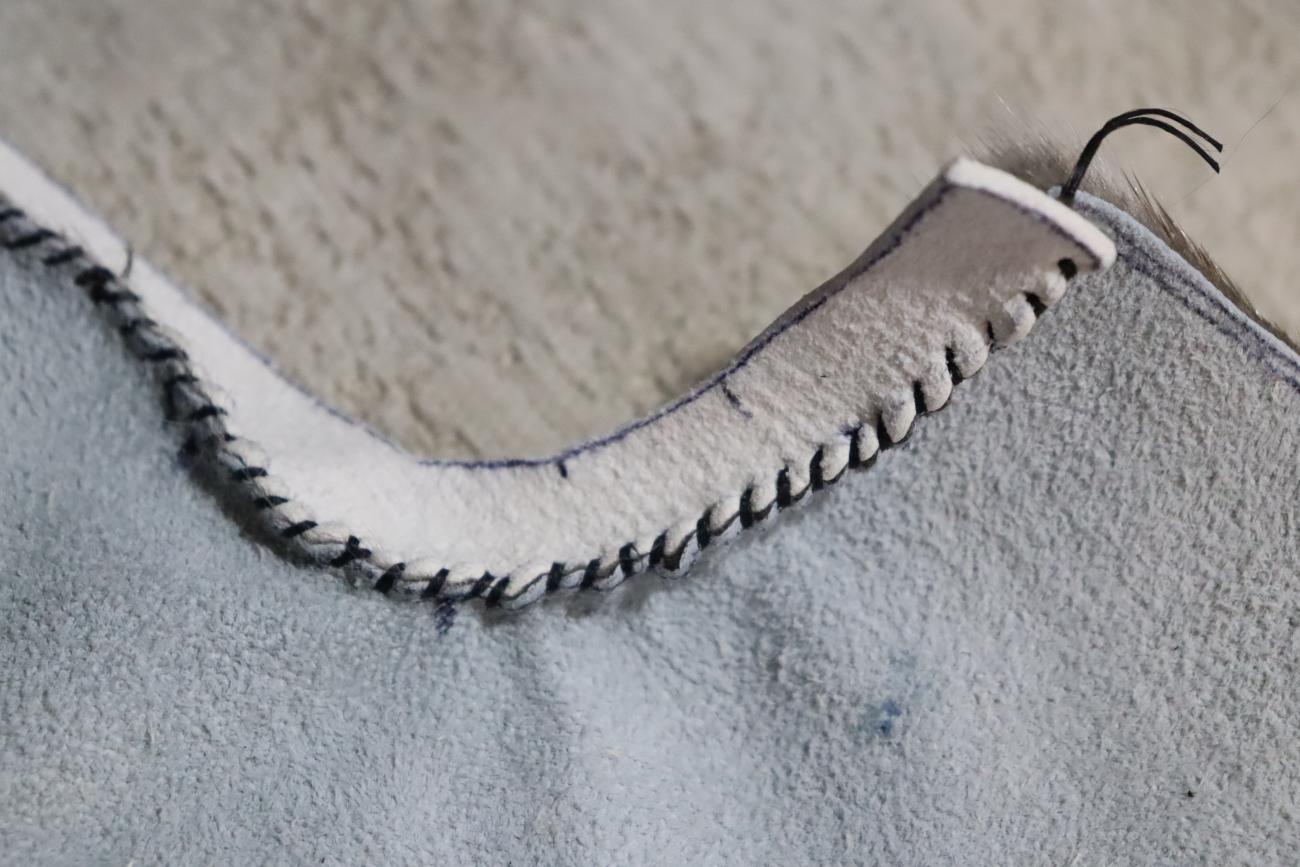
Photo courtesy of Muckpaloo Ipeelie
Ipeelie hopes that those celebrating International Inuit Day not only gain a better understanding of Inuit culture, but also of Inuit themselves.
"I want people to know that Inuit are incredibly friendly and open-hearted," she expressed. "It's a societal value called Tunnganarniq. We're super friendly, we love to laugh, and you're welcome to come learn."
Celebrate International Inuit Day at the AGO by joining Muckpaloo Ipeelie in learning more about kamiik on November 7 from 2 pm to 3 pm. This event is free with general admission. Inuit are invited to request a kamiik pattern before the event here.