Aug 18, 2026
Carl Taçon Reflects on His Grandmother Edna Taçon
Sculptor Carl Taçon reflects on the brief but transformational time he spent with his “Grand-mère" Edna Taçon
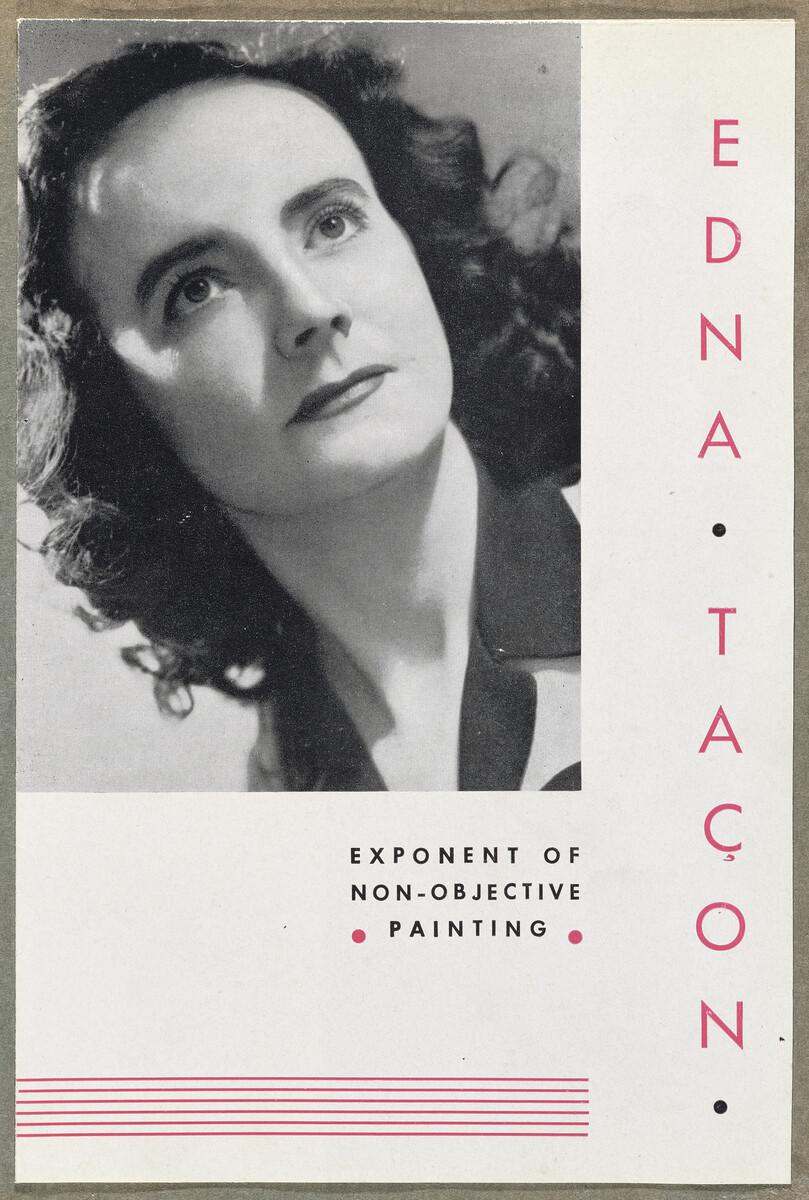
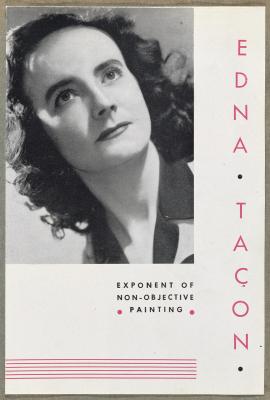
Exhibition pamphlet for Edna Taçon: Objective for Non-Objective Painting, Eaton's Fine Art Gallery, 1944. Edward P. Taylor Library & Archives, Art Gallery of Ontario. Promised gift of Paul and Susan Taçon. Photo: AGO.
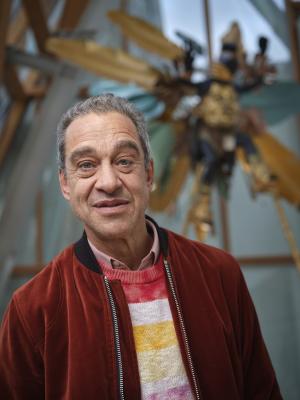
For most of his childhood, sculptor Carl Taçon had no idea that his paternal grandmother, Edna Taçon (1905–1980), was alive and working as an artist in New York City. He did not meet his Grand-mère, as she insisted he call her, until he was 13.
Edna wore many hats in her lifetime. She was a leading artist in Canada's non-objective art movement, a professional concert violinist, designer, teacher, and, ironically, a milliner. Her non-objective art influenced abstract painting in Canada. Music was intimately connected to her visual art practice, and she drew on her expertise in musical expression to explore the visuality of sound.
Edna juggled a multitude of creative and professional pursuits while raising her two sons, Paul and Peter Taçon. Navigating a male-dominated field, she faced many obstacles, including her marriage to artist and teacher Percy Taçon becoming tumultuous and abusive. When their marriage ended in 1947, Edna moved to New York and was estranged from her sons until she was reunited with her eldest, Carl's father, Paul, in 1979.
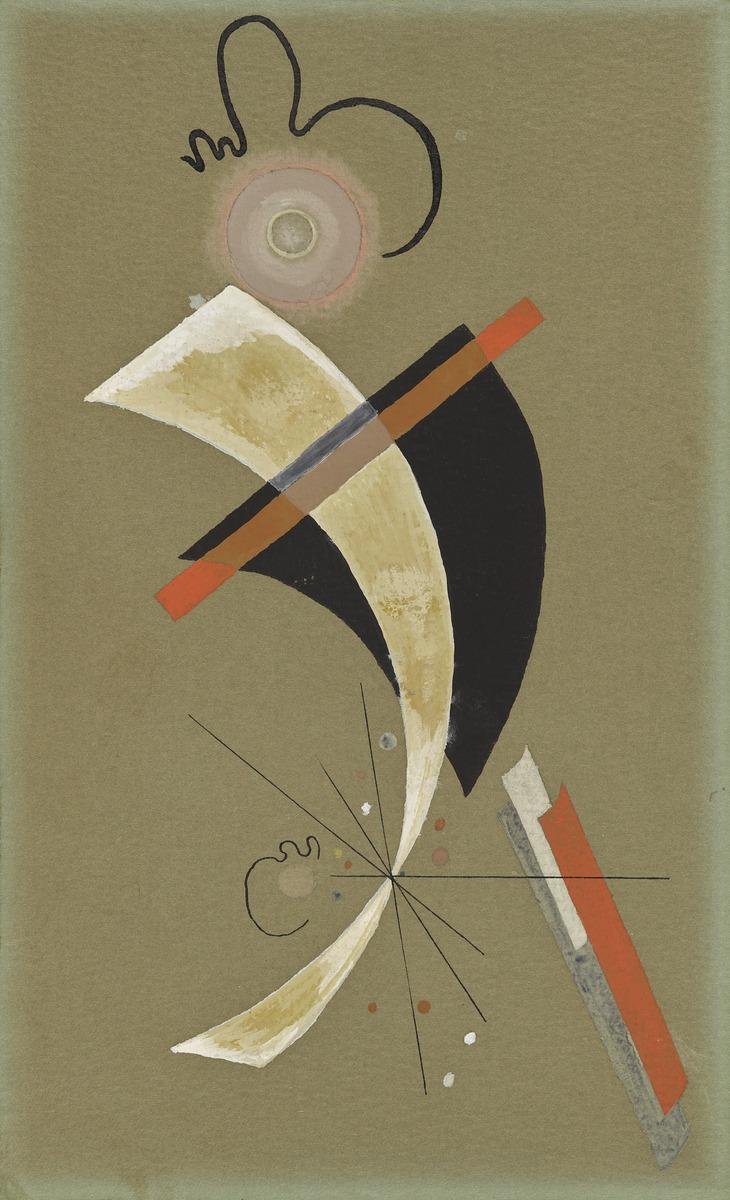
Edna Taçon. Untitled, c.1941. Pen and ink and gouache on paper, Overall: 76.2 × 50.8 cm. Promised gift of Paul and Susan Taçon. © Estate of Edna Taçon.
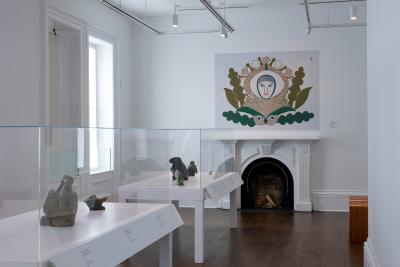
Curated by Renée van der Avoird, the AGO's Associate Curator of Canadian Art, Edna Taçon: Verve and Decorum highlights the multidisciplinary artist's intuitive approach to colour and form. Featuring more than 25 oil paintings, watercolours, and paper collages alongside archival materials courtesy of the artist's family, Verve and Decorum provides an intimate look into Edna's legacy and personal life.
From her impact on his artistic outlook to the fond memory of sharing raw onion sandwiches, learn more about the brief but transformational time Carl Taçon spent with his Grand-mère.
Foyer: Can you tell us a bit about your journey to becoming an artist and your current artistic practice?
Taçon: Growing up, I was surrounded by artwork. My father, Paul Taçon, painted and my grandfather, Percy Taçon, was also a painter and art teacher, so creative endeavours were always encouraged in my family. My true interest, however, was to become a chef. That all shifted when I met Edna, someone I didn't even know existed until I was 12 years old. Spending time in New York City with my “Grand-mère”, was entirely transformative for me. It was like opening a door into a vast landscape and stepping inside – pure magic. Edna and I initially bonded over a shared passion for cooking, particularly French cuisine, and that overflowed into art.
The poetic lyricism in Edna’s paintings and collages undoubtedly influenced my own work later on. I had lived with so much of Edna’s work at my parents’ house after she died. Through my father and grandfather, I was familiar with the language of abstraction. Getting to know Edna and learning about her association with the Museum of Non-Objective Painting in New York was profound for me. It loomed prominently in my mind, so much so that while I was in art school, I consciously began to shift my focus away from painting to sculpture, in part as an attempt to extract myself from the strong influence that Edna’s work had on me. Surprisingly, I found myself gravitating back to similar elements of pictorial composition when developing sculptural work. Years later, I learned to appreciate that many of the basic compositional tools and building blocks that I employ when conceiving of an artwork are derived from my early experiences with Edna. I learned to accept that and understand it was nothing I needed to shy away from.
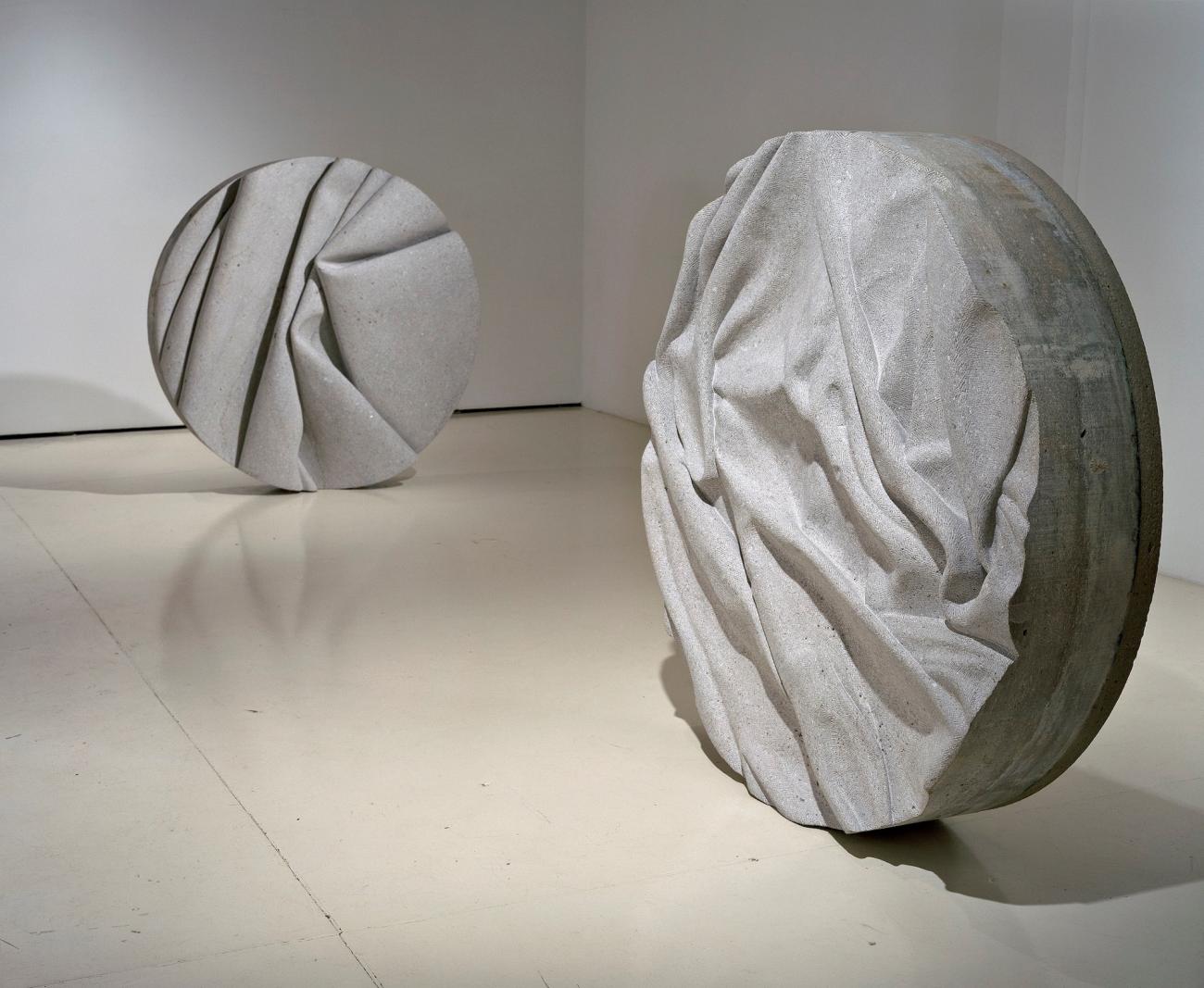
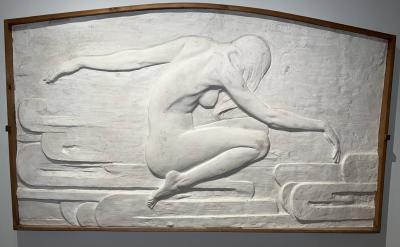
Medallion I & Medallion II, 2004. Exhibition: Drape, at Peak Gallery, Morrow Ave., Toronto, Ont. Diameter of each 52 inches x D 12 inches. Hand carved drapery on Architectural fragments (Queenston limestone) from the former Toronto Postal delivery Building. Photo: Zack Pospieszinski
Your Grand-mère was not only a trailblazing artist within Canada’s non-objective movement but also a concert violinist, milliner, shop window designer, and much more. Reflecting on Edna's diverse legacy, what aspects of her life and worldview resonate with you?
One thing I draw from Edna's multifaceted legacy is an understanding that creativity is an ongoing exploration that can morph into many forms and ways of working. It’s a journey in and of itself, with no focused and attainable destination; the path can wander into new areas of discovery as one inches forward. Satisfaction isn’t ever fully experienced in what one has done. Rather, curiosity, challenge, and anticipation of what may lie ahead are all driving forces. Another thing that has stayed with me is the poetry of beauty. I’m not talking about the superficial overlay of things that are “pretty," “cute,” or “candy-coated”, or even as the accidental “residue” of truth to materials as artist Richard Serra described. I mean beauty as something intentionally sought out, utilized and employed — an intrinsically “felt” quality to be experienced in a more “spiritual” way as one engages with something. This was an underlying premise of non-objective artists. When I studied Fine Art on the heels of minimalism, embracing beauty was often considered taboo. Getting to know Edna and her work instilled in me that employing beauty as an aspect of artistic language is nothing to be ashamed of.
My sense is that the hardships Edna endured during her childhood and her marriage resulted in a quest to find pleasure in large and small things — pleasure of taste and her love of cooking, the concentration of sound through her work as a concert violinist, the intensely detailed composition of her collages, the visual experience of standing in front of an artwork and silently focusing (as she taught me), and her extravagant dresses and hats. She explored how pleasure can be continually incorporated into one’s life. Edna had the rare quality of recognizing more than one side to situations in life, and she made a conscious effort to avoid viewing everything through a lens of black and white. I believe that outlook gave her comfort and resolve. Seeking out beauty in people, places, and objects was part of the equation she created for herself, perhaps a way of understanding. In my opinion, that’s not so bad.
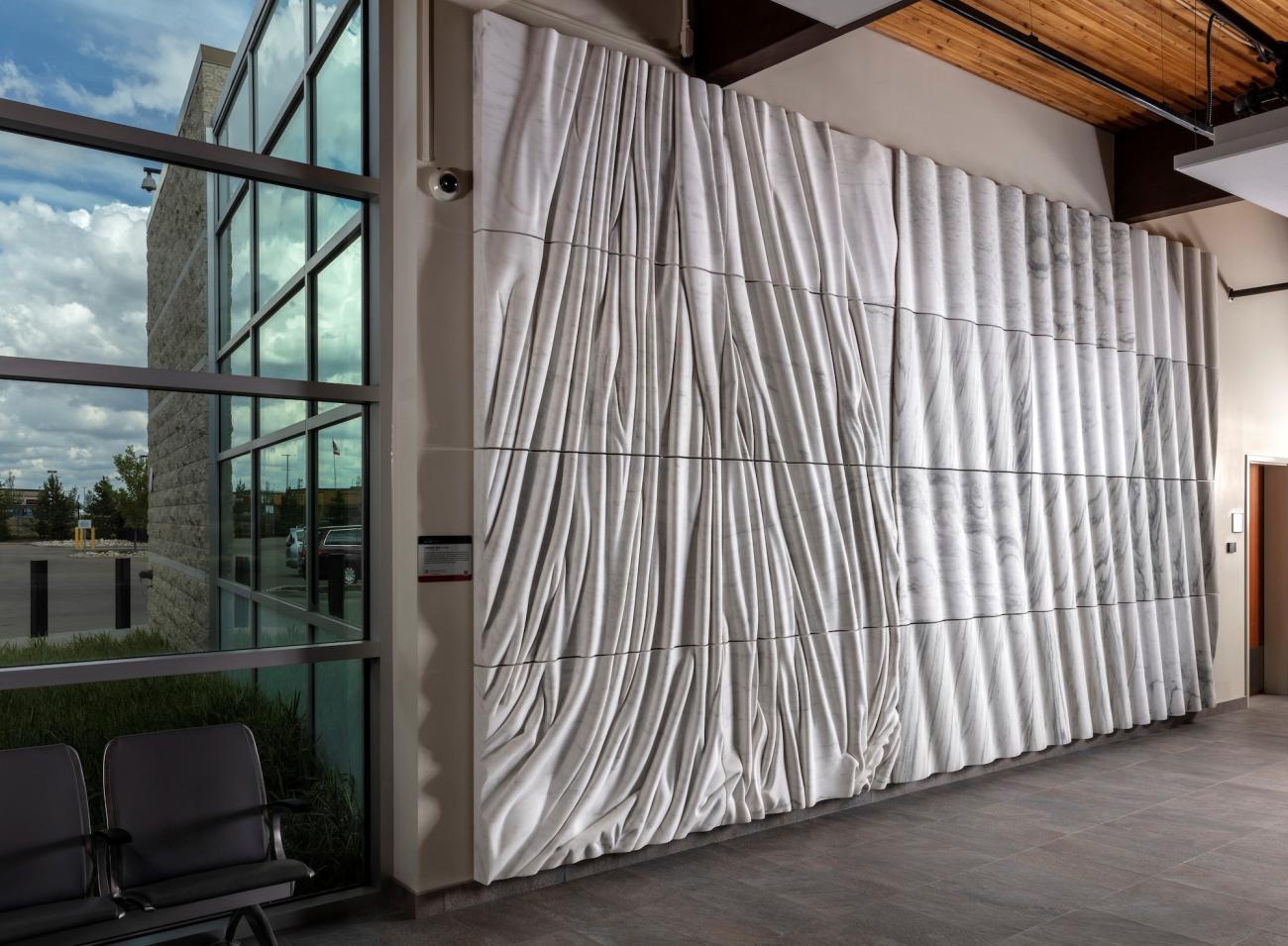
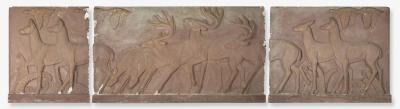
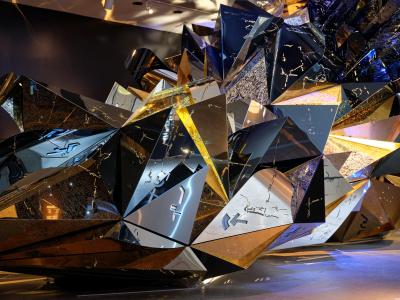
Counterpoise, 2012. Public Art Commission, Edmonton Police Service Southwest Division, Edmonton, Alberta. 12 feet high by 21.75 feet wide by 4 inches deep. Materials: Hand-carved Vermont Mountain White marble. Photo: Curtis Trent
Verve and Decorum marks the first exhibition of Edna’s work in 40 years. How does it feel to see her work honoured at the AGO again?
To be honest, it’s a dream come true. The AGO is where Edna exhibited 81 years ago, back when the AGO was called the Art Gallery of Toronto. Being a female artist at that time and then moving to New York City in the late 1940’s, Edna fell into obscurity in Canada. After Edna died in 1980, I wanted to see her receive the recognition she deserved. In the mid to late 80s, art historian Joyce Zemans took that on and curated the touring exhibition Kathleen Munn and Edna Taçon: New Perspectives on Modernism in Canada. Afterwards, things fell silent until Renée van der Avoird came across a painting by Edna in the AGO vaults. She contacted me to find out if there was a familial connection and then became intrigued by Edna’s work and life story. Renée’s research, writing and curation, along with the work of the whole AGO team, amounts to a wonderful tribute to the “person” Edna was and how I remember her, her life and her work.
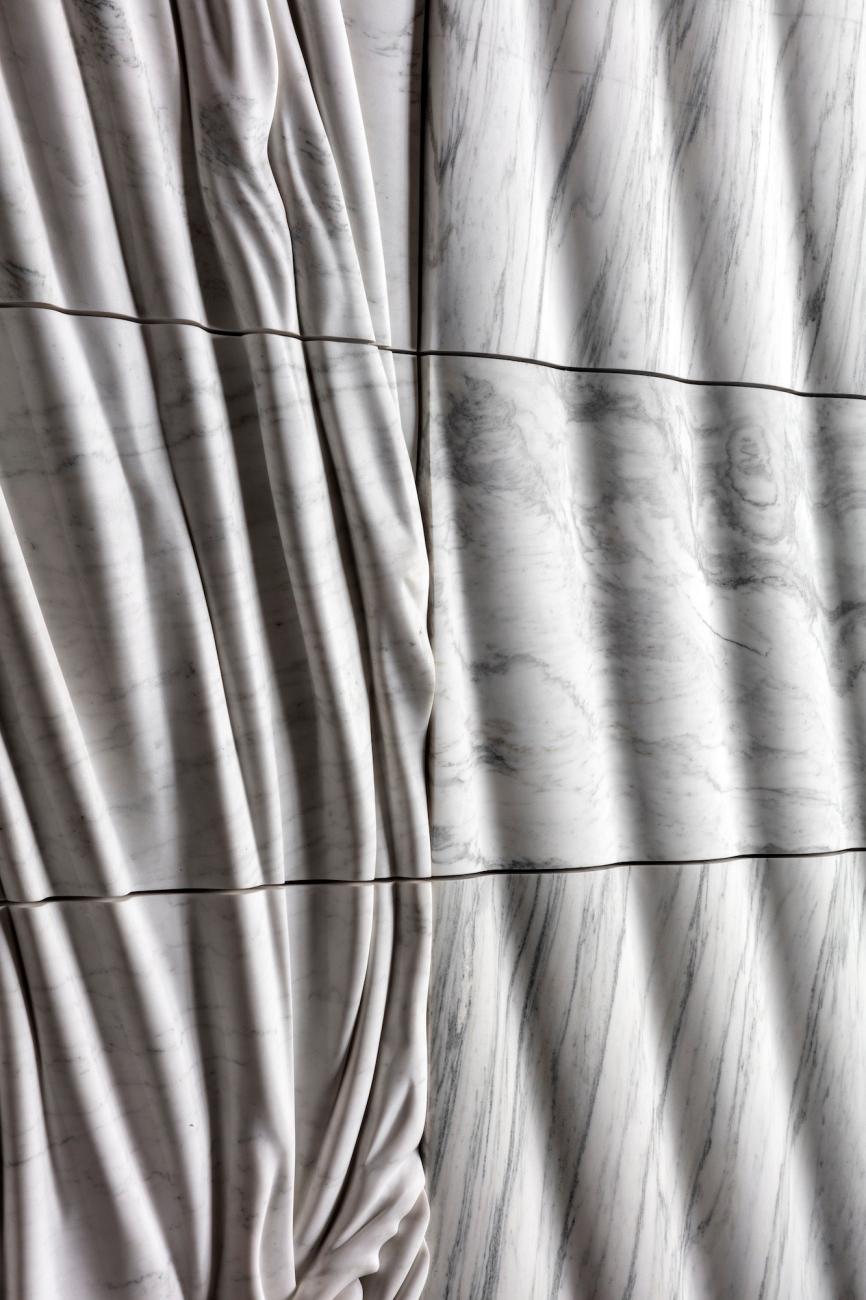
Counterpoise (detail), 2012. Public Art Commission, Edmonton Police Service Southwest Division, Edmonton, Alberta. 12 feet high by 21.75 feet wide by 4 inches deep. Materials: Hand-carved Vermont Mountain White marble. Photo: Curtis Trent
Do you have a fond memory of Edna that you would like to share?
I have many fond memories, though they are all condensed into the very short period, that was the last year of her life. Edna and I really “clicked” when I stayed with her in New York City for ten days in 1979. We talked about food and art, and we ate many lovely meals she prepared. She took me to galleries and museums and introduced me to the artworks of numerous artists I had never heard of.
One memory that still stands out for me is the onion sandwich. One evening, Edna and I had dinner accompanied by (many) drinks with a few of her friends, including fashion designer George Halley and his boyfriend Yoshi, Norma Grauman of Brody Embroidery, and a few others whose names I can’t recall. Upon returning very late to Edna’s Manhattan apartment, she wanted to make us each a raw onion sandwich. She told me that this was something she liked to have after a night out, and that she really wanted to introduce me to it because she thought that I’d like it. As a 14-year-old who just had a rousing “night on the town” with his grandmother and was feeling a little inebriated, the thought of sitting down to eat a raw onion sandwich didn’t sound all that appealing. I politely declined the offer and said that I should make my bed in the living room and get some sleep.
As I prepared my bed, I could see that Edna was quite upset while cleaning up some dishes in the kitchen, so I went into the kitchen and said that I had changed my mind, and I’d love to try her onion sandwich. Her eyes lit up, and a big smile appeared on her face. She then prepared two delicious raw onion sandwiches, which we ate while talking about art and the day’s events.
Experience the "poetic lyricism" of Edna Taçon's work by visiting Edna Taçon: Verve and Decorum, located on Level 1 of the AGO in the Nicholas Fodor Gallery (gallery 140 and gallery 141), before it closes on August 30, 2026. A more extensive interview with Carl Taçon about his relationship with his grandmother is featured in the exhibition catalogue, available at Shop AGO online and in person.


![Keith Haring in a Top Hat [Self-Portrait], (1989)](/sites/default/files/styles/image_small/public/2023-11/KHA-1626_representation_19435_original-Web%20and%20Standard%20PowerPoint.jpg?itok=MJgd2FZP)