Sep 14, 2026
Barry Ace on Angus Trudeau’s Historical Depictions
The multidisciplinary artist discusses how Angus Trudeau explored memory in his depictions of Odawa Mnis
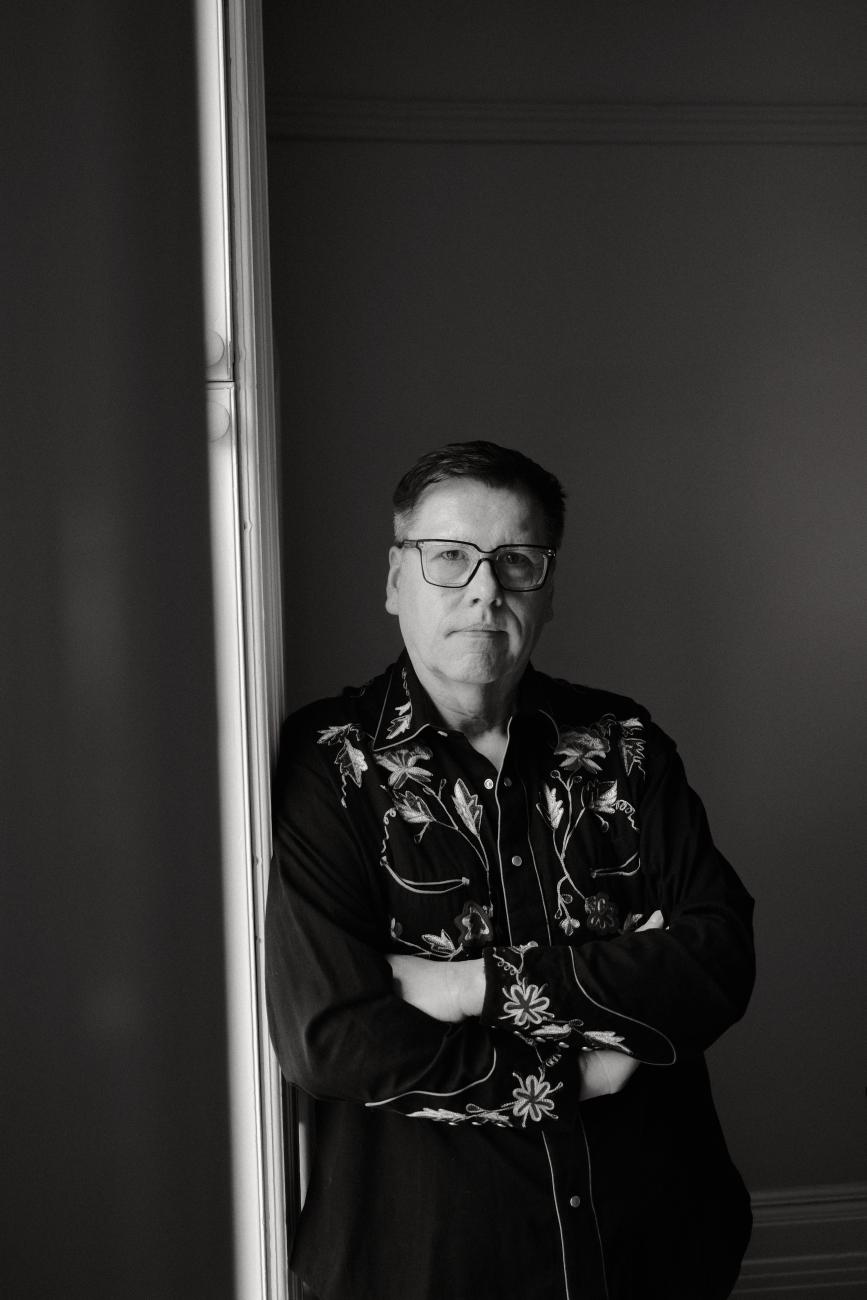
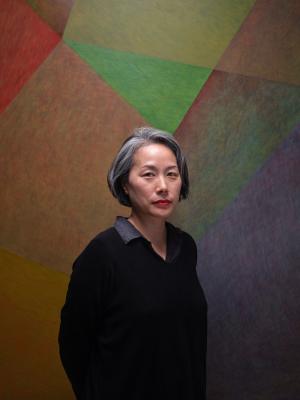
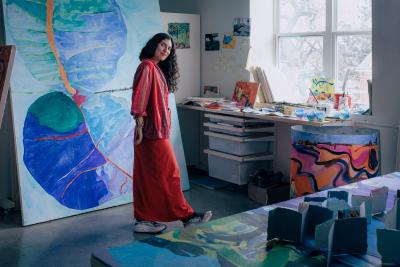
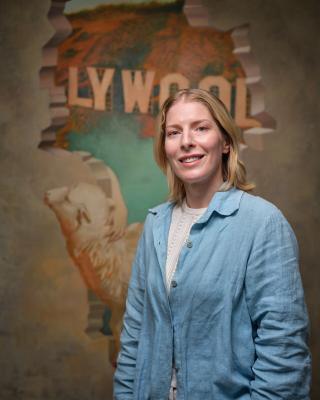
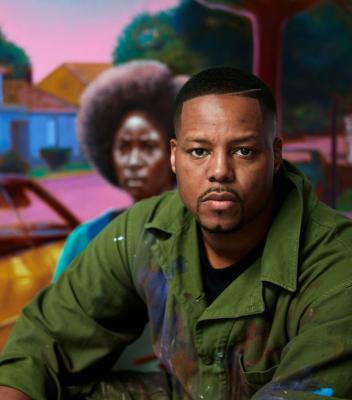
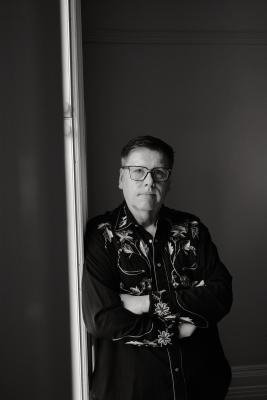
Barry Ace. Courtesy of Jasmin Daigle
A lifelong sailor turned artist, Angus Trudeau (1908-1984) created intimate and historical depictions of Odawa Mnis (Manitoulin Island), the place where he lived, worked, and created art for most of his life.
Two works by the Odawa artist are currently on view at the AGO: Red Sailboat (around late 1970s – early 1980s) and City of Midland Wikwemikong 1908 (1978). On Wednesday, September 23, artist, curator, writer and educator Barry Ace will be giving a Close Encounter talk on Trudeau's practice. This talk will explore how Trudeau's practice connects lived experience to broader stories of labour, movement, place, and resilience. Tickets for the talk are now on sale.
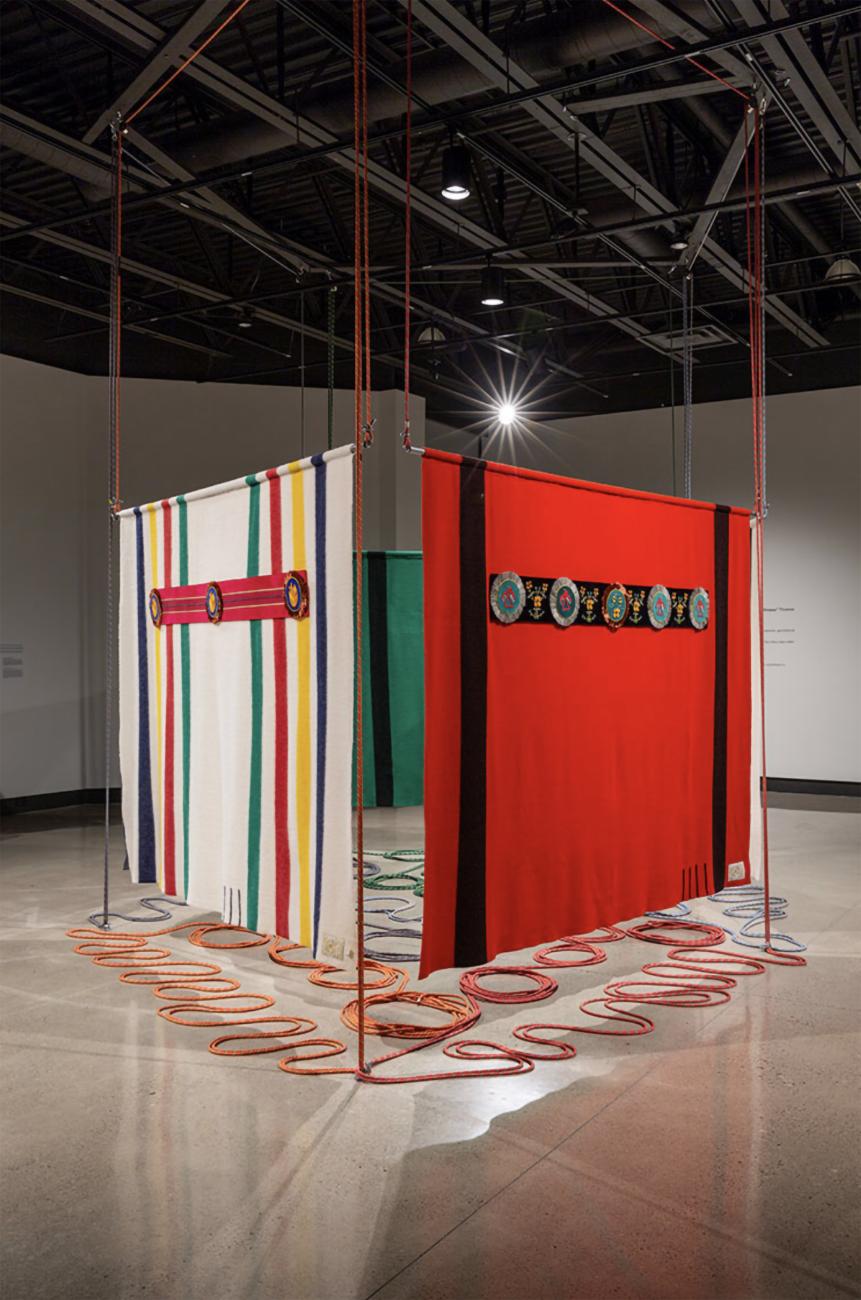
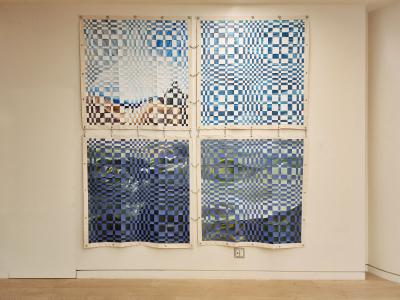
Barry Ace, Nayaano-nibiimaang Gichigamiin: The Five Great Lakes (2016). Each measuring 183 x 228 cm, Hudson Bay blanket, velvet, beads, capacitors, resistors, light emitting diodes, horsehair, copper wire, silver, pewter, metal, mountain climbing rope.
Currently based in Ottawa, Ace is a debendaagzijig (citizen) of M’Chigeeng First Nation on Odawa Mnis (Manitoulin Island). His multidisciplinary practice explores how Indigenous art carries knowledge, memory, and experience across generations. Ace's practice also extends beyond gallery walls, focusing on performance, scholarship, cultural exchange, and community.
Before his talk, Ace discusses the significance of Trudeau’s depictions of Odawa Mnis and his own personal connection to the artist.
Foyer: Can you tell us a bit about your artistic practice?
Ace: My visual art practice responds to the accelerating presence of the digital age and the ways new technologies are transforming, infusing, and reshaping Anishinaabeg culture and our ways of communicating. I work through transformation and recontextualization, drawing from historic Anishinaabeg material culture — particularly textiles and the visual language of beadwork — and bringing these forms into conversation with the technological world of the present. I push the boundaries of beadwork by replacing glass beads with the discarded remnants of technology: capacitors, resistors, and light-emitting diodes. Arranged into intricate floral motifs, these fragments of circuitry become a contemporary beadwork, carrying the memory of Anishinaabeg aesthetic traditions into a new material and technological landscape. In this act of upcycling, what has been discarded is given another life, and what might appear to be technological detritus becomes a vessel for cultural memory and continuity.
This impulse to encode and carry memory forward is also deeply connected to my own identity. As Dr. Alan Ojiig Corbiere writes, the otter, my doodem (clan), was an important messenger for the Anishinaabeg while miigis—the small cowry shell, a cousin of esiins, the freshwater clam historically recorded as Assance and Ace—has long played a role in mnemonically recalling Anishinaabe histories and teachings. Corbiere suggests that, through both my doodem and my name, I may be predisposed to encode these teachings in new media for this generation. I understand my practice in much the same way: as a form of remembering, carrying, and renewal. I negotiate the tenuous space between cultural continuity and technological colonization, allowing ancestral forms to move through contemporary materials without losing their Anishinaabeg presence. My work is not about holding culture still, but about allowing it to transform, speak, and remain alive.
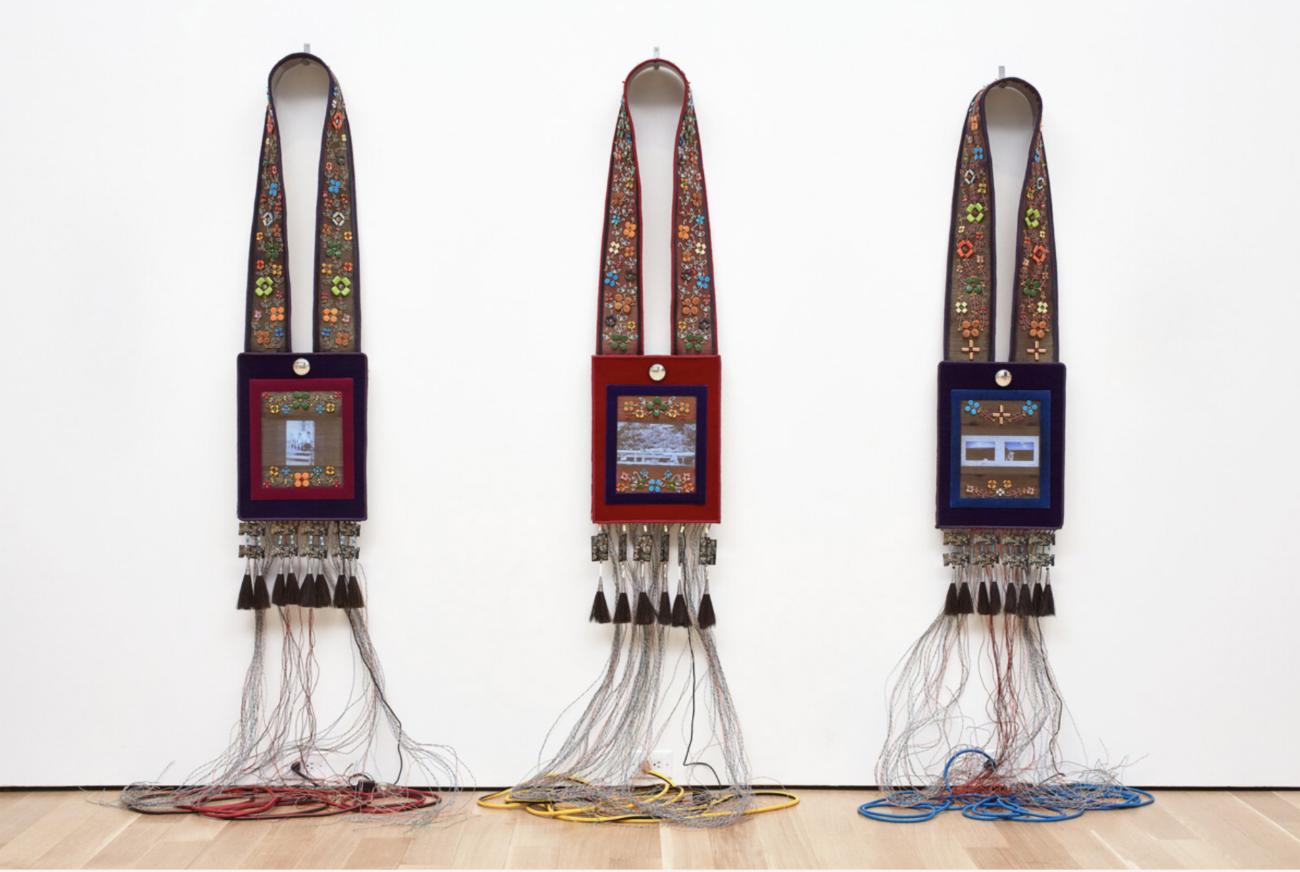
Barry Ace, trinity suite: Bandolier for Niibwa Ndanwendaagan (My Relatives); Bandolier for Manidoo-minising (Manitoulin Island); Bandolier for Charlie (In Memoriam), 2011-2015. Mixed media (motion sensor display monitors, fabric, metal, horsehair, extension cords, mirror, plastic, capacitors and resistors), overall installed: 207 x 95 x 53 cm Collection of the Art Gallery of Ontario, Toronto
Much of Trudeau’s work is rooted in the history and culture of Odawa Mnis (Manitoulin Island), which he depicted in his own distinct style. For the talk on September 23, what aspects of Trudeau’s practice are you hoping to discuss?
In my talk, I want to situate Trudeau’s work within the cultural, geographical, economic, political, and social world of Odawa Mnis in which he lived and worked. Born in 1908 in Wiikwemkoong and identifying himself as Odawa, Trudeau came of age in a world shaped by the Island’s changing economies, waterways, communities, and relationships to the wider Great Lakes region. Rather than concentrating on the many personal anecdotes and stories surrounding his life, I want to consider how these forces entered his work and shaped his distinctive sense of place and time. His paintings, collages, and model boats can be understood as mnemonic, autobiographical narratives — deeply personal observations that preserve fragments of a particular world and the histories embedded within it.
I am particularly interested in Trudeau’s distinct visual language and his remarkable instinct for transforming ordinary materials into vehicles for memory. As a self-taught artist, he freely moved between painting, collage, and assemblage, incorporating newspaper clippings, transferred imagery, plastic, thumbtacks, thimbles, cork, matchsticks, and carefully carved objects into his works. This inventive practice of repurposing parallels the way he reconstructed his own world through images and objects. His work stands apart from the Woodland style that came to characterize much Indigenous painting on Manitoulin through artists such as Daphne Odjig, Martin Panamick, and Blake Debassige, while sharing a certain affinity with the work of my cousin Don Ense. Through a close reading of several paintings and model boats, I hope to reveal the historical events, lived experiences, and material histories embedded within them, and to consider how Trudeau’s work offers an important and still underexplored visual record of life on Manitoulin Island.
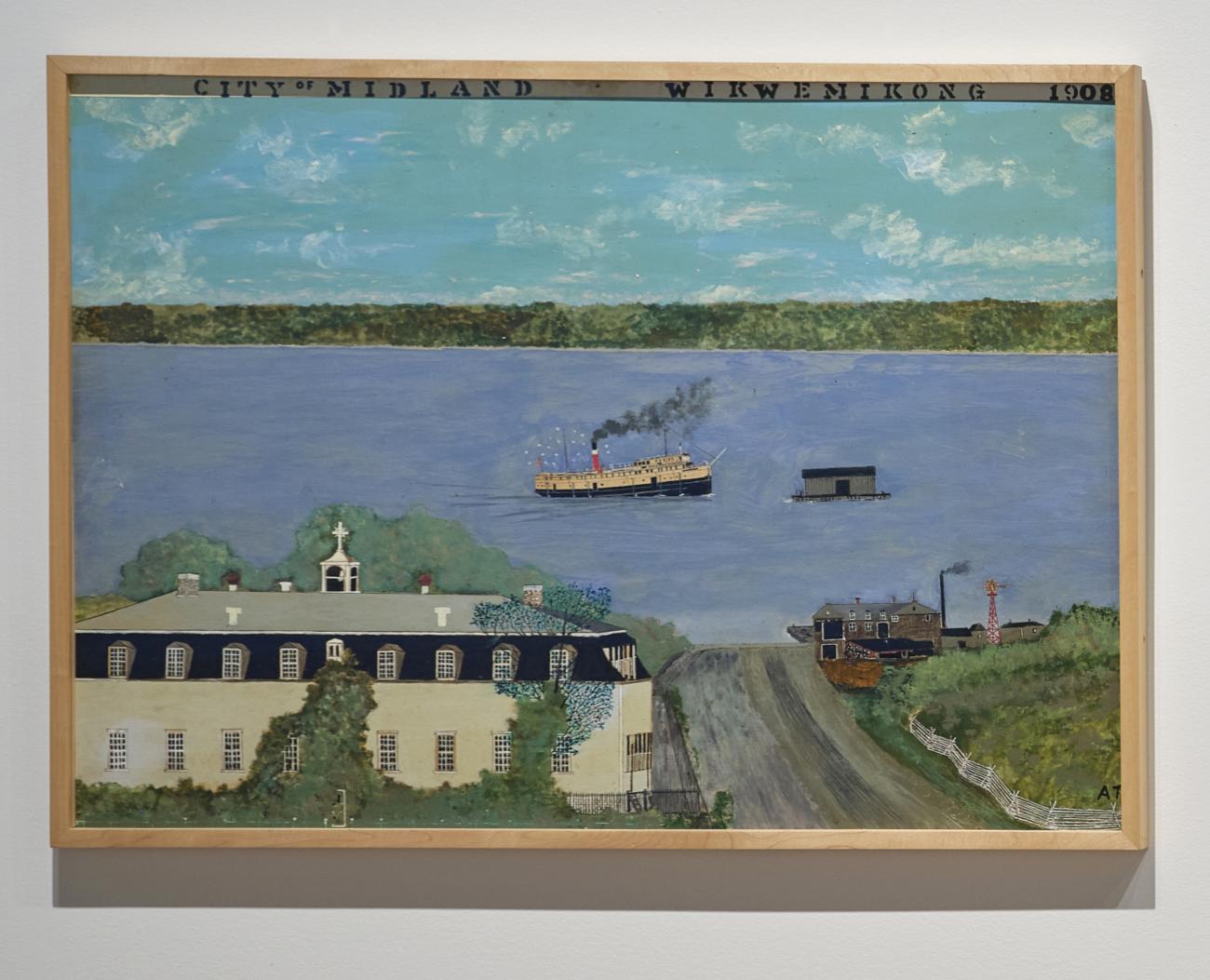
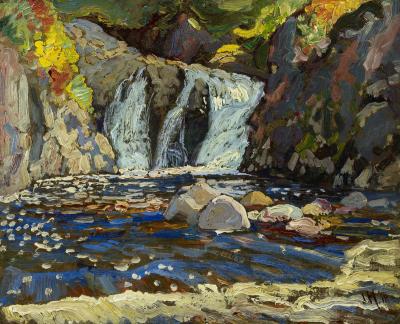
Angus Trudeau. City of Midland Wikwemikong 1908, 1978. Oil, graphite and ink, sight: 73.4 x 101 cm. Gift of Norcen Energy Resources Limited, 1986. © Estate of Angus Trudeau, courtesy Gallery Gevik. 86/59
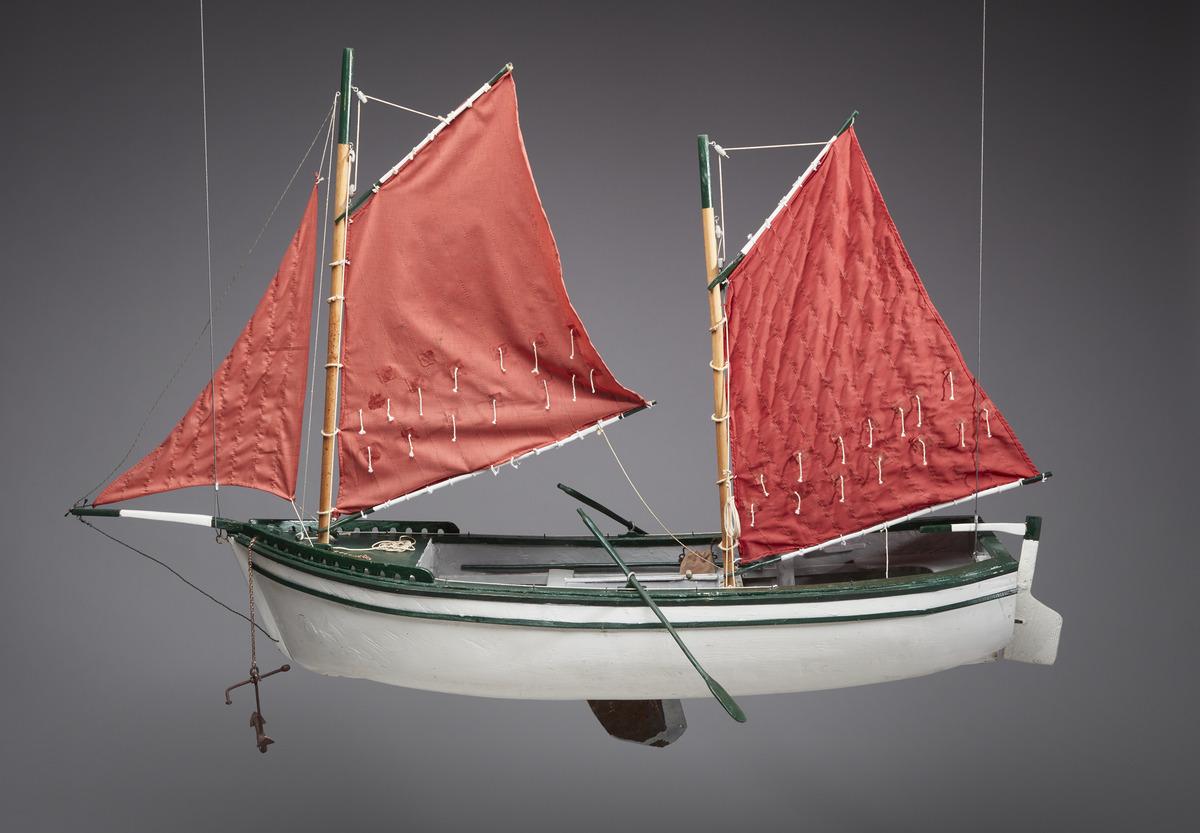
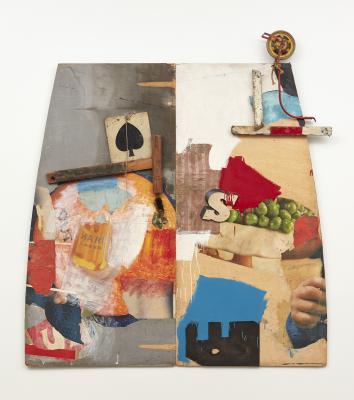
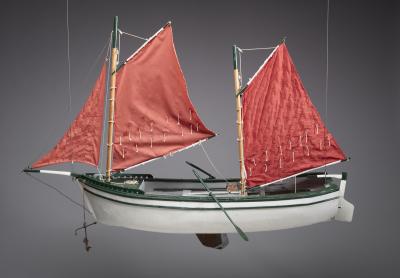
Angus Trudeau. Red Sailboat, unknown. Wood, plastic, acrylic paint, Overall: 86.4 × 139.7 × 33 cm, 9.1 kg. Art Gallery of Ontario. Gift of Barbara Hinds, 2018. © Estate of Angus Trudeau, courtesy Gallery Gevik. Photo: AGO. 2018/3746
Currently, the AGO has two works on view by Trudeau in the J.S. McLean Centre for Indigenous + Canadian Art: Red Sailboat and City of Midland Wikwemikong. Can you speak a bit about the significance of these works?
These two works in the AGO’s permanent collection are significant because they reveal how maritime history is intertwined with the larger history of colonization on Manitoulin Island. In City of Midland Wikwemikong, the vessel enters the bay at Wiikwemkoong, with the Holy Cross Mission in the foreground. On the surface, Trudeau presents an idyllic pastoral scene, yet beneath that serenity is a history of profound cultural change — the arrival of a maritime economy and the religious indoctrination carried out through the Jesuit mission. Trudeau’s landscapes often work this way: what appears familiar and peaceful can, upon closer looking, reveal layers of history and memory.
That same relational history emerges in Red Sailboat. Red-sailed Mackinaw boats were a familiar presence around Manitoulin before the Second World War. The red sailboat also carries a much more painful association. In the 1920s, Manitoulin children were photographically documented being transported on the waters surrounding the residential schools in a modified Mackinaw sailboat, its masts cut down so it could be towed by a motorized vessel known as the Garnier. This mastless boat was known as the “Red Bug” transported children on outings from Jesuit-run residential schools at Spanish—boys to St. Peter Claver and girls to St. Joseph’s. Seen through an Indigenous lens, the two works become deeply relational: the boats, waters, missions, and shorelines are not simply elements of landscape, but carriers of memory. Together, they speak to how colonization moved across Manitoulin’s waters and into the lives of its people, leaving histories that continue to reside within the places Trudeau painted.
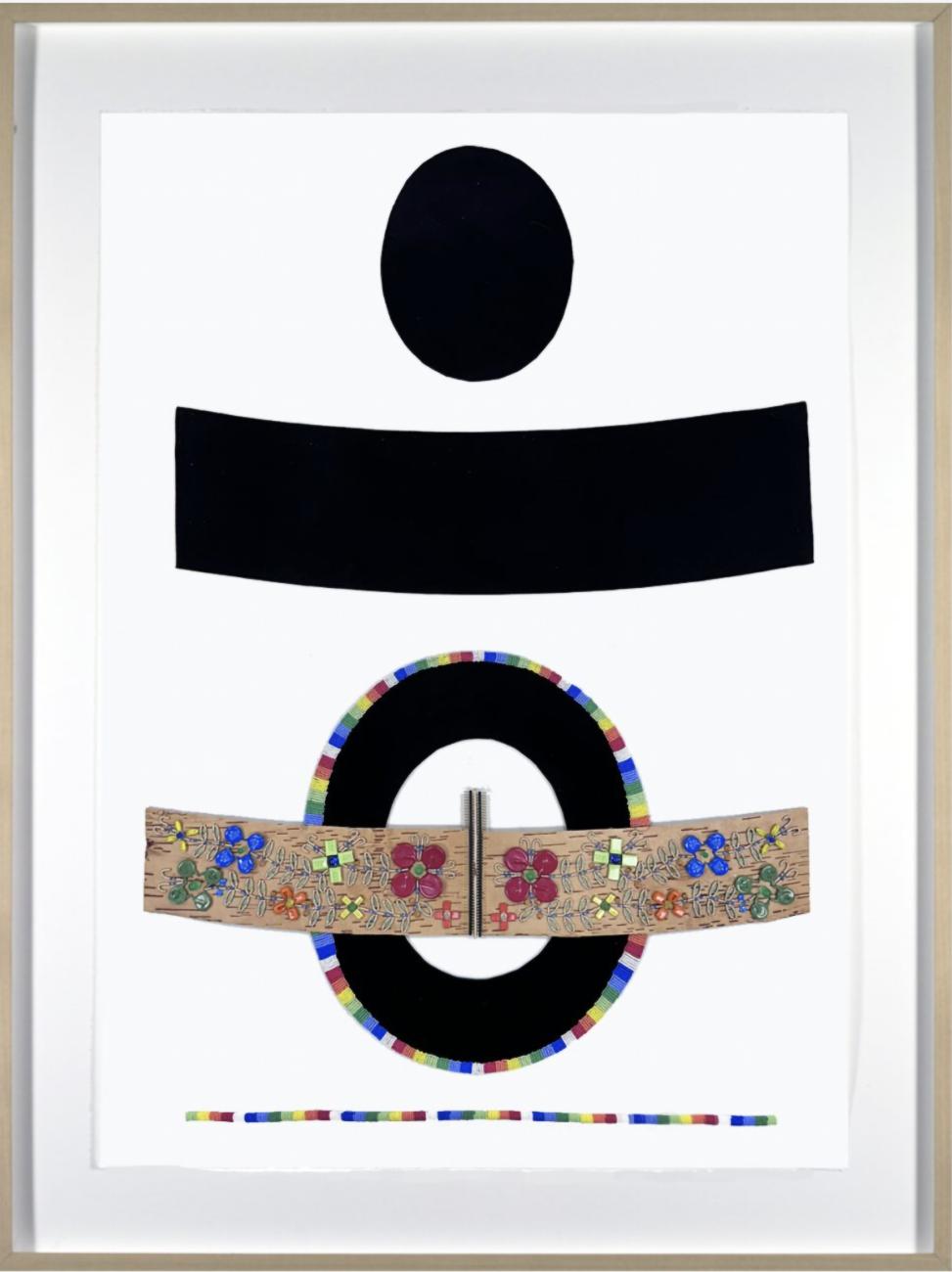
Barry Ace, Convergence of Dissonant Parts (2025). Velvet, Pellon©, birchbark, electronic components, glass beads, hide, and rope on paper. 125 x 94 cm. Collection of the Artist.
As an artist also from Odawa Mnis, you not only have a very expansive knowledge of Trudeau’s work but also an intimate connection to his subject matter. Does Trudeau’s practice have any influence on your own work or worldview as an artist?
I am always struck by the synchronicities that emerge when I undertake research for an essay or public presentation, and this talk has revealed one that feels particularly meaningful. When I began tracing Trudeau’s family lineage, I already knew the Trudeau name was part of my own genealogy. My great-grandmother, Catherine Trudeau, was married to my great-grandfather, Peter Ense Ace. As I followed the lineage further, I discovered that Trudeau and I are, in fact, related through my great-grandmother. That realization has added another layer of intimacy to my engagement with his work. I am not simply looking at the work of another artist from Odawa Mnis; I am encountering a family history and a shared relationship to place, memory, and the ways Anishinaabeg life continues to change and adapt.
There are also striking affinities between Trudeau’s practice and my own. Like Trudeau, I am interested in the historical, cultural, geographical, economic, political, social, and technological forces that shape Anishinaabeg life, and in challenging the idea that our culture exists in some fixed or static form. We both work through transformation, recontextualization, and the imaginative reuse of materials. Trudeau found ways of turning everyday and discarded objects into vessels for memory; in my own practice, I similarly transform antiquated electronic components into contemporary forms of beadwork. I use these fragments of technological culture to create intricate floral motifs that echo Anishinaabeg glass beadwork, bringing ancestral visual languages into conversation with the digital world. In that sense, Trudeau’s work resonates with my own worldview: culture does not remain still.
It carries forward, adapting to new circumstances and materials while retaining its memory, presence, and the enduring worldview of the Anishinaabeg.
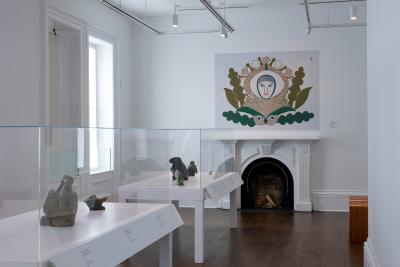
Learn more about Trudeau’s exploration of memory and place by attending Close Encounters: Barry Ace on Angus Trudeau on Wednesday, September 23, at 7 pm. Visit Trudeau’s works, Red Sailboat and City of Midland Wikwemikong 1908, currently on view in the J.S. McLean Centre for Indigenous + Canadian Art in the Irving & Sylvia Ungerman Gallery (gallery 230) on Level 2 of the AGO.
![Keith Haring in a Top Hat [Self-Portrait], (1989)](/sites/default/files/styles/image_small/public/2023-11/KHA-1626_representation_19435_original-Web%20and%20Standard%20PowerPoint.jpg?itok=MJgd2FZP)