Sep 9, 2026
Travelling With the Impressionists
From Brittany to the Netherlands, explore the various geographical locations depicted by the Impressionists
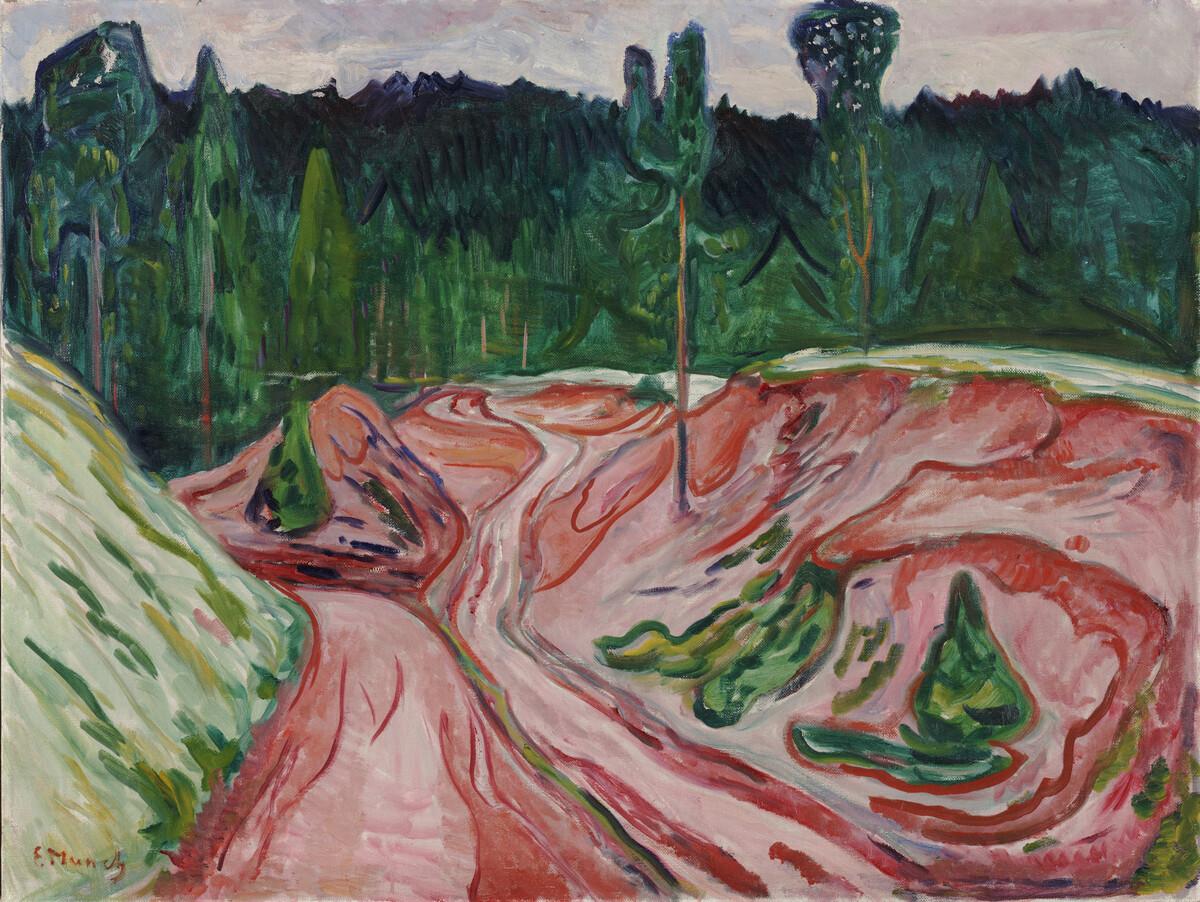
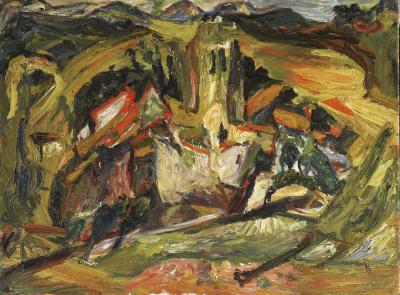
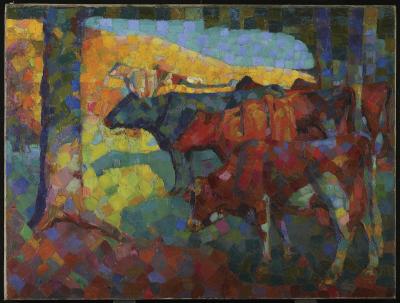
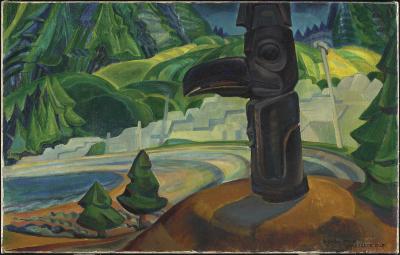
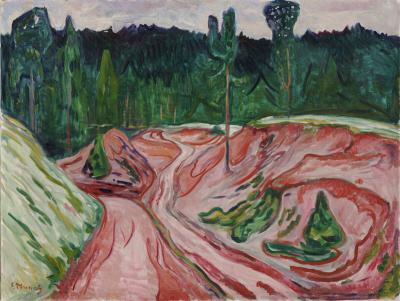
Edvard Munch. Thuringian Forest, 1904. Oil on canvas, unframed: 75.6 x 100.3 cm. Dallas Museum of Art, The Eugene and Margaret McDermott Art Fund, Inc., bequest of Mrs. Eugene McDermott, 2019.67.15.McD
The story of Impressionism unfolded across an expansive and shifting geography. Artists travelled throughout France and beyond, finding subjects in cities and countryside, along coastlines and across national borders. These varied places—and the different experiences of modern life they offered—became integral to Impressionism and to the artistic movements that developed in its wake.
The inaugural Impressionist exhibition opened in Paris in 1874, bringing together artists including Monet, Degas, Renoir, Morisot, and Pissarro. Over the next five decades, Paris and its rapidly changing environs would remain important subjects as part of a much broader geography explored by these artists and subsequent generations.
On view on Level 4 of the AGO, The Impressionist Revolution: Monet to Matisse from the Dallas Museum of Art traces Impressionism and its artistic legacy across a constellation of artists, places, and ideas. The 50 works on view encompass landscapes, structures, and scenes of everyday life from Paris and its surroundings to locations across France and beyond.
In these three works, the brushstrokes of modern artists transport us to Western France, Germany, and the Netherlands.
Émile Bernard , Bridge at Pont-Aven, 1891
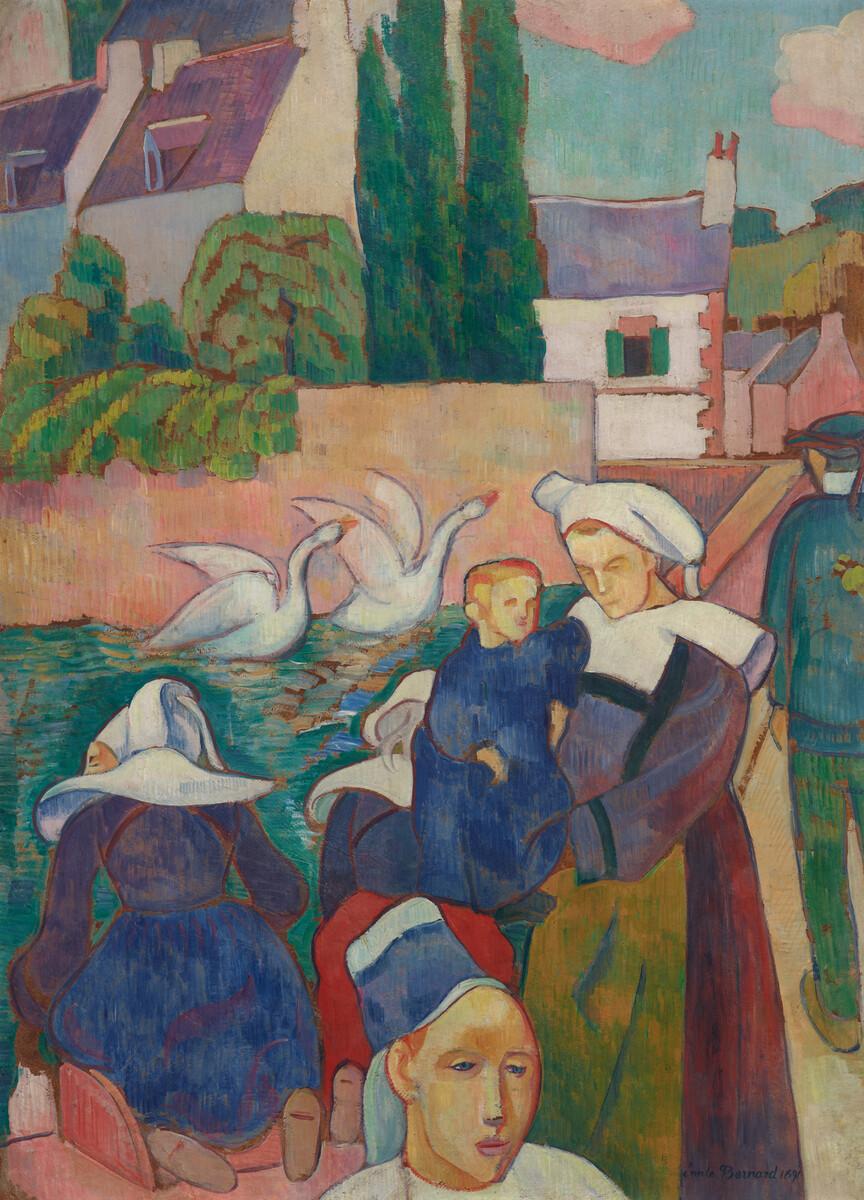
Émile Bernard. Bridge at Pont-Aven, 1891. Oil on cardboard, unframed: 115.6 x 82.6 cm. Dallas Museum of Art, gift of the Estate of Ina MacNaughton, 1992.27
In the late 1880s, Bernard and his peer Paul Sérusier travelled to Brittany—an isolated region in Western France—to join a community of artists led by Paul Gauguin. In the village of Pont-Aven, they believed they would find a culture unspoiled by modern life. Bernard painted this stylized scene in the village. The women wear traditional Breton headdresses, whose forms echo the flapping wings of the geese.
Edvard Munch, Thuringian Forest, 1904 or 1905 (image at top)
Though Munch initially experimented with Impressionism, he felt its emphasis on naturalism did not allow the emotional expression he sought. Munch developed his unique Expressionist style through his use of winding lines and exaggerated colour. Here, he depicts a recently deforested area in the Thuringian Forest in Germany. With boldly contrasting complementary colours—red and green—he portrays the undulating landscape as bleeding and raw to convey feelings of anguish and despair.
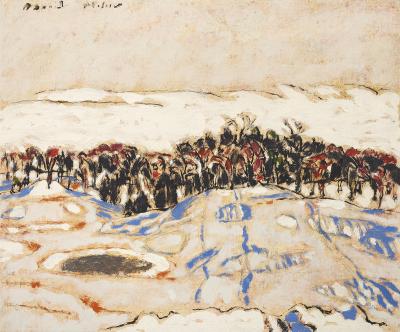
Piet Mondrian, Farm Near Duivendrecht, in the Evening, 1916
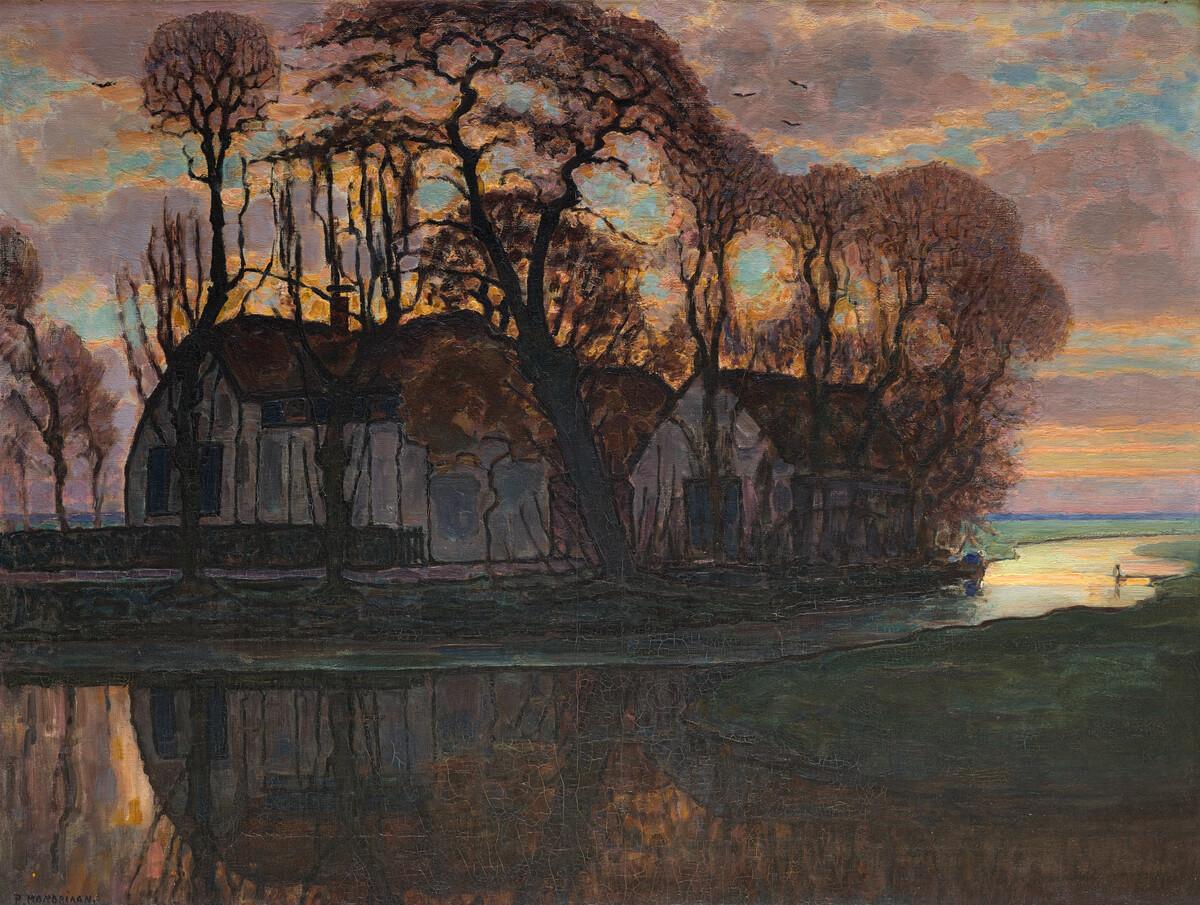
Piet Mondrian. Farm Near Duivendrecht, in the Evening, c.1916. Oil on canvas, unframed: 80.0 x 106.1 cm. Dallas Museum of Art, gift of The Edward and Betty Marcus Foundation.1987.359
Mondrian returned to this farm outside of Amsterdam repeatedly, capturing the quality of light and reflections on the river at different times of day. In the twilight hour, the artist distilled nature to its simplest elements. This work reveals Mondrian’s growing interest in balance, structure, and universal order, anticipating the fully abstract language he would develop in the coming years.
The Impressionist Revolution: Monet to Matisse from the Dallas Museum of Art is on view on Level 4 of the AGO. The exhibition is organized by the Dallas Museum of Art and curated by Dr. Nicole R. Myers, the DMA’s Chief Curatorial and Research Officer and The Barbara Thomas Lemmon Senior Curator of European Art. The AGO presentation is led by Dr. Caroline Shields, AGO Curator, European Art.
On Saturday, September 12, join Shields and Stephan Jost, Michael and Sonja Koerner Director, and CEO, in the AGO’s Baillie Court for a conversation about the Impressionist movement. Book your tickets here.
Generous Support
Ira Gluskin & Maxine Granovsky Gluskin
Andrew Talpash
Supported by the Government of Canada/Avec l’appui du gouvernement du Canada

![Keith Haring in a Top Hat [Self-Portrait], (1989)](/sites/default/files/styles/image_small/public/2023-11/KHA-1626_representation_19435_original-Web%20and%20Standard%20PowerPoint.jpg?itok=MJgd2FZP)