Oct 8, 2026
From Paris to Giverny: Claude Monet’s Iconic Works at the AGO
Multiple paintings by the Impressionist are on view at the AGO
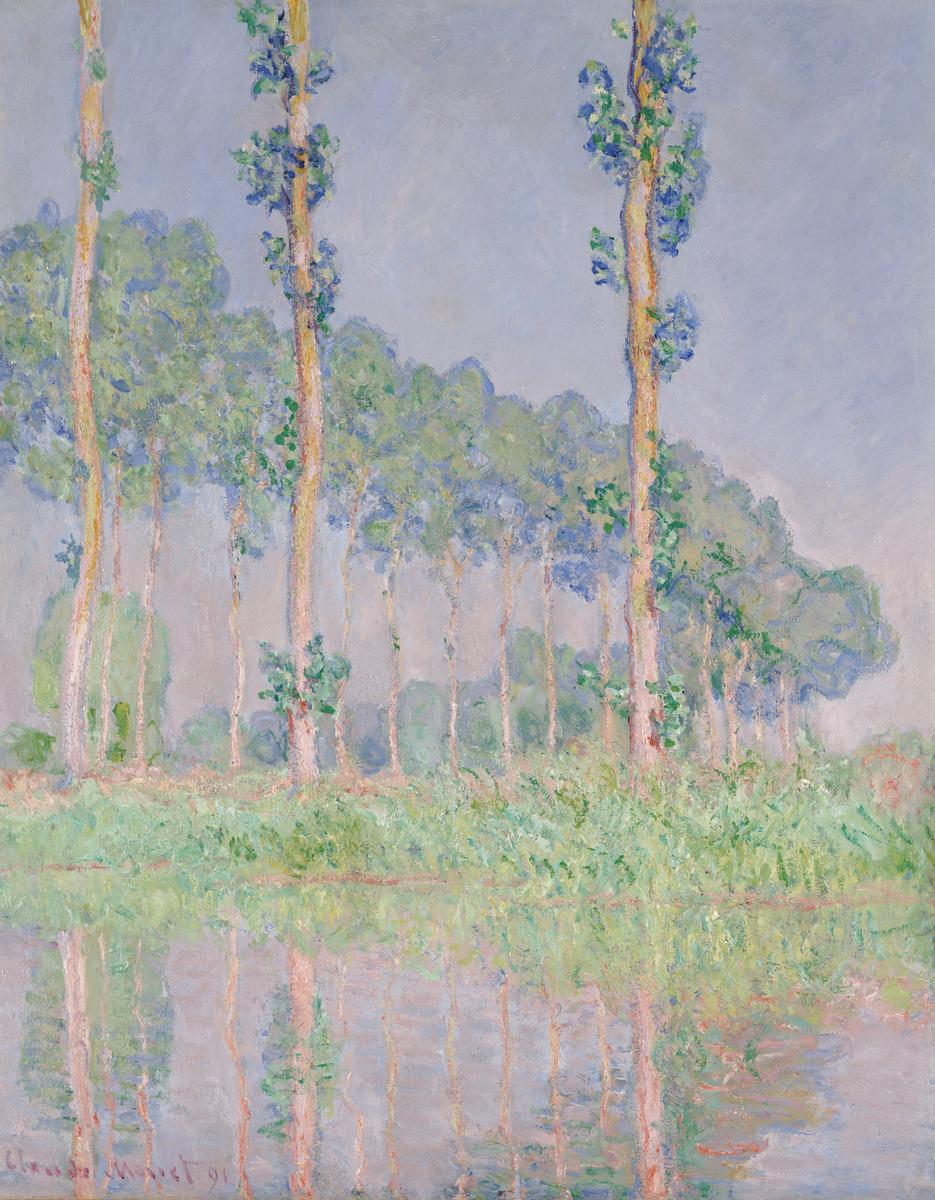
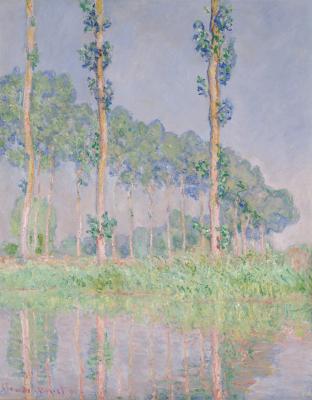
Claude Monet. Poplars, Pink Effect, 1891. Oil on canvas, Dallas Museum of Art, The Eugene and Margaret McDermott Art Fund, Inc., bequest of Mrs. Eugene McDermott, 2019.67.14.McD
On view now at the AGO until October 18, The Impressionism Revolution: Monet to Matisse from the Dallas Museum of Art invites visitors to discover the defiant creativity that propelled a beloved art movement. Monet—perhaps the most widely recognized artist of the Impressionist movement—is also the most represented artist in this exhibition, where seven of his canvases are on view.
The exhibition features seven works created by Claude Monet (1840-1926) during various stages of his illustrious and influential career. Scenes revealed through his brushstrokes include the bustling city streets of Paris, an idyllic riverside landscape on the Seine, a tea service table setting and two iterations of his Water Lilies series. Through these works, visitors can trace the evolution of Monet’s career from his beginnings in Paris to his later days painting on his rural home in Giverny.
A short film projected in one of the exhibition’s final rooms gives visitors a glimpse of the artist at work in his sprawling Japanese-inspired garden, complete with a pond, bamboo, willow trees and a low arching footbridge.
Below, learn more about the paintings by Monet included in The Impressionist Revolution: Monet to Matisse from the Dallas Museum of Art.
The Pont Neuf (1871)
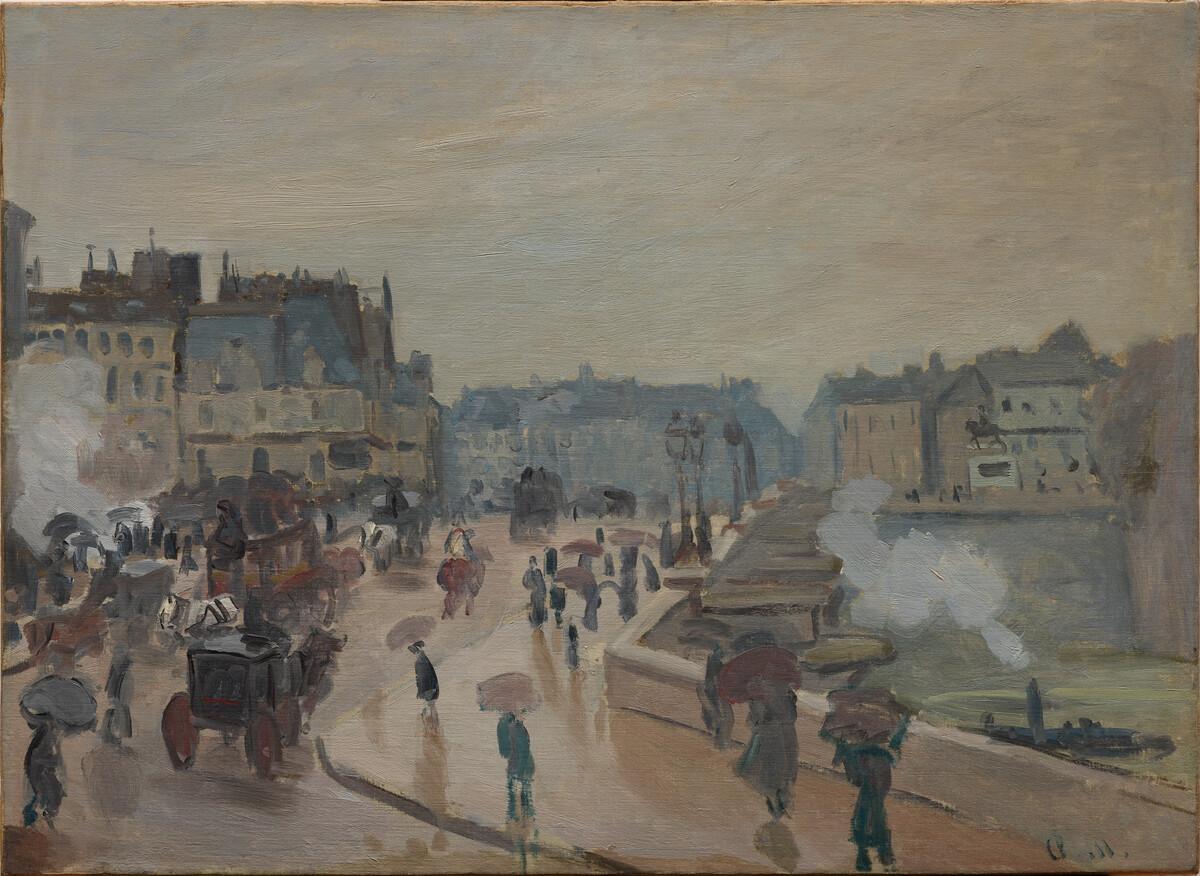
Claude Monet. The Pont Neuf, 1871. Oil on canvas. Dallas Museum of Art, The Wendy and Emery Reves Collection, 1985.R.38
Images of city life captured in a loose, sketch-like style were a novelty in 1870s France. Monet chose Paris as his subject, emphasizing the bustle of people, carriages, and boats coming and going through his use of rapidly applied brushstrokes and unfinished forms. Here, Monet evoked the look and feel of modern city life on a cold, rainy day.
Still Life, Tea Service (1872)
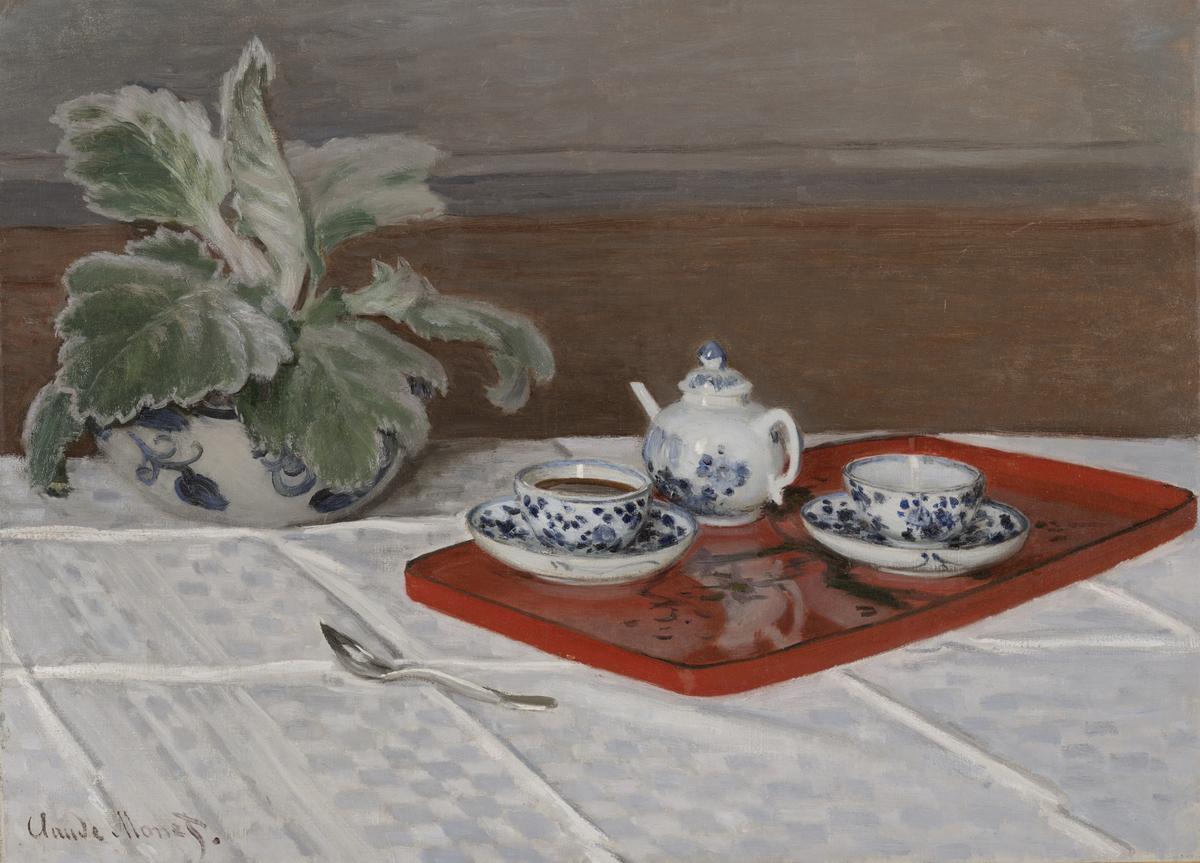
Claude Monet. Still Life, Tea Service, 1872. Oil on canvas, unframed: 53.3 x 72.7 cm. Dallas Museum of Art, The Eugene and Margaret McDermott Art Fund, Inc., bequest of Mrs. Eugene McDermott, 2019.67.12.McD
Though known for his landscapes, Monet was also a remarkable still-life painter. Completed two years before the first Impressionist exhibition, for which he was a key organizer, this painting of a porcelain tea service and sage plant highlights Monet’s skill in rendering textures. The velvety sage leaves contrast with the matte tablecloth, the slick red lacquered tray, and the glinting blue-and-white china. The reflections on the spoon, linen, and ceramics reveal Monet’s lifelong fascination with the way light interacts with various surfaces.
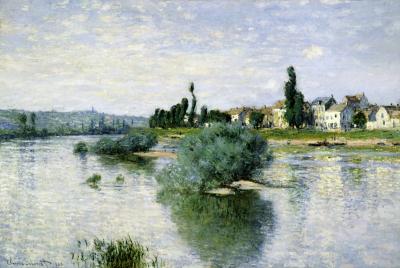
The Seine at Lavacourt (1880)
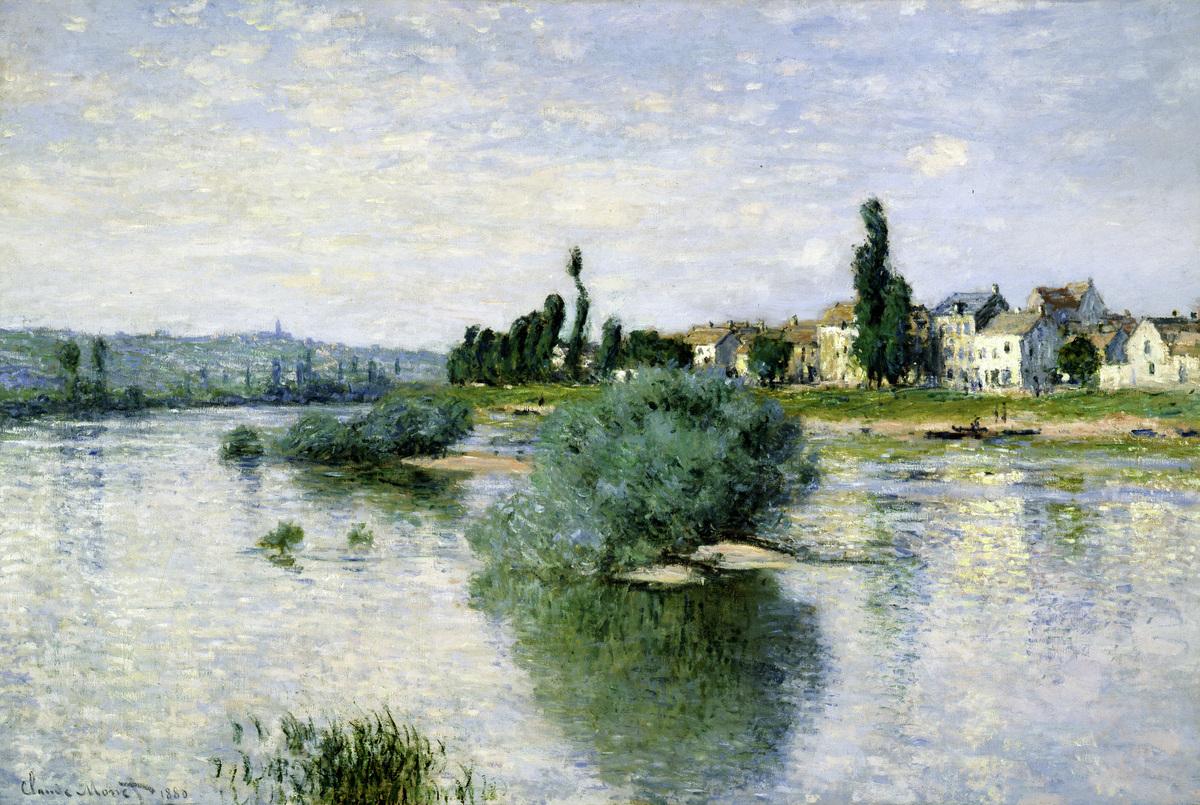
Claude Monet. The Seine at Lavacourt, 1880. Oil on canvas, unframed: 98.4 x 149.2 cm. Dallas Museum of Art, Munger Fund, 1938.4.M
Monet painted this large panorama in his studio while living in Vétheuil, northwest of Paris. He made it for the Salon of 1880—his first submission to the state-run exhibition since 1870. He based the work on several earlier versions of the same subject. Monet’s fellow Impressionists saw his participation in the Salon as a betrayal of their independent ethos, but his strategy worked in his favour. This was the first of his works that both liberal and conservative art critics praised in the press.
The Water Lily Pond (Clouds) (1903)
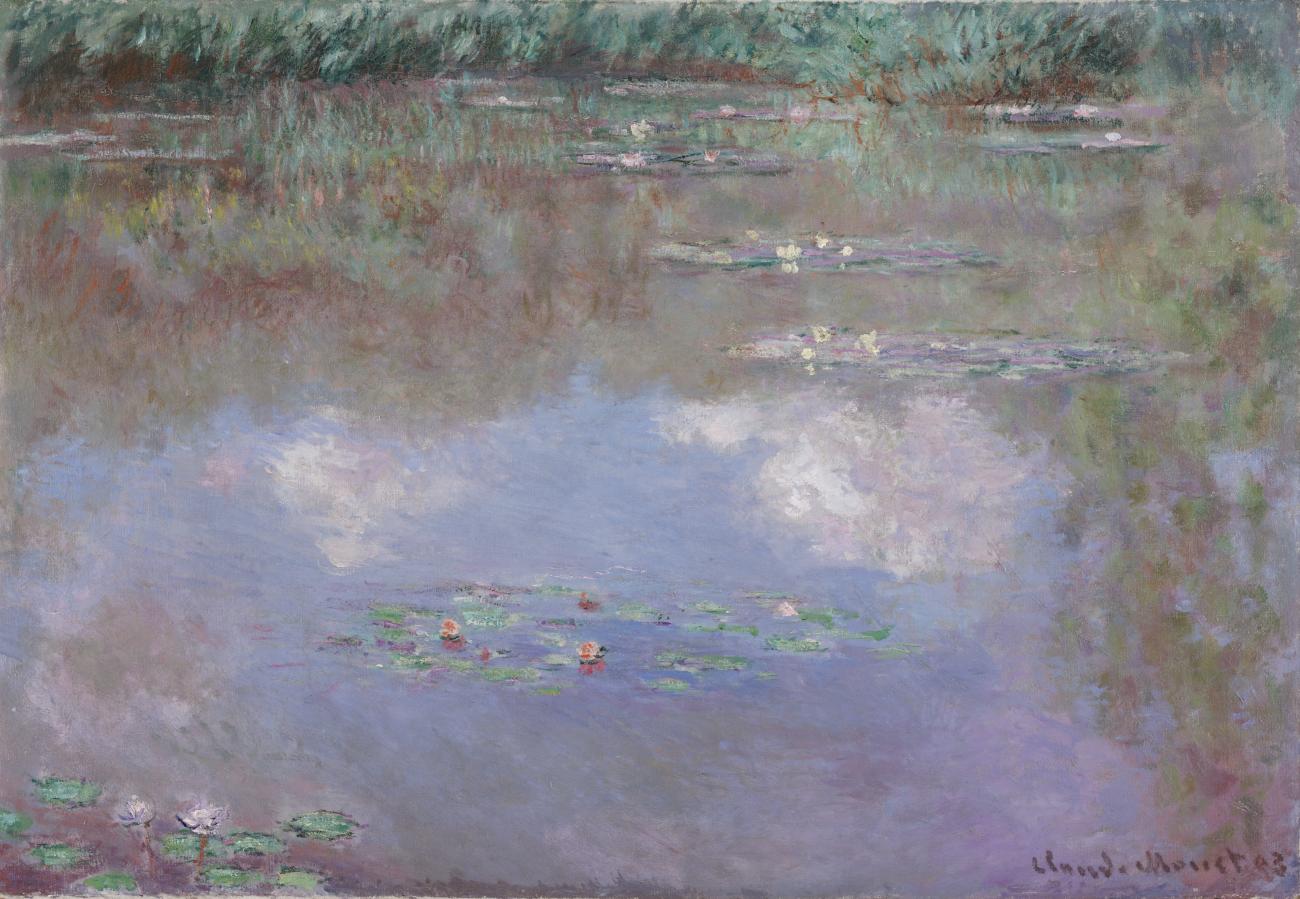
Claude Monet, The Water Lily Pond (Clouds), 1903. Oil on canvas. Dallas Museum of Art, The Eugene and Margaret McDermott Art Fund, Inc., bequest of Mrs. Eugene McDermott in honor of Nancy Hamon, 2019.67.13.McD.
Monet’s fixation with his garden as a subject extended to the surface of his pond, which was at once a mirror of the world above and a window into the world below. His determination to capture the interplay of reflective water and the matte texture of the water lilies pushed him to experiment with new oil painting techniques. He layered brushwork to create a textural effect that implies movement.
At an auction in 1917, attendees were so struck by the illusion of the reflected clouds that they believed the painting was hanging upside down.
Water Lilies (1908)
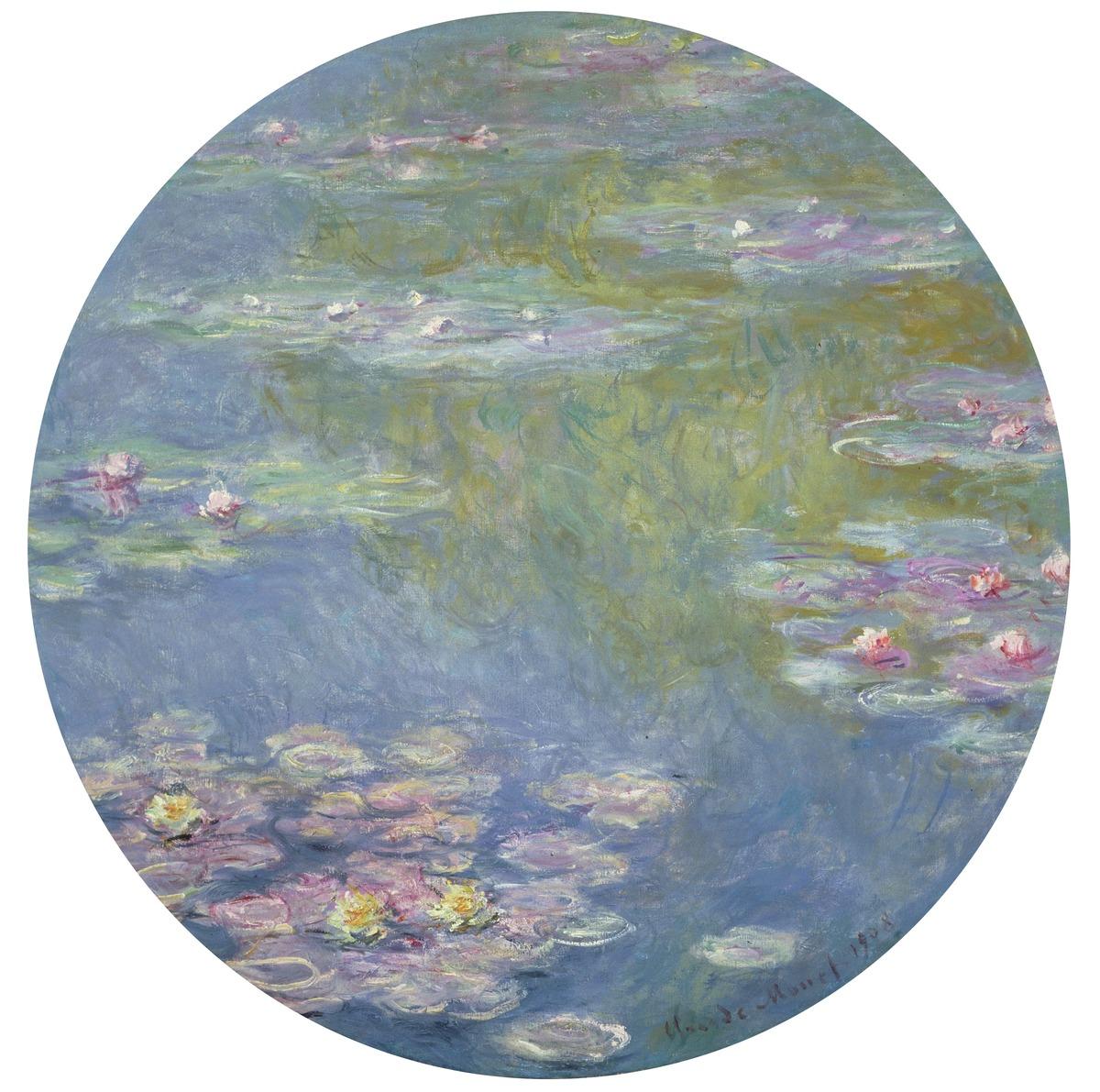
Claude Monet. Water Lilies, 1908. Oil on canvas, unframed diameter: 80.0 cm. Dallas Museum of Art, gift of the Meadows Foundation, Incorporated, 1981.128
This circular canvas offers a telescopic view of Monet’s water lilies. In earlier works, he painted the horizon line at the top of the canvas. In later works like this one, there are no horizon lines at all. Monet’s technique approached abstraction as water lilies gave way to gestural strokes of shimmering colour.
The Impressionist Revolution: Monet to Matisse from the Dallas Museum of Art is on view on Level 4 of the AGO until October 18, 2026. The exhibition is organized by the Dallas Museum of Art and curated by Dr. Nicole R. Myers, the DMA’s Chief Curatorial and Research Officer and The Barbara Thomas Lemmon Senior Curator of European Art. The AGO presentation is led by Dr. Caroline Shields, AGO Curator, European Art.
Generous Support
Ira Gluskin & Maxine Granovsky Gluskin
Andrew Talpash
Supported by the Government of Canada/Avec l’appui du gouvernement du Canada


![Keith Haring in a Top Hat [Self-Portrait], (1989)](/sites/default/files/styles/image_small/public/2023-11/KHA-1626_representation_19435_original-Web%20and%20Standard%20PowerPoint.jpg?itok=MJgd2FZP)