Apr 28, 2026
A Landscape of Her Own
A focused exhibition of sculptures by Elizabeth Wyn Wood is on view now at the AGO
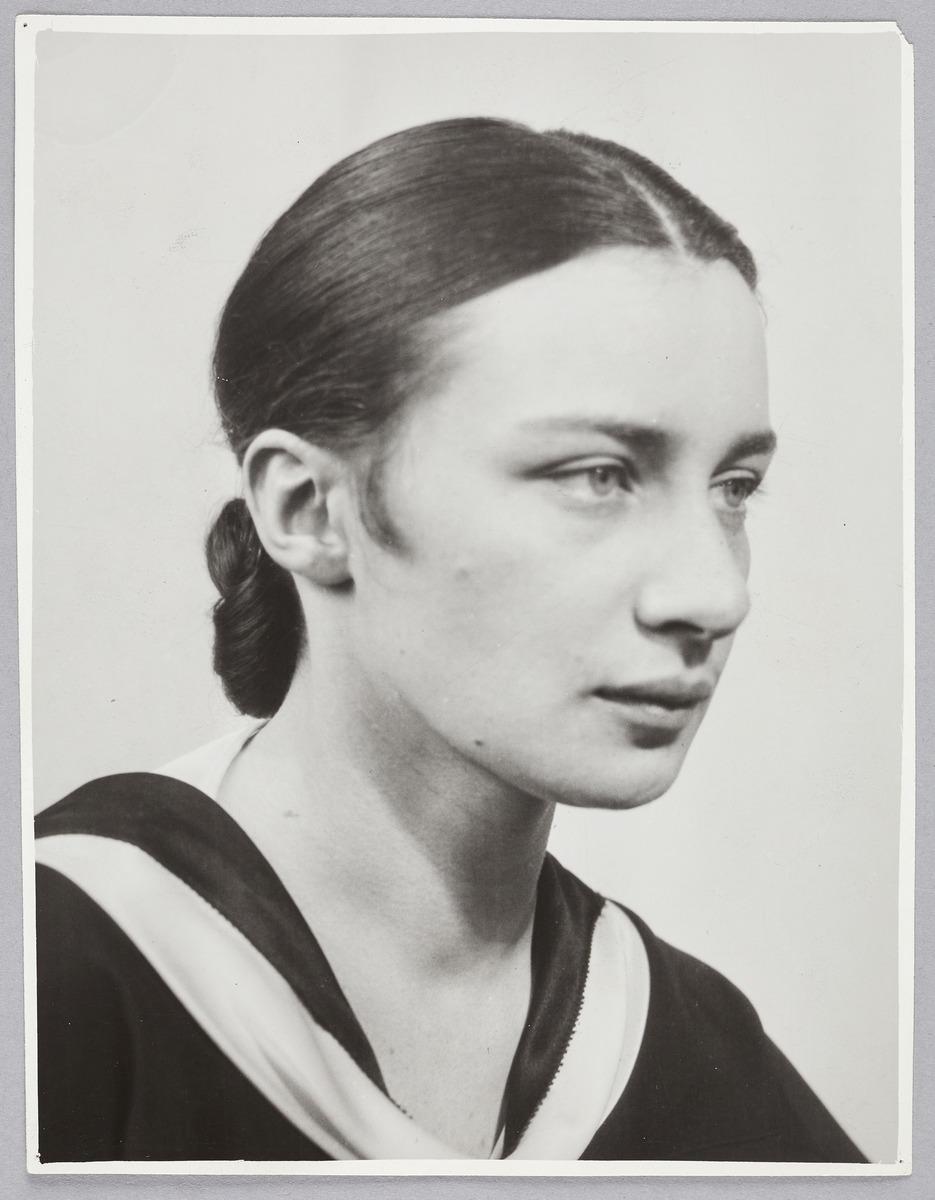
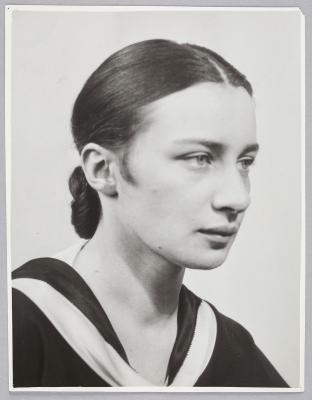
Melvin Ormond Hammond. [Photograph of Elizabeth Wyn Wood], Printed 1927-1934. Gelatin silver print, 21.4 x 17.2 cm. Edward P. Taylor Library & Archives, Art Gallery of Ontario. Photo: AGO
Ontario artist Elizabeth Wyn Wood (1903-1966) is one of many women artists who charted their own path into the wilderness during the 1920s and 1930s. The Group of Seven’s first exhibition in 1920 was a galvanizing moment for the recognition of the Canadian landscape as a deserving subject, but the Group’s members were hardly alone in their passion for it, or for their bold depictions of it.
On view now at the AGO, Elizabeth Wyn Wood is a focused exhibition featuring five works from the AGO Collection by Wood, including three recent acquisitions.
Born in Orillia, Wood graduated from the Ontario College of Art (now OCAD University) in 1925, where she studied under Group of Seven members Arthur Lismer and J.E.H. MacDonald. Afterwards, she focused almost entirely on sculpture, creating in three-dimensions the rugged landscapes she knew well – the low-lying rock islands of Lake Couchiching and the smooth granite ridges seen along the Pickerel River, where she spent many summers.
These explorations into the landscape resulted in exquisite drawings, which in turn served as source material for her sculptures. In 1928, along with fellow artists Frances Loring, Florence Wyle, Emanuel Hahn, Henri Hebert, and Alfred Laliberte, Wood founded the Sculptors Society of Canada. This collective, one of many formed in the wake of the Group of Seven, served to raise the profile of sculpture both in Toronto and nationally.
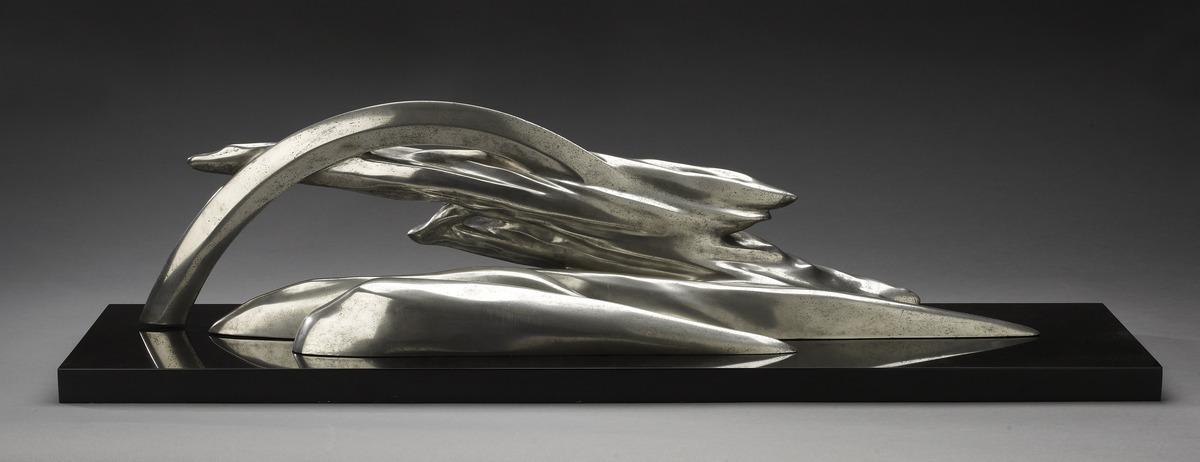
Elizabeth Wyn Wood. Reef and Rainbow, 1928-c. 1935. Cast tin on polished marble base, Overall: 24.8 × 25.2 × 96 cm. Art Gallery of Ontario. Gift from the Albert H. Robson Memorial Subscription Fund, 1950. Photo © AGO. 49/54
Wood’s early artistic concerns – simplified natural forms, experimental materials – are embodied in Northern Island (1927). Three gleaming, gold-plated rocks emerge from a black marble base, representing deep, placid water. A lone sweeping tree, likely a Jack pine, arches over the trio of rocks. The wind is harsh, and the tree twists as it arches. In her work, the vision of the windswept tree, so familiar to us now via the works of Tom Thomson and the Group of Seven, is dramatically recast for the machine age – sleek and streamlined, with sensual curves reminiscent of the human body.
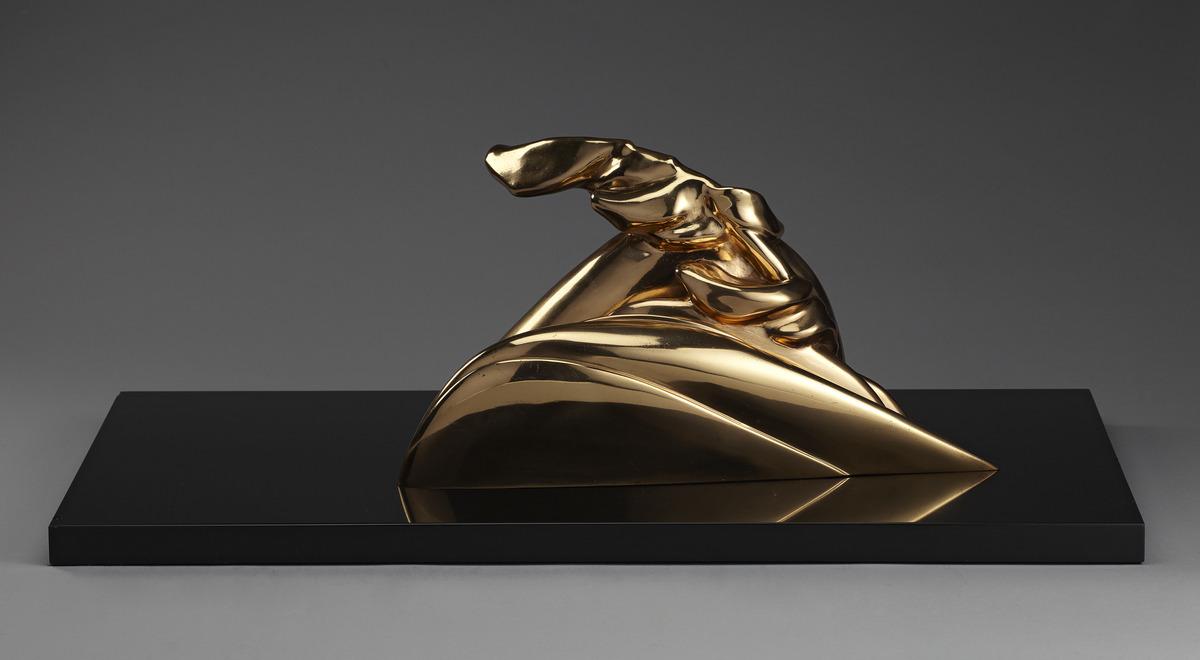
Elizabeth Wyn Wood. Northern Island, c. 1927. Gold-plated bronze on black marble base, Overall: 20.3 × 37 × 20.6 cm. Art Gallery of Ontario. Gift from the Volunteer Committee Fund, 1992. Photo © AGO 92/2
Living and working in Toronto, embedded in the same tight-knit art circle as the Group of Seven, Wood achieved both critical and popular success during her lifetime. She also taught at the Central Technical School in Toronto for more than 20 years. “The bareness of style offers a unique contribution to the aesthetic life of Canada,” wrote art critic Jehanne Biétry Salinger in 1931.
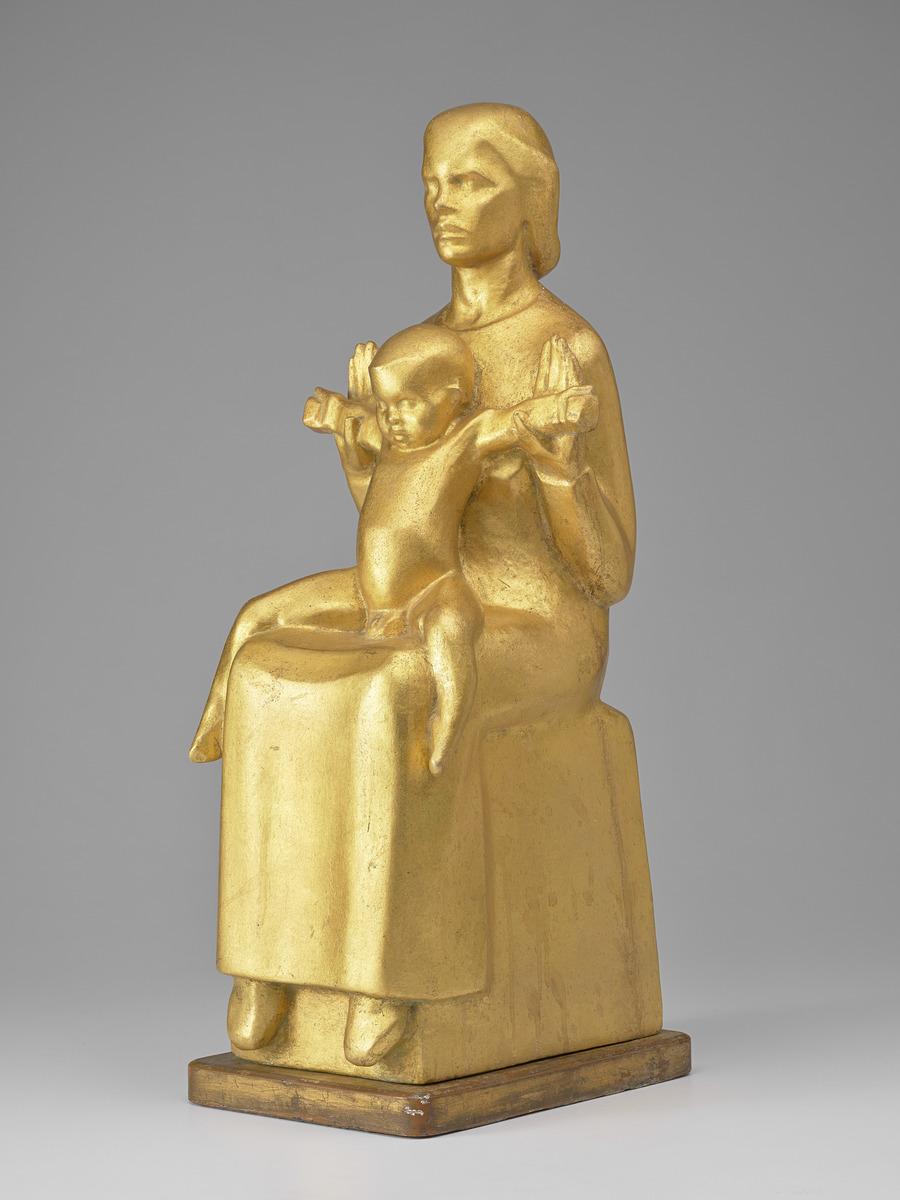
Elizabeth Wyn Wood. Regeneration, 1938. Plaster, gilding, Overall: 45 × 17.3 × 20.5 cm. Art Gallery of Ontario. Purchase, with funds from the Sculpture Fund, 2025. Photo © AGO. 2025/1064
Sharing with the Group of Seven a romantic idealism that from the landscape comes “spiritual stimulation and nourishment”, Wood advocated for a national art rooted in the purity and universal qualities of natural forms, a view outlined in her now famous and controversial essay, Art and the Pre-Cambrian Shield, published in 1937. “What should we do instead?” she wrote, “Paint castles in Spain — crumbling?”
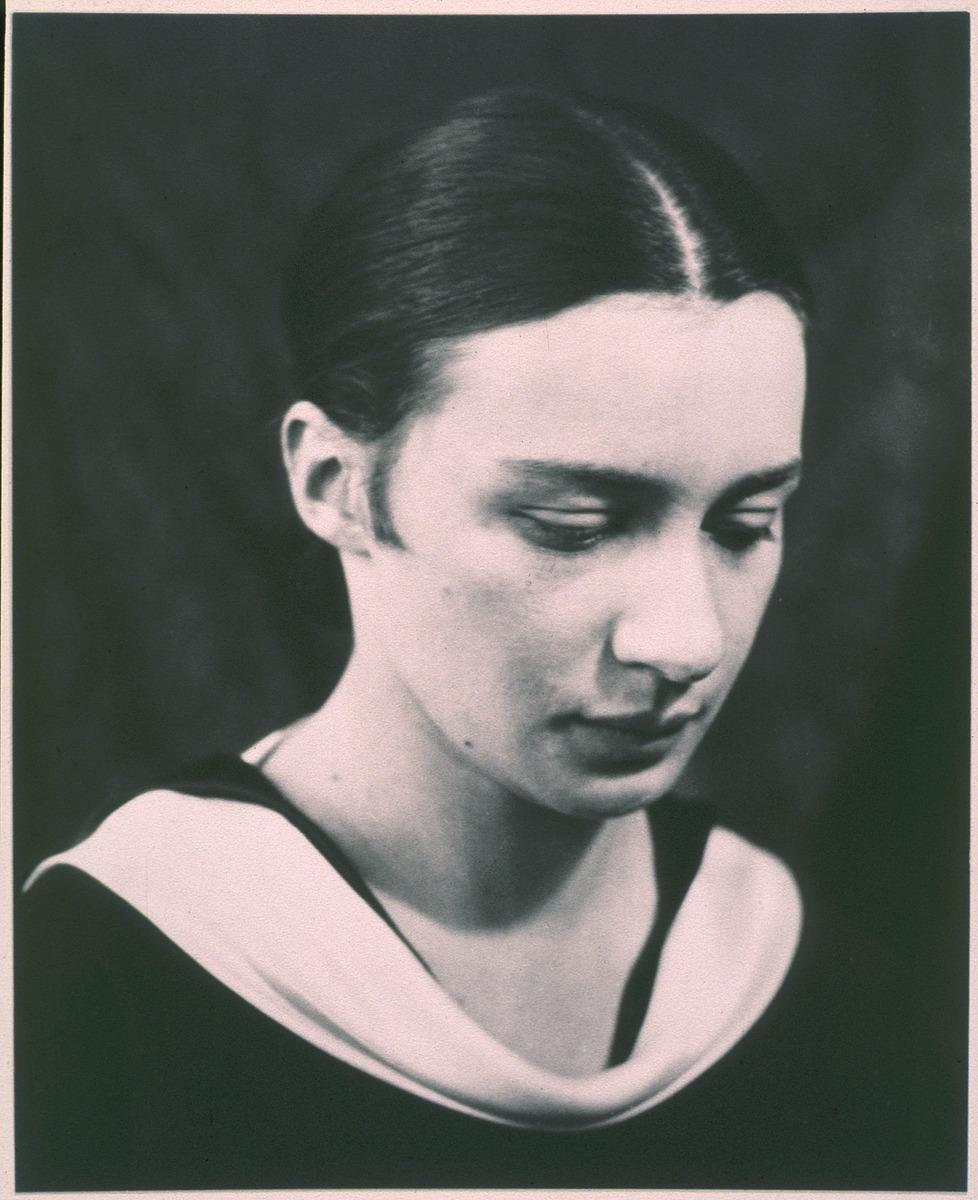
Melvin Ormond Hammond. Portrait of Elizabeth Wyn Wood (sculptor, 1903-1966), unknown. Gelatin silver print, Overall: 24.2 × 19.5 cm. Art Gallery of Ontario. Gift of Mr. Skip Gillham, Vineland, Ontario, 1985. Photo © AGO 85/138
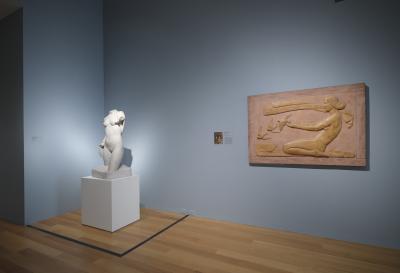
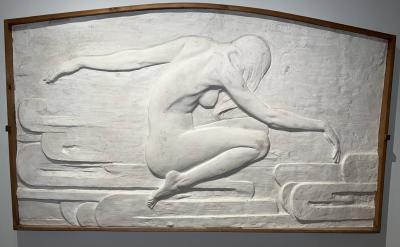
In addition to her landscape sculptures, Wood is also celebrated for her public monuments, commissioned by municipalities and institutions across Canada. In Toronto, a stone’s throw from the AGO, her 1958 bas-relief carvings, Sending and Receiving, graced the former Maclean-Hunter publishing office (now the United Building) at the northeast corner of University Avenue and Dundas Street. Based on the theme of communication, two nude figures float languorously on the limestone façade, conjuring the sending and receiving of information. Wood’s signature streamlined forms are highlighted in gold leaf, and although faded now, their luminosity harkens back to the sensuous beauty of Northern Island. Plaster maquettes of these carvings—one-third the size of the fully realized public works—have recently joined the AGO Collection and are on view in the current focused exhibition.
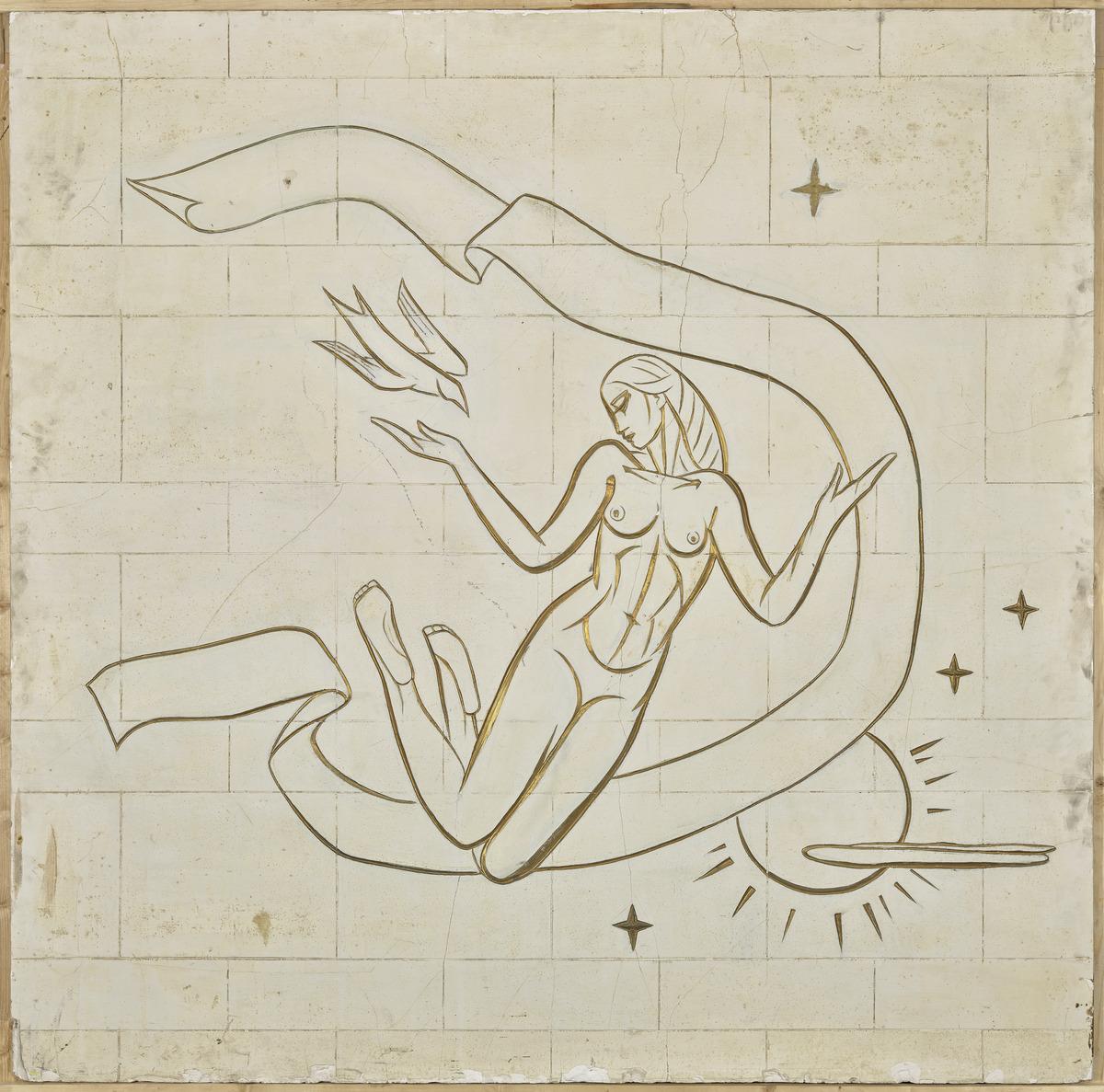
Elizabeth Wyn Wood. Sending, c. 1957-61. Plaster, paint, Overall: 158.3 × 153.6 × 2 cm. Art Gallery of Ontario. Gift of the Estate of Elizabeth Wyn Wood and Emanuel Hahn. Photo © AGO
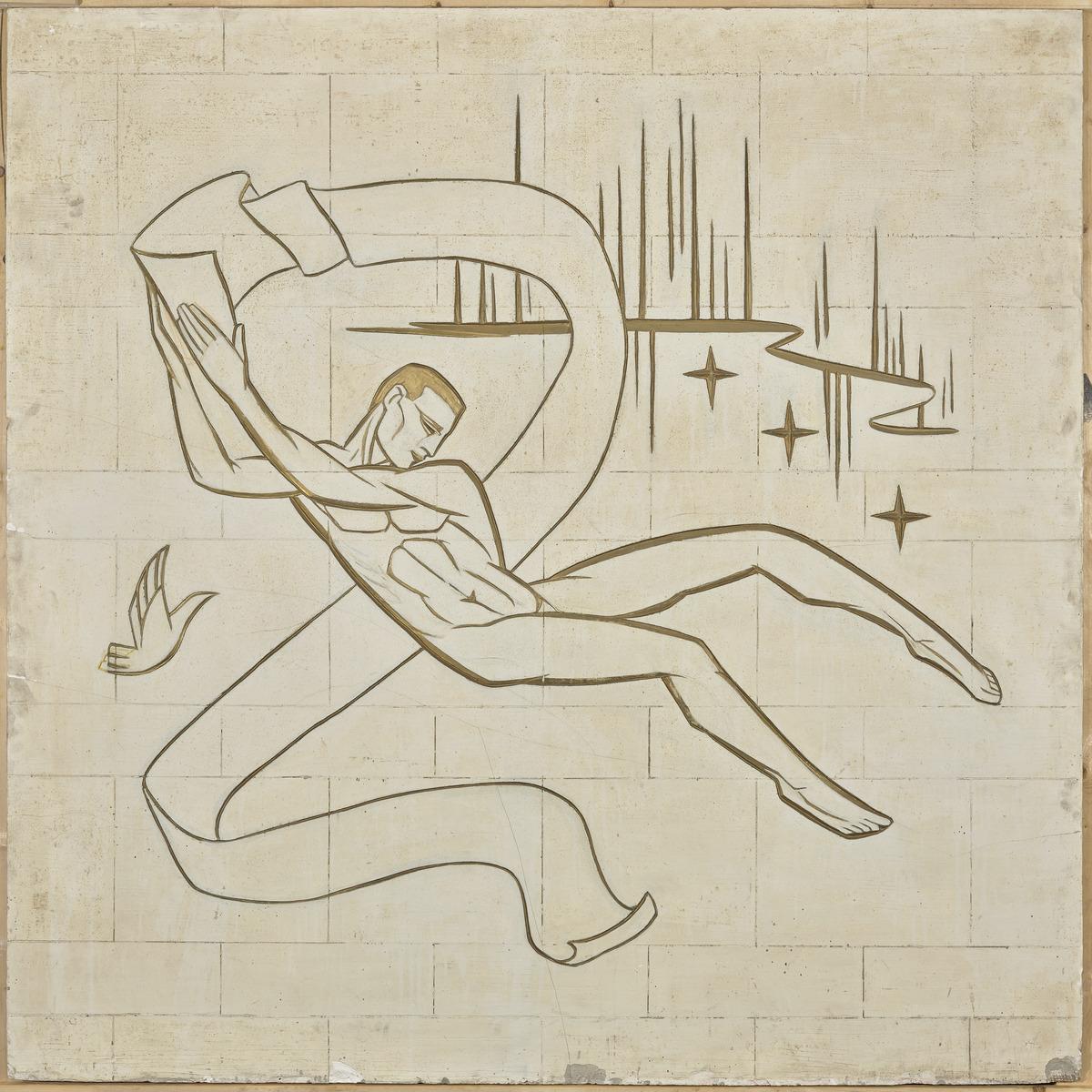
Elizabeth Wyn Wood. Receiving, c. 1957-61. Plaster, paint, Overall: 158.3 × 153.6 × 2 cm. Art Gallery of Ontario. Gift of the Estate of Elizabeth Wyn Wood and Emanuel Hahn. Photo © AGO
Elizabeth Wyn Wood is on view now at the AGO on Level 2 in Jennings Young Gallery (gallery 231). The exhibition is curated by Renée van der Avoird, Associate Curator, Canadian Art at the AGO.
Supporting Sponsor


![Keith Haring in a Top Hat [Self-Portrait], (1989)](/sites/default/files/styles/image_small/public/2023-11/KHA-1626_representation_19435_original-Web%20and%20Standard%20PowerPoint.jpg?itok=MJgd2FZP)