Jun 1, 2026
How The Beatles Left Their Mark on Toronto
The AGO’s Curator of Special Projects speaks on the impact The Beatles had on 1960s Toronto
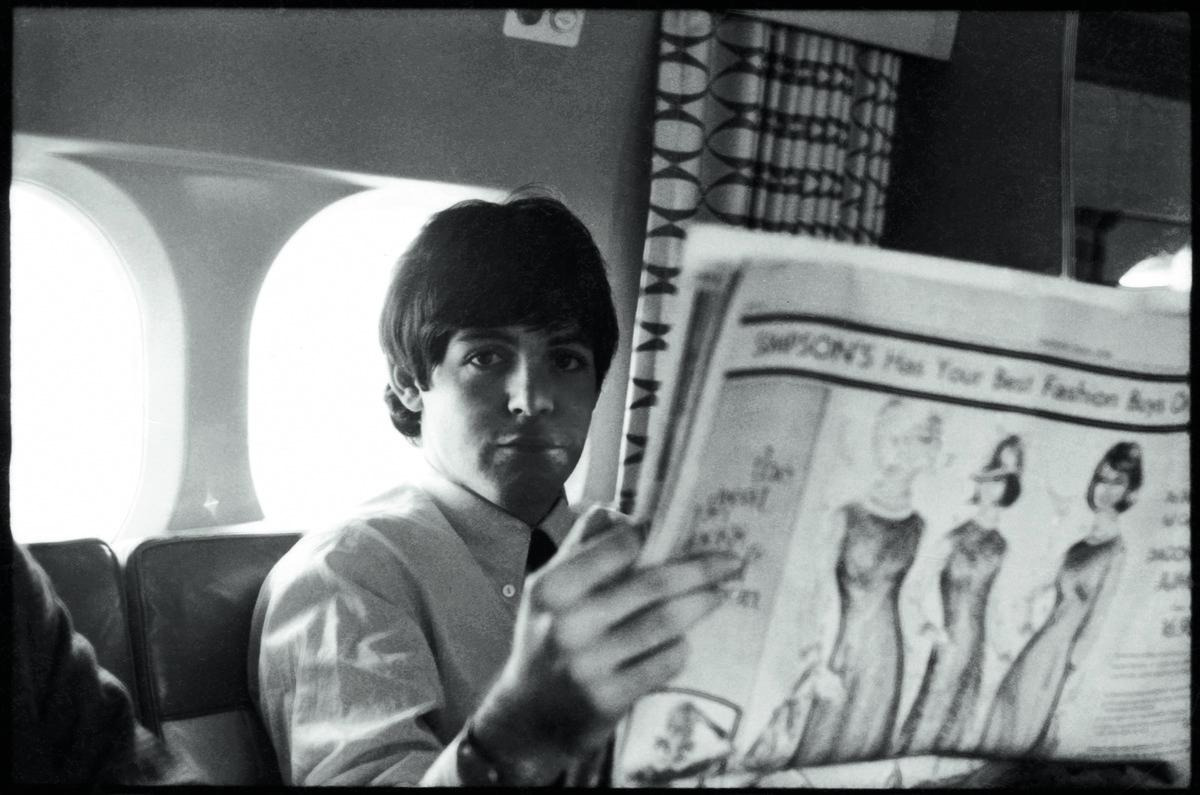
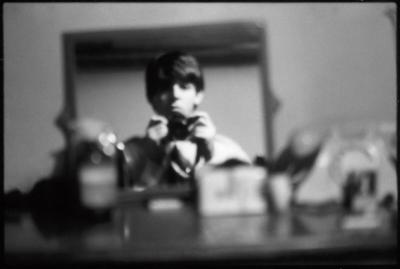
Paul McCartney onboard an aeroplane, September 1964 © 1964 Paul McCartney under exclusive license to MPL Archive LLP
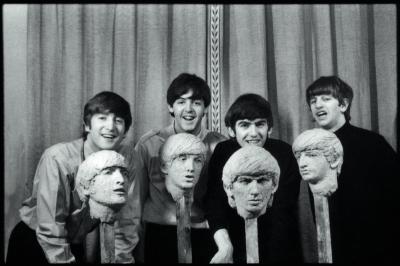
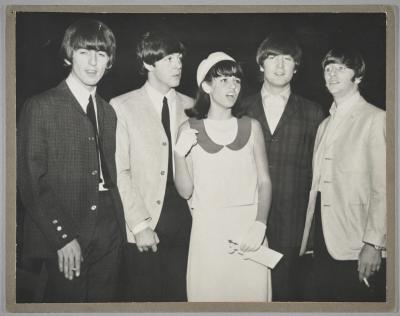
In 1964, The Beatles returned to North America following their appearances on The Ed Sullivan Show for their first full tour of the continent. They played 32 shows across Canada and the United States. Beatlemania was taking the world by storm, and Toronto was no exception.
Closing on June 7, the exhibition Paul McCartney Photographs 1963-64: Eyes of the Storm offers a look into Beatlemania from The Beatles’ perspective. As part of the Toronto presentation of Eyes of the Storm, the standalone exhibition, Beatlemania! In Toronto, also provides a local perspective on this cultural phenomenon through ephemera and archival videos documenting The Beatles’ time in Toronto.
In addition to organizing the Toronto presentation of Eyes of the Storm, Jim Shedden, the AGO’s Curator of Special Projects & Director of Publishing, curated Beatlemania! In Toronto in partnership with Canadian author Piers Hemmingsen.
Foyer spoke with Shedden about his personal connection to The Beatles and the band’s impact on pop culture and 1960s in Toronto.
Foyer: As a Beatles fan yourself, can you tell us a bit about how you were first introduced to the Beatles and what drew you to the band?
Shedden: I was born on September 18, 1963, two days after "She Loves You" was released as a single in Canada. It was the only Beatles record we owned, but it was definitely a favourite. I also heard lots of Beatles songs "in the culture", whether it was "All You Need is Love" or "Good Day Sunshine", or "Ticket to Ride" — these songs felt like they were in my DNA. It was as if they came with the "Jim Shedden" operating system. As I got older, every Beatles (or Beatles solo) record that I bought was an occasion, whether it was the double blue 1967-1970 compilation, McCartney's Band on the Run and Venus And Mars, Ringo Starr's "Photograph", or George Harrison's "My Sweet Lord".
What did I love about them? The diversity of the recordings. Every single record is different from what preceded it; every single record is a great leap forward, but every single record is also noticeably "Beatley". The creative tension between McCartney and Lennon is tangible and, for the listener, healthy right till the end with Let it Be and Abbey Road. The false endings on so many songs. The nutty curve balls like "Being for the Benefit of Mr. Kite" or "Happiness is a Warm Gun" — beautiful! But just as beautiful are McCartney's romantic ballads like "Yesterday" and "Golden Slumbers." And then there are the songs inspired by the British music hall tradition like "When I'm 64" and "Maxwell's Silver Hammer."
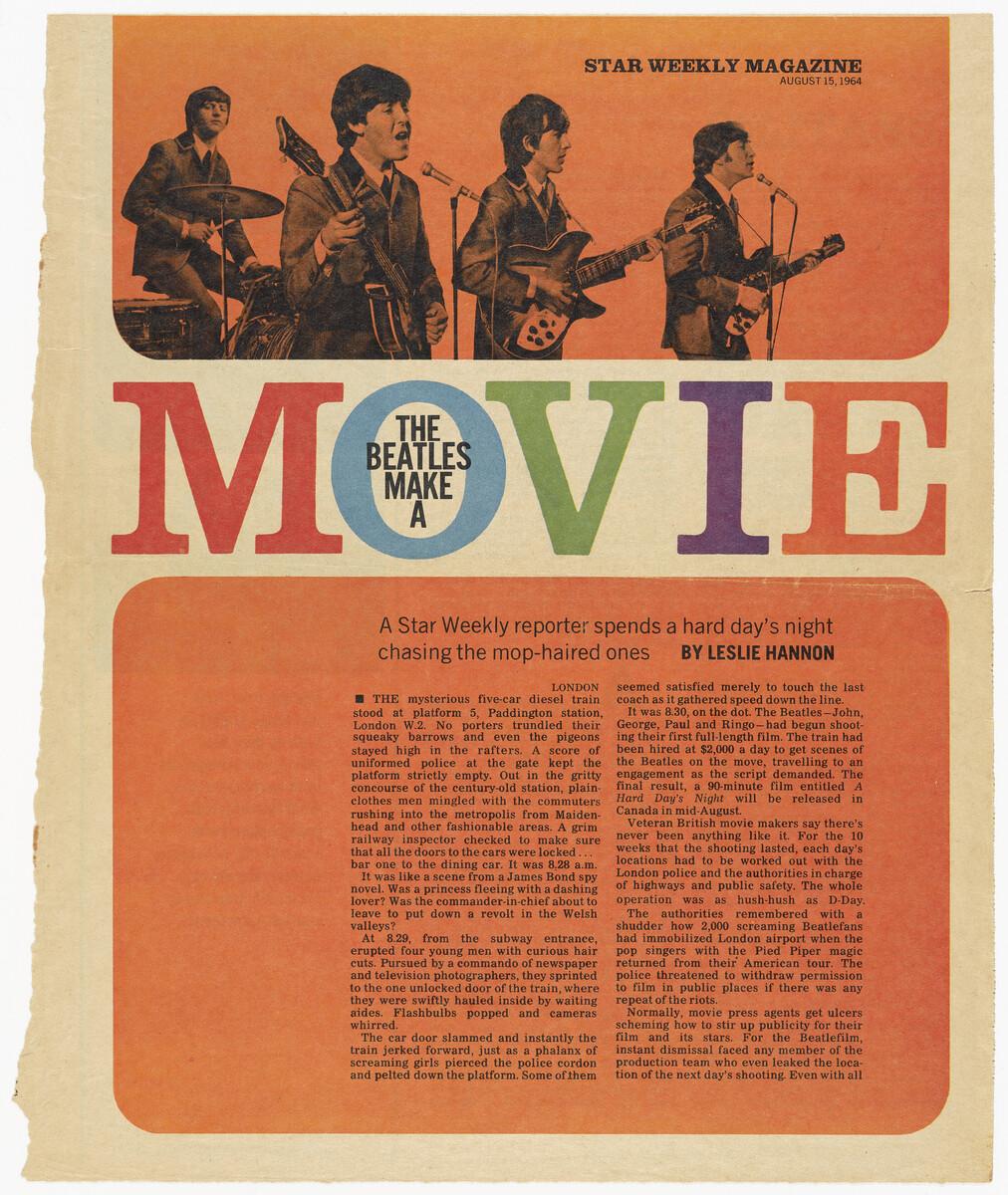
“The Beatles Make a Movie,” by Leslie Mannon, Star Weekly, August 15, 1964. Magazine, Courtesy Piers Hemmingsen.
Beatlemania spread across the world in the 1960s. In your opinion, what kind of impact did The Beatles have on pop culture and music during this decade?
The Beatles shaped 1960s culture — pop culture and counter-culture — by absorbing rock 'n roll and then inventing something new that even more profoundly spoke to the culture compared to Elvis or Chuck Berry, perhaps by their need to keep reinventing. One has to remember that from the time Ringo joined the band to the time they broke up is actually only seven years!
There is so much to be said on this topic. One could talk about their synthesis of rock 'n roll, traditional pop and avant-garde studio techniques, especially with the albums from Rubber Soul onwards. The Beatles shifted the industry from singles (though they sold their share of huge hit singles) to album rock. Sgt. Pepper's was the defining moment in that regard. It was the line in the sand. The group embraced fashion (or perhaps “style” is a better word), graphic design, and contemporary art, in brand new ways.
Along the way, they made some great films. Hard Day's Night is one of the greatest films of the 1960s. Help! is decent too. Yellow Submarine is a cult classic and, now that we have Peter Jackson's version of the "Get Back" sessions footage, it seems that they were in the middle of one of the greatest documentaries of all time.
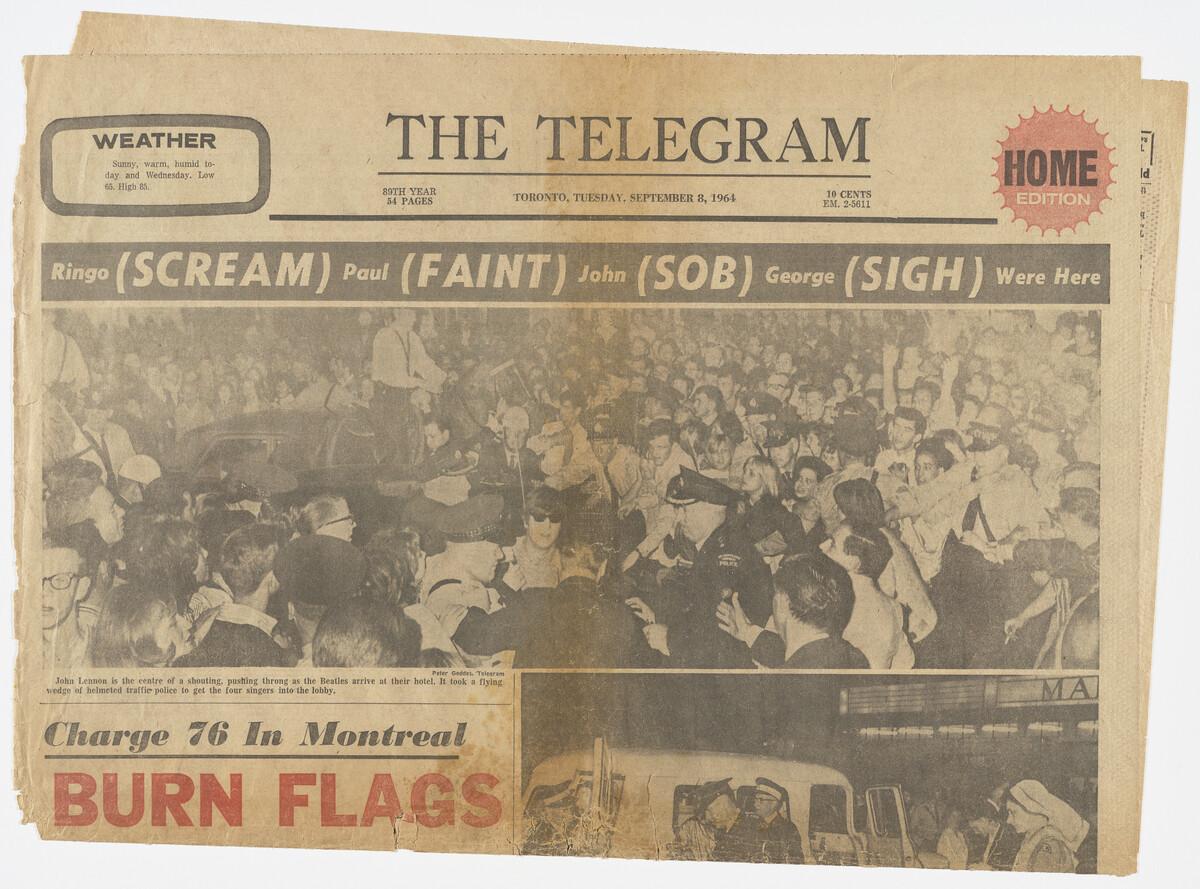
Front page of The Toronto Telegram, September 8, 1964, newsprint, Courtesy Piers Hemmingsen.
As a complement to Eyes of the Storm, you’ve curated a sidebar exhibition titled Beatlemania! In Toronto. Why was it important to include a Toronto lens on Beatlemania in this exhibition?
It was important for me to develop the sidebar exhibition, first and foremost, because people have strong associations with The Beatles visiting Toronto for the Maple Leaf Gardens shows in 1964, 1965 and 1966, whether they were there or not. Further, the story of Capitol Canada, where Artists and Repertoire (A&R) executive Paul White beat the US to the punch by releasing several Beatles singles and LPs before the American market got its act in gear, is significant. So is the story of The Beatles’ first (and largest) fan club outside the UK, started in 1963 by 14-year-old Trudy Medcalf. Media attention to the Beatles was huge. Understanding their significance in Toronto is key to understanding the dominance of 1050 CHUM AM radio.
Beatlemania hit Toronto at a time when the city was developing its own musical voice. Yorkville, on the one hand, had Joni Mitchell and Gordon Lightfoot. Yonge Street, on the other hand, had The Band. I don't know how unique Beatlemania was to Toronto, in the end — after all, it was a global phenomenon — but I can't think about our history, or even the history of Maple Leaf Gardens, without thinking about how The Beatles graced our city in the mid-1960s.
Paul McCartney Photographs 1963–64: Eyes of the Storm has been organized by the National Portrait Gallery, London, England, in collaboration with Paul McCartney. It is curated by Sir Paul McCartney with Sarah Brown for MPL Communications and Rosie Broadley for the National Portrait Gallery. The presentation at the AGO is organized by Jim Shedden, Curator, Special Projects & Director, Publishing.
AGO Members see Paul McCartney Photographs 1963–64: Eyes of the Storm first, beginning February 18, 2026. AGO Annual Passholders can access the exhibition beginning February 27, 2026. The exhibition opens to the public on March 24, 2026, and is free with general admission. The exhibition will be on view on Level 5 of the AGO from February 18, 2026, to June 7, 2026.
Presented by Bloomberg Connects, a free digital app, the audio tour is available as of February 18. To access the audio guide, click here.