Oct 15, 2026
European Impressionists in the AGO Collection
Five European Impressionist works from the AGO’s permanent collection
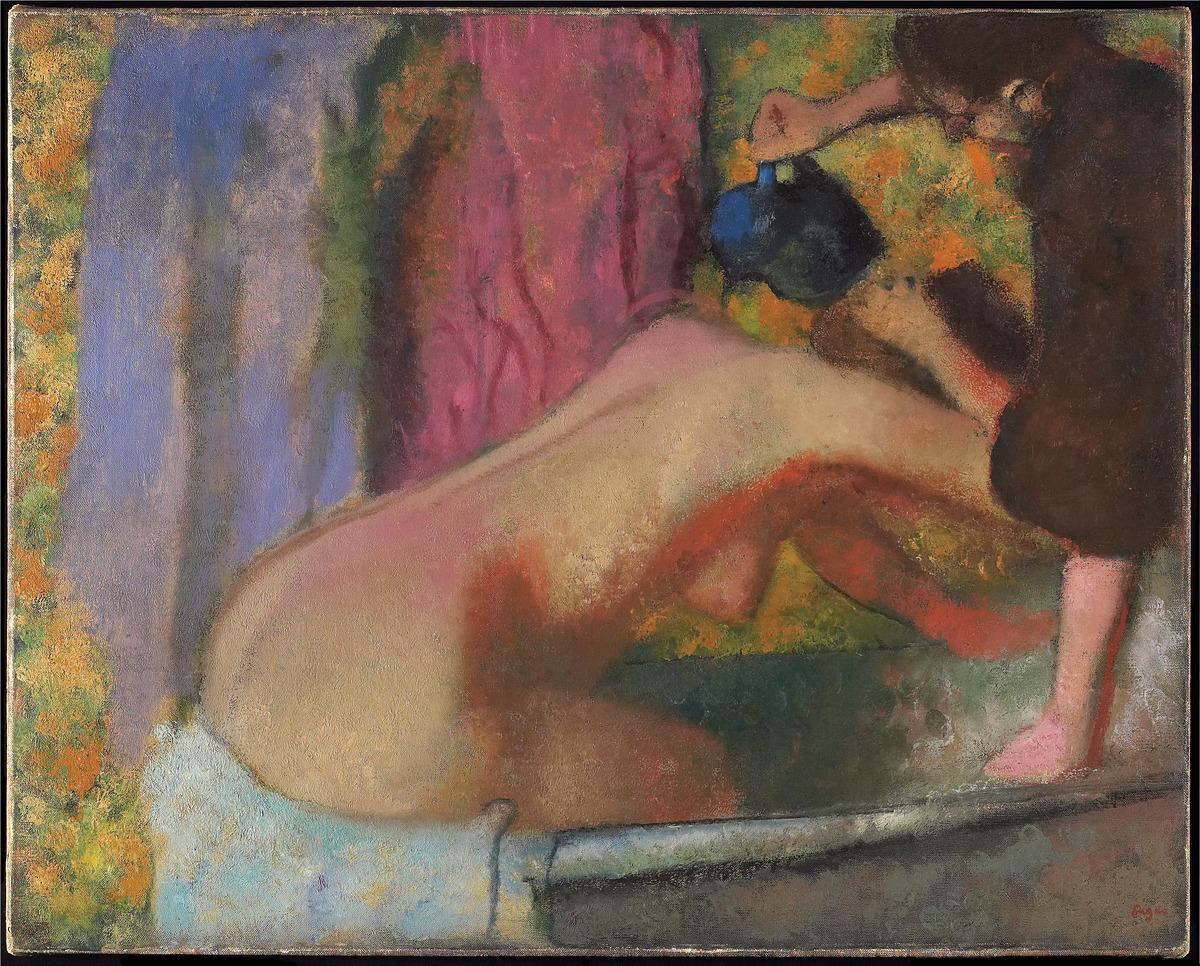
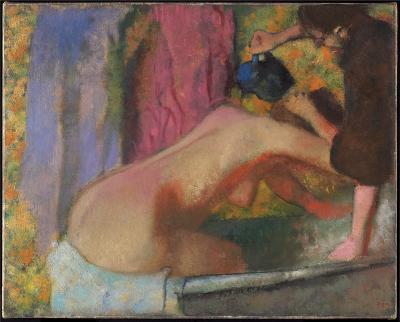
Edgar Degas, Woman at Her Bath, c. 1895. Oil on canvas, Unframed: 71.1 × 88.9 cm. Art Gallery of Ontario. Purchase, Frank P. Wood Endowment, 1956. Photo © AGO. 55/49
While the most recent major exhibition on Impressionism at the AGO, The Impressionist Revolution: Monet to Matisse from the Dallas Museum of Art, has closed, do not fret. The AGO has long been home to numerous works by renowned Impressionists, many of which are currently on view throughout Level 1.
Beginning as a collective of artists frustrated with France’s conservative art system, Impressionism would become one of the world’s most widely celebrated art movements. Artists like Claude Monet (1840-1926), Edgar Degas (1834-1917), and Pierre-Auguste Renoir (1841-1919) were seen as rebels for how they depicted landscapes, city life, scenes of industry, and everyday subjects in new ways, from bright colour palettes to unusual cropping or visible brushstrokes.
If you’re looking for more Impressionism, here are five works to see in the AGO Collection.
Please note that works in the Gallery are regularly rotated, so the paintings listed below may change location or be taken off view over time.
Edgar Degas – Woman at Her Bath (Around 1895) (Above)
In this private interior scene, French painter Degas depicts a domestic worker assisting a woman in the bath. Degas captures the exertion of the working woman, who leans her weight on the tub while stretching to pour water over the bather. A ceramic tub of this size could only have belonged to a wealthy family; in the days before plumbing, manually filling and emptying such a large vessel required the help of household staff.
Visit Woman at Her Bath in the Richard Barry Fudger Memorial Gallery (gallery 125), located on Level 1 of the AGO.
Claude Monet – Étretat, L’Aiguille and the Porte d’Aval (1872)
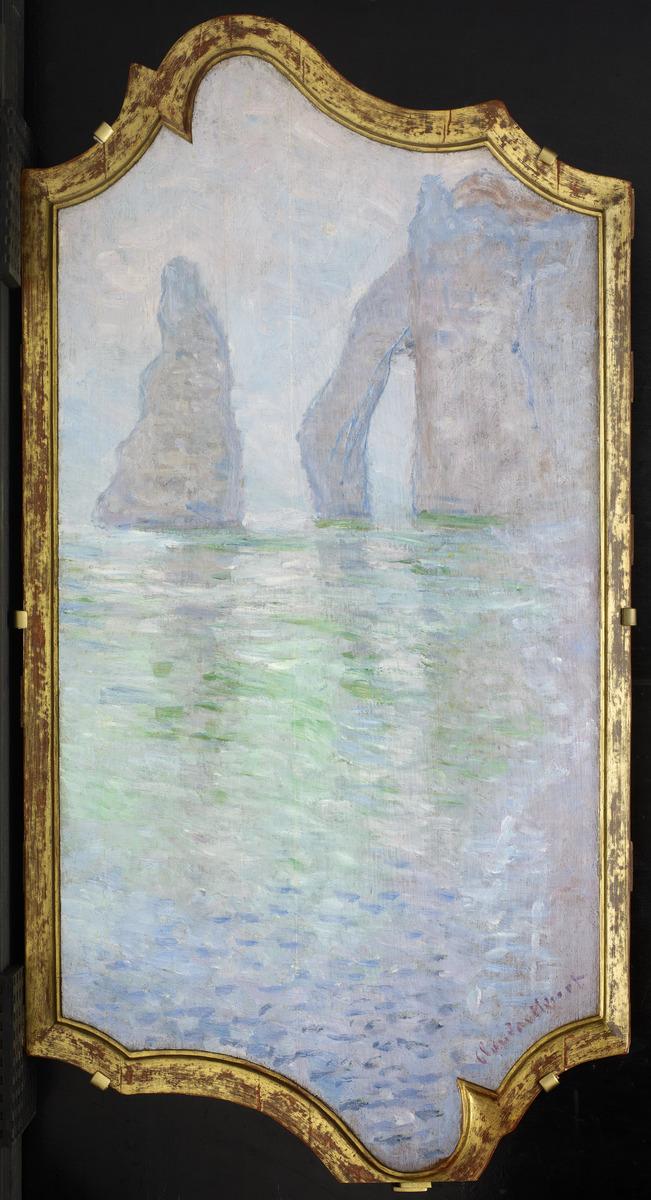
Claude Monet, Étretat, L'Aiguille et la Porte d'Aval, 1885-1886. Oil on panel, Overall: 85.4 x 44.2 cm. Art Gallery of Ontario. Anonymous bequest, 1991. Photo © AGO. 91/377
The AGO has multiple works by Monet on view, including his dreamy painting Étretat, L’Aiguille and the Porte d’Aval. Monet made many paintings of these remarkable rock formations near the town of Étretat on the Normandy coastline. For this version, he used a wardrobe door from the bedroom of a nearby hotel in which he was staying. Perhaps Monet was drawn to this door because of its sweeping form, which plays a role in the composition of the work: the curved lines of cliffs echo the panel’s shape.
This work is on view as part of the exhibition Steam: Impressionist Painting Across the Atlantic, located in the Carol Tanenbaum Gallery (gallery 116).
Pierre- Auguste Renoir – The Seine at Chatou (around 1871)
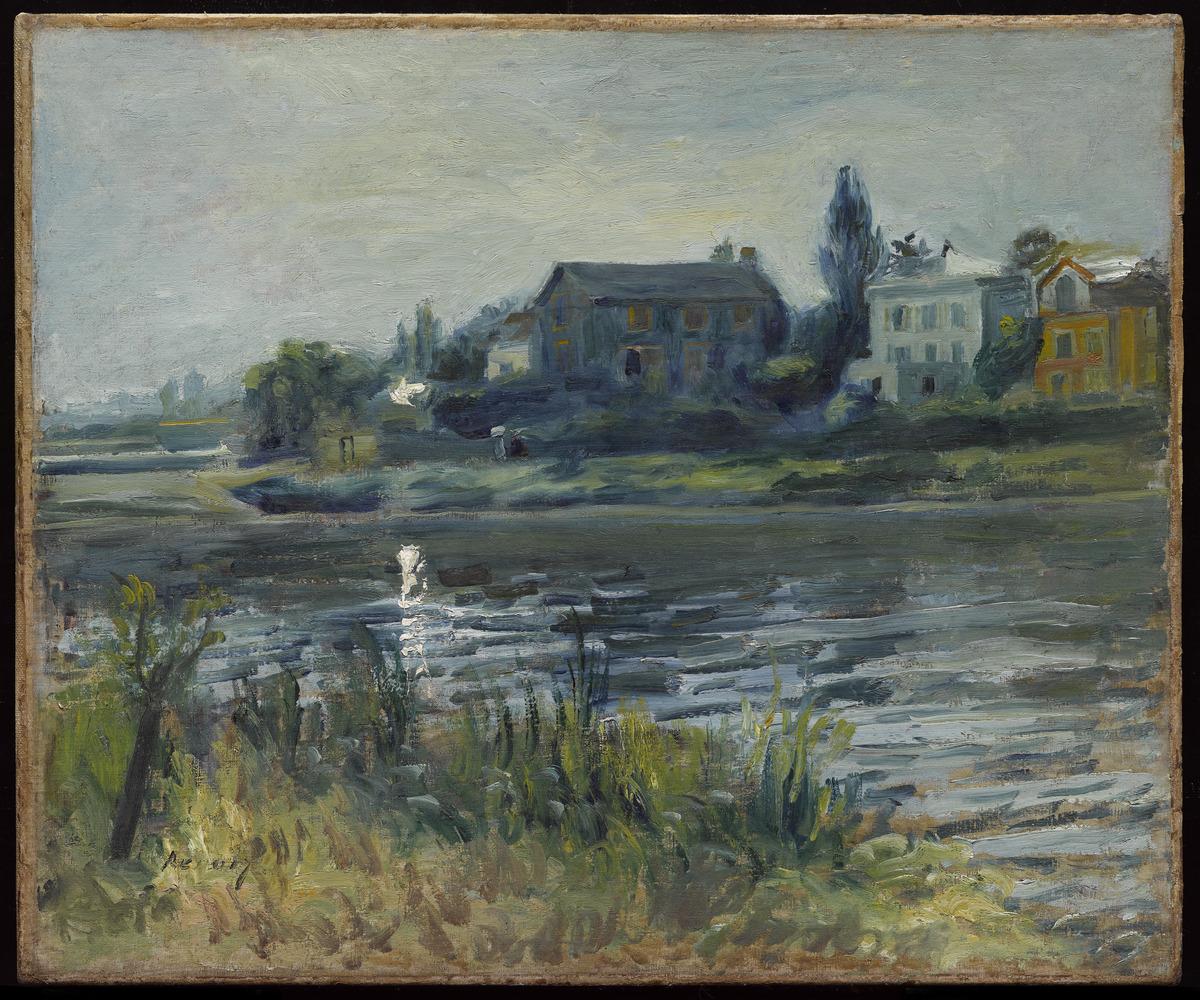
Pierre-Auguste Renoir, La Seine à Chatou, c. 1871. Oil on canvas, Overall: 46.7 x 56.1 cm. Art Gallery of Ontario. Purchase, 1935. Photo © AGO. 2304
Renoir delighted in the different textures of paint and canvas, experimenting with his materials to convey the appearance of light. In this painting, Renoir applied thick, wet strokes of paint in some places, while letting the canvas peek through in other places. With the buildings in silhouette, the brilliant reflection of the sun on the water dominates the composition. Trains took Sunday picnickers from Paris to the various parks and islands along the Seine River, where artists would often gather to work. This painting was the first Renoir made of Chatou, which became a popular destination for Impressionists.
This work is on view as part of the exhibition Steam: Impressionist Painting Across the Atlantic, located in the Carol Tanenbaum Gallery (gallery 116).
Camille Pissarro – Pont Boieldieu in Rouen, Damp Weather (1896)
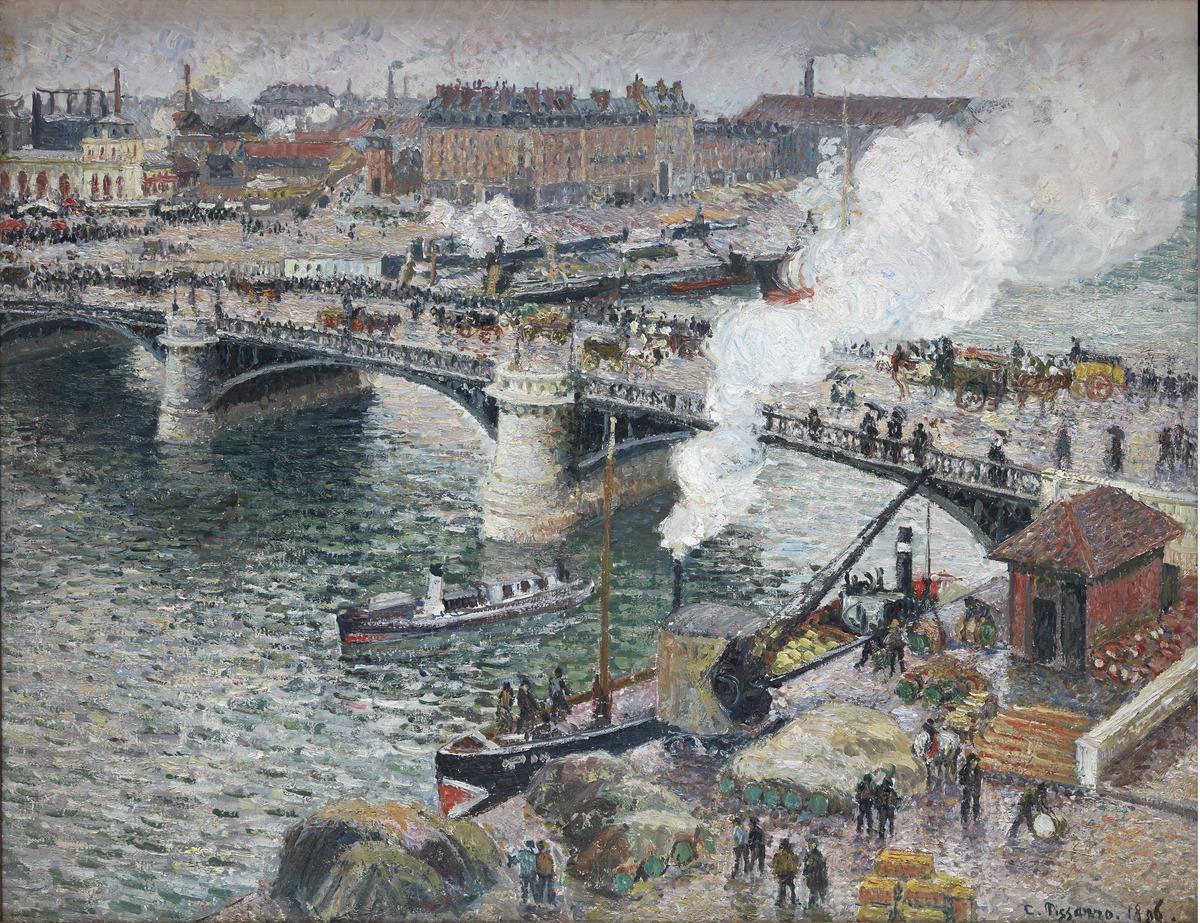
Camille Pissarro, Le pont Boieldieu à Rouen, temps mouillé, 1896. Oil on canvas, Unframed: 73.6 × 91.4 cm. Art Gallery of Ontario. Gift of Reuben Wells Leonard Estate, 1937. Photo © AGO. 2415
Camille Pissarro (1830-1903) saw this scene as a celebration of the progress and productivity of French industry, as the city of Rouen was the terminus for the transatlantic shipping vessels seen in this painting. It became a major hub for the textile industry, since these ships carried textiles and dyes made from cotton and pigments extracted from the Americas.
Speaking on painting the Pont Boieldieu bridge in Rouen, France, Pissarro shared, “What particularly interests me is the motif of the iron bridge in wet weather with all the vehicles, pedestrians, workers on the embankment, boats, smoke, haze in the distance; it’s so spirited, so alive. I’ve tried to catch this hive of activity.”
Visit Pont Boieldieu in Rouen, Damp Weather in the Richard Barry Fudger Memorial Gallery (gallery 125), located on Level 1 of the AGO.
Eugène Boudin – Beach Near Trouville (1864)
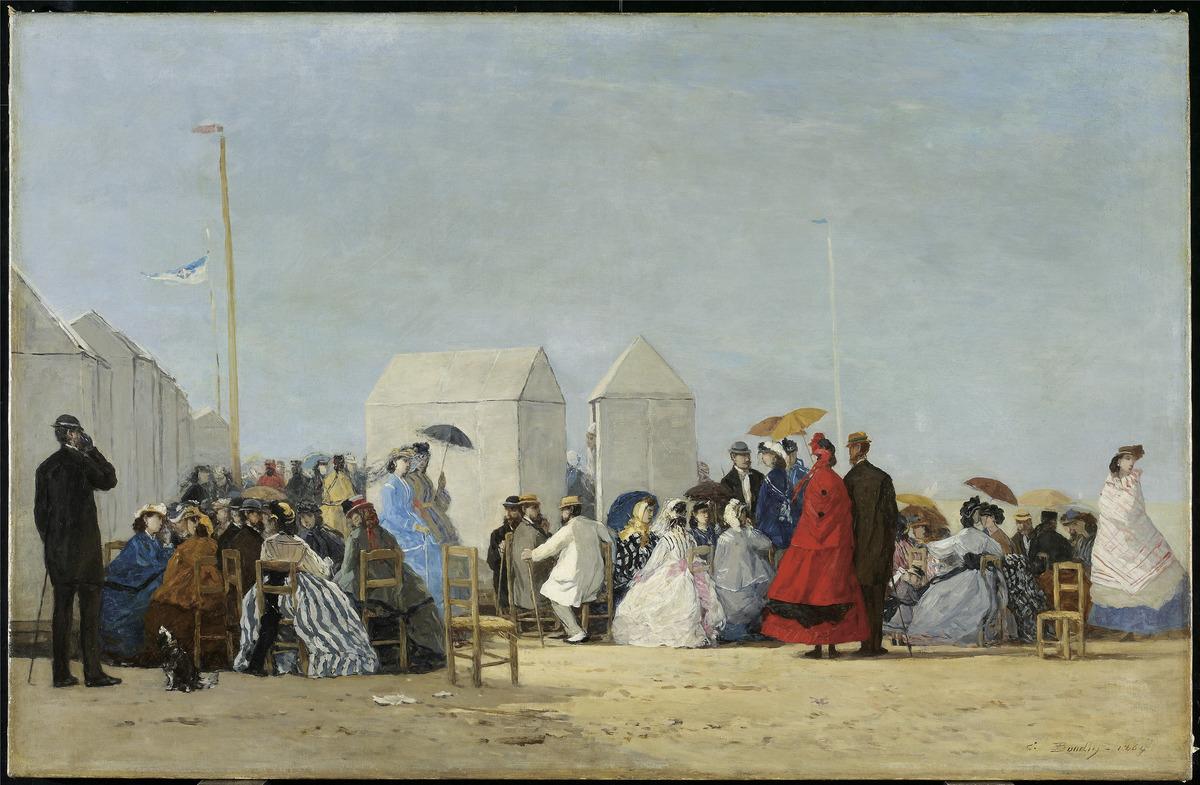
Eugène Louis Boudin, La plage de Trouville à l'heure du bain, 1864. Oil on canvas, Overall: 67.5 x 104 cm. Art Gallery of Ontario. Anonymous gift, 1991. Photo © AGO. 92/37.
French Painter Eugène Boudin (1824—1898) often captured France’s countryside and beaches, as depicted in this painting. His interest in social scenes does not lie in the individual attendees, pictured here with indistinct faces, but rather in their dress, which he depicts with portrait-like detail. The beach town of Trouville was a fashionable place for members of Paris’s high society to spend their holidays, as they could travel there by train. While the white tents were used as spaces to change into bathing attire, this crowd is there to mingle.
This work is on view as part of the exhibition Steam: Impressionist Painting Across the Atlantic, located in the Carol Tanenbaum Gallery (gallery 116).
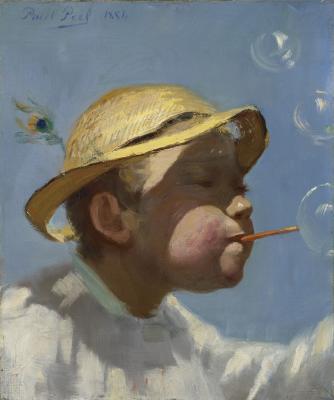
Visit the AGO’s permanent collection Impressionist exhibition, Steam: Impressionist Painting Across the Atlantic, on Level 1 in the Carol Tanenbaum Gallery (gallery 116) until May 16, 2027. There are also many more Impressionist works to be seen at the AGO, including works by notable Canadian artists Mary Hiester Reid, Paul Peel, and Helen McNicoll, throughout Level 1 of the AGO.