Nov 4, 2026
Eric Birkle on Reframing Frames
The Marie Zimmermann Fellow reflects on studying the AGO's Historic Frames Collection.
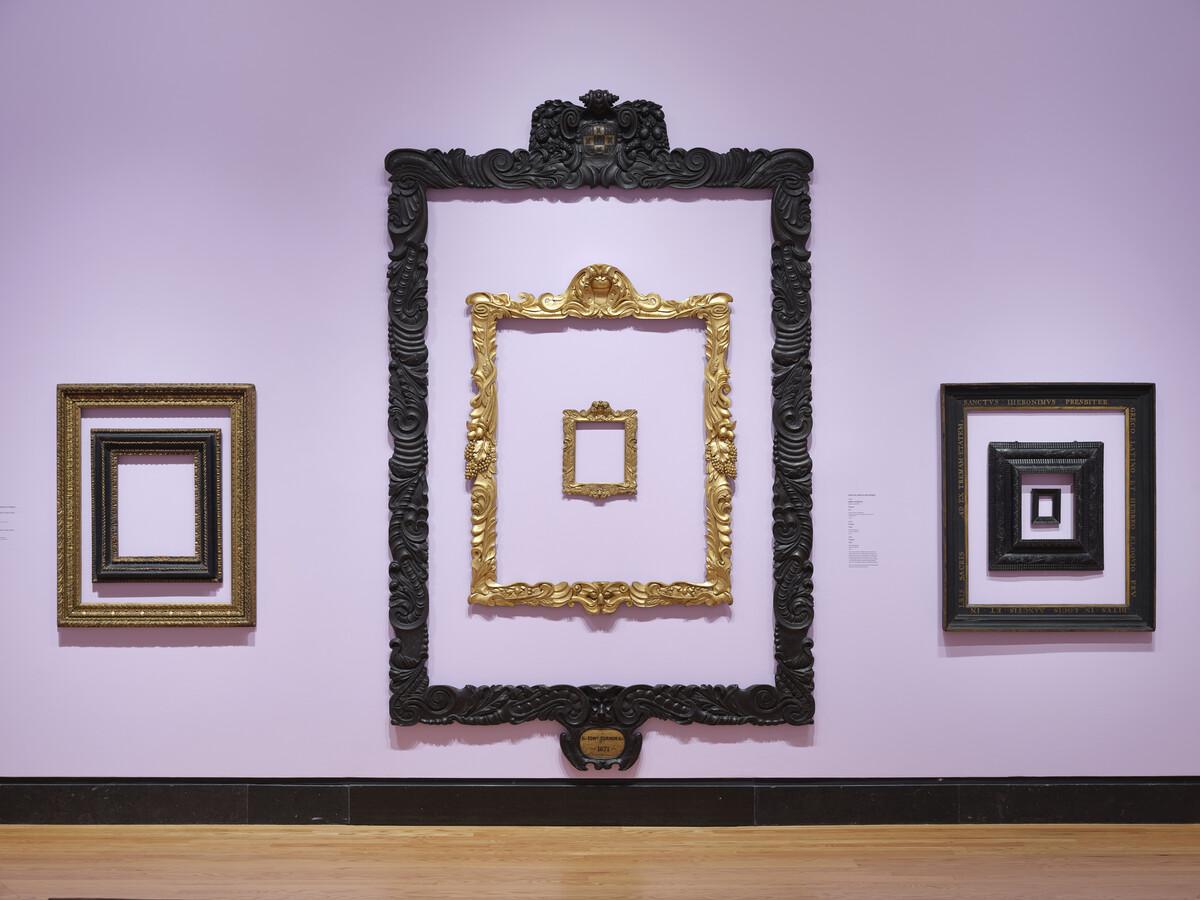
In Plain Sight: Highlights from the AGO’s Collection of Historic Picture Frames, October 17, 2026 – November 7, 2027. Art Gallery of Ontario. Photo © AGO.
Integral but often overlooked, frames aren't usually the reason people visit art galleries, yet without them, your visit would be much different. A new focused installation at the AGO goes beyond a frame’s main function, instead focusing on the art and skill of its creation.
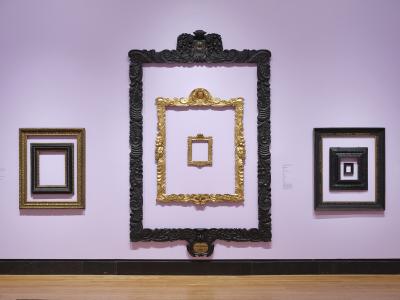
In Plain Sight: Highlights from the AGO's Collection of Historic Picture Frames presents 37 wooden frames without any art enclosed in them, positioning frames as works of art themselves. Showcasing frames from the late 15th to early 20th century, this installation includes detailed label text and, where possible, the names of the makers behind them. A partnership between the AGO's curatorial and conservation teams, In Plain Sight is curated by Adam Harris Levine, AGO Associate Curator, European Art; Julia Campbell-Such, Assistant Conservator, Frames; and Eric Birkle, Marie Zimmermann Fellow, European Art.

Eric Birkle, The AGO's Marie Zimmermann Fellow. Photo by Craig Boyko.
Beginning with an anonymous gift of over 800 historical frames, the AGO now stewards one of the world’s largest and most important frame collections. Birkle began his fellowship in 2024, researching and cataloguing European frames in the AGO’s Historic Frames Collection. Over the next two years, he helped publish a refreshed online catalogue of this collection, selected appropriate frames for reframing works in the AGO’s European Collection, and, as the grand finale of his fellowship, co-curated In Plain Sight.
From the historical view of frames as "low art" to a discovery made after hours of study, Birkle discusses his experience working with the AGO's Historic Frames Collection and curating In Plain Sight.
Foyer: In Plain Sight explores frames as works of art in their own right, departing from the idea that they are only ornamental. Can you speak more to this idea and the artistry of the frames on view in this exhibition?
Birkle: Throughout the centuries represented in this exhibition, the idea of frames constituting “art,” as we understand the term today, didn’t yet exist for the most part. By the early 1700s in Europe, during the Age of Enlightenment, the arts were divided into various categories in attempts to codify human achievement, resulting in a now-arbitrary division of so-called “high art” and “low art.” Low art broadly encompassed crafts and creations of lesser societal “value,” with the word value in this case referring to an object’s contribution to intellectual and moral elevation. However, it also suggests that low art lacks a certain level of preciousness assigned to “high art.” In the 1700s, frames were typically grouped with furnishings and cabinetmaking and were considered low art as they were seen as functional, if decorative, objects.
Frames, regardless of when they were made, were always purposely and conscientiously fashioned for the first painting they were meant to contain. While many paintings have undergone reframing, some retain their original frames. This provides context for understanding how a painting was meant to be experienced—and we would say, by extension, how a frame was meant to be experienced! It wasn’t until the 1980s and 90s that a heightened concern for uniting paintings with their “original” or period-appropriate frames came about as curatorial practices shifted to involve greater interpretation of collection objects. Since the 1990s, significant strides have been made in the field of frame research, and museums have increasingly dispensed with the old division between high and low art. In the last several years alone, the AGO has reframed a number of European paintings with frames from the Historic Frames Collection that are as close as possible to the ones the paintings would have originally had. Examples include the Louis XVI Revival-style frame on Jeremias Schultz’s Portrait of Eleonora Susette (1775) and the ebonized Dutch frame on Hubert van Ravesteyn’s Still Life with Walnuts, Tobacco, and Wine (1671).
With the increased presence of period-, regional-, and style-appropriate frames in the AGO’s European galleries, exhibiting frames without paintings allows visitors to visualize paintings and frames as both united yet separate objects. Given their inherent placement and form as borders or peripheries, it can sometimes be difficult to fully “see” a frame when united with its painting. By presenting empty frames in In Plain Sight, we have created an environment in which the outdated divisions between high and low art are erased, and the painstaking, skilled craftsmanship and artistry of frame-making can be both physically and ideologically centred. Makers’ names are provided where known and frames are given full wall labels just as paintings are, thus reinforcing the AGO’s commitment to treat its frames, which are accessioned objects, with the same research and care it would for any other artworks in its collection.
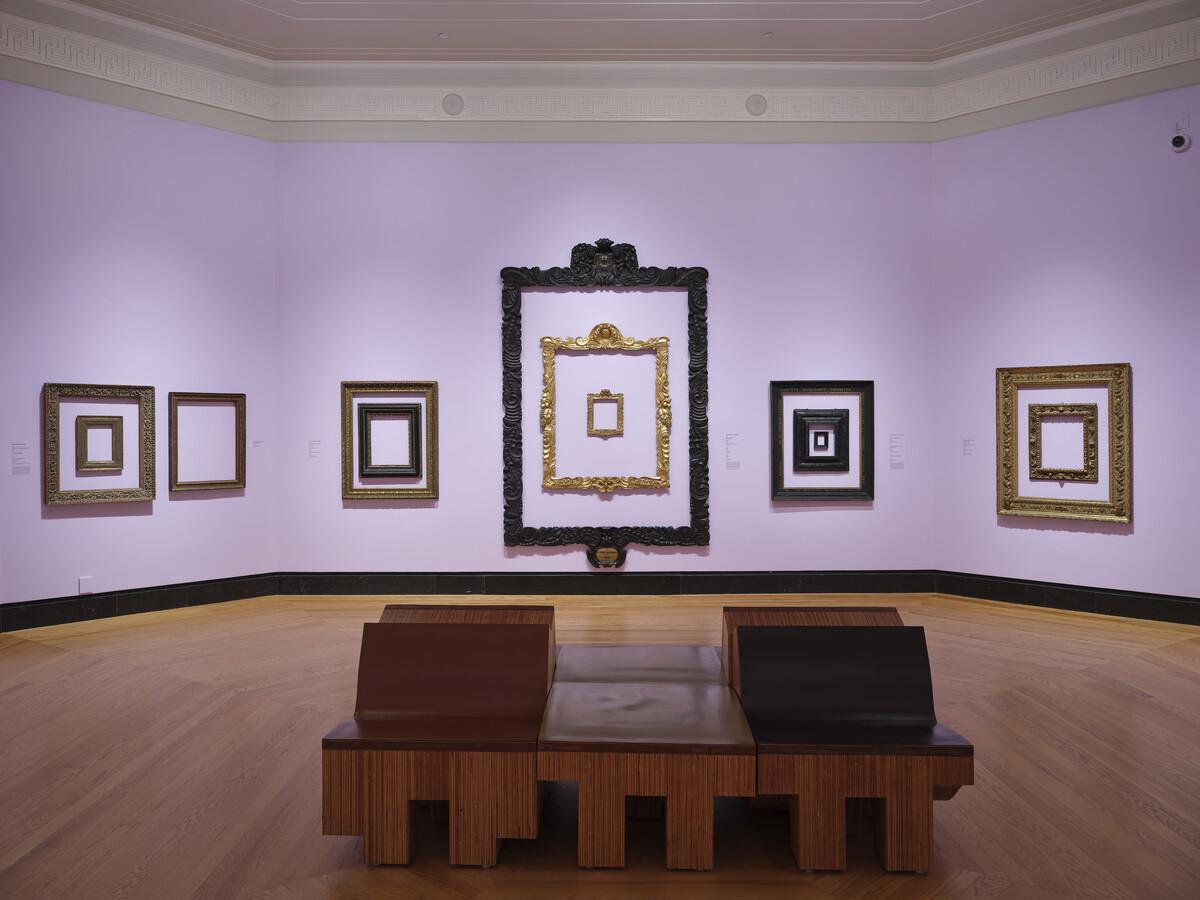
In Plain Sight: Highlights from the AGO’s Collection of Historic Picture Frames, October 17, 2026 – November 7, 2027. Art Gallery of Ontario. Photo © AGO.
During your fellowship, you made a discovery that enabled you to trace the identity of a frame maker. Can you tell us a bit more about this discovery?
I discovered maker’s stamps on the back of six frames when I was carefully reviewing high-resolution photography of all the frames in the Collection. The back (reverse) side of a frame contains as much information—in fact, sometimes more—than the front regarding a frame's period and place of creation. For instance, certain wood types were preferred and predominantly used in certain places at certain times, such as Baltic oak in France during the 1600s. How a frame was constructed can also help situate it in place and time. I was looking for this information when I stumbled upon a stamp clearly captured in the image of the back of a French Louis XVI-style frame, a Neoclassical type of frame made just before, during, or and briefly after Louis XVI's reign from 1774-1792. The stamp read “E.L. INFROIT” and I quickly began researching it to identify the maker.
Due to the nature of earlier guild structures and a lack of documentation, it is exceedingly uncommon to know the names of frame-makers prior to the 1700s. Even for frames made in the 1700s and 1800s, it is nearly impossible to attribute a frame to a specific maker without the surviving presence of a maker’s stamp on the object or a manufacturer’s label. My research revealed that the maker stamp “E.L. INFROIT” belonged to Étienne-Louis Infroit (1720-1794), whose career spanned several decades between the mid-to-late 1700s. He became a master sculpteur (carver) when he joined the Académie de Saint-Luc on August 14, 1759, and on October 12, 1768, he became a master menuisier (carpenter) through the Corporation des Menuisiers-Ébénistes, or the Jurande des Menuisiers Ébénistes (JME). This double credential allowed him to both build and carve his own frames, which typically bear his individual estampille (stamp/punch) as well as that of the guild.
I checked the backs of the rest of the AGO's Louis XVI-style frames and discovered four more made by Infroit and one by his contemporary Claude Pépin (1742-1782), who also worked in France. Pépin was certified as a master carpenter through the JME in January 1775. While these specific frames are not on view in the exhibition, examples of earlier Louis-style frames, such as Louis XIII and Louis XIV, may be seen.
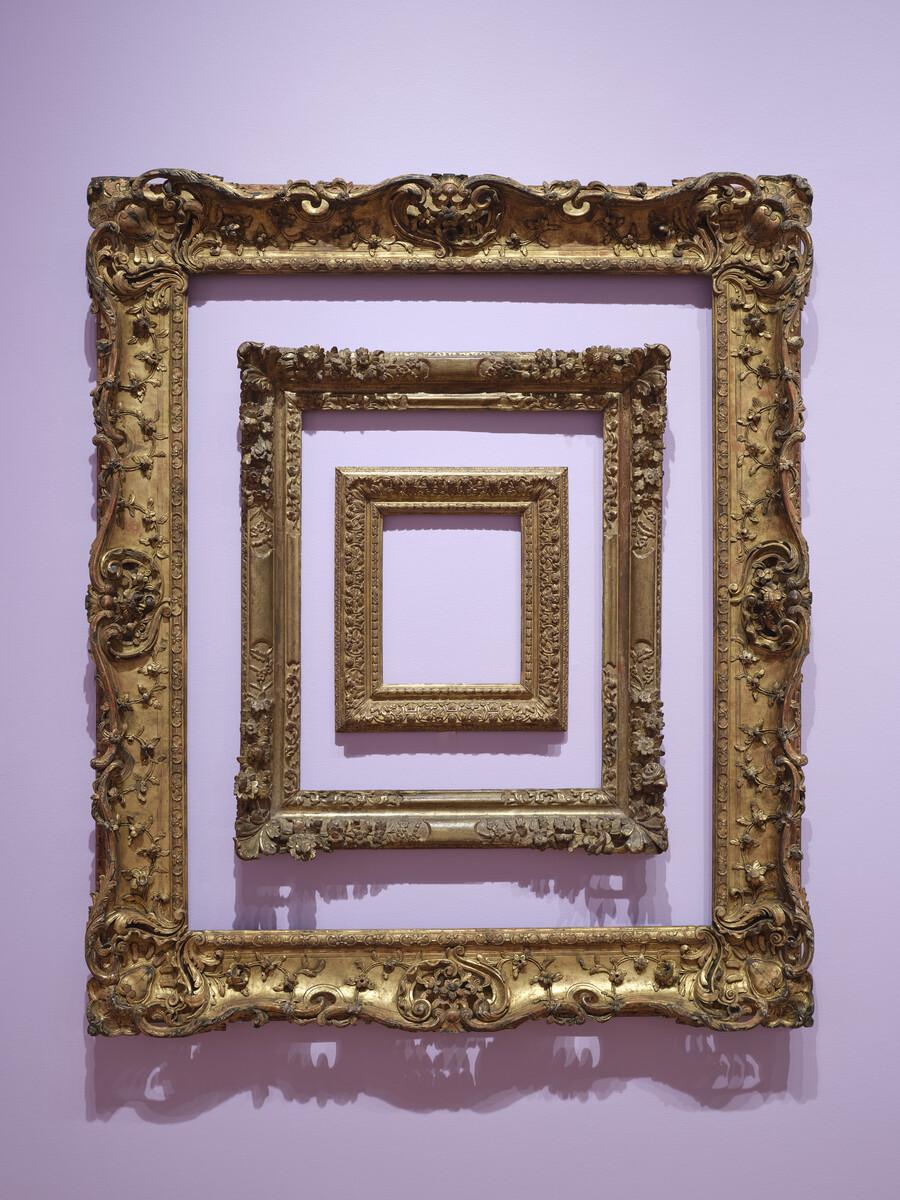
In Plain Sight: Highlights from the AGO’s Collection of Historic Picture Frames, October 17, 2026 – November 7, 2027. Art Gallery of Ontario. Photo © AGO.
What was your favourite part of curating this exhibition?
One of the most exciting things about this exhibition is taking objects that exist at the fringe—both in art historical scholarship and as literal borders for the paintings they typically contain—and centring the attention on them. This is the premise of In Plain Sight at its core, and it is also a primary driving factor in my curatorial practice: pausing, examining, and investigating that which is often overlooked or taken for granted. Each of the frames on view in the exhibition has gone through extensive comparative analysis and research during my tenure. I am so grateful and proud to share both the frames themselves and additional information about them with the public, including the contexts of the frames’ origins and what we know about the people who made them.
In my time at both the AGO and other museums, I and my colleagues have found that visitors are frequently drawn to frames and often enquire about them. In Plain Sight takes things a step further by not only allowing visitors to see frames without paintings, but also grouping them by period and style. Providing several examples of frame styles side-by-side immediately establishes perceptible commonalities and differences, making the act of looking both a visual feast and an unfussy learning experience for visitors.
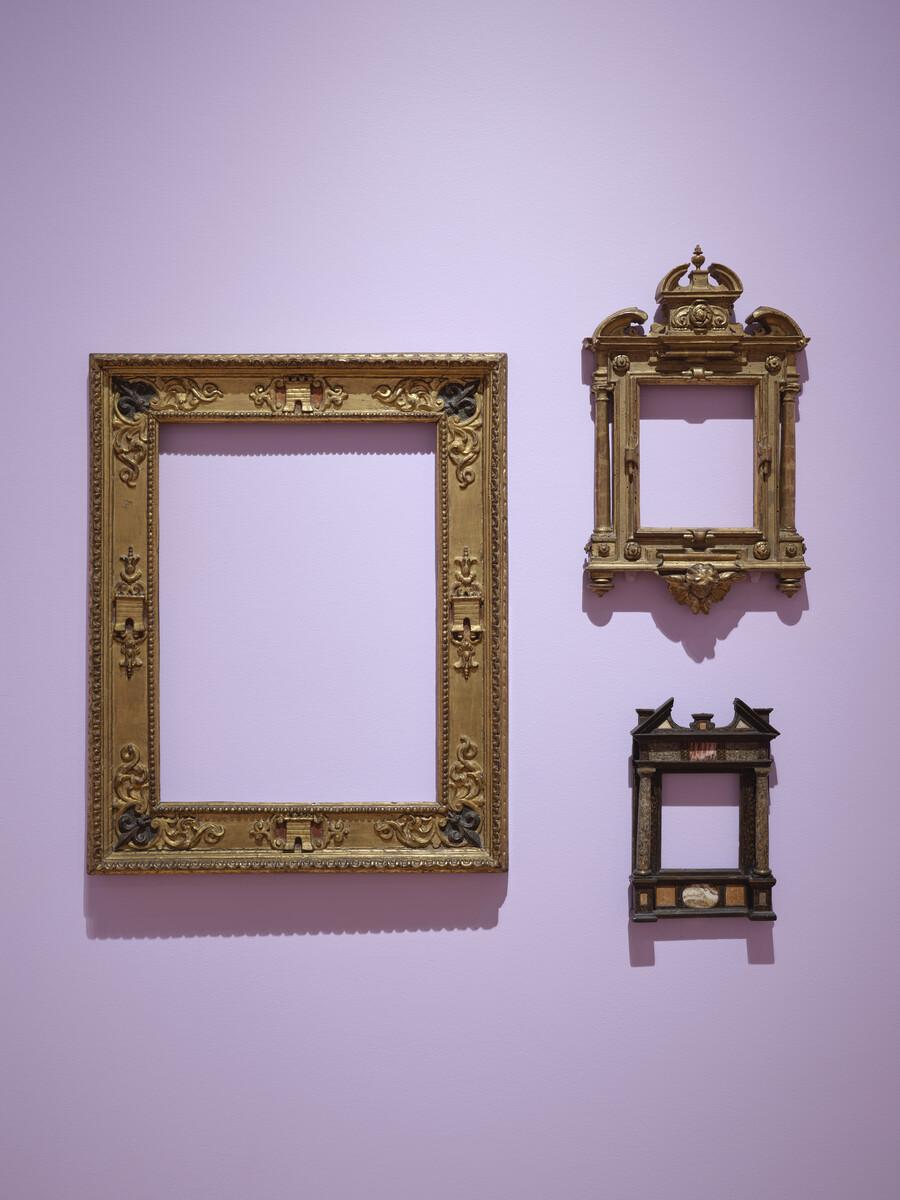
In Plain Sight: Highlights from the AGO’s Collection of Historic Picture Frames, October 17, 2026 – November 7, 2027. Art Gallery of Ontario. Photo © AGO.
I would also be remiss if I didn’t emphasize how thoroughly have enjoyed collaborating with colleagues in the field, both within the AGO and at institutions abroad. I am especially appreciative of the materials knowledge I have gained over the past two years working with Julia Campbell-Such, the AGO’s Assistant Conservator of Frames. So much about a frame can be learned through close looking and an understanding of materials (hardwood, softwood, bone, metal, stone), construction (carpentry, joinery, hardware), ornamental technique (parquetry, marquetry, carving, sgraffito, applied composition), and condition (oxidation, warping, flaking, discolouration, cracking, delaminating, soot deposits). Through Julia's generous sharing of practical woodworking and conservation knowledge, I have personally gained a more profound,holistic understanding of frames than I could ever have hoped to learn from academic study alone.
Appreciate the AGO's rich collection of frames by visiting In Plain Sight: Highlights from the AGO's Collection of Historic Picture Frames, currently on view on Level 1 of the AGO in the Reuben Wells Leonard Rotunda (gallery 115).