Jul 30, 2026
Dawoud Bey and the Historical Resonance of Landscape TEST
The acclaimed artist talks about using landscape photography to bring history into the contemporary
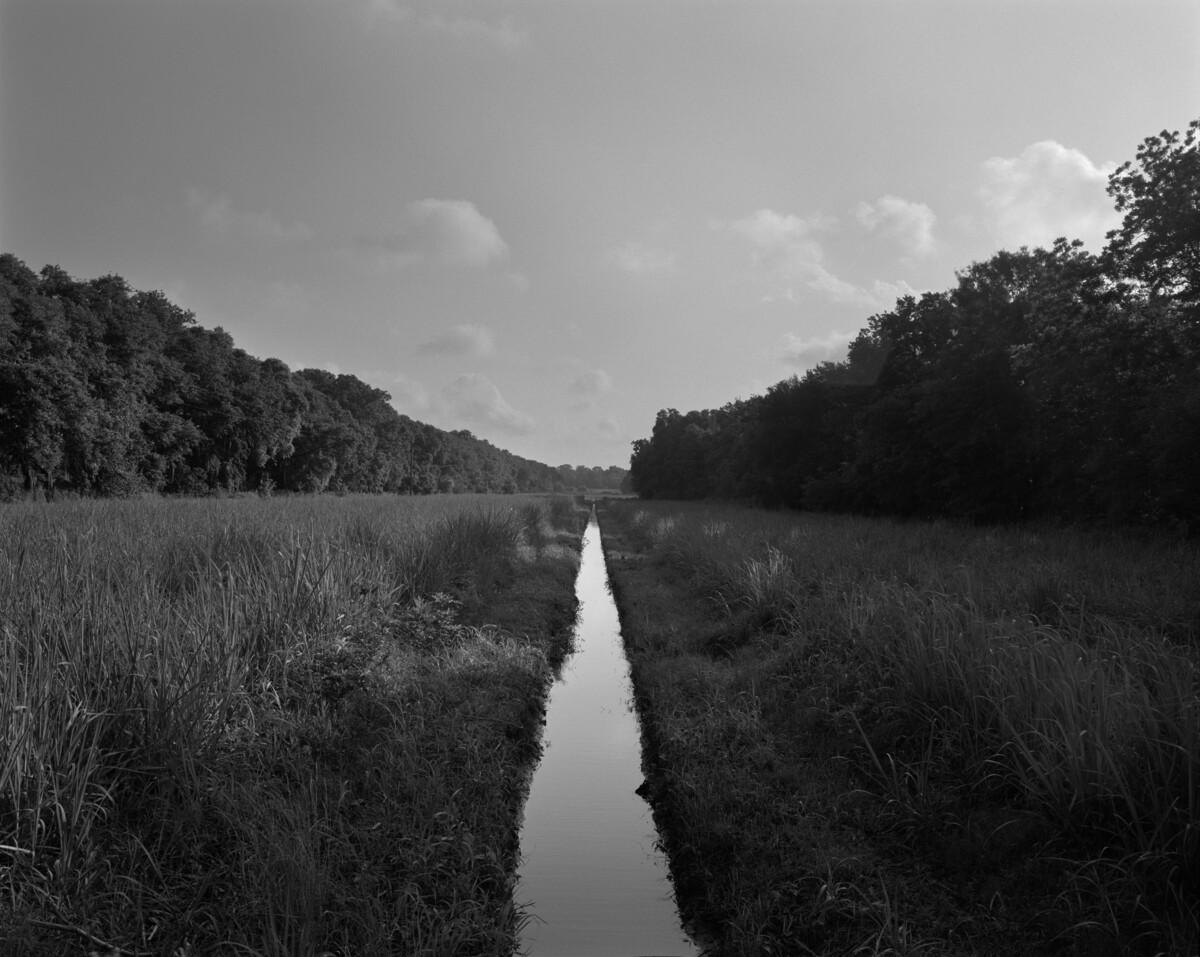
Dawoud Bey, Irrigation Ditch, From the series In This Here Place, 2020. Gelatin silver print, Framed: 124.8 × 152.4 × 5.1 cm. Rennie Collection, Vancouver. © Dawoud Bey
For acclaimed artist Dawoud Bey, American landscapes are a repository for ancestral stories. His site-specific photographs of former slave trails, plantations and points along the Underground Railroad personify the land, using its image to summon the presence of those who endured one of the most harrowing periods in American history. On view now at the AGO, Bey’s new solo exhibition invites visitors to confront the history embedded in landscapes.
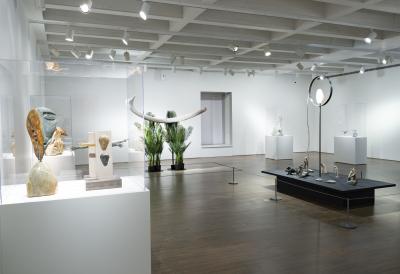
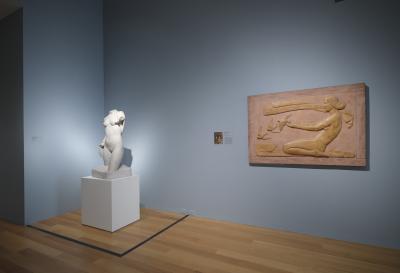
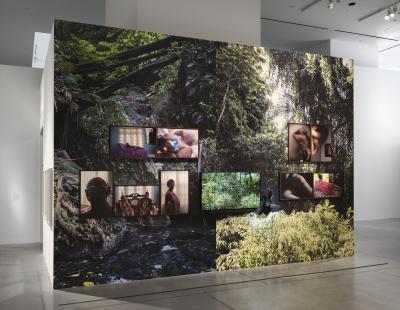
Installed in the Murray Frum Gallery on Level 2 of the AGO (gallery 249), Dawoud Bey: Material Histories, Living Landscapes features a selection of large-scale black-and-white photographs from the artist's landscape-based projects. Arranged around the gallery’s periphery are works from Bey’s series In This Here Place (2019), featuring images of former plantations in Louisiana and Stony the Road (2023), which uses landscape photographs to recreate the journey made by enslaved Africans along the Richmond Slave Trail. Meeting visitors as they enter the exhibition is a large vinyl reproduction of a work from Bey’s series, Night Coming Tenderly, Black (2017); a photograph of Lake Erie from Ohio looking North to Canada. These works come to the AGO on loan from the Rennie Collection in Vancouver.
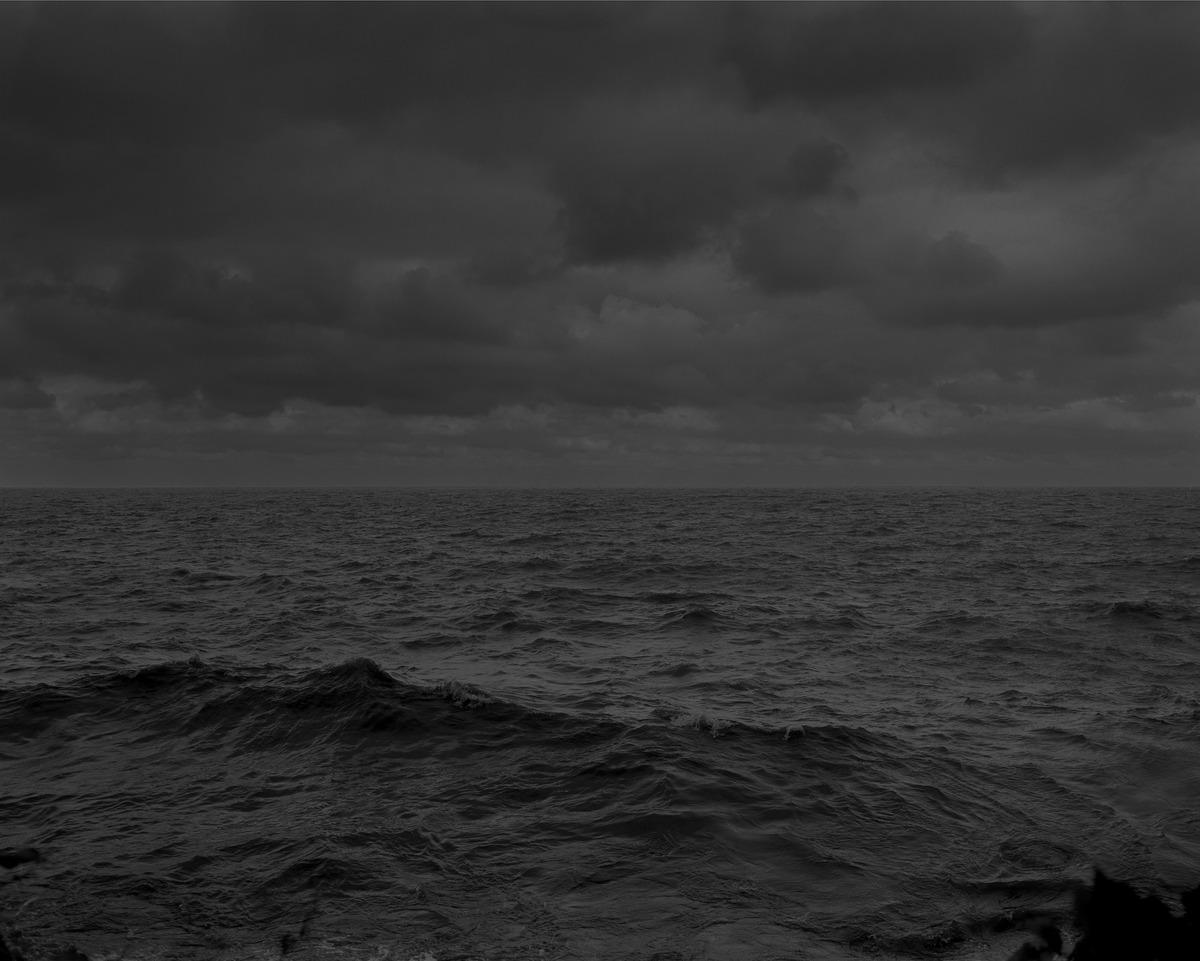
Dawoud Bey (American, born 1953), Untitled #25 (Lake Erie and Sky), AP2, From the series Night Coming Tenderly, Black, 2017. Gelatin silver print. Rennie Collection, Vancouver. © Dawoud Bey. Image courtesy of the artist.
At the exhibition’s centre is 350,000, a two-channel video accompaniment to Stony the Road. Projected in the middle of the gallery space, the film uses black-and-white cinematography and a soundtrack of breaths and body percussion to create a first-person perspective of the Richmond Slave Trail.
Co-presented by the 2026 Toronto Biennial of Art (TBA), Bey worked with TBA curator Allison Glenn to develop this installation, which also includes artworks and objects from the AGO’s Frum Collection in the exhibition. Bey selected four African sculptures that visually and historically represent a call-and-response between West African histories in the United States and Canada and those held in Nigeria, Ghana, and the Kongo.
Foyer spoke to Bey about the historical resonance of landscape photography, the visual identity of his work, and the two-channel video at the center of his debut AGO exhibition.
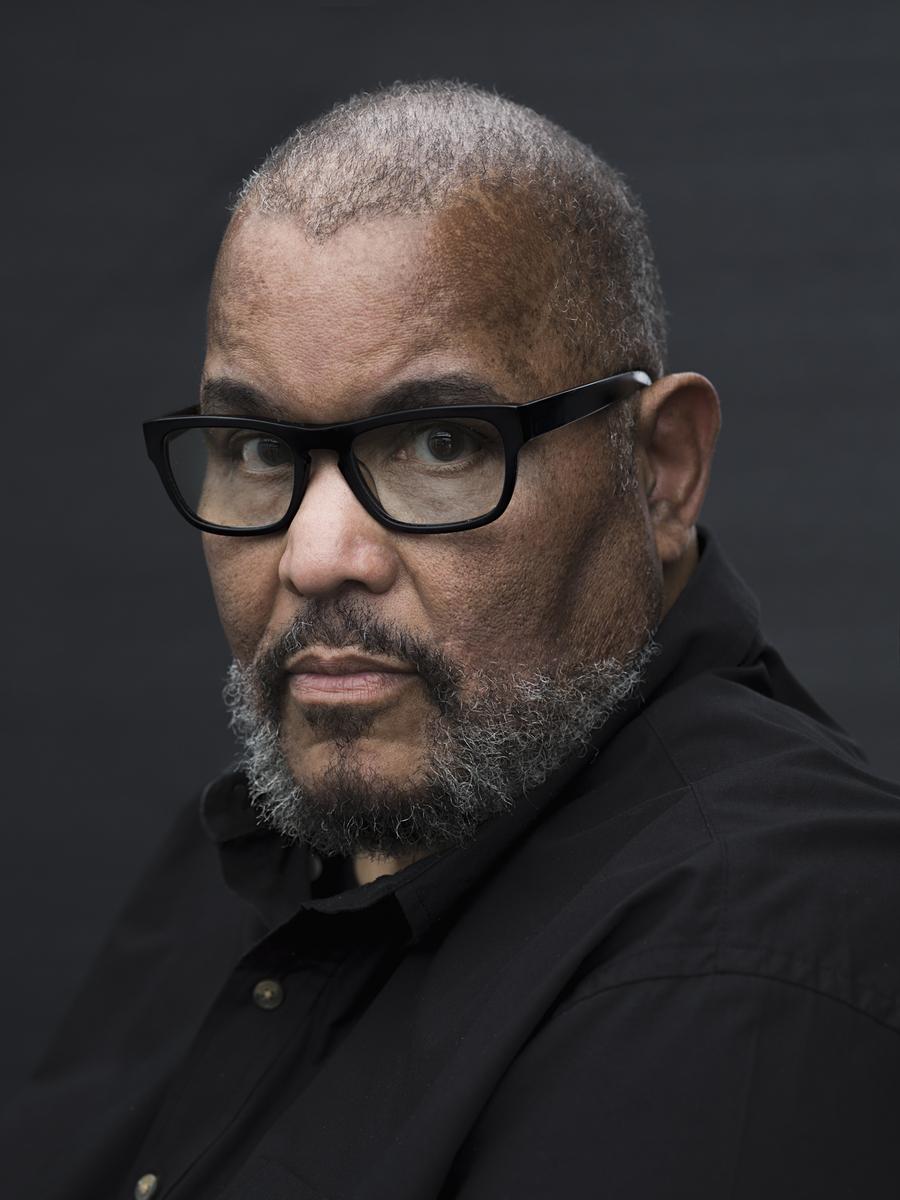
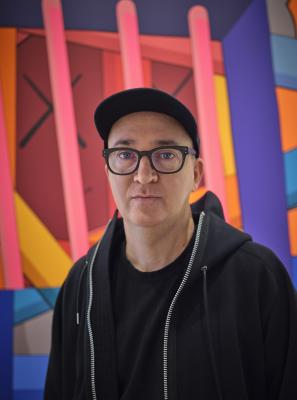
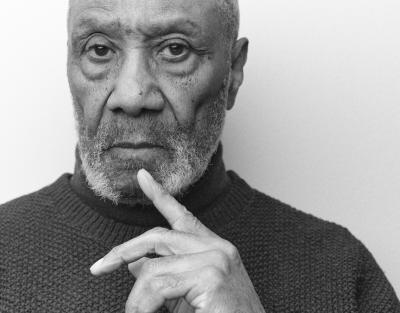
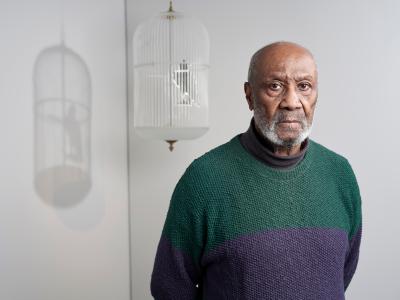
Dawoud Bey. Photo: Frank Ishman
Foyer: The promotional short film for your exhibition In This Here Place opens with you stating, "History is always present." Can you talk about why landscape photography is a powerful tool for bringing historical narratives into the present moment?
Bey: The American landscape holds a number of different narratives, many of them no longer visible. I am interested in making the unseen visible, to make the past resonate in our contemporary moment. There is a tradition in landscape photography that begins with the 19th-century survey photographs of the Western landscape by Carleton Watkins, Timothy O'Sullivan, and William Henry Jackson. These photographs created the visual syntax for photographs of the landscape. They also contained a fundamental deception. They portrayed a vast and seemingly unoccupied land that was actually inhabited by the Native population. I use the visual language and tradition of landscape photography to assert a Black presence in that tradition and to evoke the unseen African American presence that lingers in those landscapes, to try to bring them to life as experienced by the Black bodies that once inhabited those spaces.
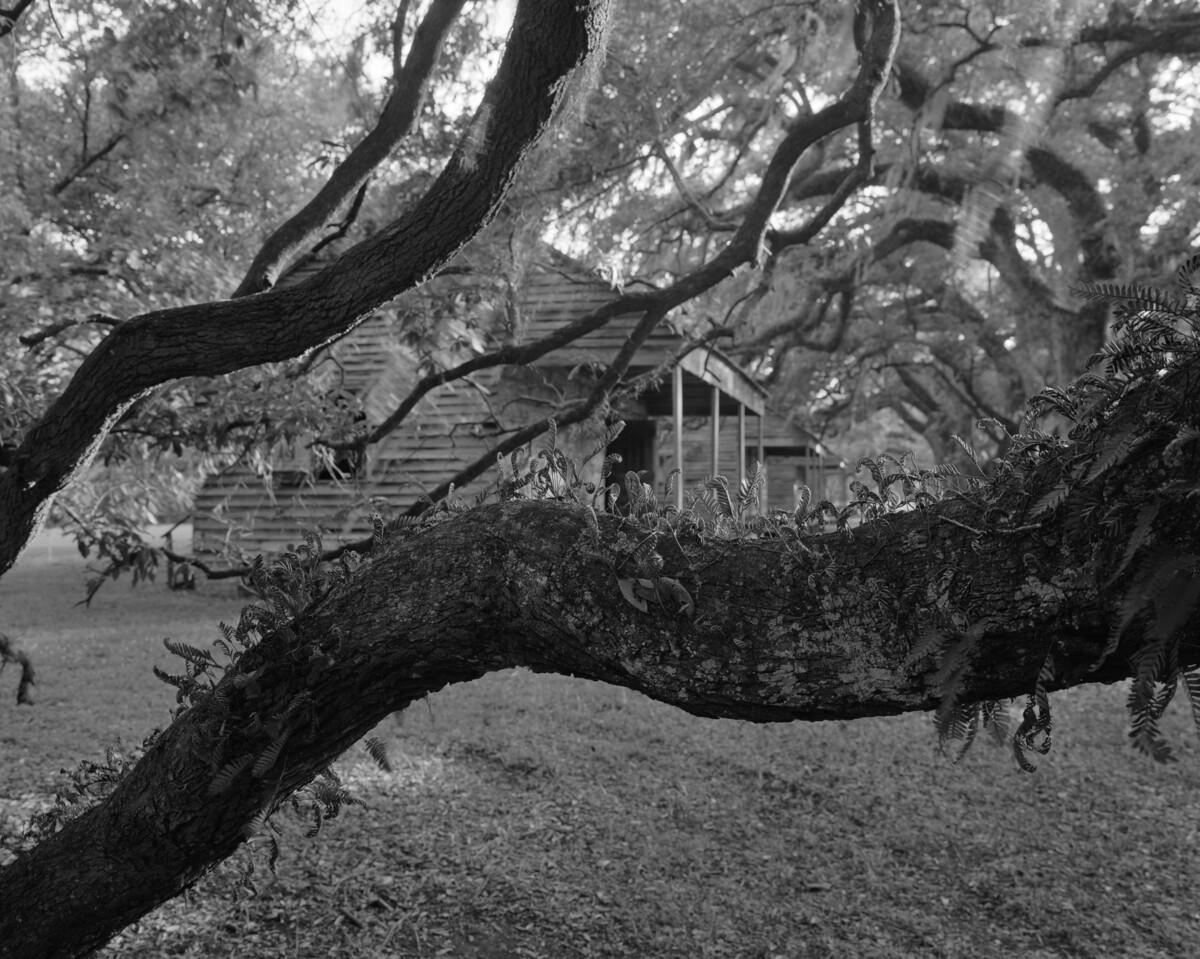
Dawoud Bey, Branches, Leaves, and Cabins, From the series In This Here Place, 2020. Gelatin silver print, Framed: 124.8 × 152.4 × 5.1 cm. Rennie Collection, Vancouver. © Dawoud Bey
block 1
We wired up the dancers’ bodies to record their layered breathing and overdubbed that as well. What I was looking for was something that became a dense cacophony of sound as if we were hearing history unfold over time on the Slave Trail laye
I use black-and-white film and prints in my history-based work because those materials are the materials of photography's history. I want the history to be suggested by the materials themselves. I also use large scale, which is a very contemporary way of presenting photographs in an exhibition context. I use that scale to make the experience of the work more physical, to pull the viewer into the space of the pictures. So, the photographs embody both a contemporary and historical sensibility. If they were large scale and in colour, I don't think the viewer would be as readily pulled into the past that I am evoking in the work. All of the photographs are also made from an eye-level vantage point, which is meant to suggest a view of those landscapes as they were once experienced by the Black bodies that inhabited them; to suggest the landscape as if it were viewed through their eyes.
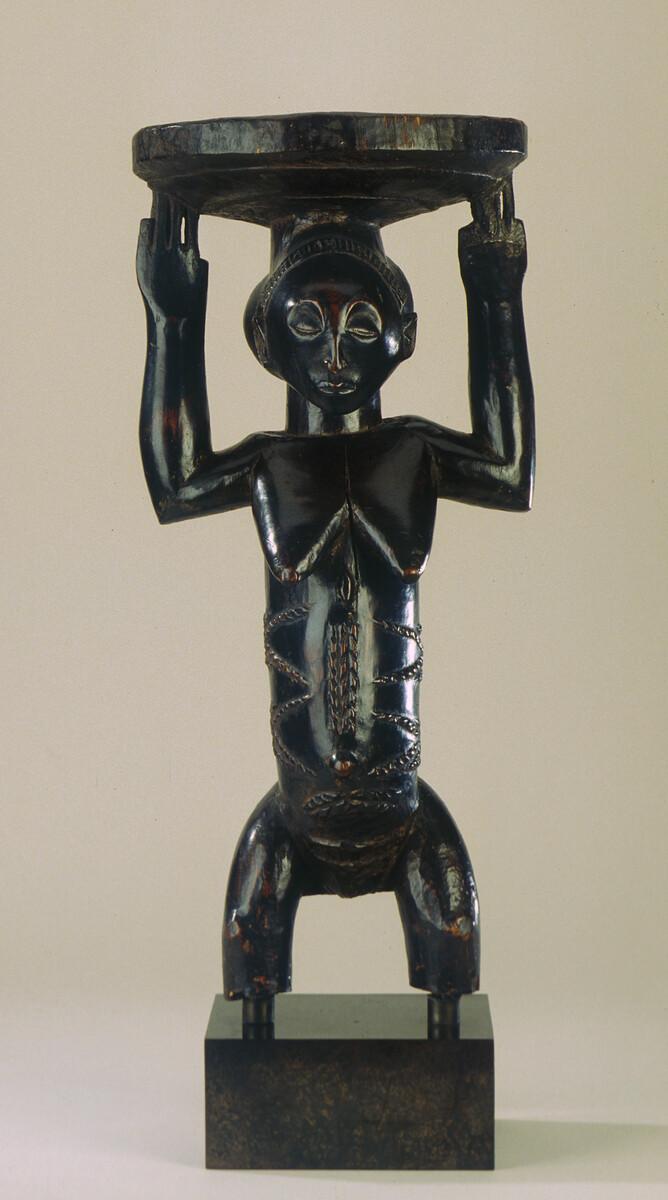
Luba peoples, Stool with Supporting Female Figure, 19th century (?). wood, Overall: 46.5 x 10 x 11.5 cm. Art Gallery of Ontario. Gift from the Frum Collection, 1999. Photo © AGO. 99/480
The exhibition is being presented in dialogue with four works you have selected from the AGO’s Frum Collection of African Art. Can you share your thoughts about what this element of juxtaposition brings to the exhibition?
My interest in the African objects is a very recent one, and this is the first time I am bringing the African objects into the shape of an exhibition. The three most recent history projects all begin in Africa, from visualizing the escape from slavery in Night Coming Tenderly, Black, to the experience of enslavement on the plantation in In This Here Place, and finally Stony the Road, which marks the initial encounter with enslaved Africans and America that began in Virginia. That entire cycle of history begins with the enslavement of Africans who became African Americans. All of these projects have been made in the space of various American landscapes. I wanted to begin to shift the focus more towards Africa, to give those Africans who were enslaved a more palpable identity through the objects that they made which embody their complex worldview and their skills as makers of objects that embodied the cosmology of their lives. So, beginning to focus on the African objects in conjunction with my photographs and films is a way to begin to foreground the African presence in the history I have been engaging in, to create a more layered and complex representation of that history in which Africans and Africa have always been implied but are now made present.
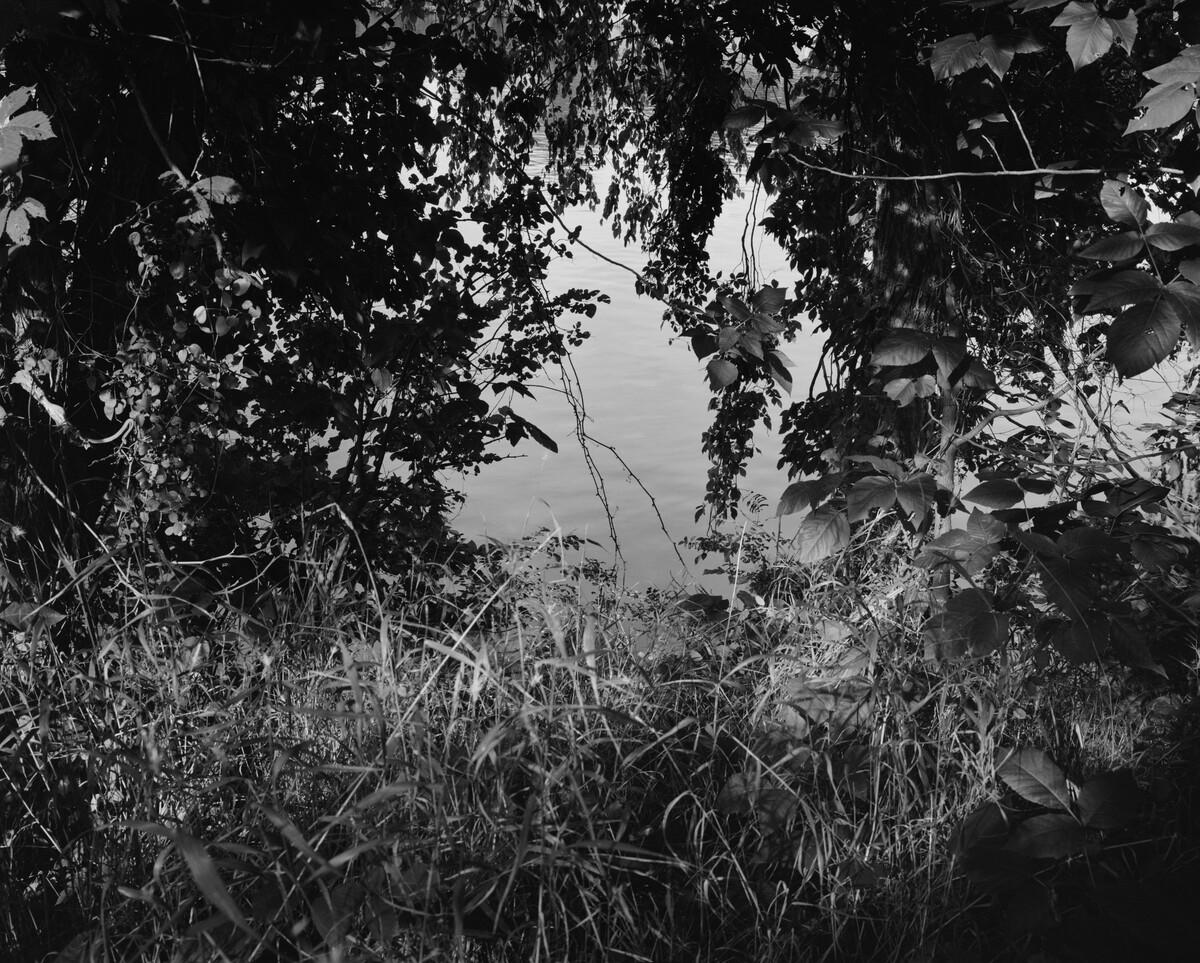
Dawoud Bey. Untitled (James River Through the Opening), From the series Stony the Road, 2023. Gelatin silver print mounted to Dibond, Framed: 122.6 × 150.5 × 5.1 cm. Rennie Collection, Vancouver. © Dawoud Bey
350,000 takes viewers on a journey of remembrance down the Richmond Slave Trail, bringing together the work of cinematographer Bron Moyi and choreographer E. Gaynell Sherod. Can you share the inception story of this film?
350,000 began with the question, "What might history sound like if it could be sonically layered?" That's where the film began, with an idea about giving history an imagined sonic presence. Upwards of 350,000 Africans were walked into slavery along the Richmond Slave Trail in Richmond, VA. If we could layer the sounds of those 350,000 pairs of feet, what might that sound like? That's where I started. Valerie Csssel Oliver, curator at the Virginia Museum of Fine Art introduced me to choreographer E. Ganelle Sherrod. As a dancer and choreographer, she's used to her body being seen. I explained to her that I was interested in the sound of the body. She brought on two other dancers, and I explained my idea: Working with sound designer Paul Bruski at In Your Ear Studio in Richmond, we began recording the sound of several pairs of feet, working in the Foley pit at the studio, recording and doing multiple layers of overdubbing to build up the sound, also using ambient sound files, and layering in other sounds such as bird calls by birds native to the region. We wired up the dancers’ bodies to record their layered breathing and overdubbed that as well. What I was looking for was something that became a dense cacophony of sound as if we were hearing history unfold over time on the Slave Trail layered.
Working with Bron Moyi, my director of photography who I'd worked on previous films with, and a crew from Spang TV I figured out the choreographed movement on the trail using a Stedicam and a Stedi operator as the surrogate for the body of an enslaved African moving through this foreign terrain, looking around and trying to take in this new space in which they are encountering for the first time after a journey of thousands of miles in the hull of a slave ship that began its journey in Africa. In post-production, I slowed the film down in order to heighten the sense of disorientation being experienced as one moves through the space. The visual and the sonic together create a destabilizing experience of moving through time and space in a foreign environment.
Dawoud Bey: Material Histories, Living Landscapes is presented at the AGO, in partnership with the Toronto Biennial of Art.This exhibition is curated by Allison Glenn, Curator of the 2026 Toronto Biennial of Art, and is on view in the Murray Frum Gallery on Level 2 of the AGO (249) through spring 2027.
Lead Sponsor

Contemporary programming at the AGO is supported by